1 free read left. Create a free account for unlimited reading + AI research.
Create free account
Collectible Games - II: Monetizing Our Collecting Urges - Extra Credits
Key insights
6 takeaways- 01Ethical implementation requires integrating monetization into core design, such as using pack randomness for strategic draft or sealed play rather than as a barrier to progress.
- 02Developers utilize the illusion of scarcity and the sunk cost fallacy to increase player retention, as the time and financial investment required for a collection makes abandonment difficult.
- 03The model specifically targets 'achievers' driven by the compulsion to complete sets and 'explorers' motivated by the discovery of randomized content.
- 04Collectible monetization models leverage psychological mechanisms similar to slot machines, using random rewards to trigger human impulses for exploration and completion.
- 05Designing games as 'Skinner boxes' that prioritize numerical power creep over gameplay risks fostering player resentment and damaging the long-term reputation of the industry.
- 06To ensure sustainability, developers must prioritize meaningful gameplay experiences over short-term revenue extraction to avoid predatory gambling-like cycles.
Ask AI about this video
Transcript
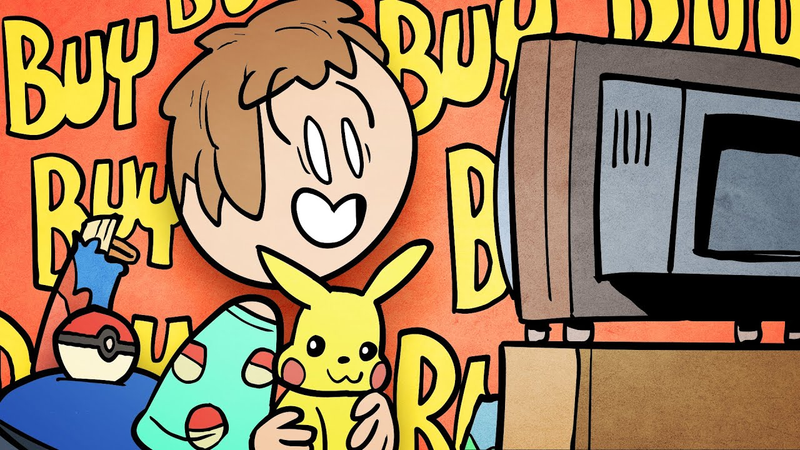
Now to continue our discussion of the collectible model in free-to-play games. We listed two ways this model benefits developers last week, like how it turns 100% of your audience into a customer for 100% of the items you're selling, as well as the way it allows customers to purchase non-consumable items multiple times in a way that feels more or less fair. So why else is it good for the developer? Well, because it's basically identical to playing a slot machine. Opening a pack is just like pulling that big shiny lever. There's the same excitement, the same hope for something great, the same idea that you might win big. There's even the same feeling that the big win might be just waiting for you in that next pull. Heck, you know how slot machines are basically rigged to give you some portion of your value back when you pull the lever? Because if you just kept losing everything you'd leave. Well, collectible games have that too. That thrill and that possibility are big motivating factors. We know it from years of gambling research, and yet here we can use it without running a foul of gambling laws. And by the way,
some of you may have noticed that almost all of this applies to loot systems in MMOs, too. Secretly, MMOs have been using a collectible model for years. It's just one where you put in time instead of dollars. So what else does this collectible model get us? Well, it also feeds the principal motivations of two of the most well-established player types, the explorer and the achiever. For the explorer, every pack is full of new possibility. You never know what you're going to get. You never know what new elements of the game you might unearth. And that's a compelling thing. For the achiever, it fulfills our compulsion to collect and to acquire. Simply by letting you know that you've gotten X out of Y cards or showing you a virtual binder that's 3/4 full, it pulls on that need in us for completion, for acquisition. Lastly, it plays on our illusions of scarcity and sunk cost. In a digital collectible game, unlike their physical counterparts, there's literally potentially infinite copies of any given card. But because a card was hard for us to get, because it's labeled as rare or epic, we believe it's scarce and it has value. We can see our time or our money as an investment instead of an expense. This also leads us headlong into the sunk cost fallacy. The more a player's collection grows, the more time and
money and effort they've spent on it, the less likely they are to walk away. The less likely they are to turn their back on all they've put into it, creating a vicious psychological trap, a subtle loop in our logic that doesn't let us go. So clearly, you can see the dangers these games can present. And just by their very nature, they bring the power of gambling with the added compulsions of exploration and collection. They lead us into the trap of sunk cost, and they get us to buy things we don't want, and do it over and over again. So you can see how if used merely exploitatively, this system could do a huge amount of damage, and further degrade players' opinions of free-to-play games. But can it be used well? Well, of course, but only if you consider the monetization as part of the design. If you use the randomness of the packs as a game element, or the varied nature of what players will be able to field as a strategic component of your game, then the collectible model becomes a boon to your game. It still has all the features listed above, but it also gives back to the player. It makes the experience more interesting than it could otherwise be without such a model. Play types like sealed, a game type where you play only the cards you get from a limited number of packs, or draft, where the very nature and
organization of the packs themselves becomes a strategic element of the game, are an excellent example of this. Additionally, games which use a collectible monetization scheme to justify creating enormous sets of game elements, and make part of the fun of the game reorganizing your strategy around new pieces as your collection grows, can grant the player a variety and diversity of gameplay that they'd never get if they simply initially had access to the entire set. Unfortunately, so many games that use the collectible monetization method today, especially in the mobile market, seem to be going for that slash and burn mentality, exploiting the method of monetization to drain their customer dry, and then simply leave them with a bad taste in their mouth, a resentment against these types of games, and perhaps games in general. These games don't have to be pay-to-win games to be profitable, and they can certainly have far more to their gameplay than a Skinner box, more than just an energy bar and tapping on a screen to win. If your player's only goal in a collectible game is to get pieces with higher numbers than the pieces of their opponent, then that's not a game, that's a trap. It's a gambler's pit and a street corner dealer. We can do better than that. We can design better games than that. And it doesn't take much effort. Heck, right now with the bar where it is, it doesn't
even take much skill. We don't have to trample all over a method for monetizing our games that can be good for the consumer and us as an industry just to cash in today for a quick buck. So, if you're out there watching this at one of the many, many mobile or tablet development houses where they're building games that purport to be collectible, please ask yourself, how does the collectible nature of what I'm making make the game better? Not just margin. If you do that, this can be good for all of us. If not, just take a trip down to Reno and watch the retirees with their oxygen masks sitting in smoke-filled halls pulling levers of one of those one-armed bandits over and over again throughout the hours of their day, because that's what you're going to be doing to a younger generation of players. We'll see you next week.
Summary
The collectible monetization model in free-to-play gaming functions as a sophisticated psychological mechanism that mirrors the mechanics of slot machines. By leveraging the thrill of random rewards, developers tap into fundamental human impulses for exploration and completion. This model effectively targets specific player archetypes, such as achievers who are driven by the compulsion to fill virtual binders and explorers who are motivated by the discovery of new, randomized content. These systems often utilize illusions of scarcity and the sunk cost fallacy to increase player retention, as the time and financial investment required to build a collection makes it increasingly difficult for users to abandon the game.
While these mechanics are highly effective at driving revenue, they carry significant risks of exploitation. When used solely to extract capital, the collectible model degrades the player experience and fosters resentment toward the free-to-play industry. The primary danger lies in designing games that function as mere Skinner boxes, where the only objective is to acquire items with higher numerical values than those of opponents. This approach reduces gaming to a predatory cycle of gambling-like behavior, which can damage the long-term reputation of developers and the industry at large.
To utilize this model ethically, developers must integrate monetization directly into the core game design. By incorporating mechanics like draft or sealed play, where the randomness of packs serves as a strategic element rather than a simple barrier to progress, the collectible nature of the game can enhance variety and depth. Ultimately, the industry must prioritize meaningful gameplay over short-term profit, ensuring that the collectible aspect serves to enrich the player's experience rather than functioning as a trap for impulsive spending.















Comments