1 free read left. Create a free account for unlimited reading + AI research.
Create free accountArticle European Conference on Games Based Learning (ECGBL)
1 free read left. Create a free account for unlimited reading + AI research.
Create free accountArticleEuropean Conference on Games Based Learning (ECGBL)
The paper argues that notifications, advertising, and short-form content push readers toward surface-level engagement.
Can You Even Read? is a research-creation paper by Nora Perry and Caighlan Smith that presents an educational simulation game examining how the contemporary attention economy erodes close reading skills and encourages reliance on generative AI. The authors argue that constant notifications, advertisements, and short-form content condition readers toward surface-level engagement, and that AI summarization tools offer an easy exit from the demanding work of sustained, critical reading. Their central thesis is that the game's procedural rhetoric can make these pressures tangible for players, prompting reflection on what is gained and lost when readers outsource comprehension to machines rather than engaging with texts directly.
The paper grounds its argument in Citton's concept of the attention economy and Boullier's "regime of alarm," alongside a review of recent studies linking short-form video consumption and LLM use to reduced attention span, weaker critical thinking, and diminished literary analysis. It cites survey findings from Pew Research and other sources indicating that substantial shares of teenagers and postsecondary students use AI to summarize readings or complete assignments, with one undergraduate survey reporting over 40 percent admitting to uses explicitly prohibited by instructors. These figures are presented as evidence of a broader shift in how students approach reading tasks.
The game itself, built in Unity, has players read The Picture of Dorian Gray while increasingly intrusive pop-ups, notifications, and offers from an in-game AI assistant interrupt them. An attention monitor tracks focus and triggers summary offers as it drains, and the game is designed to provoke discussion rather than to be won. The authors position it as a classroom tool for secondary and postsecondary settings. The paper acknowledges limitations, including its reliance on a single English text and the absence of formal user testing at the time of writing, and outlines plans for qualitative study with teacher candidates and an open-source version adaptable to other texts.
Each row is a game or company this document names, each column a document, oldest first. A mark means that document names it. Select a row to see those documents.
European Conference on Games Based Learning (ECGBL) · 2026
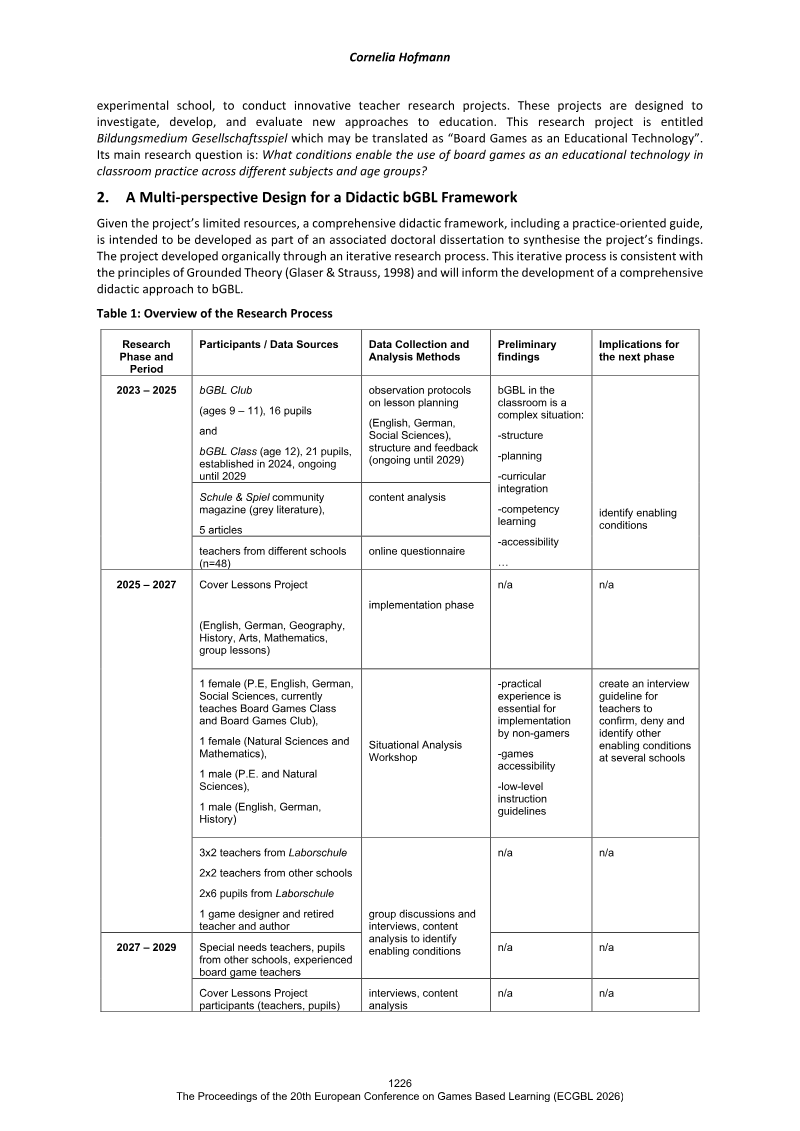
European Conference on Games Based Learning (ECGBL) · 2026
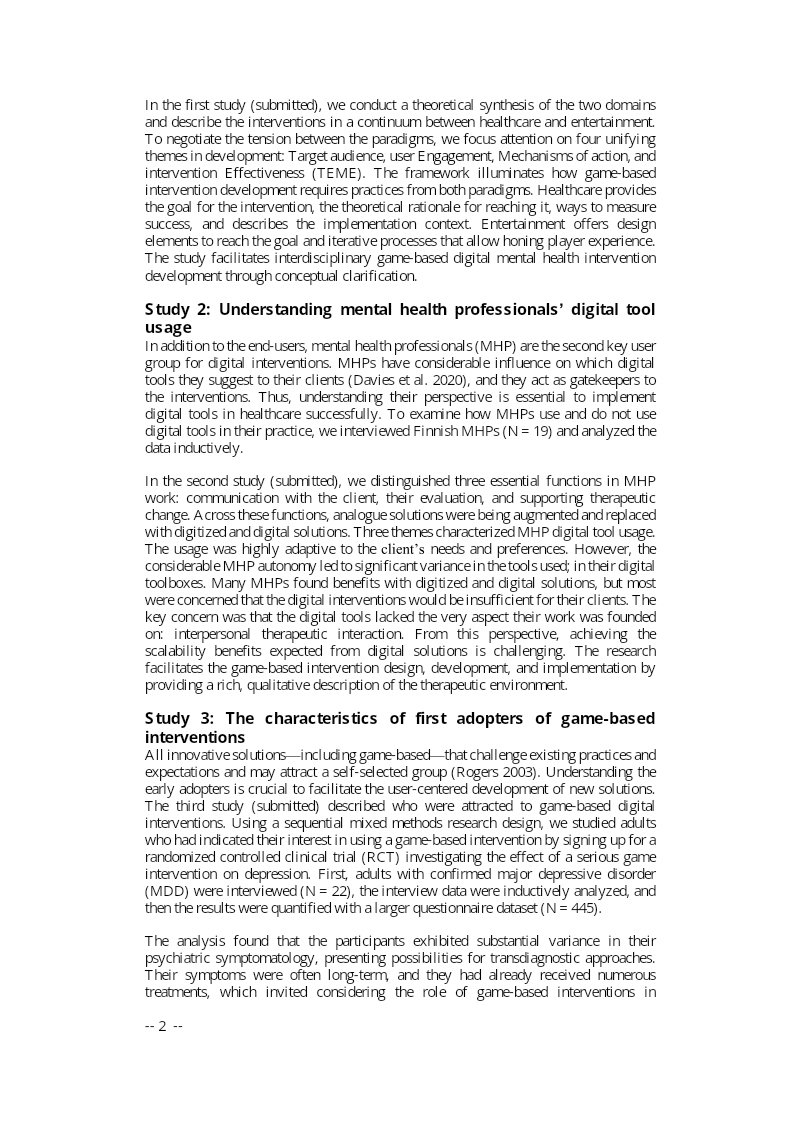
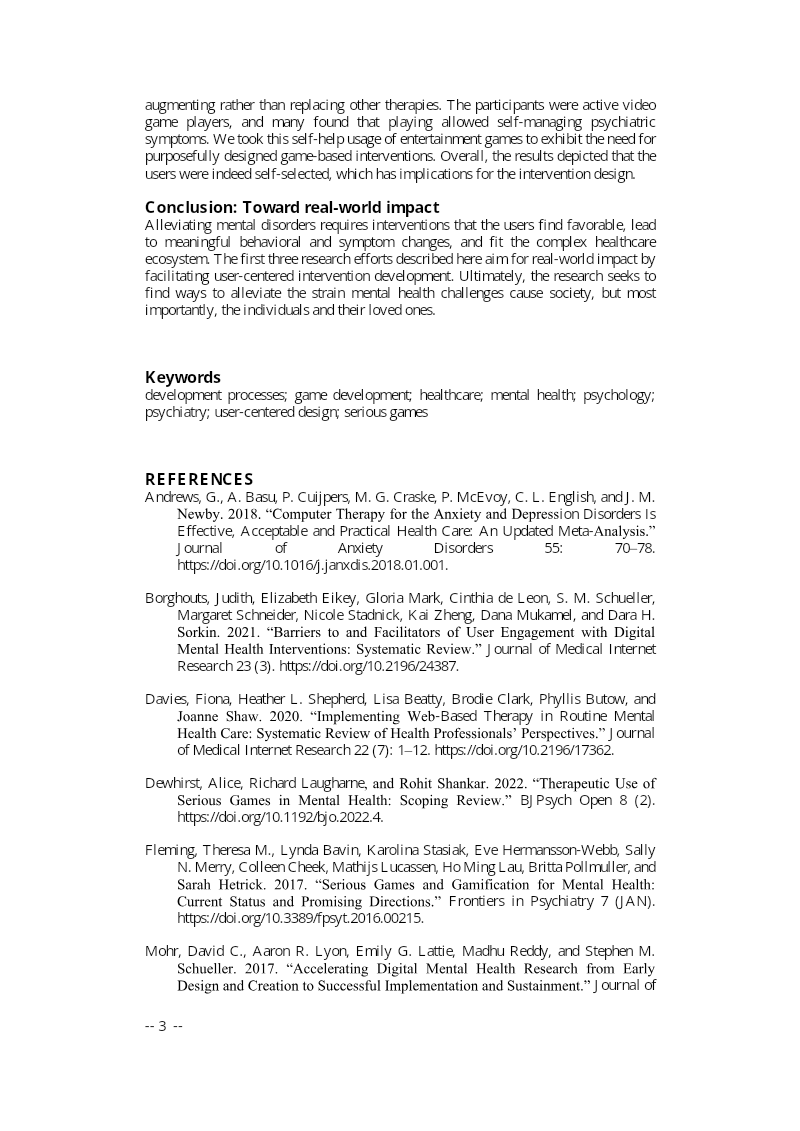
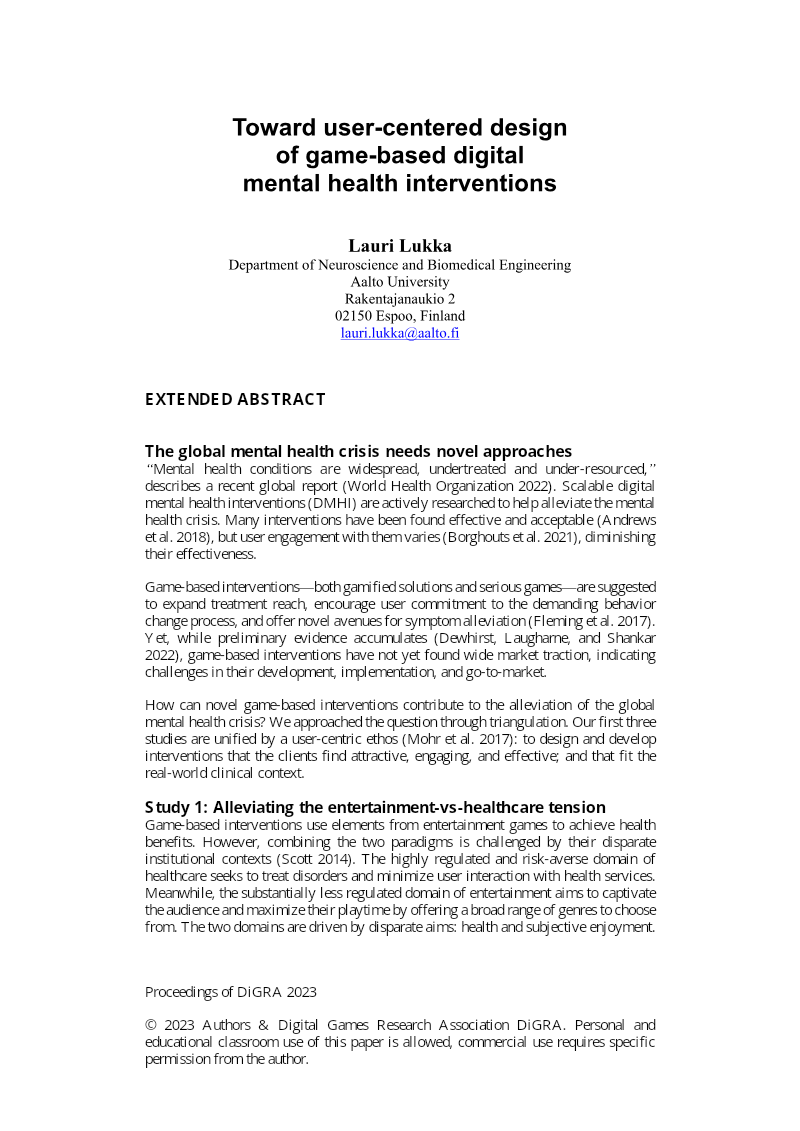
DiGRA · 2023