1 free read left. Create a free account for unlimited reading + AI research.
Create free accountWhitepaper DiGRA
1 free read left. Create a free account for unlimited reading + AI research.
Create free accountWhitepaperDiGRA
The game uses cute visuals, a calm soundscape and accessible mechanics to present precarious Arctic imagery as a pleasurable experience. The analysis asks whether this makes the threat more approachable or less serious.
"Arctictopia" and Its Cozy, Casual Climate Catastrophe examines how a cozy puzzle game about Arctic ecology uses soft, picture-book aesthetics to frame the climate crisis, and whether that framing makes the threat more approachable or less serious. The central argument is that the game's cute visuals, calm soundscape, and accessible mechanics transform precarious Arctic imagery into a pleasurable experience that gestures toward environmental awareness while potentially sidestepping its existential stakes. The analysis contends that the game's romanticized-nature and doomed-Arctic binary, along with colonialist undertones in its collection-based progression, raises the question of whose pleasure and whose suffering is made visible.
The analysis finds that the game's mechanics, which emphasize accumulating seals and puffins, strategically melting ice floes, and undoing mistakes, sit in tension with its environmentalist message, reinforcing individualist and growth-oriented logics. While background imagery of ghost nets, tires, and industrial ships critiques extractive industry, and its multispecies alliances foreground nonhuman life, the single human figure, an Inuit-coded angler, is reduced to passive scenery. Its coziness, grounded in safety, abundance, and softness, is read as uneasily compatible with capitalist structures, and its short-session design supports flexible, low-commitment play.
Reception data reinforces these concerns. The developer, Gamtropy, presents itself as a pro-social indie studio, and its no-microtransaction model aligns with that image. Reviews are overwhelmingly positive, with all three journal reviews and 31 of 33 Steam user reviews recommending the game, yet only a small minority explicitly mention climate change. This suggests the game functions largely as relaxing diversion rather than a prompt for ecological engagement. The author concludes that this gap between cozy aesthetics and the gravity of the crisis is a fundamental challenge for such games, while acknowledging that the study cannot determine whether accessibility outweighs the risk of trivializing the issue.
Each row is a game or company this document names, each column a document, oldest first. A mark means that document names it. Select a row to see those documents.
DiGRA · 2026
DiGRA · 2026
DiGRA · 2026
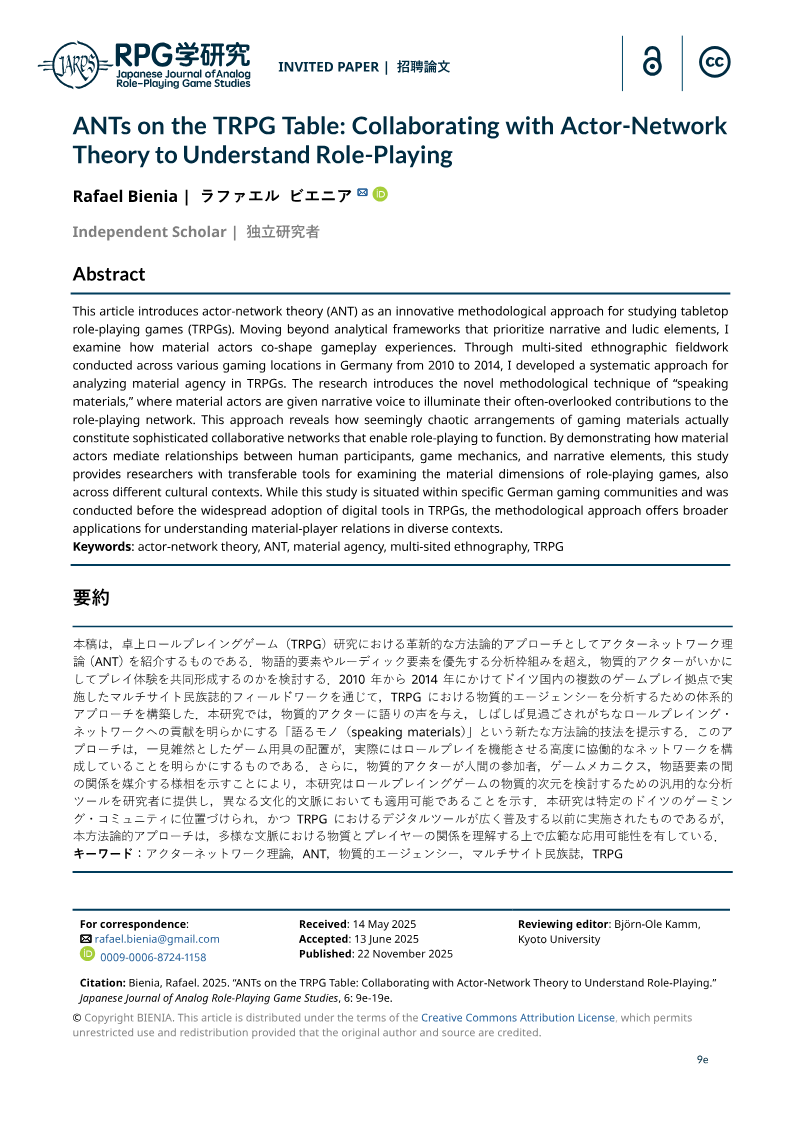
Japanese Association for Role-Playing Game Studies (JARPS) · 2025
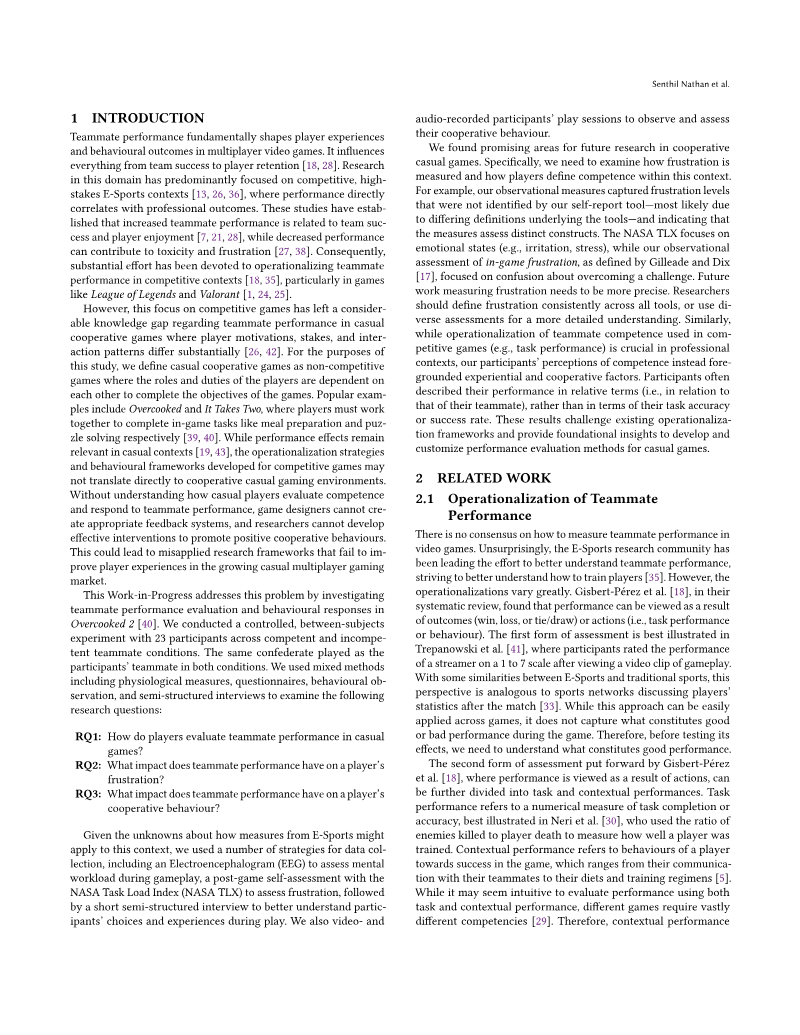
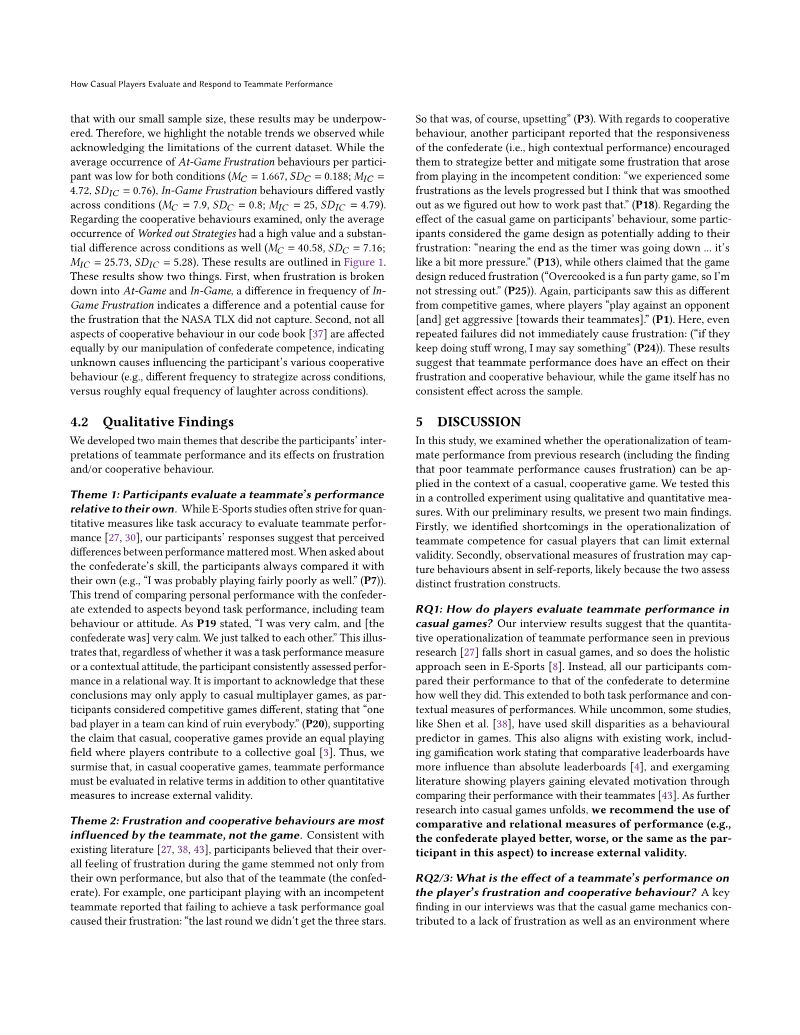
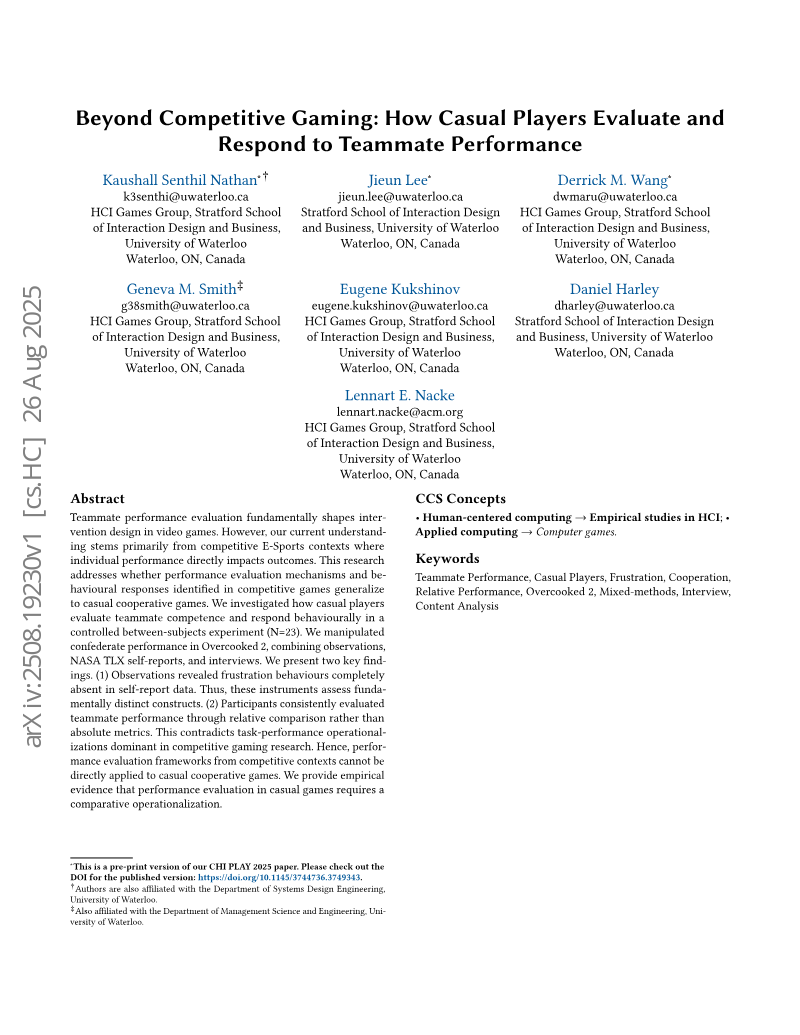
University of Waterloo · 2025
Spiel|Formen · 2025
Spiel|Formen · 2025
Netzwerk Game Labs an Hochschulen · 2025
Spiel|Formen · 2025
Replay. The Polish Journal of Game Studies · 2024
Replay. The Polish Journal of Game Studies · 2024
Spiel|Formen · 2024
Spiel|Formen – Zeitschrift für Play & Game Studies · 2024































