Loading the document
1 free read left. Create a free account for unlimited reading + AI research.
Create free accountArticle Deconstructor of Fun
1 free read left. Create a free account for unlimited reading + AI research.
Create free accountArticleDeconstructor of Fun
Platforms including Netflix, Apple and Microsoft are struggling to achieve sustained engagement or profitability with subscription models. Funding from these services is predicted to dry up.
This document presents six predictions for the mobile gaming industry in 2025, drawing on data from Sensor Tower and industry expertise. The analysis covers global trends, focusing on business, technology, and geopolitical factors impacting the sector.
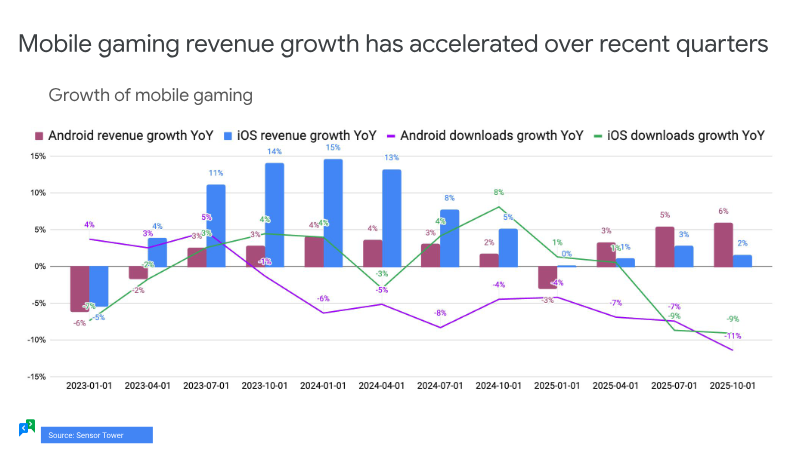
The mobile gaming market is expected to see incremental, rather than exponential, growth in 2025. This limited growth is attributed to persistent inflation, geopolitical instability, increased competition for consumer screen time from non-gaming apps, and the ongoing impact of privacy changes like Apple's IDFA, which have reduced the effectiveness of targeted advertising. While some positive trends, such as decreasing inflation and improved post-IDFA marketing strategies, are noted, the market is considered mature, leading to a "winner-takes-all" environment where only well-resourced companies can thrive.
Funding from game subscription services like Apple Arcade, Xbox Game Pass, and Netflix Games is predicted to dry up. These services have struggled with engagement, as free-to-play games dominate player attention, and their expensive back catalogs of older premium titles fail to attract users. Developers also face significant revenue loss when launching on these platforms, making them less attractive for successful games.
AI tools are not expected to deliver on their lofty promises of revolutionizing game development in 2025. While beneficial for small and mid-sized teams in streamlining tasks like asset creation and QA, larger studios face challenges integrating AI into complex workflows. The current impact is seen as incremental, primarily in making asset creation and coding cheaper and faster, rather than transformative.
Diversity, Equity, and Inclusion (DEI) initiatives are predicted to be backtracked by game companies. Following a post-Trump shift in the U.S. and mounting evidence that DEI efforts can create internal division and alienate audiences, many companies are quietly scaling back these programs. The focus is expected to shift back to creating games with broad appeal and prioritizing business growth and sustainability.
Western game publishers, including Riot Games and Supercell, are anticipated to distance themselves from Chinese powerhouses like Tencent and NetEase. This strategic move is driven by a volatile geopolitical landscape, restrictive Chinese regulations, and growing Western concerns over data privacy and censorship associated with Chinese ownership. Potential IPOs or M&A conversations are suggested as ways for these companies to break away from Chinese control.
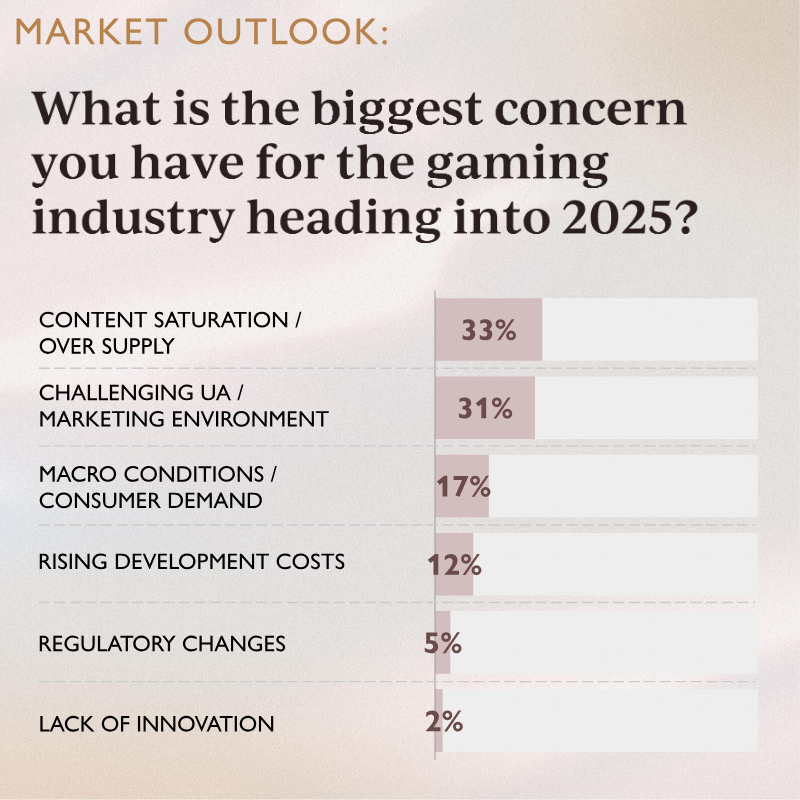
Finally, gaming-focused Venture Capital (VC) firms are expected to broaden their investment scope beyond game studios into adjacent tech, apps, and platforms. This shift is a response to the stagnation of the gaming industry post-pandemic, which has made it harder for gaming startups to deliver the high returns VCs seek. Existing gaming funds, having amassed significant capital during the pandemic boom, will increasingly act as tech generalists with gaming as a specialty, leading to less direct capital flow into game studios.
 Riot GamesCompany · United States · founded 2006 · 576 documents
 SupercellCompany · Finland · founded 2010 · 702 documents
 Tencent HoldingsCompany · Game company · 1,122 documents
 NetEaseCompany · China · founded 2001 · 326 documents
 AppleCompany · United States · founded 1976 · 1,678 documents
 NetflixCompany · United States · founded 1997 · 621 documents
 MicrosoftCompany · United States · founded 1975 · 1,547 documents
Each row is a game or company this document names, each column a document, oldest first. A mark means that document names it. Select a row to see those documents.
Deconstructor of Fun · 2026

Deconstructor of Fun · 2026

Two & a Half Gamers · 2026



Newzoo · 2026

Deconstructor of Fun · 2026

Two & a Half Gamers · 2026

Deconstructor of Fun · 2026
Naavik · 2026

Two & a Half Gamers · 2026
PocketGamer.biz · 2026
PocketGamer.biz · 2026
Aream & Co · 2026
InvestGame · 2026
Tenjin · 2026