Smoke
Company
2 documents in the library are about Smoke, from writers such as Deconstructor of Fun and Naavik. Each has a summary and key insights with the page they come from.
Connections
The documents about Smoke on the inner ring, the other games and companies they name on the outer one. Select a cover to see it up close and open it in a new tab; drag to move, pinch or Ctrl + scroll to zoom.
Documents about Smoke
Deconstructor of Fun65 min
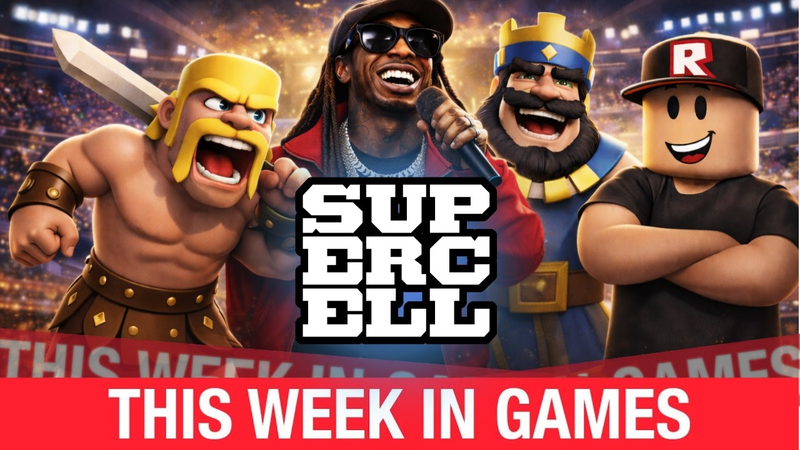
TWiG #370: Supercell’s Annual Letter, Reading Between the KPIs
The global gaming industry is currently defined by a stark consolidation of market share, where established live-service titles dominate revenue and monthly active users across PC and console platforms.
- Supercell’s Squad Busters failed to achieve long-term viability despite reaching 75 million downloads and receiving a $100 million marketing investment.
- Supercell is restructuring into a startup-like model with tighter budgets and profit-sharing to address internal complacency and move away from a reliance on high-spend user acquisition.
- Roblox is struggling with low unit economics and market saturation due to a user base primarily under the age of 18, prompting a strategic pivot toward older, higher-income demographics.
Deconstructor of FunFeb 2026
Article
The Smoke Test: Are These Game Economies Sustainable?
The sustainability of blockchain-based game economies hinges on their ability to function independently of continuous user growth.
- The sustainability of a game economy can be tested by assuming a constant player count; if the economy collapses without continuous growth, it functions as a Ponzi scheme rather than a sustainable model.
- Axie Infinity's collapse serves as a primary case study, where a steady user count failed to generate demand for new Axies, causing the value of the SLP token to plummet and triggering an exodus of play-to-earn participants.
- Splinterlands has maintained relative stability by shifting play-to-earn rewards from the DEC token to the governance-focused SPS token, helping to mitigate oversupply and support the value of its in-game currency.
NaavikJan 2023