Platinum Games
Company
2 documents in the library are about Platinum Games, from writers such as DiGRA and The Game Business. Each has a summary and key insights with the page they come from.
Connections
Each row is a game or company named alongside Platinum Games, each column a document, oldest first. A mark means that document names it. Select a row to see those documents.
Documents about Platinum Games
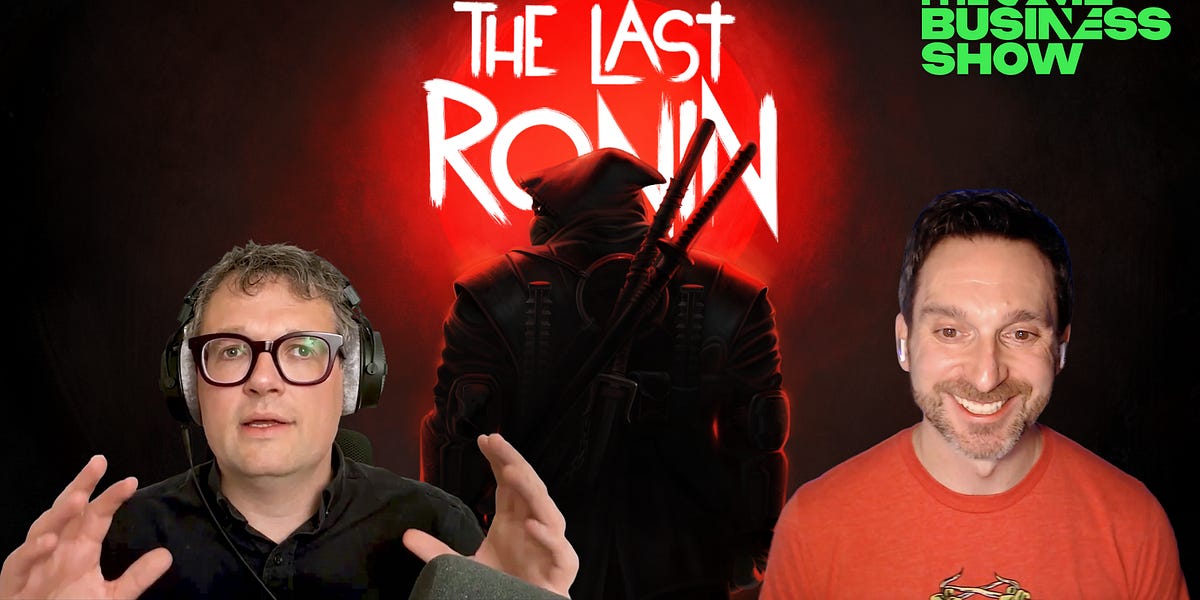
The New Paramount Games Isn’t Like the Old Paramount Games
Paramount Games is undergoing a strategic transformation, moving away from past failed attempts at gaming to establish a sustainable, long-term development and publishing operation.
- Paramount Games is shifting its strategy toward 'cost-effective AAA' titles, explicitly avoiding the massive, high-risk budgets associated with industry-standard blockbusters like GTA.
- The company aims to release multiple titles per year across its portfolio, leveraging established properties like SpongeBob and Nick Toons alongside new original IP to ensure consistent audience engagement.
- Paramount has partnered with Platinum Games to develop 'Teenage Mutant Ninja Turtles: The Last Ronin,' signaling a move to prioritize development partners who demonstrate genuine passion for the source material.
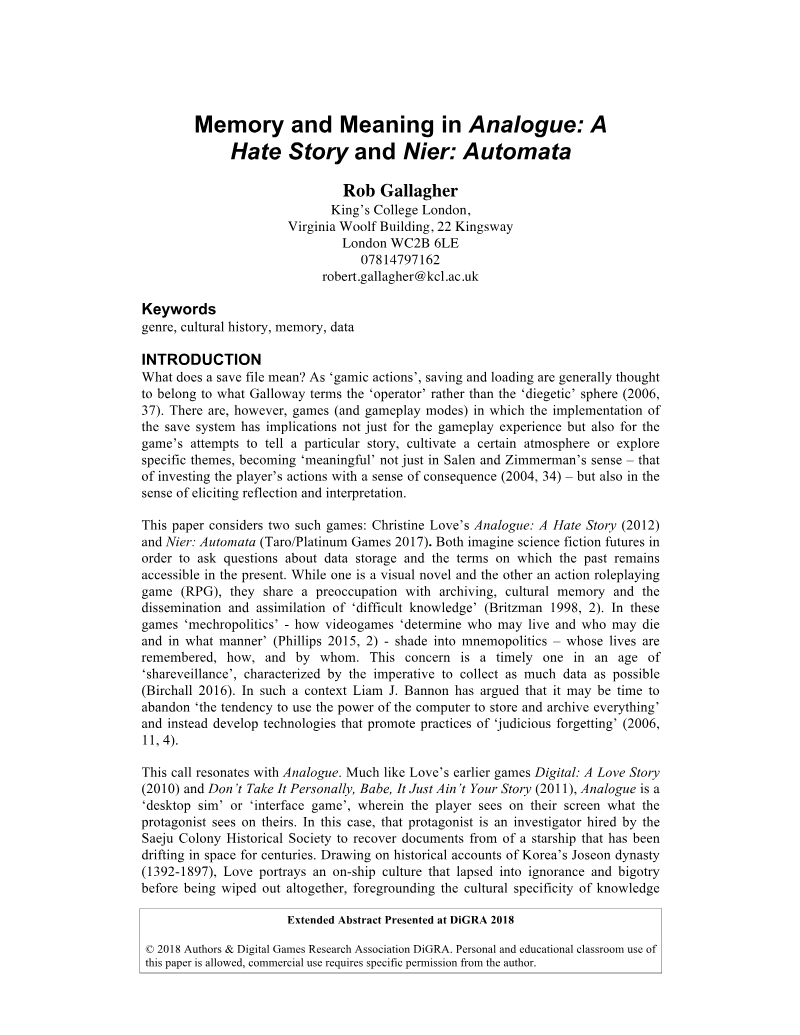
Memory and Meaning in Analogue: A Hate Story and Nier: Automata
This paper examines how two games, Christine Love's visual novel Analogue: A Hate Story (2012) and Platinum Games' action RPG Nier: Automata (2017), make the act of saving and loading data meaningful beyond its usual role as a gameplay mechanic.
- The paper argues that save and load systems in games can carry narrative, thematic, and interpretive meaning, not just serve as a gameplay mechanic, prompting reflection on how the past is stored, accessed, and remembered in digital culture.
- It frames its analysis through the concepts of "mechropolitics" (who lives and dies within a game's systems) and "mnemopolitics" (whose lives are remembered and how), drawing on theorists of archiving, difficult knowledge, and testimony.
- In Analogue: A Hate Story (2012), players cannot see every file in a single playthrough, so they must decide whom to believe and what to preserve, a choice tied to Leigh Gilmore's notion of the "adequate" versus "tainted" witness.
