Coktel Vision
Company
2 documents in the library are about Coktel Vision, from writers such as DiGRA. Each has a summary and key insights with the page they come from.
Connections
Each row is a game or company named alongside Coktel Vision, each column a document, oldest first. A mark means that document names it. Select a row to see those documents.
Documents about Coktel Vision

Whitepaper3 pages
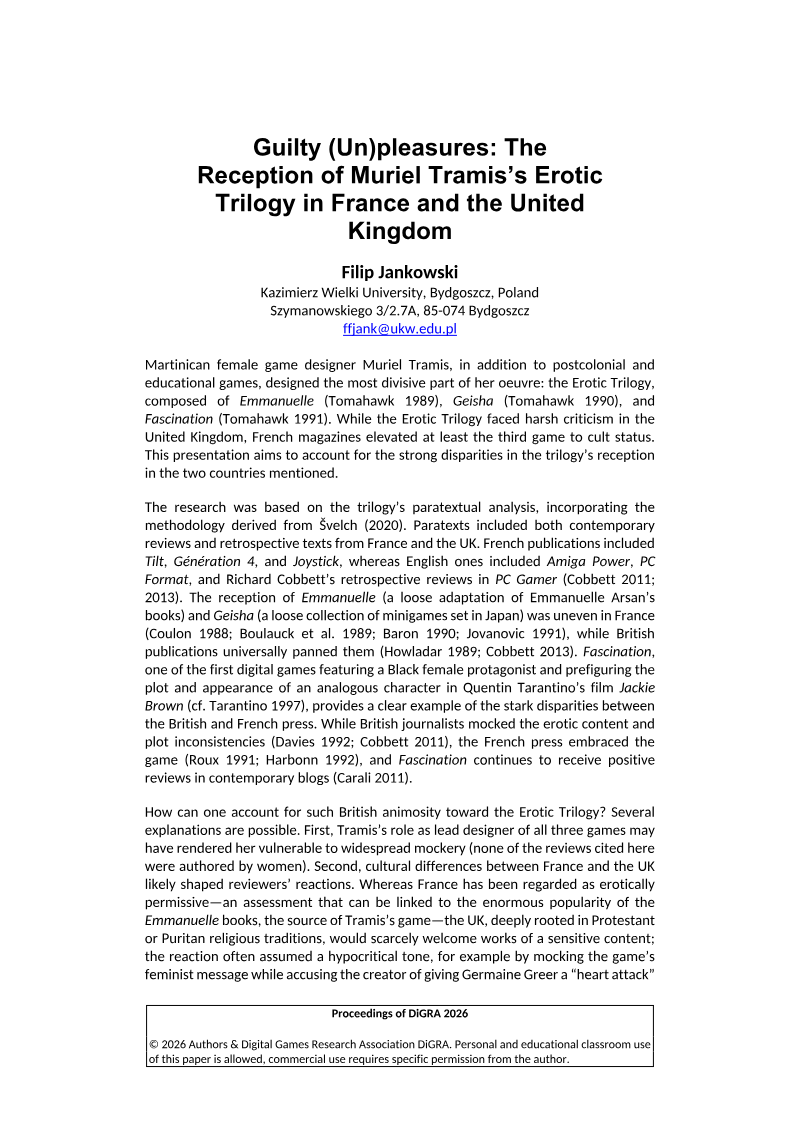
Guilty (Un)pleasures: The Reception of Muriel Tramis's Erotic Trilogy in France and the United Kingdom
This paper examines the sharply divergent reception of Muriel Tramis's Erotic Trilogy, comprising Emmanuelle (1989), Geisha (1990), and Fascination (1991), in France and the United Kingdom.
- The paper contrasts the reception of Muriel Tramis's Erotic Trilogy (Emmanuelle 1989, Geisha 1990, Fascination 1991): British publications dismissed the games almost universally, while French magazines elevated at least Fascination to cult status.
- Fascination, one of the early digital games with a Black female protagonist, best illustrates the divide: British journalists mocked its erotic content and plot inconsistencies, whereas French critics praised it, and it still attracts positive attention in contemporary blogs.
- The author attributes British hostility partly to Tramis's role as lead designer across all three games, and notes that none of the cited reviews were written by women.
DiGRAJun 2026
Whitepaper3 pages
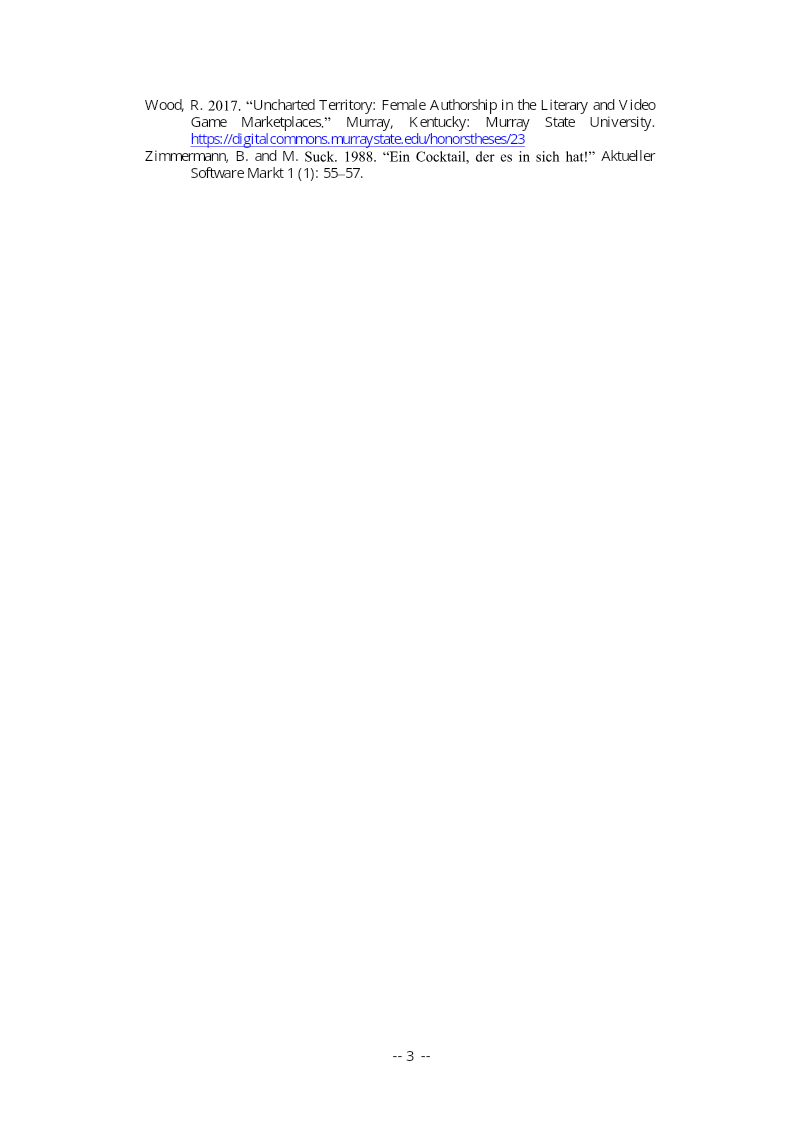
What Is a Game Autrice? The Auteur Theory and Female Game Developers: Muriel Tramis's Example
This paper argues that auteur theory, which has historically centered male game developers, should be extended to include women working in commercial game design, using the career of French designer Muriel Tramis as a case study.
- The paper argues auteur theory, historically centered on male game developers, should be extended to women, proposing the term "game autrice" and using French designer Muriel Tramis as the case study.
- The study applies Astrid Ensslin's functional ludostylistics to seven games Tramis worked on at Coktel Vision between 1987 and 1993 and in 1996, selected from a larger body of co-designed titles.
- Recurring features identified in Tramis's output include critical treatment of racism and colonialism (e.g., Méwilo, Freedom, Lost in Time), subversion of pornography and critique of the male gaze (e.g., Emmanuelle, Geisha, Fascination), and culturally embedded puzzles.
DiGRAJan 2022