Monetization & Live Ops
Revenue models, in-game economies, retention and live operations.
282 documents

Sensor Tower · 2024
ReportSensor Tower Global Mobile Gaming Industry Outlook 2024
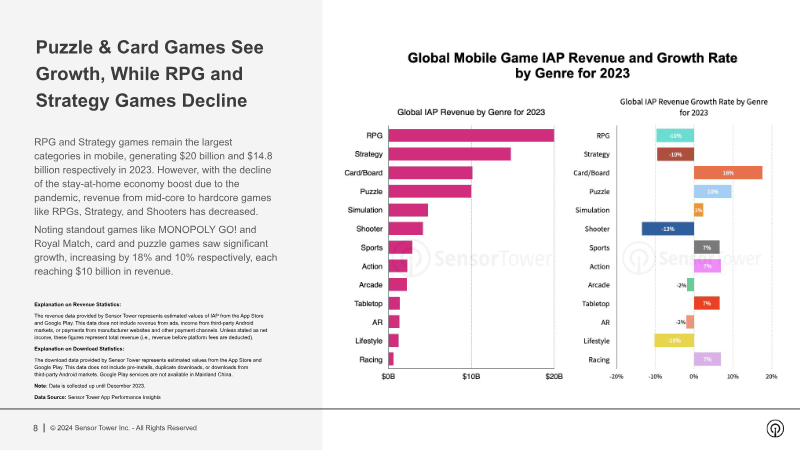
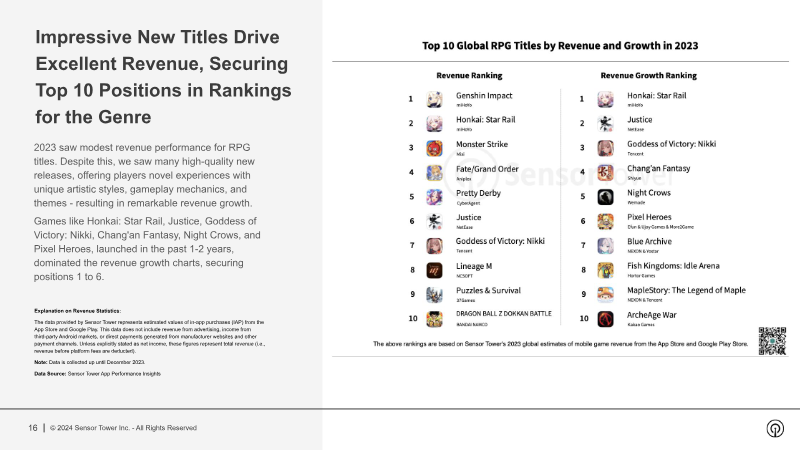
Global mobile gaming experienced a minor 2% year-on-year decline in in-app purchase revenue in 2023, totaling $76.7 billion. Despite this slight contraction, the market remains 22% larger than pre-pandemic levels in 2019. Projections indicate a recovery to $78 billion in 2024, with a long-term growth trajectory expected to surpass $100 billion by 2028 at an average annual growth rate of 6.8%. These findings are based on Sensor Tower App Performance Insights, covering the App Store and Google Play across major global markets including the United States, China, Japan, and South Korea. The industry is currently defined by a shift in consumer spending from mid-core and hardcore titles toward casual and hybrid-casual models. Casual game revenue grew 8% to $28.6 billion in 2023, now accounting for 38% of the global market. Hybrid-casual games showed the most aggressive growth, increasing 30% to exceed $2.1 billion. In contrast, traditional high-revenue genres like RPGs and Strategy games both saw 10% revenue declines as the pandemic-era stay-at-home boost faded. Despite these drops, RPGs and Strategy remain the largest individual segments, generating $20 billion and $14.8 billion respectively. Geographically, the United States remains the largest market at $22.2 billion, followed by the Chinese iOS market at $15.1 billion. While the Japanese and South Korean markets saw declines of 13% and 7% respectively, specific titles defied broader trends. MONOPOLY GO! and Royal Match emerged as major drivers in the casual sector, with the former generating $1.2 billion and the latter surpassing Candy Crush Saga in monthly revenue. In the mid-core space, new entrants like Honkai: Star Rail and Whiteout Survival achieved significant growth, particularly in APAC markets, by utilizing innovative themes and integrated gameplay mechanics.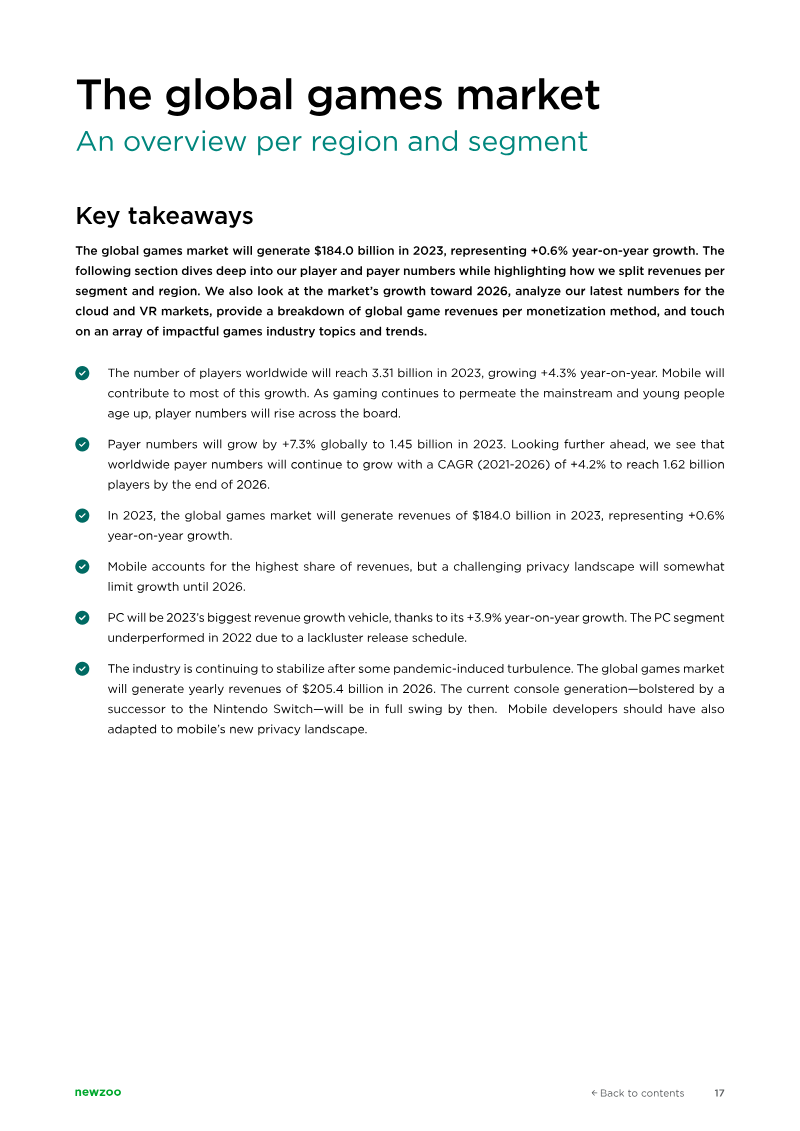
Newzoo · 2024
ReportGlobal Games Market Report
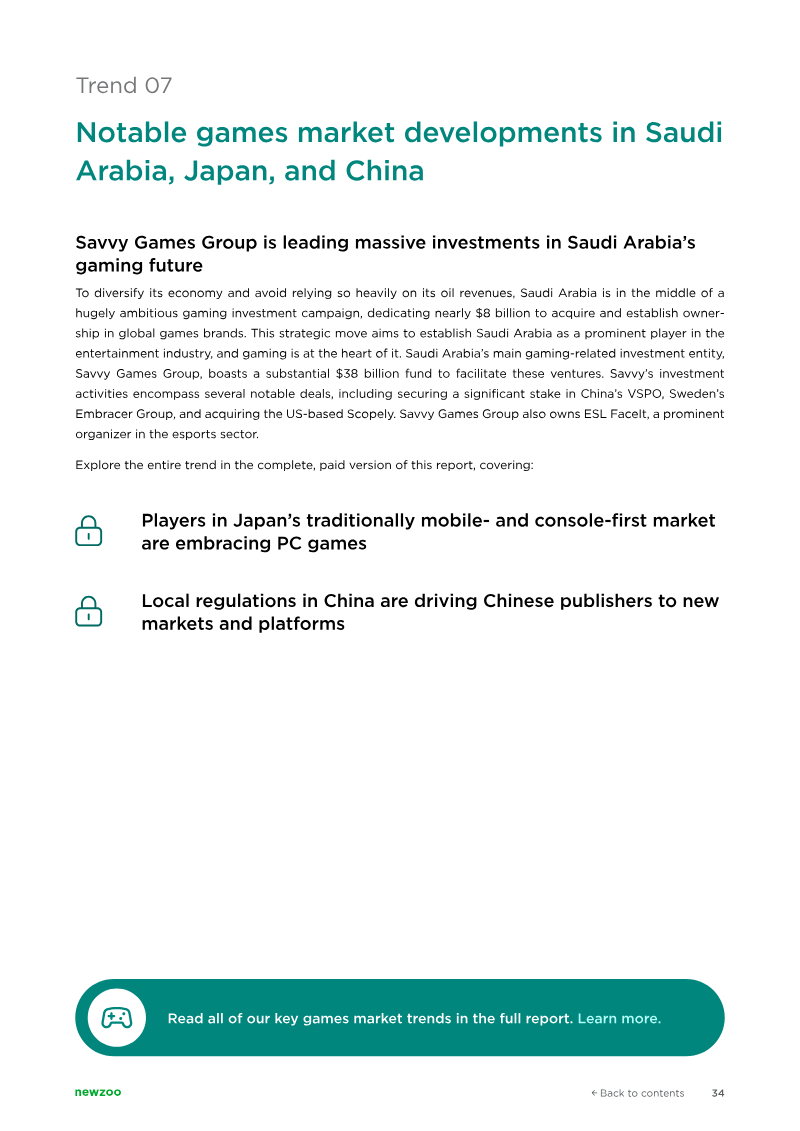
The global games market is entering a period of stabilization and renewed growth, with 2023 revenues projected to reach $184.0 billion. This recovery follows a post-pandemic correction and is supported by a massive player base of 3.31 billion people worldwide. While the industry faces macroeconomic pressures and shifting privacy regulations, long-term forecasts remain positive, with total revenues expected to climb to $205.4 billion by 2026. This trajectory is fueled by the maturation of the current console generation, the expansion of the middle class in emerging markets, and the increasing influence of transmedia strategies that drive engagement across multiple entertainment formats. Market dynamics are shifting significantly across different platforms and regions. Mobile gaming remains the largest revenue segment at $89.7 billion, yet it is currently experiencing a 1.4% decline as privacy policies complicate user acquisition and monetization, particularly within the RPG genre. In contrast, the PC and console segments are the primary growth engines for 2023, benefiting from a steady supply of hardware and a robust slate of high-profile releases. Geographically, the Asia-Pacific region maintains its dominance, accounting for 46% of global revenue, even as regulatory hurdles in China slow its immediate growth. Meanwhile, significant capital infusions, such as Saudi Arabia’s $38 billion investment through Savvy Games Group, are reshaping the competitive landscape. Technological and structural transformations are further defining the industry's future. Generative AI is emerging as a pivotal tool for managing the rising costs of AAA development, though its adoption is tempered by concerns over copyright and workforce impact. Revenue models have transitioned almost entirely to digital formats, with physical sales becoming negligible in the PC market and live-service models dominating console engagement. As the industry evolves, the rise of cloud gaming and handheld "complementary devices" like the Steam Deck are expanding how and where players interact with content, ensuring the market remains resilient despite shifting regulatory and economic conditions.
Video Game Insights · 2024
ReportState of Free to Play on Steam in 2024
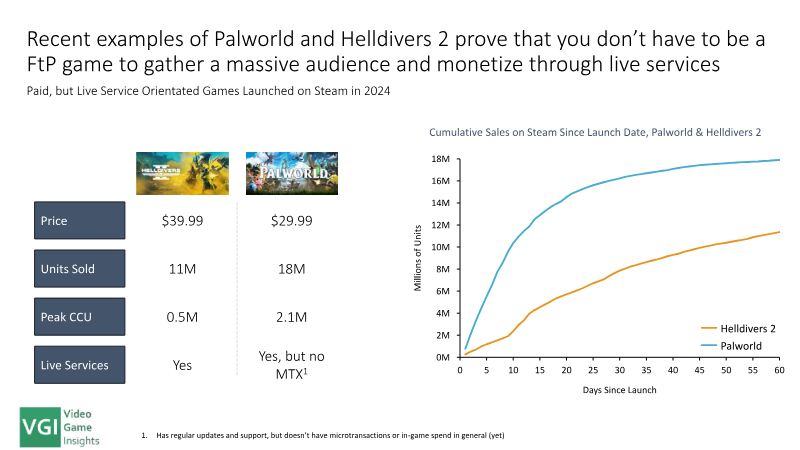
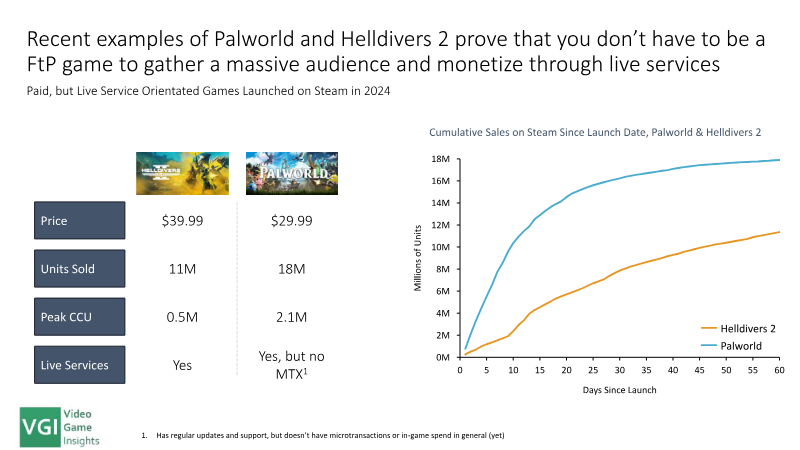
The analysis evaluates the free‑to‑play (FtP) segment on Steam, highlighting its dominant share of player engagement and the increasing difficulty for new titles to break through. In 2023, FtP games accounted for 51 % of total hours played on the platform, despite premium titles comprising the majority of releases. Engagement is highly concentrated: the top 25 FtP titles generate 88 % of all FtP activity, the top 10 capture roughly 70 %, and the top five hold nearly 60 % of concurrent users (CCU). Counter‑Strike 2 and Dota 2 continue to lead the charts, with eight of the ten highest‑CCU games in 2023 being FtP, while only one premium title (Rust) appears in the list. The market shows signs of compression as high‑quality premium and paid‑live‑service games erode FtP share. Between 2021 and 2024, premium titles priced $10‑$50 grew from 31 % to 37 % of total playtime, and flagship releases such as Elden Ring and Hogwarts have boosted the over‑$50 segment. Nonetheless, FtP titles remain older on average; the top ten FtP games have a mean age of seven years, and only two new entries (Call of Duty Warzone and Naraka: Bladepoint) have entered the top‑ten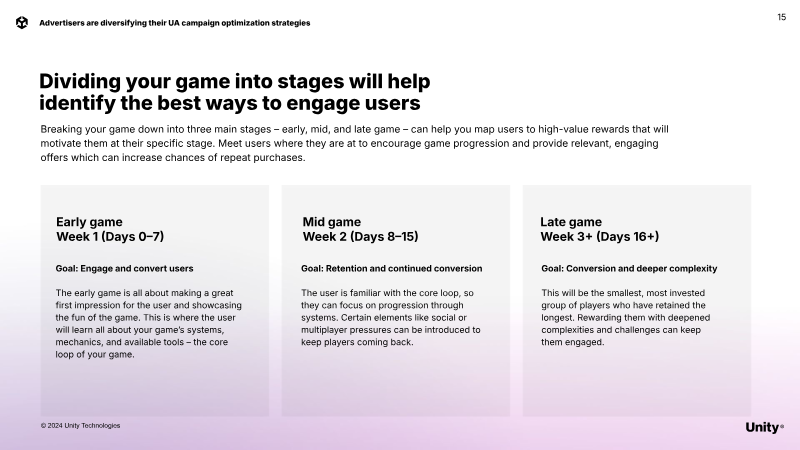
Unity · 2024
ReportMobile Growth and Monetization Report 2024
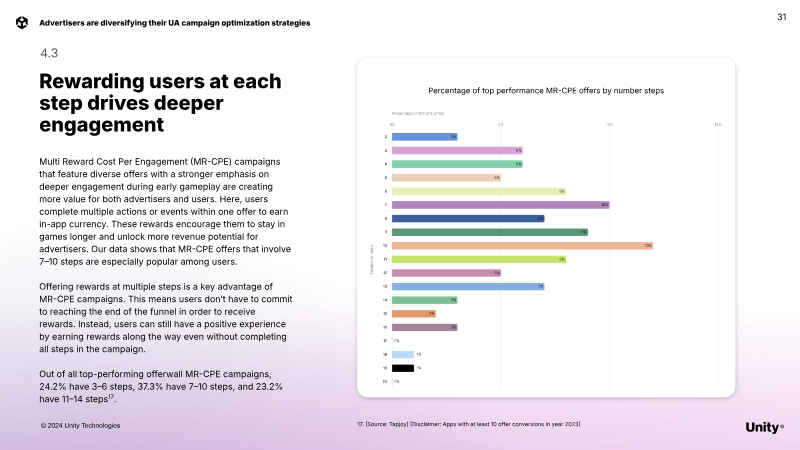
The 2024 mobile gaming landscape is defined by a strategic transition from volume-based user acquisition toward high-value retention and diversified monetization. While only 1.83% of users convert to in-app purchases, nearly 29% of those individuals become repeat buyers, with the vast majority of transactions occurring within the first 30 days of installation. To capitalize on this window, developers are increasingly mapping specific products to game stages, utilizing starter bundles for early engagement and limited-time events to sustain mid-to-late-game revenue. This shift reflects a broader industry move away from traditional cost-per-install models in favor of return-on-ad-spend and event-based optimizations. Monetization strategies are becoming more sophisticated through the integration of rewarded video and offerwalls. Rewarded video engagement is particularly high in Word, RPG, and Casual genres, especially when placements are context-sensitive, such as offering additional moves or resources during critical gameplay moments. However, offerwalls represent a superior revenue driver for non-paying users, generating a monthly ad revenue of $4.04 per converter compared to just $0.15 for rewarded video. Users acquired through offerwalls, specifically via Multi-Reward CPE campaigns with multiple engagement steps, demonstrate significantly higher long-term value and retention. Advertisers are further diversifying acquisition through Daily Reward CPE to engage casual users with low-friction tasks, which see near-total conversion rates for early milestones like tutorials. On the publishing side, maximizing performance requires prominent UI placements and the strategic use of monthly currency sales, which can increase conversions by up to 46%. These findings, derived from Unity Cloud, Unity Ads, Tapjoy, and ironSource data, cover global markets categorized by purchasing power and English proficiency, providing a comprehensive view of the current mobile ecosystem across Tier 1, Tier 2, and emerging regions.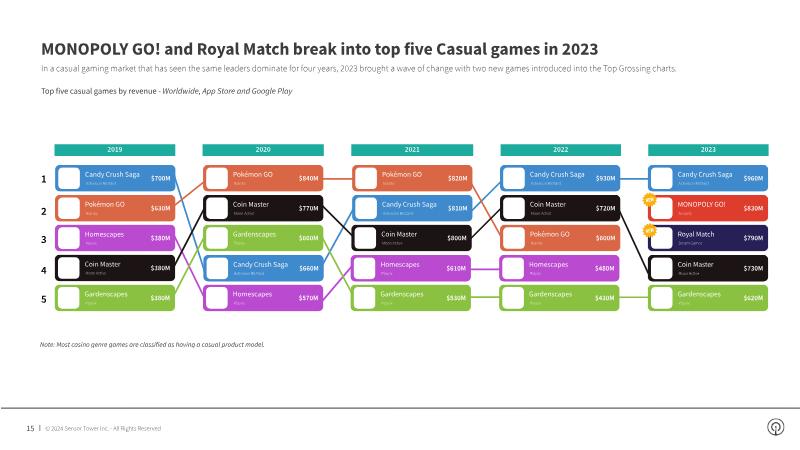

Sensor Tower · 2024
ReportThe State of Gaming 2024: An Analysis of the Current Mobile Gaming Market Trends
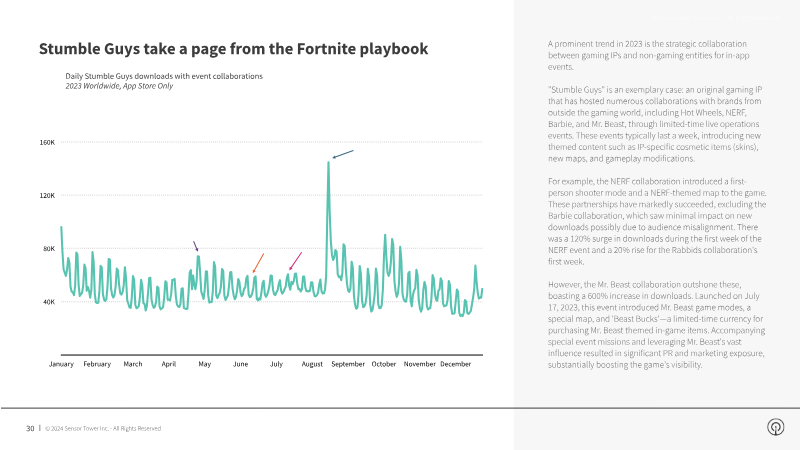
The global mobile gaming market underwent a significant correction in 2023, characterized by a 10% decline in worldwide downloads and a 2% drop in total revenue. This downturn was primarily fueled by escalating user acquisition costs and a post-pandemic stabilization of consumer habits. While the broader market contracted, a distinct shift toward casualization occurred, evidenced by an 8% increase in Casual game revenue and a 30% surge in the Hybridcasual segment. Conversely, Mid-core titles faced a 9% revenue decline, signaling a transition in player preferences toward more accessible experiences. Geographic performance diverged sharply as publishers pivoted toward emerging markets to mitigate rising costs in established territories. While the Asian market saw a 6% revenue contraction, the Middle East, Europe, and Latin America experienced revenue growth of 8%, 7%, and 4% respectively, despite falling download numbers. This regional resilience was often driven by high-profile intellectual properties, such as the success of Monopoly GO! in Europe and the expansion of Netflix’s gaming portfolio, which saw a 194% increase in downloads through the integration of major franchises like Grand Theft Auto. Strategic adaptations in 2023 focused on maximizing player lifetime value through Live Ops events and transmedia collaborations. Mobile gaming now commands 67% of global digital advertising spend, with marketing strategies increasingly segmented by platform; YouTube and TikTok serve as primary hubs for core gamers, while Facebook and Pinterest remain vital for reaching casual female audiences. To combat the challenges of the current landscape, the industry has embraced low-cost user-generated content and external subscription models, leveraging recognizable IP to bridge the gap between gaming and broader entertainment media.

SGA · 2024
ReportSerbian Gaming Industry Report 2023
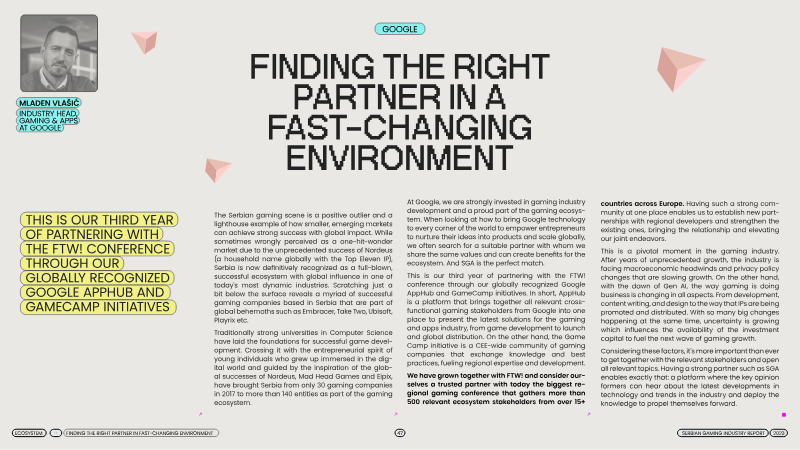
The 2023 Serbian gaming industry assessment quantifies the sector’s rapid expansion, maps its ecosystem, and evaluates the conditions shaping future growth. Drawing on a 97‑question survey that reached 80 % of the domestic ecosystem and validated financial data for the 21 leading firms, the analysis establishes a clear upward trajectory for Serbia’s game development landscape. Total industry revenue reached €175 million, a 17 % year‑on‑year increase, while the workforce nearly doubled to roughly 4,300 professionals. The market now hosts 38 active studios producing 81 titles, with mobile‑first games still dominant but ceding share to core and original‑IP projects. Talent inflows from Russia, Ukraine and Belarus, together with 70 % of respondents expressing optimism, underpin this momentum, and a quarter of companies are planning foreign offices despite lingering concerns over tax incentives and regulatory red tape. The ecosystem comprises more than 140 companies and over 500 regional stakeholders, featuring high‑profile successes such as Foxy Voxel’s “Going Medieval” (850 k+ copies), GameBiz Consulting’s $250 million revenue from 80+ global studios, Onyx Studio’s 57 million monthly players, and Sozap’s NASDAQ listing with 30 million downloads. Collaborative ties with DICE/EA, Microsoft, Google and Epic Games, alongside mentoring programmes, Gamescom exposure, and the Shift2Games and Playing Narratives initiatives, reinforce Serbia’s emergence as a European development hub. At the same time, the rollout of generative‑AI tools raises IP, privacy and deep‑fake risks, prompting EU‑wide regulatory scrutiny. Overall, the sector is maturing into a diversified, internationally connected hub with strong growth prospects. Realising its potential will require addressing regulatory and fiscal barriers, leveraging AI responsibly, and sustaining education and mentorship programmes that nurture talent and support SMEs in scaling their operations.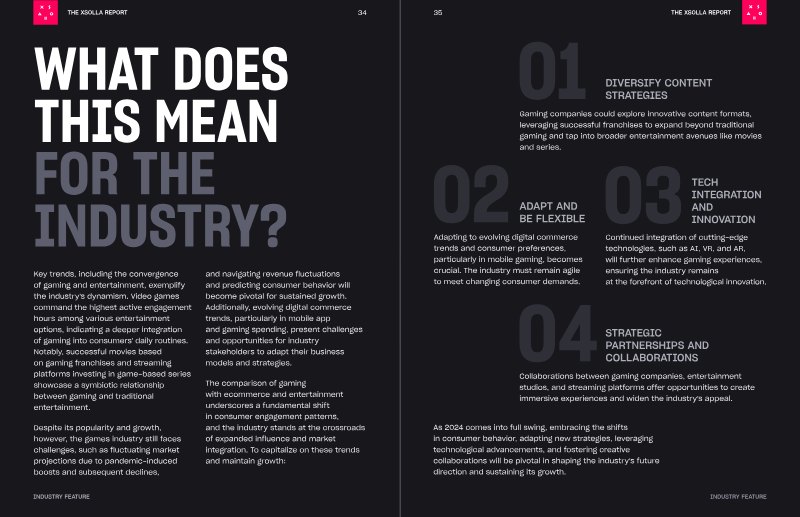


Xsolla · 2024
ReportState of Play: Winter 2024
The analysis projects global gaming revenue to reach approximately $205.7 billion by 2026, up from $106.8 billion in 2023, reflecting an average annual growth rate of 3.9 percent. Mobile and cloud gaming are identified as the primary engines of this expansion, with the mobile sector alone expected to generate $111.4 billion in spend and to be bolstered by record app‑download volumes—76.8 billion downloads across iOS and Google Play in the first half of 2023. Consumer spending surged by as much as 60 percent in early 2023 before stabilising within a –10 percent to +20 percent range for the remainder of the year, underscoring the volatility of post‑pandemic demand. In the United States, women now comprise roughly half of the gaming audience and represent a significant portion of spending power, yet only 26 percent of studios report inclusive hiring practices and 18 percent provide diversity training. This disparity highlights a persistent gap between audience demographics and industry representation, even as iOS‑based role‑playing games alone generated about $1.33 billion in revenue during Q3 2023. Growth is further driven by financial realignments, the emergence of metaverse, AR/VR, and cloud‑based experiences, and evolving consumer habits that favour direct‑to‑consumer commerce. A mobile‑gaming platform that enables web‑store sales has become a major revenue source, positioning service providers as essential partners for developers seeking funding, marketing, launch, and monetisation across multiple regions. Concurrently, a cultural shift toward greater gender diversity in executive, design, and development roles is expanding the industry’s creative talent pool, reinforcing the sector’s long‑term resilience and innovation potential.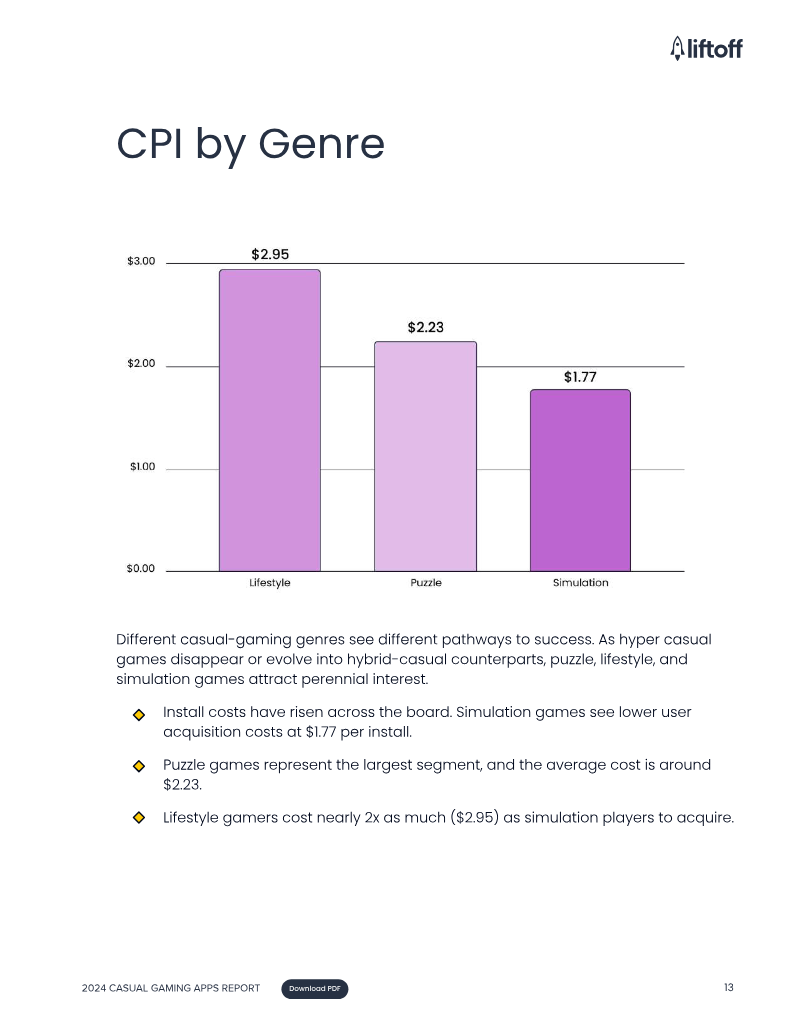
GameRefinery · 2024
ReportCasual Gaming Apps Report 2024
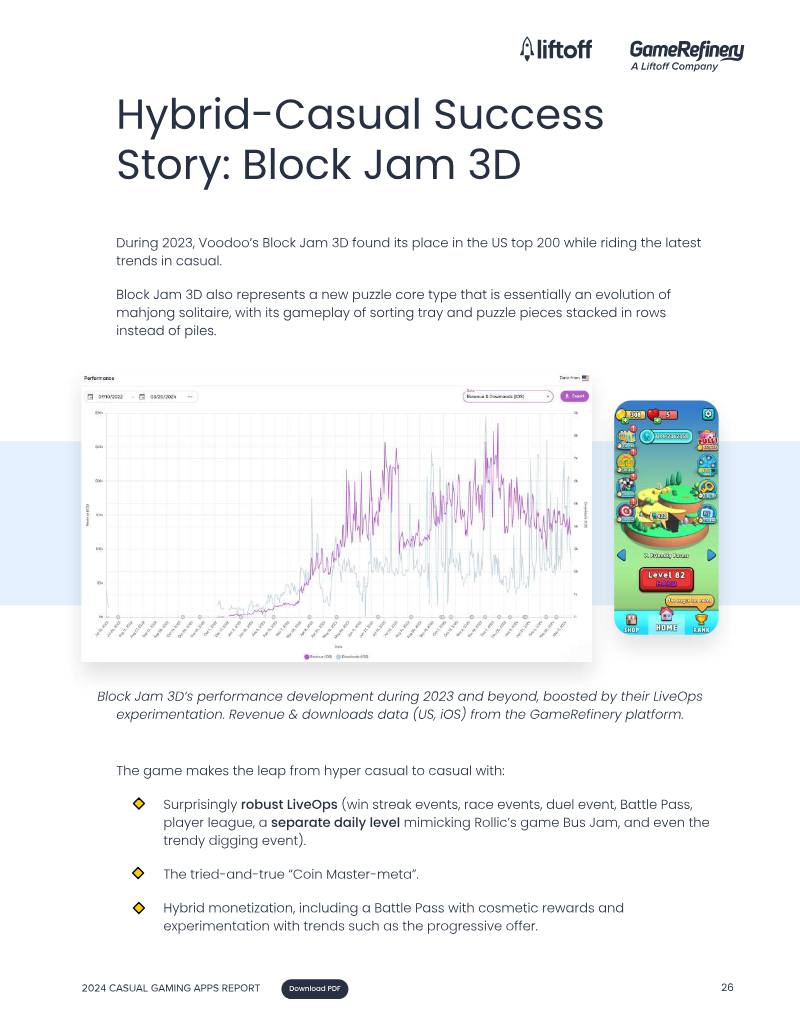
The mobile gaming landscape is currently defined by a strategic shift toward casual and hybrid-casual experiences, which serve as the primary engine for industry growth and user acquisition. While the market faces significant headwinds in the form of rising acquisition costs—particularly on iOS, where the $4.83 cost-per-install is nearly eight times higher than on Android—high-performing regions like North America continue to deliver a sustainable Day 7 return on ad spend of 5.9%. This economic environment has triggered a transition away from hyper-casual titles toward puzzle games, which now command 37% of installs, and hybrid-casual models that integrate complex meta-layers and sophisticated LiveOps into accessible core mechanics. Monetization strategies are becoming increasingly diversified as developers move beyond traditional advertising. The rise of "progressive offers" and "engagement offers" has transformed in-app purchases by tying discounts and rewards directly to active gameplay milestones. Furthermore, the industry is seeing a surge in collaborative "partner events" and social mechanics, such as win streaks and digging minigames, to stabilize and boost baseline revenues. These engagement-driven tactics are often paired with the emergence of external web stores, allowing developers to bypass platform fees and foster direct-to-consumer relationships through exclusive loyalty rewards and daily gifts. The casualization of the market extends even to mid-core titles, which now rely on casual mechanics for 74% of their installs. Emerging subgenres like 3D match and Mahjong Solitaire are gaining significant traction, reflecting a broader trend of deepening gameplay depth within the casual category. By combining simple core loops with complex monetization structures and social event formats, developers are successfully navigating the high-cost acquisition environment to maintain long-term player retention and revenue growth across global markets.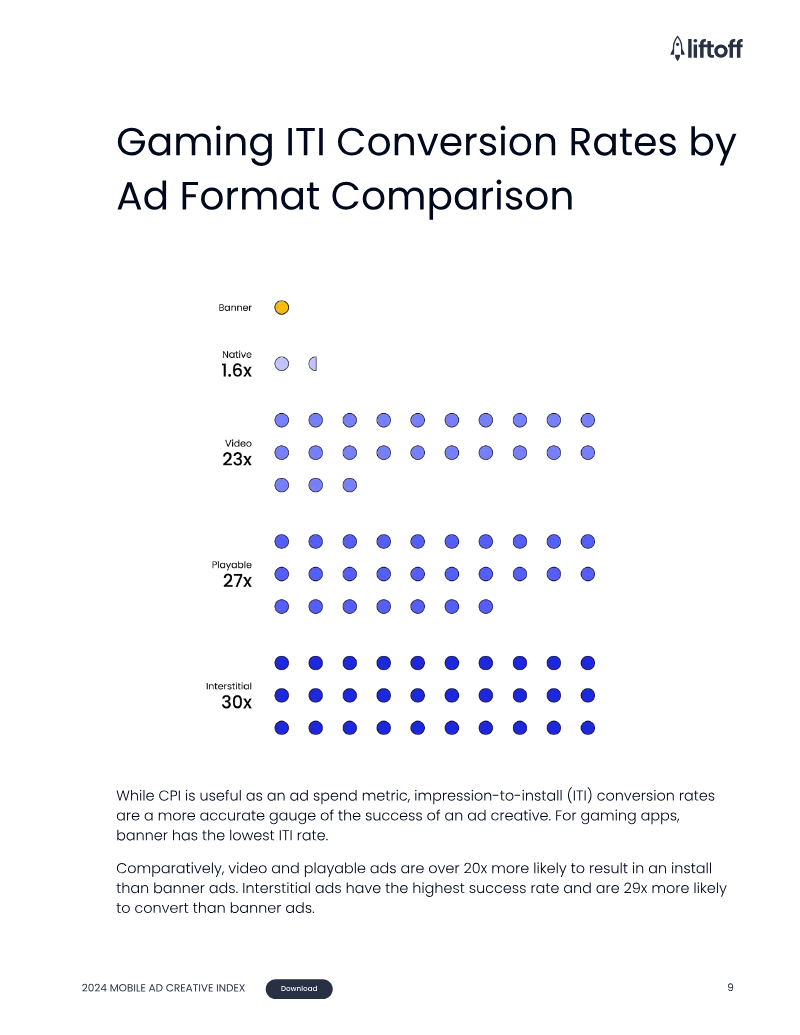


Liftoff · 2024
ReportMobile Ad Creative Index 2024
The Mobile Ad Creative Index provides a comprehensive analysis of performance benchmarks and emerging trends within the mobile advertising ecosystem. Covering the period from January 2023 to January 2024, the data is derived from a massive sample of 602 billion impressions, 49.4 billion clicks, and 144 million installs across the gaming, e-commerce, finance, and entertainment sectors. The primary thesis asserts that while traditional formats like banners remain cost-effective for driving specific actions, high-engagement formats such as video, playables, and interstitials are significantly more effective at converting impressions into installs. Key findings highlight a stark contrast in performance across formats. In gaming, video and playable ads are over 20 times more likely to result in an install than banners, while interstitial ads in the finance sector are 18 times more likely to convert. However, cost-per-install (CPI) varies greatly by platform; for instance, native ads are the most cost-effective on iOS for gaming, whereas playables offer the best value on Android. In e-commerce, native and banner ads excel at driving post-install purchases, achieving install-to-action rates exceeding 30%. The analysis identifies several pivotal trends for 2024, most notably the integration of generative AI to enhance the speed and scale of creative production, such as automated localization and voice-overs. User-generated content (UGC) remains a dominant force, with optimized UGC ads showing 20% lower CPIs than standard video. Furthermore, there is a measurable shift toward longer, more immersive ad experiences. Spend on long-form video grew by 245% year-over-year, and "triple-page" ads—combining video, playables, and end cards—saw a 355% increase in spend, suggesting that users increasingly prefer transparent, high-quality engagement over short, deceptive creative tactics.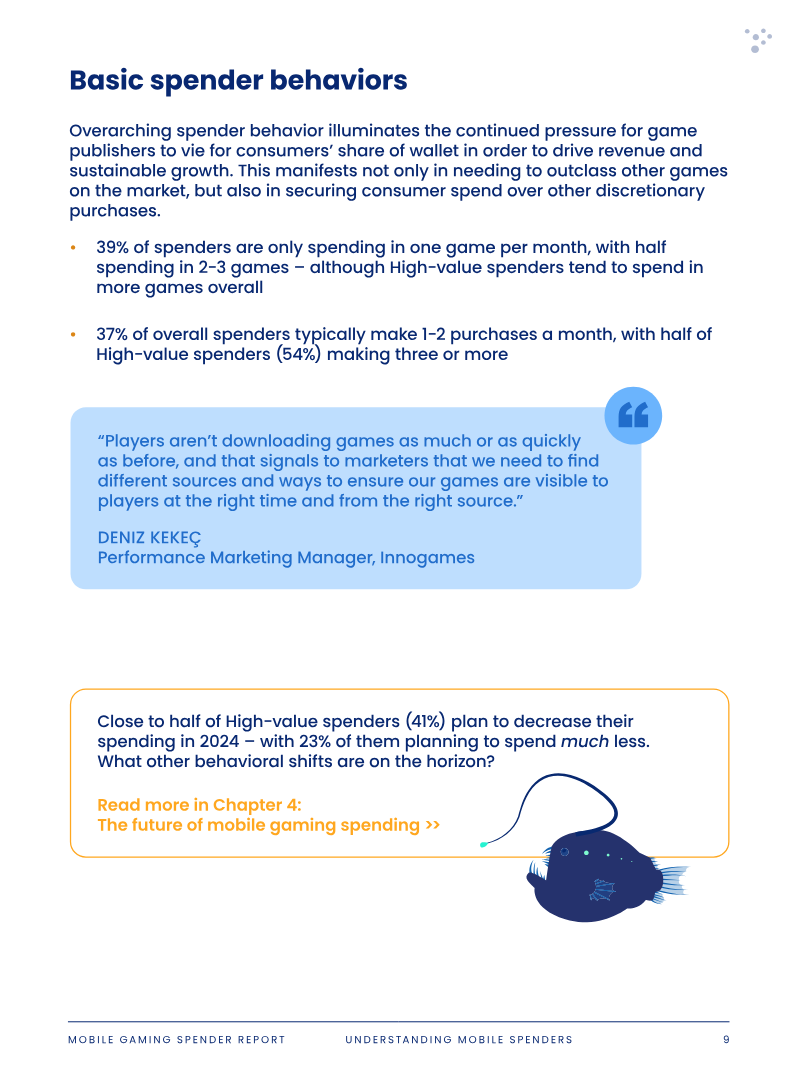

Mistplay · 2024
ReportMobile Gaming Spender Report: Decoding Today’s Mobile IAP Spenders to Understand Motivations, Engagement
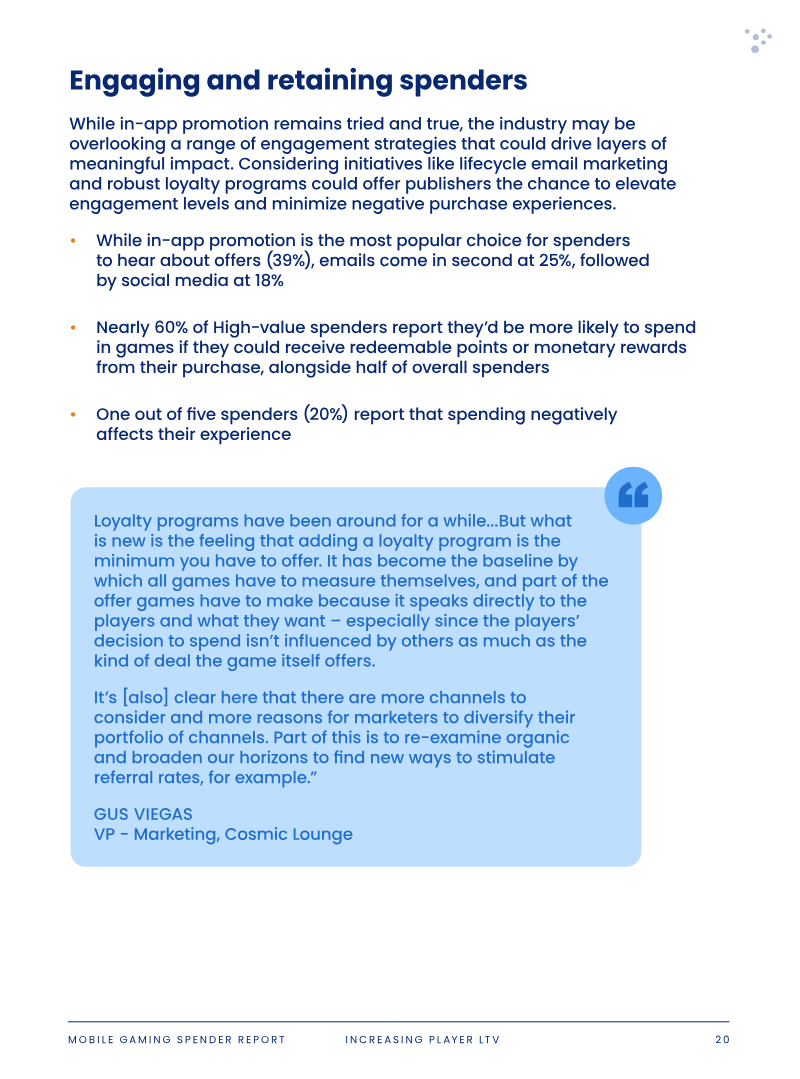
The 2024 Mobile Gaming Spender Report by Mistplay examines the evolving motivations, behaviors, and shifting financial priorities of mobile in-app purchase (IAP) spenders. The analysis is based on a survey of approximately 2,000 active spenders in the United States and Canada conducted between December 2023 and January 2024, supplemented by behavioral data from millions of users on the Mistplay platform from Q2 2023 through Q1 2024. The report segments players into high-value ($100+), mid-value ($10–$99), and low-value (<$10) cohorts to provide granular insights into the current market maturity. A primary thesis of the research is that mobile spenders are becoming increasingly discerning due to economic headwinds. Findings indicate that 32% of all spenders—and 41% of high-value spenders—plan to reduce their in-game expenditures in 2024. To combat this, the data suggests a shift toward hyper-personalization and loyalty-driven retention. Approximately 40% of spenders are influenced by personalized offers, and 79% engage with loyalty programs. Furthermore, 51% of respondents indicate they would spend more if they earned tangible rewards or points for their purchases, highlighting a demand for value-driven discretionary spending. The report also identifies distinct genre-based personas: "Casual Candace" (Puzzle/Simulation), "Midcore Mike" (RPG/Strategy), and "Lucky Lucy" (Social Casino). While social factors and referrals are effective for top-of-funnel discovery—with 73% of spenders installing a game via referral in the past year—they rarely drive actual spending, as 69% of respondents claim social influence does not affect their financial decisions. Ultimately, the findings conclude that sustainable growth in 2024 will require publishers to move beyond traditional user acquisition toward sophisticated lifecycle marketing, direct-to-consumer web stores, and transparent ad creative that accurately reflects gameplay.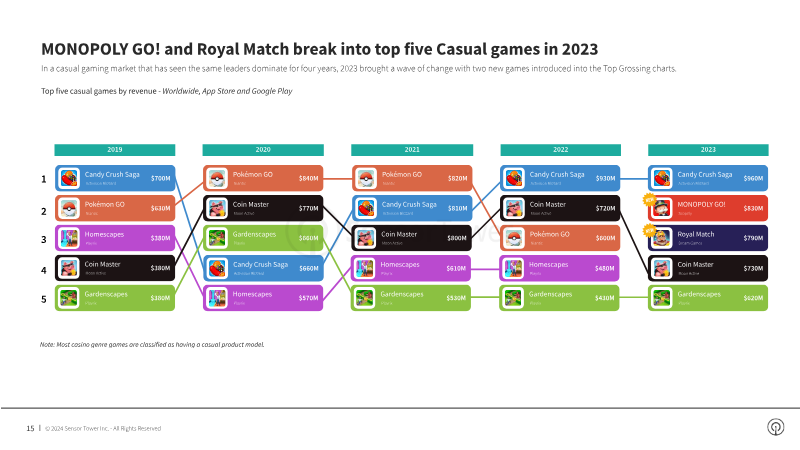

Sensor Tower · 2024
ReportThe State of Gaming 2024
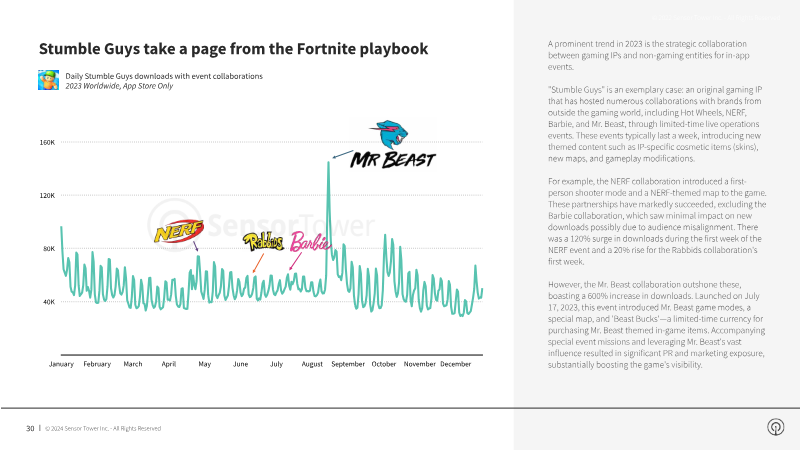
The global mobile gaming market underwent a significant correction in 2023, characterized by a 10% decline in downloads and a 2% dip in overall revenue. This downturn was primarily driven by escalating user acquisition costs and a post-pandemic stabilization of consumer habits. A distinct shift in player preference emerged as mid-core revenue fell by 9%, while casual and hybrid-casual segments grew by 8% and 30%, respectively. Despite these macro challenges, breakout successes like Monopoly Go! and Royal Match proved that innovative monetization and robust live operations can still yield massive returns in a tightening market. Marketing strategies have evolved to prioritize high-impact collaborations and mobile advertising, which now commands 67% of global gaming ad spend. The industry is seeing a move toward gender parity in mid-core gaming, while platform-specific engagement has become more specialized, with TikTok attracting core gamers and Facebook remaining a stronghold for the female-skewing casual demographic. To mitigate rising costs, developers are increasingly leveraging intellectual property and transmedia expansions to drive organic discovery and long-term player retention. Geographically, the industry focus is shifting toward emerging markets such as Latin America and the Middle East, where lower costs per install in countries like Brazil and Saudi Arabia offer new avenues for growth. While external subscription models, such as Netflix Games, experienced a 194% surge in downloads, they currently represent a small and largely unprofitable portion of the total ecosystem. Consequently, the prevailing industry strategy emphasizes the optimization of existing titles through aggressive live operations and brand partnerships rather than relying solely on new user acquisition in saturated Western markets.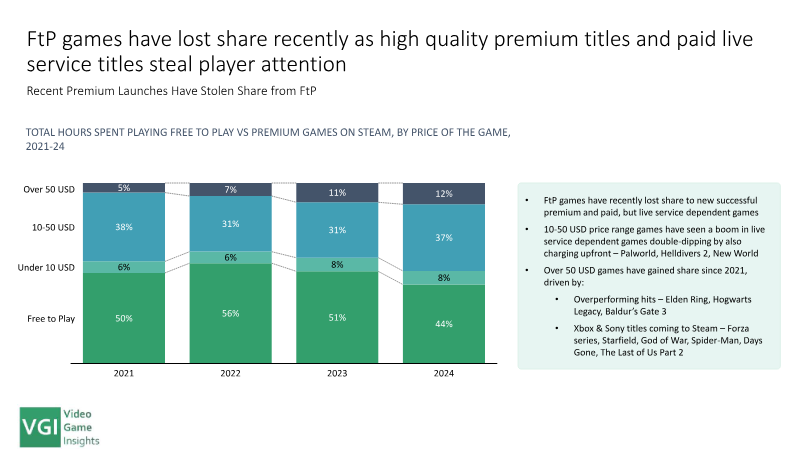
Video Game Insights · 2024
Report