Mobile Games
The mobile market by genre, from hypercasual and puzzle to midcore and idle.
403 documents


data.ai · 2023
ReportState of Mobile 2023
Global mobile usage reached a record in 2023, with users spending an average of more than five hours per day on apps and total advertising expenditure projected at $362 billion, reflecting an 18.5% five-year CAGR. While overall consumer spend dipped slightly in 2022, non-gaming verticals—utilities, productivity tools, and OTT services—experienced robust growth in downloads (11%), spend (9%) and time-spent (14%). Gaming, by contrast, saw a 5% decline in spend despite a surge to nearly 90 billion downloads, with RPGs dominating in-app purchase revenue and hypercasual titles leading download volume. Creative sandbox games such as Roblox and Minecraft drove a 25% rise in global playtime, whereas battle-royale shooters fell by roughly 20%, indicating a shift toward casual, creative experiences and age-segmented targeting. Social platforms continued to shape consumer spending patterns. TikTok surpassed all other non-gaming apps with over $3 billion in 2022, achieving a 17% year-over-year increase in total time spent and leading ARPU at approximately $0.85 per user; its revenue model relies heavily on high-price in-app purchases, while Snapchat’s earnings are largely subscription-based. In the travel sector, airline and transportation apps such as Uber and Moovit dominated downloads across iOS and Google Play, with steady growth in North America and emerging markets like Mexico and Brazil. Sports-focused apps remained fragmented yet profitable, driven by live-score trackers and fan engagement platforms that generate high-frequency usage. Geographically, the top ten markets—China, India, the United States, Brazil, Indonesia and others—contributed the majority of downloads and spend, with pockets such as Mexico, Hong Kong and Brazil exhibiting 15–34% year-over-year growth. The data underscore a continued dominance of mobile advertising, resilience of non-gaming verticals amid economic headwinds, and the importance of diversified monetization strategies across social and gaming segments.


Tenjin · 2023
ReportFrom Hyper to Hybrid in 2023 (2023)
The report examines the evolving landscape of mobile gaming in 2023, focusing on the decline of pure hyper-casual profitability and the rise of hybrid models that blend ad revenue with in-app purchases. It attributes the downturn to factors such as iOS App Tracking Transparency, post-COVID user behavior shifts, and stricter publisher gatekeeping that now demands “absolute hit” metrics. Consequently, developers increasingly self-publish and diversify monetization strategies, incorporating IAPs and meta gameplay elements. Key findings highlight that India leads in ad impressions and IAP volume, while the United States dominates eCPM earnings across both Android and iOS platforms. Apple Search Ads remains the top iOS ad network, securing three of the highest positions, whereas Applovin dominates Android advertising. In monetization channels, ironSource and Meta networks top the rankings for revenue generation on both operating systems. The data set spans global markets, covering major regions such as North America and Asia, and includes both Android and iOS ecosystems. The methodology relies on Tenjin’s comprehensive data warehouse, aggregating millions of installs and ad impressions to produce rankings and predictive insights. The analysis integrates LTV prediction models, attribution visualization, and advanced metrics to provide actionable guidance for publishers transitioning from hyper-casual to hybrid monetization strategies.


Niko Partners · 2023
ReportFive Key Mobile Game Genres in Asia and MENA
The bulletin delivers a data-driven assessment of the five most influential mobile game genres in Asia and MENA for 2022, combining a 9,000-respondent survey from Niko Partners with AppMagic’s analytics of Apple and Google Play stores. The analysis covers China, India, Indonesia, Japan, Korea, Malaysia, Philippines, Saudi Arabia, Singapore, Thailand, UAE, Vietnam and Egypt, providing a comprehensive view of regional spending patterns, download volumes, and player demographics. RPGs dominate the market, generating 50% more revenue than the other four genres combined and achieving the highest monetization score (7.7) thanks to strong spend in East Asia. Strategy games rank second in revenue and third in downloads, yet exhibit the lowest engagement score (5.2) due to shorter play sessions and lower player longevity. MOBAs deliver the second-highest revenue per download (5.4) and lead in average weekly playtime, but their esports engagement is modest. Puzzle titles enjoy the largest download base (highest engagement score of 6.0) but suffer from low monetization and esports relevance. Battle Royale games, while generating the lowest total revenue, excel in esports metrics (score 9.5) and maintain high engagement levels. The methodology blends survey-derived player profiles with AppMagic’s download, revenue, and esports viewership data across 21 metrics, weighted into four categories—monetization, engagement, esports appeal, and overall genre score. The resulting scores (1–10) rank RPG as the top genre overall, with Battle Royale leading in esports influence and Puzzle offering the broadest download reach. The bulletin concludes that developers targeting these markets should tailor monetization strategies to RPG’s high spend, leverage MOBAs’ loyal user base, and capitalize on Battle Royale’s esports traction.


AppsFlyer · 2023
ReportThe State of Mobile Gaming in India: 2023
India’s mobile-gaming ecosystem is experiencing rapid expansion, with a projected market value of $8.6 billion by 2027 and more than 600 million active users. Growth is fueled by affordable smartphones, low data costs, and a pandemic-accelerated surge in casual, hyper-casual, and real-money titles. Install rates spiked up to 90% during lockdowns, while in-app purchase revenue is expected to reach $284 billion by 2026. To sustain this momentum, brands must deploy comprehensive customer-engagement platforms that provide real-time analytics, segmentation, and personalized push campaigns to enhance retention and monetization. Push notifications and in-app messaging prove critical for user engagement. Data shows a 3.34% click-through rate and up to 91% delivery success for push alerts, while in-app campaigns achieve 15–44% conversion rates and a 38% average on one million impressions. Segmentation techniques such as RFM, affinity profiling, and predictive AI models (e.g., Sherpa) enable targeted, omnichannel flows that reduce churn and lower acquisition costs—new customers cost five times more than retaining existing ones. App Store Optimization tools like AppTweak further amplify visibility; for instance, RummyCircle’s keyword strategy increased visibility by 14.2% and drove a 200,000-download spike after A/B testing. Despite the market’s growth, brands face declining installs, stickiness, and revenue. The solution lies in data-driven engagement: hyper-personalized messaging powered by AI unlocks deeper customer insights, improves retention, and provides a competitive advantage. Platforms such as MoEngage, already trusted by Fortune 500 and internet-first brands worldwide, offer the scalability required for publishers to thrive in India’s dynamic mobile-gaming landscape.


Skillprint · 2023
ReportState of Mobile Games: Cognitive and Psychological Benefits
The report investigates how mobile games influence cognitive and psychological well-being, drawing on a large U.S. sample of 483 participants (252 men, 213 women, 18 non-binary) and a series of 28 individual game studies. Personality was measured with the Big 5 inventory, while gaming habits included frequency, genre preference and primary motivations. The study found that personality traits significantly moderate game effects: extraverts gravitate toward social and action games, while introverts prefer relaxation-oriented titles; openness predicts immersion and inspiration motives. Mood impact was quantified using Cohen’s d effect sizes for pre- to post-play changes. Several games produced moderate to large positive effects on focus (e.g., Sound Sky, d = 0.90), creativity (Colorize, d = 1.17), determination (Nature Video, d = 0.76) and calmness (Color Breathing, d = 0.61). Puzzle-centric titles consistently boosted creativity and curiosity, whereas timed or competitive games enhanced focus and grit. Non-game controls such as a dripping faucet video yielded negative mood shifts, underscoring the relative benefit of game interventions. The findings suggest that mobile games can serve as low-cost, scalable tools for improving mental well-being, particularly when game design incorporates personalization to match diverse personality profiles. Recommendations target developers (to broaden appeal through adjustable difficulty and genre alignment), players (to select games aligned with desired emotional outcomes), and health professionals (to consider mobile gaming as adjunct therapy for mood disorders or attention deficits). The report calls for future research incorporating real-time behavioral metrics to refine these insights.

Indie Games Poland Foundation · 2023
ReportDeveloper's Guide to the Chinese Market
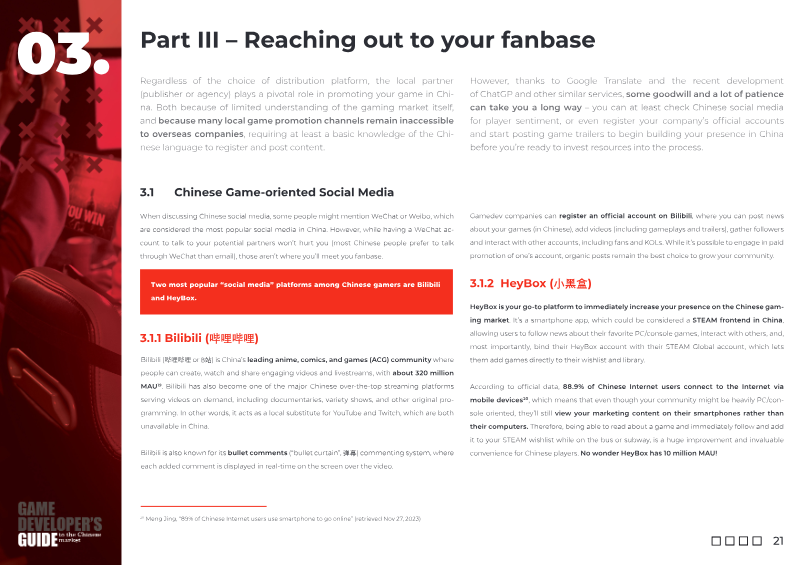
The Chinese gaming market represents a massive, recovering ecosystem that reached a record 668 million players by mid-2023. While mobile gaming accounts for two-thirds of total revenue, the PC and console segments remain vital, supported by an estimated 55 million users on Steam. Despite this scale, the market presents a high barrier to entry characterized by rigorous regulatory oversight, intense domestic competition, and distinct cultural preferences. Success in this region hinges on a sophisticated understanding of local infrastructure, including the mandatory ISBN licensing process for domestic distribution and the necessity of adapting technical frameworks to function without blocked global services. Navigating this landscape requires more than simple translation; it demands comprehensive localization of aesthetics, humor, and social-oriented multiplayer features. Because regulatory compliance is strict—requiring the removal of prohibited themes and foreign text—collaboration with experienced local publishers is essential. These partners provide the institutional knowledge required to manage complex government approvals and navigate the unique social media environment. Developers are encouraged to move beyond Western-centric marketing strategies, instead prioritizing engagement on platforms like Bilibili and HeyBox and utilizing native-speaking coordinators to manage relationships with local media and key opinion leaders. While high-profile industry events such as ChinaJoy and WePlay Expo offer significant exposure, developers must balance the high costs of participation against the potential for direct partnership outreach. The market rewards a patient, strategic approach that prioritizes long-term relationship building over immediate gains. By integrating into the local gaming culture, adhering to regional content sensitivities, and leveraging specialized expertise, foreign developers can effectively capture a share of one of the world’s most significant gaming populations.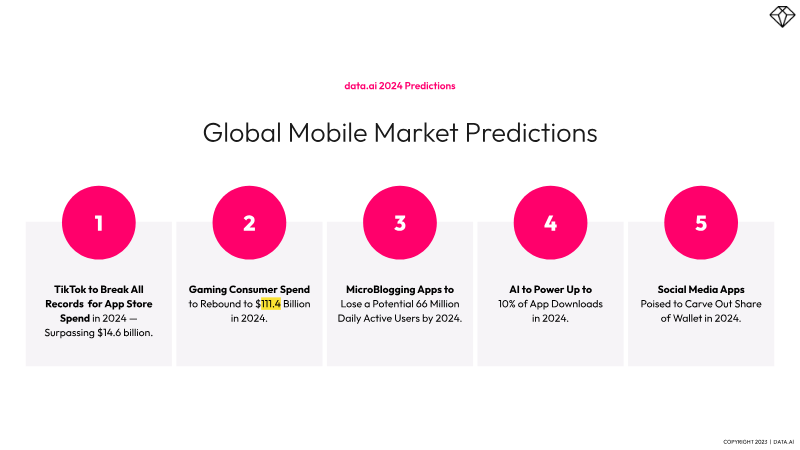

data.ai · 2023
Report5 Mobile App Predictions for 2024
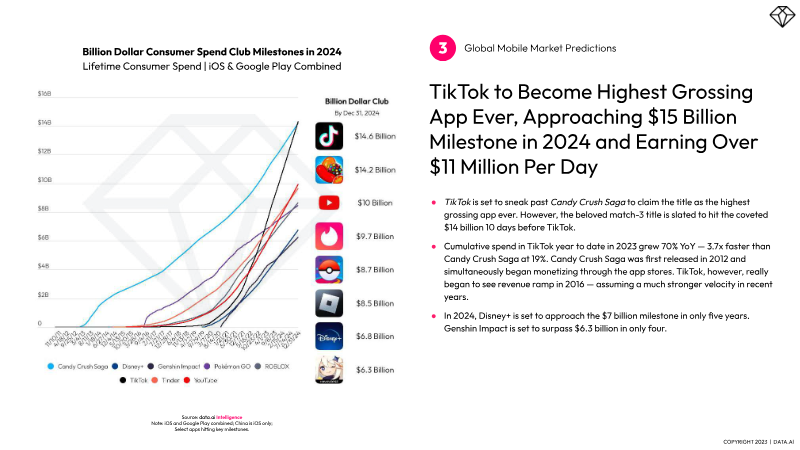
The mobile app market is poised for a transformative year in 2024, characterized by the integration of artificial intelligence, a shift in social media monetization, and a rebound in gaming expenditures. This analysis, based on proprietary market estimates and historical data, identifies five critical trends that will define the industry landscape. The findings suggest that while macroeconomic headwinds have previously constrained growth, strategic pivots toward direct consumer monetization and AI-driven functionality are creating new avenues for revenue. A primary driver of 2024 growth is the proliferation of generative AI, with 2.3 billion downloads expected to feature AI-integrated functionality. This represents a 40% year-over-year increase, fueled by the rapid adoption of chatbots and photo-editing tools. Simultaneously, the mobile gaming sector is projected to recover from recent declines, with consumer spending expected to reach $111.4 billion—a 4% year-over-year increase. The United States, Japan, and South Korea are identified as the primary engines for this recovery, with RPG and match-based genres leading the growth. The social media landscape is undergoing a structural shift as microblogging platforms face declining daily active users in favor of video-first platforms. TikTok is positioned to become the highest-grossing app in history, projected to surpass $14.6 billion in lifetime consumer spend. This success is driving a broader industry trend where social networks are moving away from pure ad-based models toward in-app purchases and creator-tipping features. Media-sharing networks are expected to see a 152% increase in consumer spend, reaching $1.3 billion as platforms increasingly shift costs from advertisers to end-users. These trends collectively indicate a move toward more diversified, direct-to-consumer revenue streams across the global mobile ecosystem.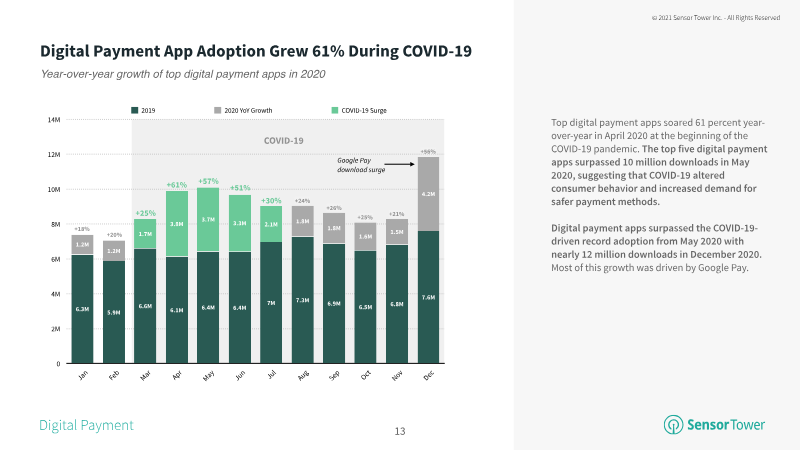
Sensor Tower · 2023
ReportThe State of Payment Apps: An Analysis of Payment App Market Trends and Top Apps in the U.S.
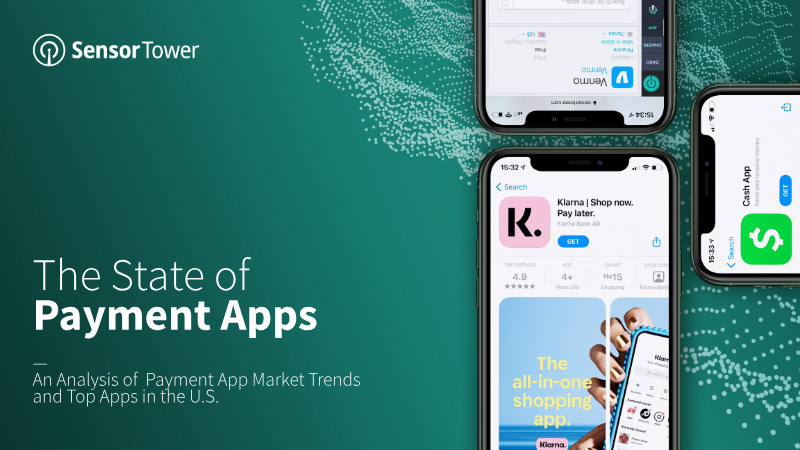
The United States payment application market underwent a period of unprecedented expansion between 2020 and early 2021, catalyzed by the COVID-19 pandemic and the distribution of federal stimulus payments. Total downloads reached a record 35 million in the second quarter of 2020 as consumers transitioned toward digital-first financial tools and safer, contactless payment methods. While established platforms like Cash App maintained overall market leadership, the landscape became increasingly competitive due to aggressive promotional strategies and significant app relaunches. Google Pay, for instance, achieved a 347% year-over-year surge in early 2021 by leveraging referral incentives and expanded feature sets including cryptocurrency integration and cashback rewards. The "Buy Now, Pay Later" (BNPL) segment emerged as a primary driver of industry growth, particularly during the 2020 holiday season. Services such as Klarna and Afterpay saw exceptional adoption rates, with Klarna surpassing one million monthly installs by optimizing its App Store presence and pivoting toward influencer-led video advertising and gaming-related messaging. This growth was further bolstered by deep integrations with major retail applications, positioning BNPL as a mainstream alternative to traditional credit. Simultaneously, money transfer services like Western Union and Remitly experienced a peak in adoption in April 2020, growing 85% over the previous year as users sought reliable digital channels for domestic and international remittances. As the market continues to diversify, leading payment applications are evolving into comprehensive financial ecosystems. The integration of advanced financial management tools and cryptocurrency support reflects a broader shift in consumer expectations. To maintain dominance, top-tier apps are increasingly relying on strategic keyword bidding and multi-channel marketing to capture a user base that now prioritizes versatility and digital integration in their financial transactions. This evolution signifies a permanent shift in the American financial landscape toward decentralized and flexible payment solutions.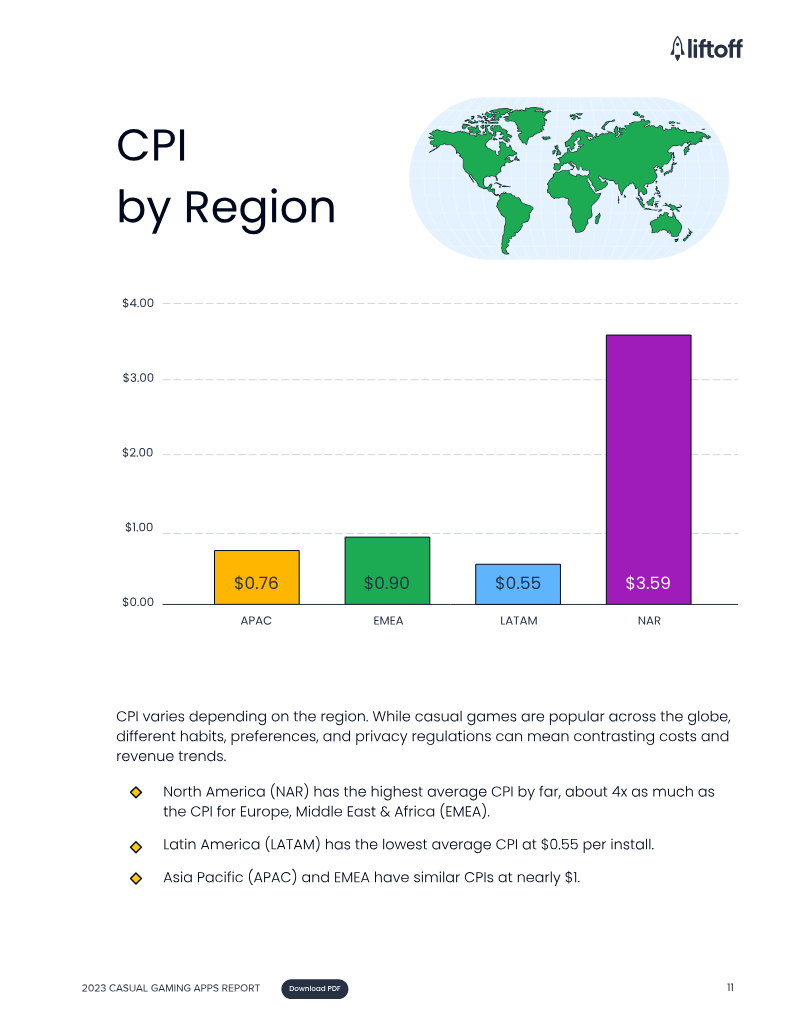
Liftoff · 2023
Report2023 Casual Gaming Apps Report
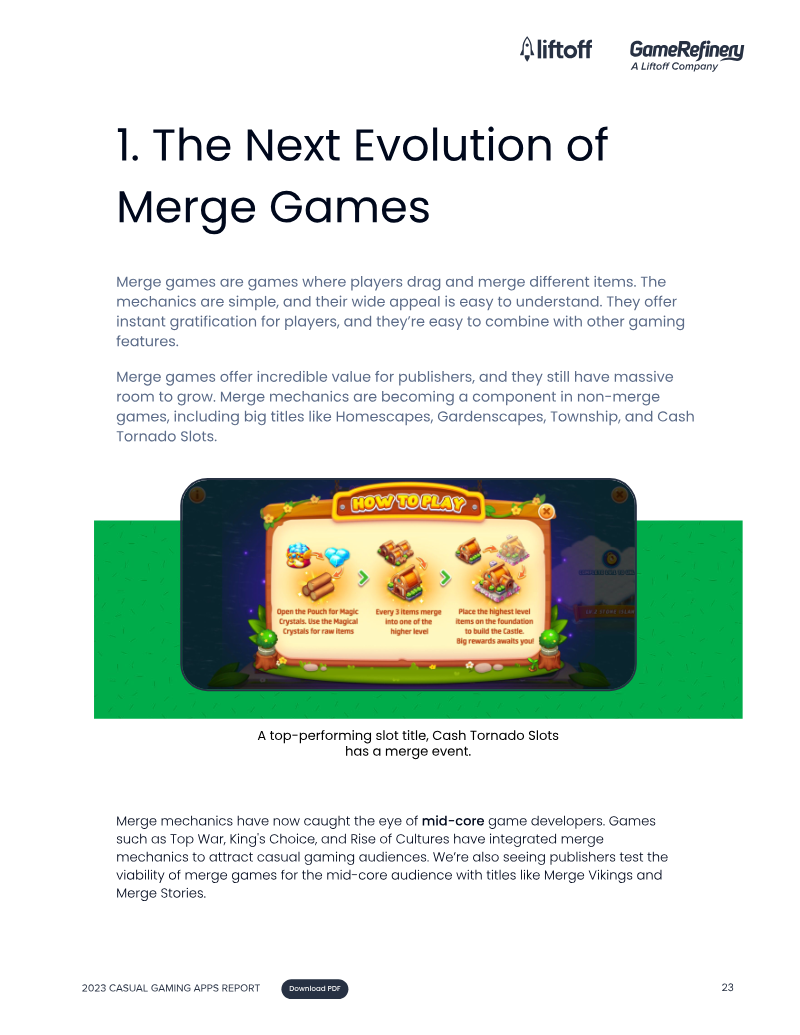
The casual gaming landscape in 2023 is defined by a strategic pivot from rapid user acquisition toward long-term profitability and sophisticated engagement models. While iOS acquisition costs significantly exceed those of Android at $2.23 compared to $0.63, both platforms achieve a comparable Day-7 return on ad spend of approximately 7.7%. North America remains the most expensive yet lucrative market, yielding an 8.1% return on ad spend despite a high $3.59 cost per install. Simulation games have emerged as a particularly efficient entry point for developers, maintaining the lowest acquisition costs at $0.59. Casual titles serve as the primary engine for the broader mobile ecosystem, driving 74% of installs across all gaming categories and nearly 75% of mid-core installs. Hyper-casual and puzzle games remain the dominant traffic sources, but the industry is increasingly embracing hybridization. This trend involves layering complex meta-elements, such as narrative progression and competitive social features, over simple core mechanics. By blending ad-based and in-app purchase monetization models, developers are successfully targeting crossover audiences and extending the lifecycle of traditionally short-lived genres. Engagement strategies now heavily rely on competitive mechanics and gameplay diversification. Approximately 90% of leading level-based titles utilize solo leaderboards, while over half incorporate team-based races, debunking the myth that casual players avoid competitive environments. Furthermore, nearly a quarter of top-grossing casual games integrate minigames, such as hidden object or board game mechanics, to refresh the user experience and lower acquisition barriers. These features collectively deepen player retention and monetization, signaling a shift toward more robust, feature-rich casual experiences that prioritize player depth over simple volume.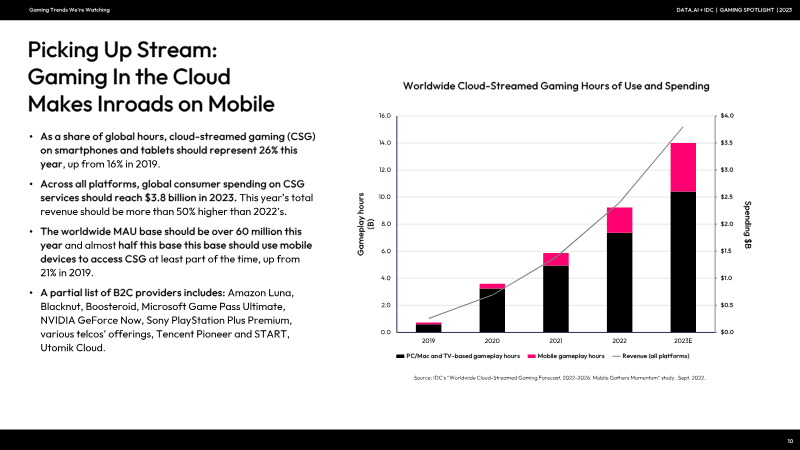

data.ai · 2023
ReportGaming Spotlight 2023 Review
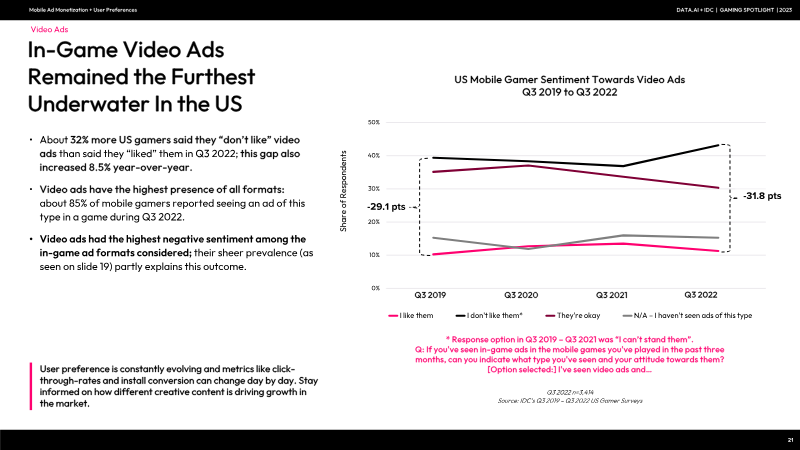
The global gaming market in 2023 was defined by a complex interplay between mobile contraction and steady growth in the PC and console sectors. While mobile remains the industry’s largest segment, consumer spending fell 2% to $108 billion, a decline attributed to macroeconomic instability and privacy-related shifts such as Apple’s App Tracking Transparency framework. Conversely, the PC and home console markets expanded by 4% and 3% respectively, bolstered by the rising popularity of subscription services. Handheld gaming also experienced a demographic fragmentation, with the Nintendo Switch Lite attracting a younger, female-leaning audience while the Steam Deck appealed to older, male gamers. Emerging technologies like cloud-streamed gaming are gaining significant traction, projected to reach $3.8 billion in revenue with mobile devices facilitating over a quarter of global streaming hours. Success in the first half of 2023 was concentrated among high-performing titles that leveraged Gen Z engagement and sophisticated in-app purchase models. Monopoly GO and Honkai: Star Rail emerged as standout performers, generating hundreds of millions in revenue within their first months of release. Established franchises like Royal Match and FIFA Soccer also reached significant lifetime milestones, surpassing $1.7 billion and $1 billion respectively. These successes occurred despite a challenging user acquisition landscape where gamer sentiment toward traditional advertising formats has turned increasingly negative. While rewarded video and playable ads remain the most tolerated formats, overall ad fatigue is rising due to market oversaturation. To navigate this evolving environment, the industry must adapt to shifting privacy standards and the impending implementation of Google’s Privacy Sandbox. Although data suggests that privacy frameworks have not directly damaged iOS ad sentiment, the general decline in ad acceptance necessitates a move toward more diverse formats and contextual market data. Strategic focus is shifting toward combating rising acquisition costs through high-value player engagement and the optimization of cross-platform experiences. As the market stabilizes, the integration of cloud services and the continued dominance of mobile-first economies in emerging regions will likely dictate the next phase of global industry growth.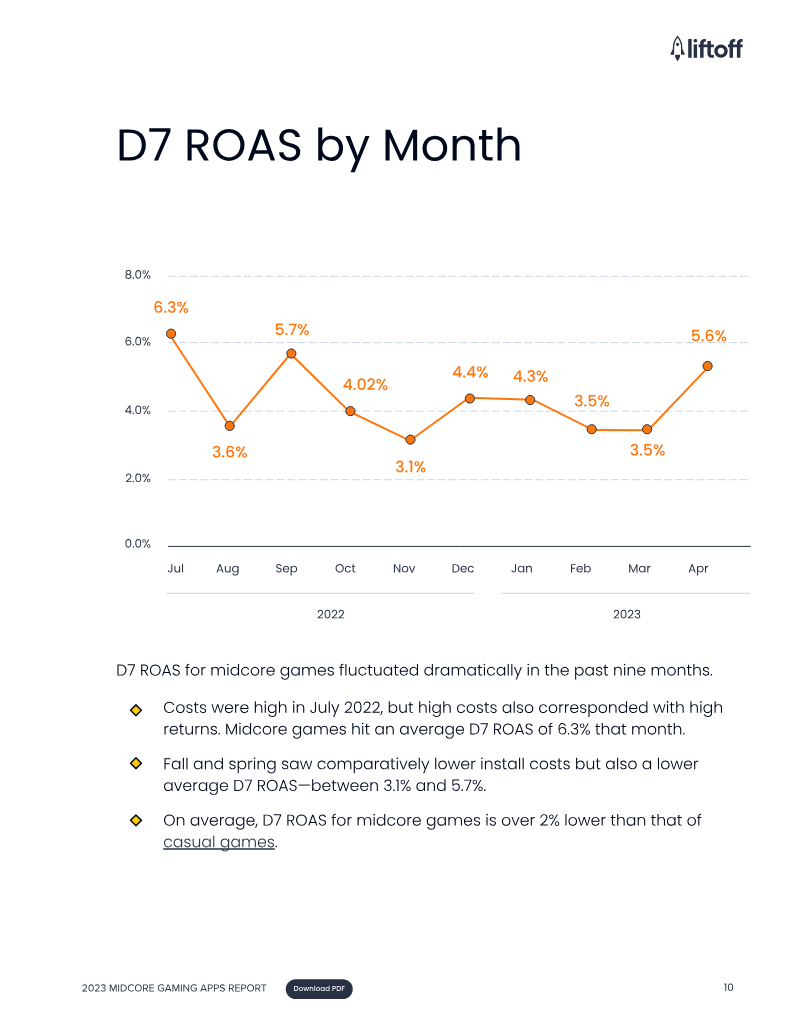
Liftoff · 2023
Report2023 Liftoff Company Midcore Gaming Apps Report
The midcore mobile gaming market in 2023 is defined by a strategic pivot toward deeper gameplay mechanics and diversified monetization streams, now commanding 35% of total iOS gaming revenue in the United States. While North America remains the most lucrative region with a 4.5% Day-7 return on ad spend, significant performance disparities exist between platforms. Android offers a more cost-effective environment for user acquisition compared to iOS, though the shooter genre remains the most expensive and rewarding category, commanding a $7.47 cost per install alongside a leading 6% Day-7 return on ad spend. Market longevity favors midcore titles over casual alternatives, as evidenced by midcore games being twice as likely to maintain a top-200 grossing position over a twelve-month period. The strategy genre, particularly 4X and "Build & Battle" subgenres, continues to dominate revenue charts. To sustain this momentum, developers are increasingly adopting sophisticated engagement models such as extraction shooter mechanics, multi-layered Battle Passes with dedicated storefronts, and seasonal progression resets designed to prevent late-game stagnation. Operational strategies have shifted toward aggressive LiveOps and the circumvention of traditional platform fees. Top-performing titles typically manage fifteen simultaneous unique events and fifteen limited-time gachas to drive consistent monetization. Furthermore, publishers are leveraging legal shifts to direct players toward external web stores, offering better value while avoiding app store commissions. Competitive social structures remain the backbone of retention, with 88% of leading midcore games utilizing permanent PvP seasons and over half incorporating guild-based competitions to foster long-term player commitment.

Sensor Tower · 2023
Report