Mobile Games
The mobile market by genre, from hypercasual and puzzle to midcore and idle.
410 documents
Apptica · 2023
ReportMobile Games: State of the Market & Playtime Benchmarks Q3 2023
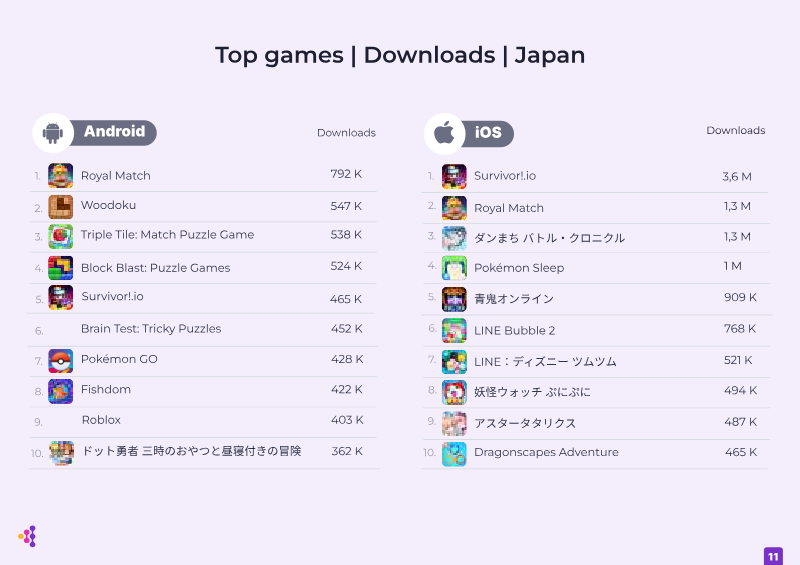
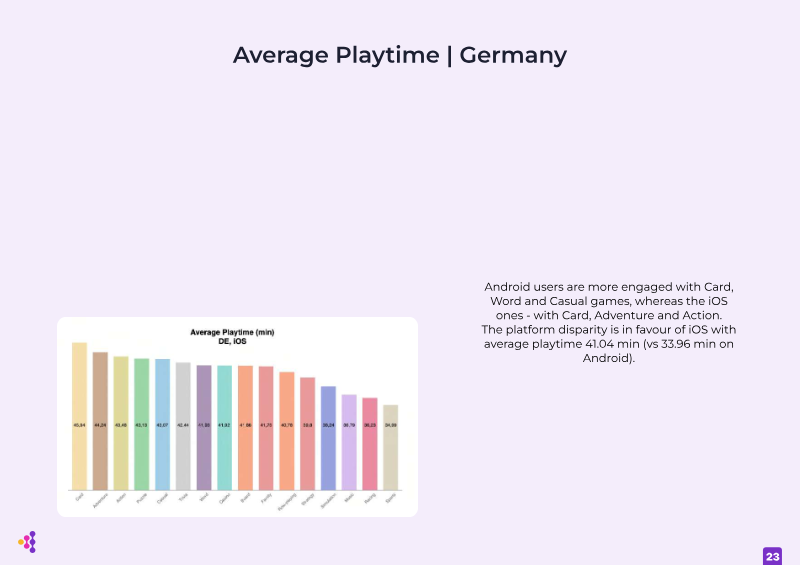
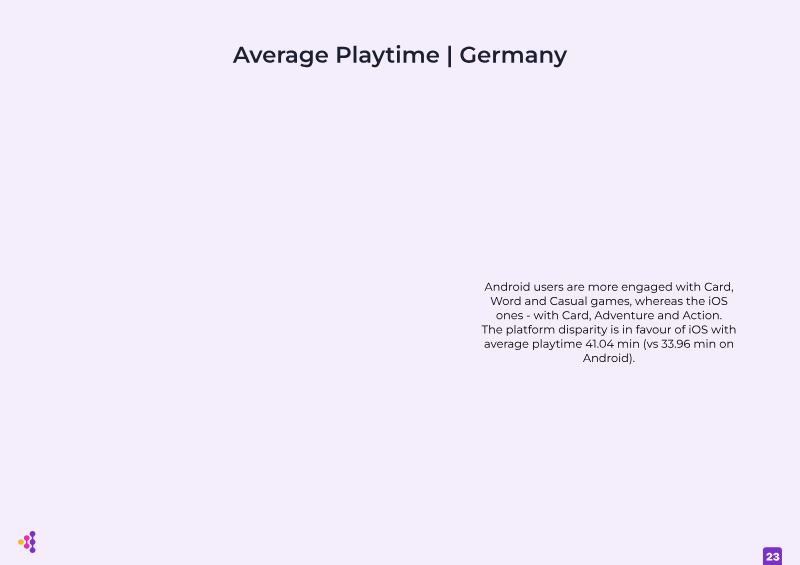
The analysis evaluates the current performance of the mobile-games ecosystem, concentrating on download popularity, revenue generation, and user-engagement metrics across key Western and Asian markets. By comparing platform-specific behavior and regional preferences, it seeks to identify the titles and genres that drive the strongest financial returns and the longest play sessions, thereby informing strategic decisions for developers, publishers, and marketers. Casual-puzzle and social titles dominate download charts in France, Germany, and the United Kingdom, with Monopoly Go!, Roblox and Subway Surfers leading the rankings. Revenue concentration is even more pronounced: Coin Master repeatedly tops earnings tables, delivering €5.3 million on Android in France and €6.7 million on Android in Germany. Across the surveyed territories, iOS users exhibit markedly longer sessions than Android users, with average iOS playtime ranging from 35 minutes in the United States to 51 minutes in Japan, compared with 29–44 minutes on Android. Japan records the longest sessions overall, while France shows the smallest platform gap of roughly 3.6 minutes. The titles that capture the most playtime vary by region but are largely anchored by the same franchises, such as Candy Crush and other established puzzle series. The study covers major European markets (France, Germany, UK), North America (US) and Japan, reflecting data from the most recent full-year cycle. It spans the casual, puzzle, and social segments of the mobile-games industry, highlighting a persistent dominance of a limited set of high-engagement franchises and a clear platform-based divergence in user behavior. These patterns suggest that future monetization strategies should prioritize iOS-centric engagement tactics in markets with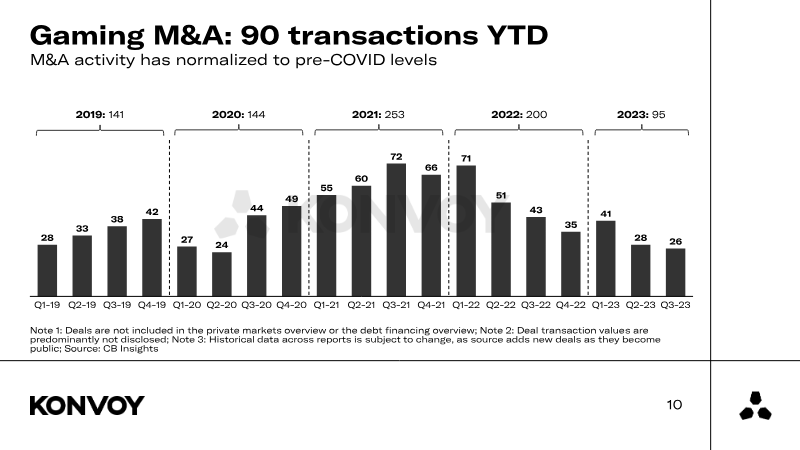
Konvoy · 2023
ReportGaming Industry Report: Q3 2023
The global gaming industry experienced a period of stabilization and strategic realignment during the third quarter of 2023, characterized by a modest recovery in consumer spending and a significant shift in investment patterns. Total market revenue reached approximately $46.5 billion for the quarter, representing a 3.2% year-over-year increase. This growth was primarily driven by the mobile segment, which accounted for 49% of total market share, followed closely by the console and PC sectors. Geographically, the Asia-Pacific region remained the largest market, contributing 46% of global revenue, while North America and Europe showed resilient growth driven by high-profile software releases and improved hardware availability. Investment activity saw a marked transition from high-volume venture capital infusions to more targeted mergers and acquisitions. Total deal value for the quarter reached $12.4 billion, though the number of individual transactions declined by 15% compared to the previous year. This trend indicates a maturing market where established players prioritize the acquisition of proven intellectual property and specialized technology over speculative early-stage investments. Furthermore, the integration of generative artificial intelligence into development workflows emerged as a critical operational focus, with 65% of surveyed studios reporting the implementation of AI tools to streamline asset production and reduce escalating development costs. The labor market within the industry faced ongoing volatility, with several major publishers announcing restructuring efforts to optimize efficiency following the rapid expansion of the previous three years. Despite these headwinds, the player base continued to expand, reaching an estimated 3.38 billion gamers worldwide. Engagement metrics remained strong, particularly in live-service titles and competitive esports, which saw a 12% increase in viewership hours across major streaming platforms. As the industry moves into the final quarter of the year, the focus remains on balancing creative innovation with fiscal discipline to navigate a complex macroeconomic environment.
AppMagic · 2023
ReportCasual Mobile Gaming in H1 2023
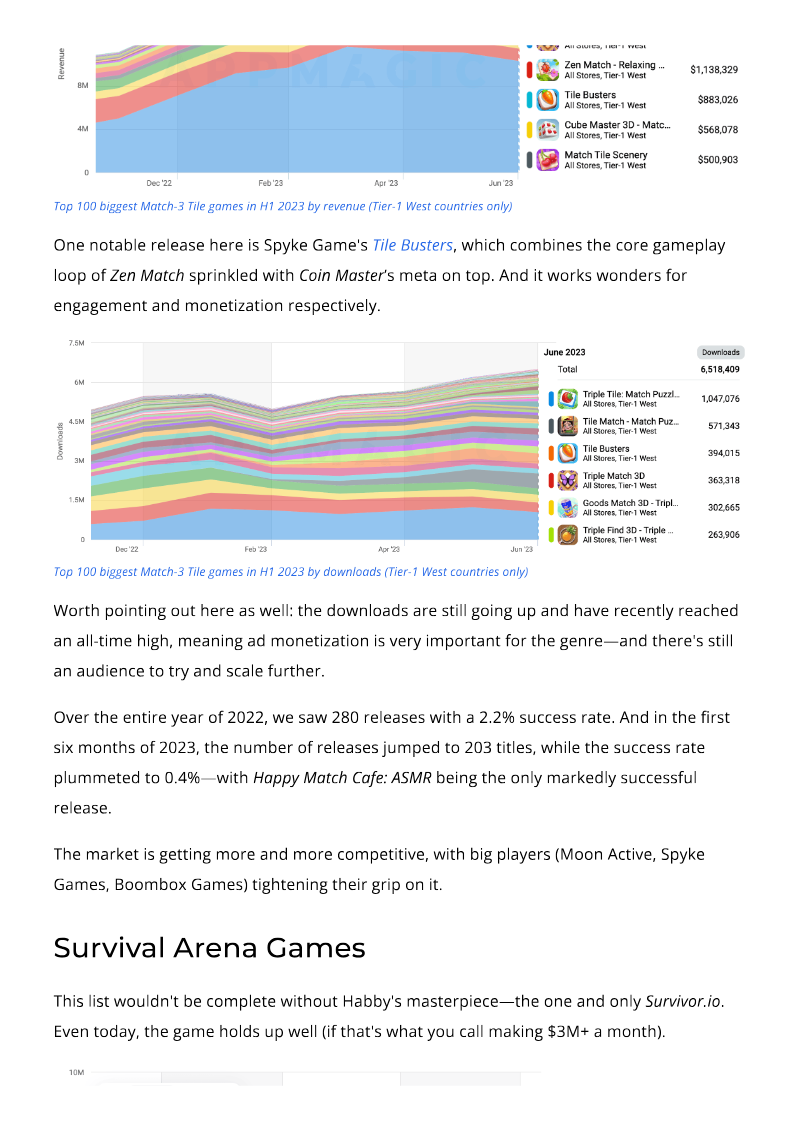
The mobile gaming market in Tier-1 Western countries—comprising Australia, Canada, France, Germany, the UK, and the US—experienced significant shifts during the first half of 2023. The primary objective of this analysis is to evaluate the performance of specific casual gaming subgenres, assessing their growth trajectories and success rates compared to the previous year. The findings indicate a market characterized by increasing saturation and heightened competition, where the sheer volume of new releases has led to a notable decline in success rates across most categories. Key findings reveal that while the Merge-2 subgenre saw a 60% increase in monthly revenue during the first half of 2023, the market has become increasingly difficult for new entrants, with no new titles achieving significant success. Conversely, the Idle RPG sector demonstrated resilience, growing by approximately 20% in monthly revenue, largely driven by successful new releases from South Korean developers. Other segments, such as Idle Tycoon and Survival Arena, faced stagnation or declining success rates as the market struggled to absorb the high volume of new titles. For instance, the success rate for new Survival Arena games plummeted from 3% in 2022 to 0.8% in the first half of 2023. The analysis concludes that success in the current landscape is increasingly dependent on sophisticated LiveOps strategies, personalized monetization, and aggressive user acquisition rather than pure innovation. As the market matures, publishers are advised to pivot toward identifying niche segments with lower competition to improve their probability of success. The data, derived from proprietary market intelligence tools, highlights that while the overall casual gaming sector has slowed, strategic execution remains the primary driver for top-performing titles.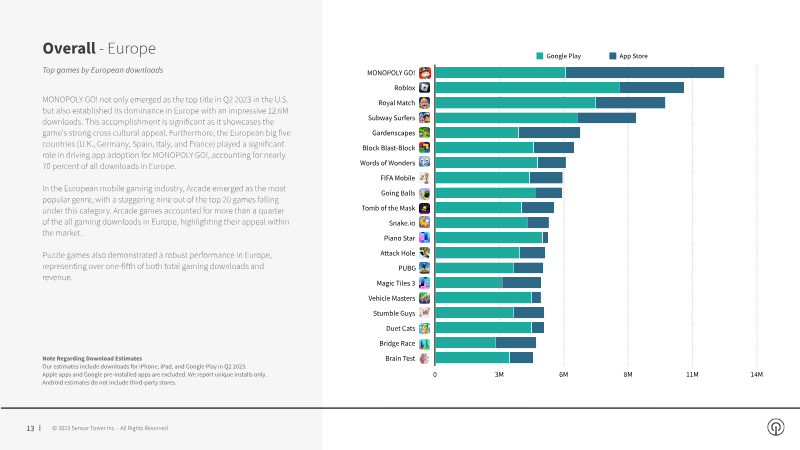


Sensor Tower · 2023
ReportStore Intelligence Data Digest: Q2 2023
Global mobile app performance in the second quarter of 2023 reflects a stabilizing market, with total downloads reaching 34.3 billion despite a marginal 1.5% year-over-year decline. While TikTok maintained its long-standing position as the most downloaded app globally, the quarter was defined by the rapid expansion of the shopping platform Temu, which achieved 74 million downloads and secured a top-ten global ranking. In the gaming sector, established titles like Subway Surfers and Ludo King continued to lead worldwide, though new entries such as MONOPOLY GO! and Honkai: Star Rail demonstrated significant momentum by dominating Western markets and leveraging existing brand equity. Geographic trends highlight a shift in growth centers, as traditional markets like the United States, China, and the United Kingdom experienced download contractions. In contrast, India solidified its status as the world’s largest mobile market, accounting for 24% of global Google Play downloads. Emerging markets also showed resilience, with the App Store seeing double-digit growth in Brazil and Indonesia. While Meta and Google remain the preeminent global publishers, Meta faced regional headwinds in Asia due to regulatory shifts in India that impacted Instagram and Facebook adoption. Sector-specific analysis reveals a transition toward gamification and retention-focused strategies. Education apps, led by Duolingo, successfully utilized streak features to drive high user engagement, whereas the food delivery and streaming sectors faced saturation. Food delivery downloads fell below pre-pandemic levels, and streaming services pivoted toward aggressive monetization and advertising strategies to combat slowing acquisition. Although Netflix maintains a superior 79% retention rate, its low new-user acquisition rate of 3% underscores the broader challenge of maintaining growth in a mature digital landscape.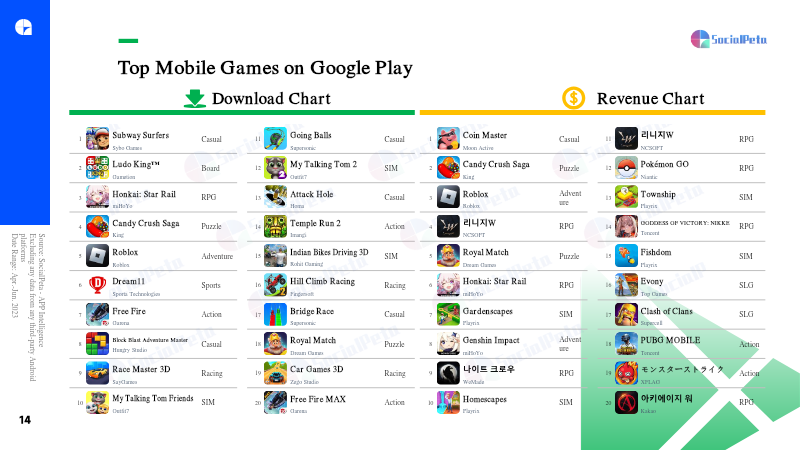

SocialPeta · 2023
ReportInsights into Marketing Trends of Global Mobile Games
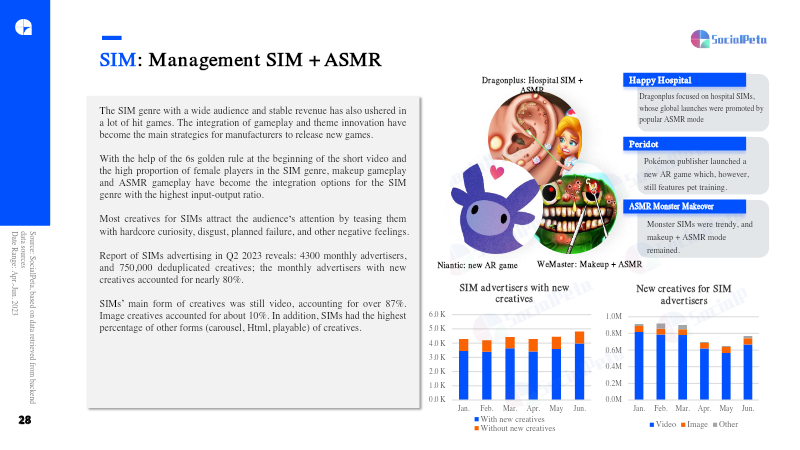
Global mobile game marketing reached a pivotal turning point in the second quarter of 2023, characterized by a record-breaking surge in creative volume. Over 9.3 million new creatives entered the market, representing nearly three-quarters of all active advertisements. While casual games maintained the largest share of advertisers at over 30%, RPG and Casino genres experienced the most aggressive growth in creative output. Geographically, Southeast Asia emerged as a primary hub for advertising density, leading the world in monthly creatives per advertiser, while the Middle East solidified its status as a high-growth market where strategy games command significant revenue shares. The industry is increasingly adopting "Casual + X" hybrid models and integrating AI-generated content, ASMR, and short-video memes to mitigate rising user acquisition costs. Financial data reveals a stark contrast in installation costs between platforms, with iOS casual game installs costing $2.23 compared to $0.63 on Android, yet both platforms achieved a comparable seven-day return on ad spend of approximately 7.7%. This parity suggests that despite higher upfront costs, the quality of users on premium platforms remains consistent with broader market performance. Market leaders like Honkai: Star Rail and MONOPOLY GO! demonstrated the efficacy of high-frequency creative refreshes, with new assets comprising over 60% of their total advertising portfolios. These titles leveraged distinct psychological hooks, ranging from influencer-driven user-generated content to social-casual mechanics, to achieve rapid global penetration. Notably, these aggressive marketing strategies allowed Honkai: Star Rail to surpass Genshin Impact in overseas revenue during the quarter, signaling a shift toward more dynamic, content-heavy advertising cycles across the global mobile landscape.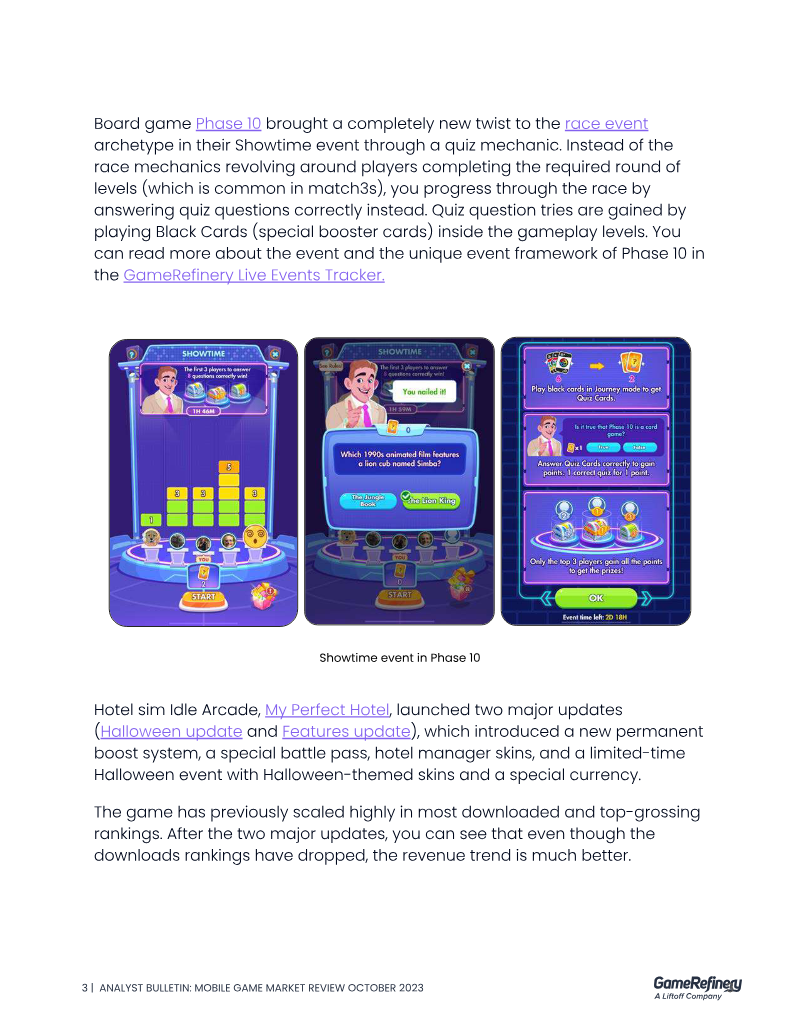
GameRefinery · 2023
ReportMobile Game Market Review October 2023
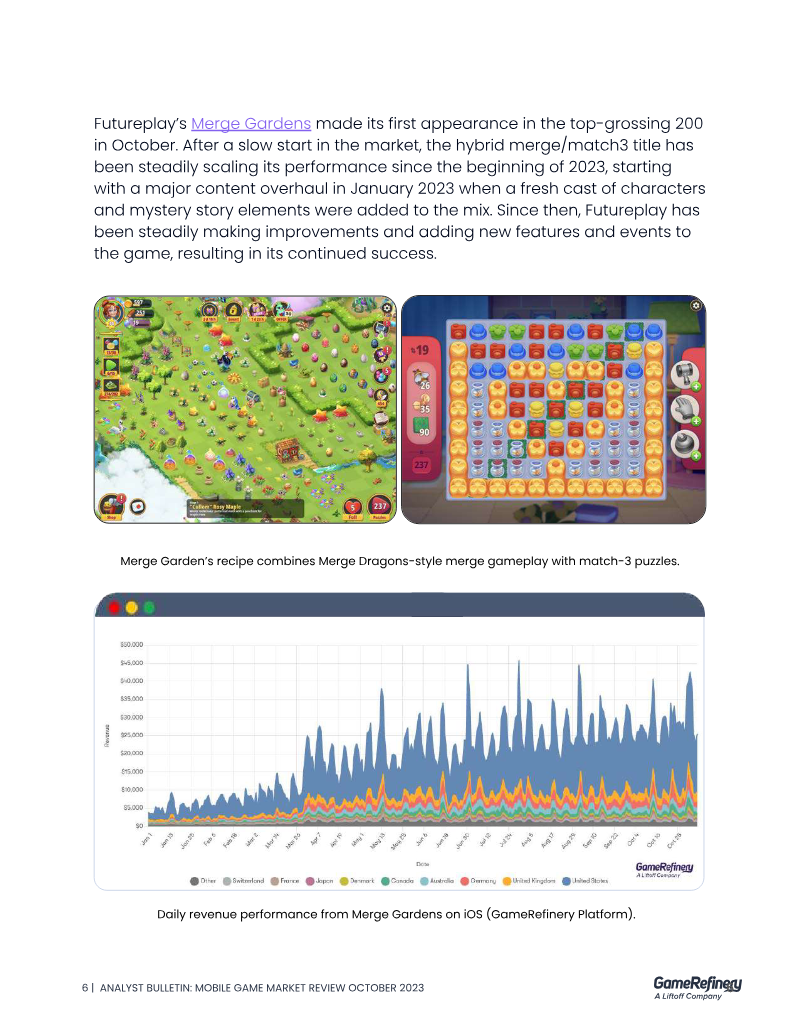
The mobile gaming market in October 2023 was characterized by a heavy reliance on seasonal Halloween content and innovative social features to drive monetization and engagement. Analysis of the period reveals that major titles across the casual and midcore segments utilized limited-time events, crossover collaborations, and experimental gacha mechanics to bolster revenue. Geographically, the review focuses on major global markets, specifically the United States, Japan, and China, highlighting how regional preferences dictate event structures, such as the prevalence of social multi-gachas and location-based business discounts in the Japanese market. In the casual segment, developers increasingly integrated social and competitive mechanics to maintain player interest. Notable examples include Pokémon Go’s introduction of a four-player party system and Eggy Party’s "Pedestrian Street" mode, which emphasizes social hangouts over core gameplay. Data indicates that titles like My Perfect Hotel successfully improved revenue trends by balancing download fluctuations with permanent boost systems and specialized battle passes. Furthermore, the market saw the rise of "challenging" platforming content in the party royale genre, drawing inspiration from viral PC trends to test player perseverance. The midcore sector demonstrated the power of long-term live operations and high-profile collaborations. Monster Strike’s 10th-anniversary celebrations in Japan utilized celebrity partnerships and anime crossovers to maintain its top-tier status. Simultaneously, new entries such as Dungeon Hunter 6 and Reverse: 1999 achieved significant chart positions shortly after launch, with the latter reaching the top 100 in both the US and Japan. The findings suggest a market shift toward hybrid gameplay—such as combining merge mechanics with match-3 puzzles—and the successful localization of high-performing Chinese extraction shooters for Western audiences. Overall, the data underscores that consistent content overhauls and the strategic timing of feature updates remain the primary drivers for scaling performance in a competitive mobile landscape.

AARP · 2023
ReportThe 50-Plus Gamer of Today and Tomorrow
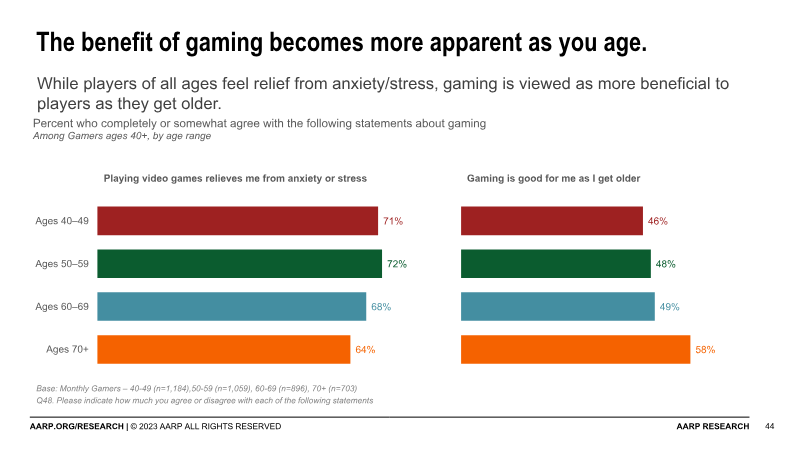
The population of gamers aged 50 and older has expanded to 52.4 million individuals, with average weekly engagement rising over 40% since 2019 to reach 12 hours per week. While mobile remains the dominant platform due to the popularity of puzzle, card, and word games, there is a notable increase in console and PC usage among high-engagement segments. This demographic is segmented into five distinct cohorts, where the most passionate 26% of players—classified as Enthusiasts and Immersives—account for nearly half of all total spending. Although current biannual spending averages $49 per person, the market is poised for significant growth as the 40-49 age bracket, which boasts a 62% participation rate, transitions into this older demographic. Primary motivations for play center on mental acuity and passing time, with 70% of these gamers viewing play as an essential component of healthy aging and cognitive stimulation. Despite this high level of engagement, a significant gap exists between consumer behavior and industry representation. Approximately 70% of older gamers feel the industry treats them as an afterthought, citing a lack of age-inclusive design and a dearth of marketing that reflects their demographic. Furthermore, these players express strong dissatisfaction with aggressive monetization strategies, such as progress-gating ads and microtransactions, which serve as primary barriers to enjoyment. The industry currently faces a critical disconnect where older adults struggle to find titles specifically designed for their needs. While gaming peaks for this group during evening hours, their preferences remain concentrated in logic and tile genres, though higher-engagement segments increasingly seek narrative-driven and social experiences. To capture the full potential of this expanding market, developers must address sensitivities regarding cost and representation while leveraging the deep-seated belief among older players that gaming is a vital tool for maintaining mental health and social connection.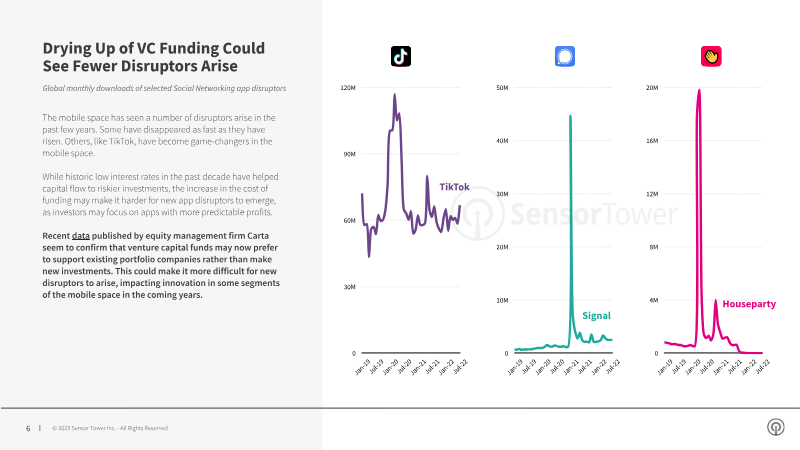

Sensor Tower · 2023
ReportThe Mobile Economy and Digital Ad Space in 2022 and Beyond: An Analysis of the Global Trends Shaping the Mobile and Digital Advertising Industry
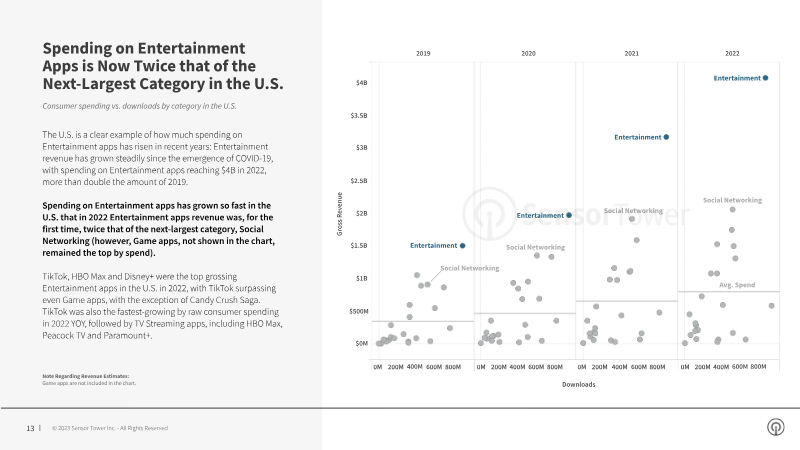
This analysis examines the global mobile economy and digital advertising landscape throughout 2022 and into early 2023, utilizing proprietary market intelligence data from the App Store and Google Play. While global app installs have slowed following the initial pandemic surge, they remain significantly above 2019 levels. Mobile games continue to be the primary driver of downloads globally, exceeding 50 billion installs in 2022, though the utilities category has recently emerged as a significant growth leader, particularly in emerging markets like India. A major shift occurred in 2022 as global consumer spending on mobile games declined for the first time, falling to $79 billion. This downturn was particularly pronounced on Android devices, which saw a 7 percent revenue drop driven by high inflation and the lifting of COVID-19 restrictions. Japan experienced the most significant contraction, with game revenue falling by $3.2 billion. Conversely, the entertainment category has become a primary engine for revenue growth, with spending on apps like TikTok, HBO Max, and Disney+ reaching record highs. In the United States, entertainment spending doubled compared to 2019 levels, while in Japan, a manga reader app became the top-grossing title for the first time, displacing traditional gaming leaders. The digital advertising sector reached $28 billion across North America and major European markets in the fourth quarter of 2022. While established platforms like Facebook maintain the largest market share, TikTok has emerged as the fastest-growing ad channel, recording a 60 percent quarterly increase in U.S. ad spend. Facing headwinds from Apple’s privacy changes and reduced marketing budgets, many developers are pivoting toward subscription models and diversified monetization strategies. Looking forward, the reopening of China and the high smartphone penetration growth in Africa are identified as critical factors for the next phase of global mobile adoption.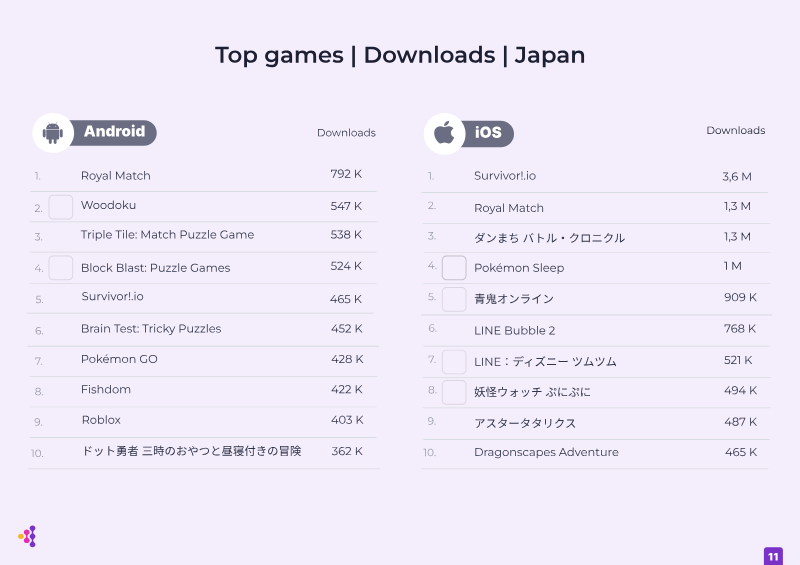
Apptica · 2023
ReportMobile Games: State of the Market & Playtime Q3 2023
The global mobile gaming market faced a contraction in total installs during the third quarter of 2023, reflecting a broader cooling trend in user acquisition. Despite this decline, the industry maintained a robust financial performance, with iOS securing 56 percent of global revenue, totaling $5.91 billion compared to $4.64 billion on Android. The United States remains the primary driver of both download volume and total earnings, though regional disparities persist. Japan and South Korea continue to anchor the market for Role-Playing Games, while Western European markets like France, Germany, and the UK have seen the rapid ascent of titles such as Monopoly Go! as a dominant force in both engagement and monetization. Genre performance remains bifurcated between popularity and profitability. While Casual, Action, and Simulation titles command the highest volume of downloads, Role-Playing Games consistently outperform other categories in global revenue generation. Engagement metrics reveal that card games currently serve as the most time-intensive genre for users. Furthermore, established titles including Candy Crush Saga, Royal Match, and Roblox continue to command significant portions of daily playtime across major territories. User behavior patterns highlight a clear distinction between operating systems and geographic regions. iOS users consistently demonstrate longer average playtimes than their Android counterparts, with Japan leading the world in total engagement sessions. These findings underscore a market environment where, despite a contraction in new installs, high-performing titles successfully leverage deep engagement loops to maintain revenue stability. The data suggests that while the mobile gaming sector is maturing, success is increasingly defined by the ability to retain players within high-engagement genres rather than relying solely on broad-market acquisition.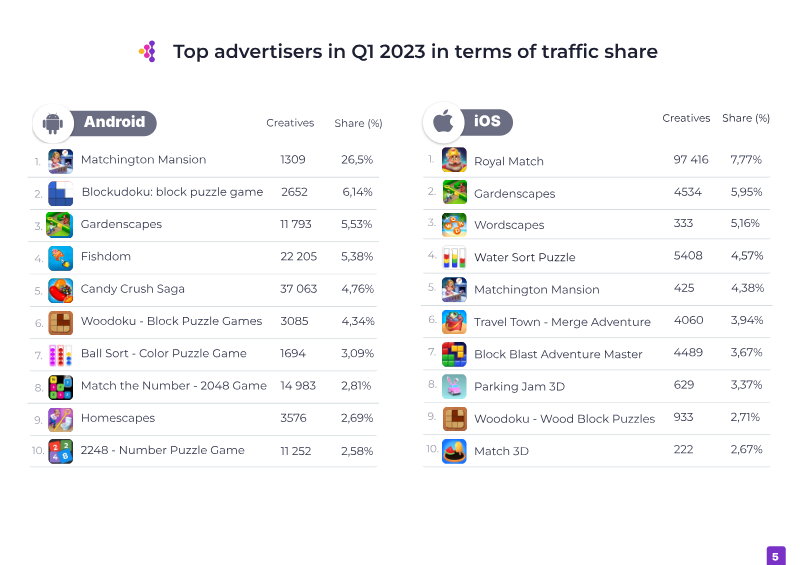
Apptica · 2023
ReportState of the Market: Puzzle Games Q1 2023
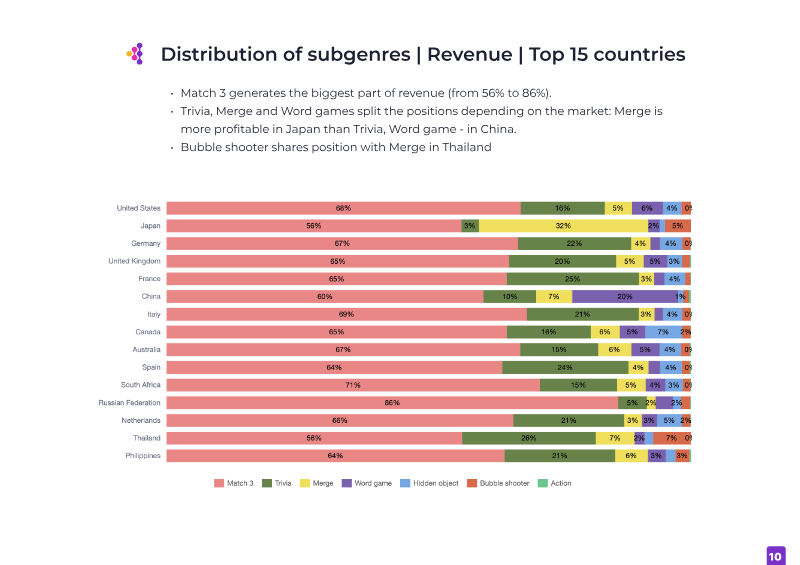
This analysis examines the performance of the mobile puzzle gaming category during the first quarter of 2023, utilizing data from the Apptica platform across 35 countries. The study focuses on the Apple App Store and Google Play, evaluating key metrics including download volume, revenue generation, and advertising activity. The findings highlight a significant platform disparity, where Android accounts for 80% of total puzzle game downloads, yet iOS generates 56% of the category's total revenue. Match 3 games maintain a dominant position within the puzzle sector, representing approximately one-third of all downloads and between 56% and 86% of revenue across the analyzed markets. On a broader industry scale, Match 3 titles account for 6% of all gaming downloads and share the second-highest revenue position at 9%, trailing only MMORPGs. While subgenres like Trivia, Merge, and Word games show regional variance in profitability, Bubble Shooter games demonstrate high download volume but contribute significantly less to total revenue. Advertising remains a critical component of the puzzle category, which accounts for over 50% of ad traffic on iOS and more than 33% on Android. Leading titles such as Candy Crush Saga, Royal Match, and Gardenscapes consistently rank at the top for both downloads and revenue. Geographically, the United States leads in both download and revenue shares, while markets like Japan show a unique preference for Merge-style mechanics. Overall, the data underscores the continued maturity and high monetization potential of the puzzle genre within the global mobile gaming ecosystem.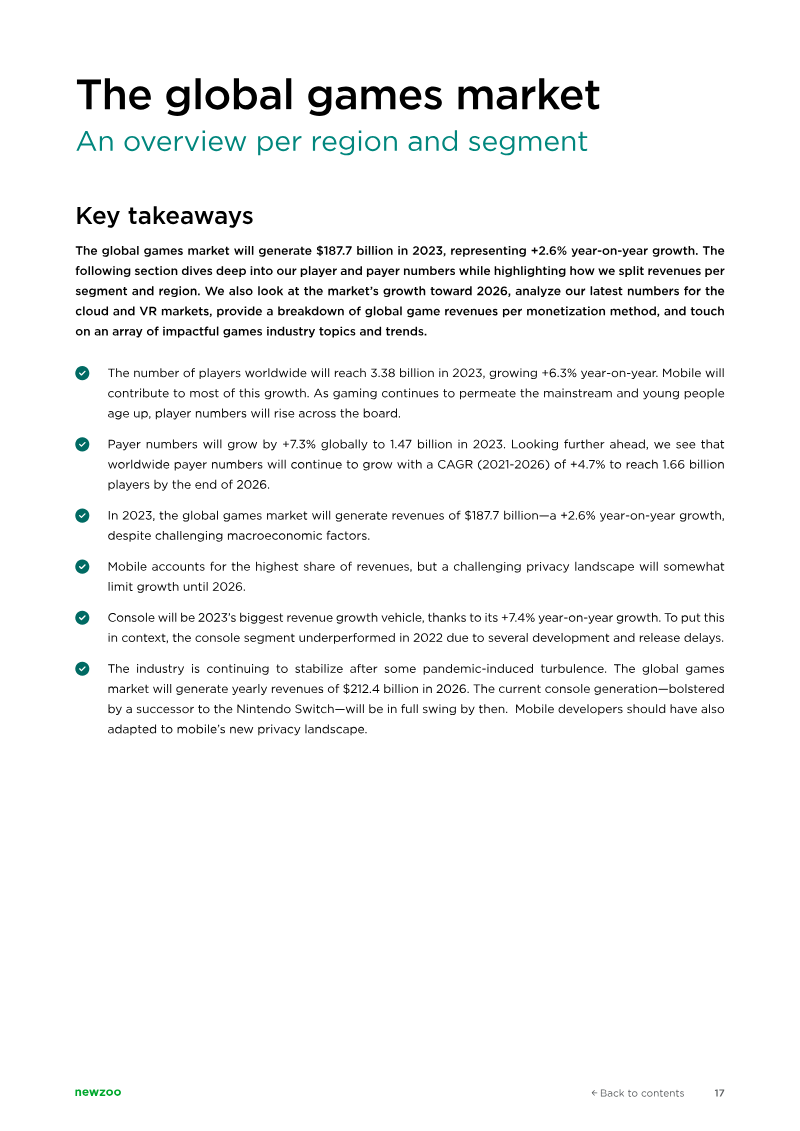
Newzoo · 2023
ReportGlobal Games Market Report: August 2023
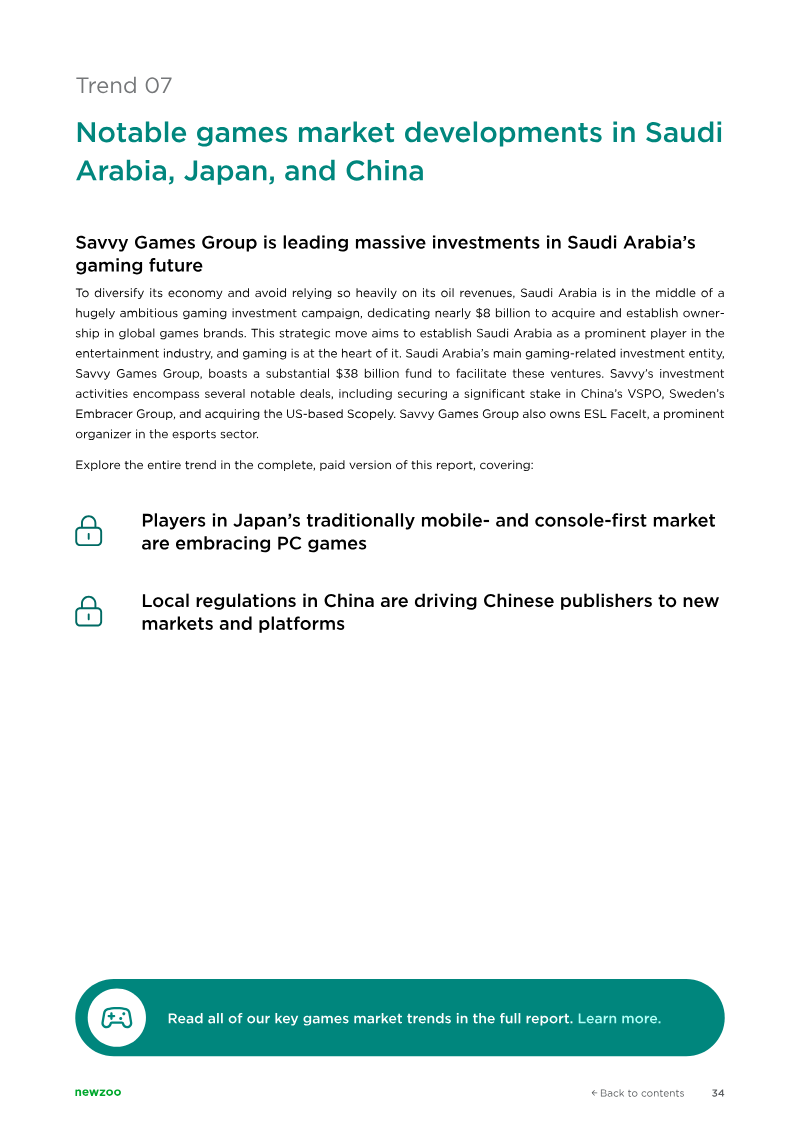
The global games market is entering a period of recovery in 2023, characterized by a projected revenue of $187.7 billion and a total player base of 3.38 billion. This 2.6% year-on-year growth signals a stabilization following the post-pandemic market correction of 2022. While mobile gaming remains the largest revenue segment, console gaming serves as the primary catalyst for this year’s expansion, rebounding significantly from previous development delays. Looking toward 2026, the industry is expected to maintain this upward trajectory, with total revenues forecasted to reach $212.4 billion. Regional performance remains uneven, as strong console demand in Western markets contrasts with slower growth in the Asia-Pacific region, where regulatory challenges in China continue to dampen momentum. To mitigate rising production costs and extended development cycles, studios are increasingly prioritizing live-service monetization models and integrating generative AI into their workflows. While these technologies offer potential for streamlined asset creation and prototyping, their long-term viability is complicated by unresolved legal and ethical concerns regarding copyright and intellectual property. The industry is undergoing a structural shift toward digital-first engagement, evidenced by the continued decline of physical media and the rise of transmedia strategies and influencer-led development. Hardware diversification is also accelerating, with the emergence of complementary handheld devices expanding the reach of traditional platforms. Despite these advancements, specific genres are experiencing shifting player preferences; while adventure and shooter titles remain dominant, the battle royale genre is losing traction. Furthermore, the mobile sector faces persistent headwinds in monetization and user acquisition, largely driven by evolving privacy policies that have impacted the performance of previously lucrative genres like RPGs.
Niko Partners · 2023
Report