Marketing & User Acquisition
Campaigns, ad creatives, app store optimization and the cost of a player.
271 documents

Adjust
ReportMobile App Trends: Vietnam 2026
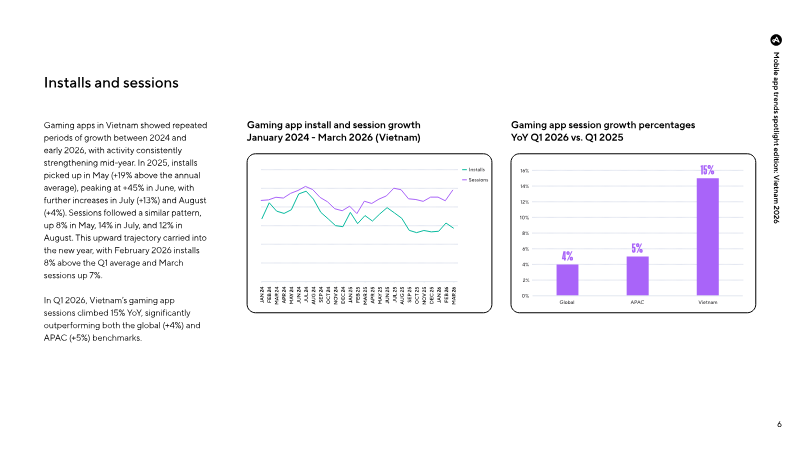
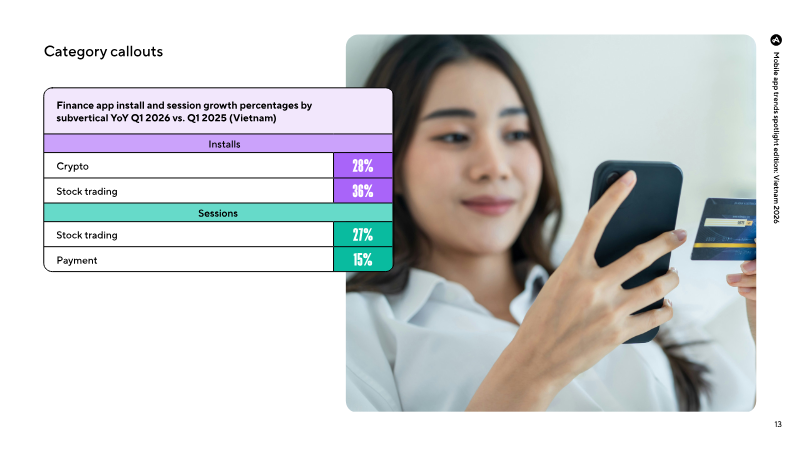
The mobile app market in Vietnam is experiencing significant expansion, driven by a digitally native population, high smartphone penetration of 84%, and near-universal 4G coverage. As of 2025, the country ranked 11th globally for app downloads, totaling 2.88 billion. The primary objective for marketers in this region is to navigate increasingly complex regulatory environments and sophisticated user behaviors to convert high engagement into sustainable revenue. This analysis utilizes aggregated, anonymized data from apps tracked by Adjust between January 2024 and March 2026 to benchmark performance across the gaming, finance, and entertainment sectors. Gaming remains the most dominant vertical, with 1.29 billion downloads in 2025. Vietnamese studios are increasingly pivoting toward hybrid-casual and midcore titles to improve monetization, resulting in a 15% year-over-year increase in session growth during Q1 2026, which significantly outperformed global and APAC benchmarks. Finance apps are also seeing accelerated growth, with mobile payment volumes rising 34.4% in early 2026. This sector is consolidating around dominant super apps, though stricter biometric and identification regulations have raised the barrier to entry. Meanwhile, the entertainment sector is characterized by a surge in short-form drama content, which saw a 271% year-over-year increase in downloads by late 2025. Despite strong growth in installs and session frequency, retention remains a challenge. Gaming retention in Vietnam trails global averages, and finance app session lengths have slightly decreased as users shift toward more efficient, embedded financial services. Success in the Vietnamese market now depends on balancing aggressive user acquisition with high-quality, stable digital experiences that align with local habits. Marketers are encouraged to leverage precise data measurement to navigate a non-linear user journey and comply with evolving local regulations, such as the 2024 Decree 147.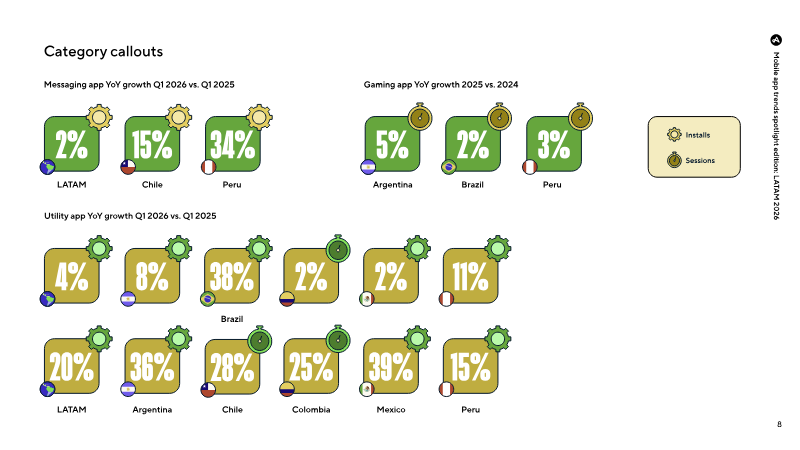

Adjust
ReportMobile App Trends: LATAM
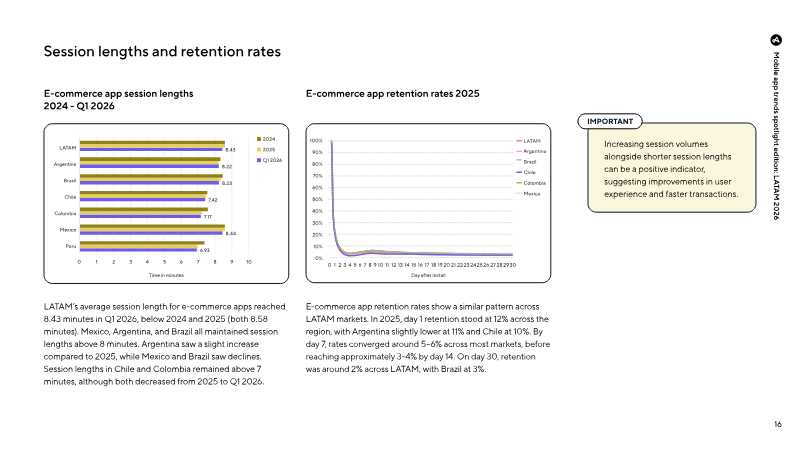
The Latin American mobile app market is experiencing robust growth, driven by a highly mobile-first population and rapid economic digitalization. With smartphone penetration projected to reach 93% by 2030, the region’s app development sector is forecast to reach $56.1 billion by 2034. This growth is particularly pronounced in the finance and e-commerce sectors, where the adoption of super apps, buy-now-pay-later models, and real-time payment systems like Brazil’s Pix have fundamentally altered consumer behavior. Data collected between January 2024 and March 2026 indicates that user engagement remains high, with regional App Tracking Transparency (ATT) opt-in rates reaching 49% in Q1 2026, significantly outpacing the global average of 38%. Brazil leads the region in opt-in rates at 54%. Overall app performance in the region showed consistent year-over-year gains, with Q1 2026 seeing notable spikes in session activity, particularly in Peru and Chile. Finance apps, in particular, saw a 34% year-over-year increase in sessions during Q1 2026, while e-commerce apps benefited from strong seasonal shopping events that drove significant install and session volume. Methodologically, the analysis utilizes aggregated, anonymized data from a subset of 5,000 top-performing apps alongside a broader dataset tracked by Adjust across 45 to 250 countries. While the region shows strong growth, the report emphasizes that success is not uniform across countries. Marketers are encouraged to move beyond last-click attribution models, instead adopting cross-platform, cross-device measurement and deep-linking strategies to navigate non-linear user journeys. By focusing on personalized, data-driven engagement, developers can better optimize retention and maximize lifetime value in this complex, high-growth mobile ecosystem.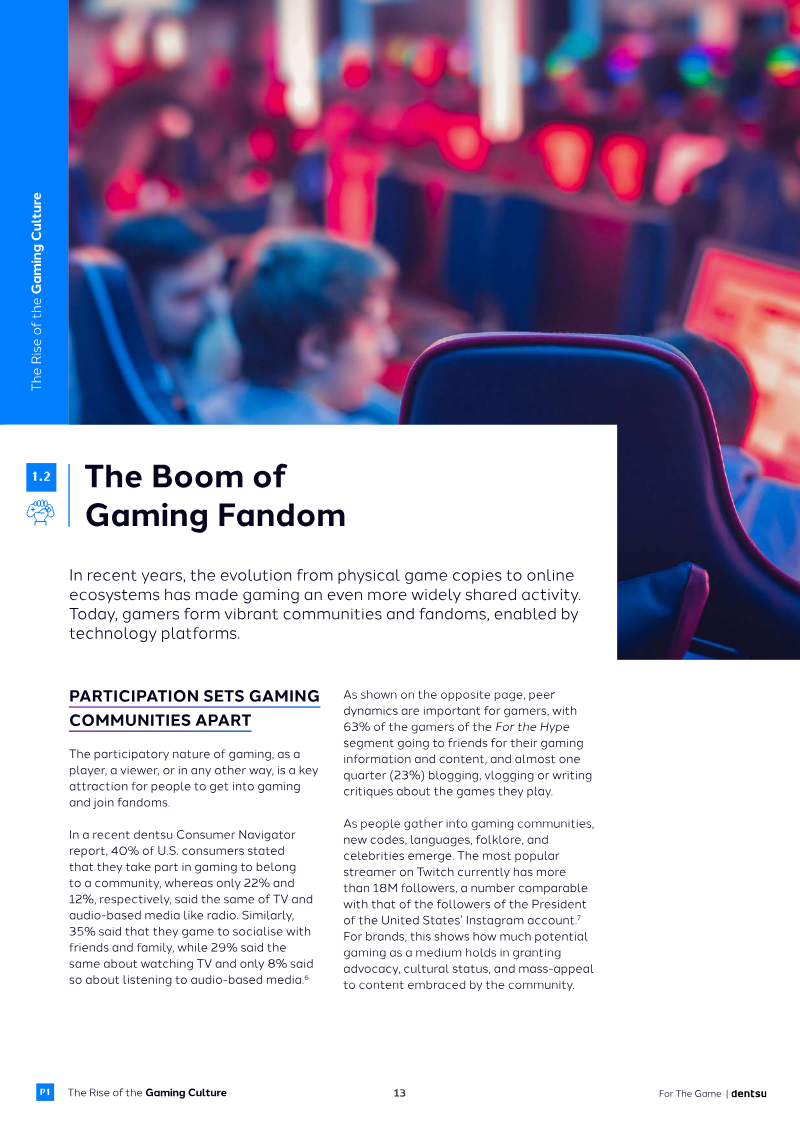

InvestGame
ReportFor the Game: Data Fusion Sheds a New Light on Players
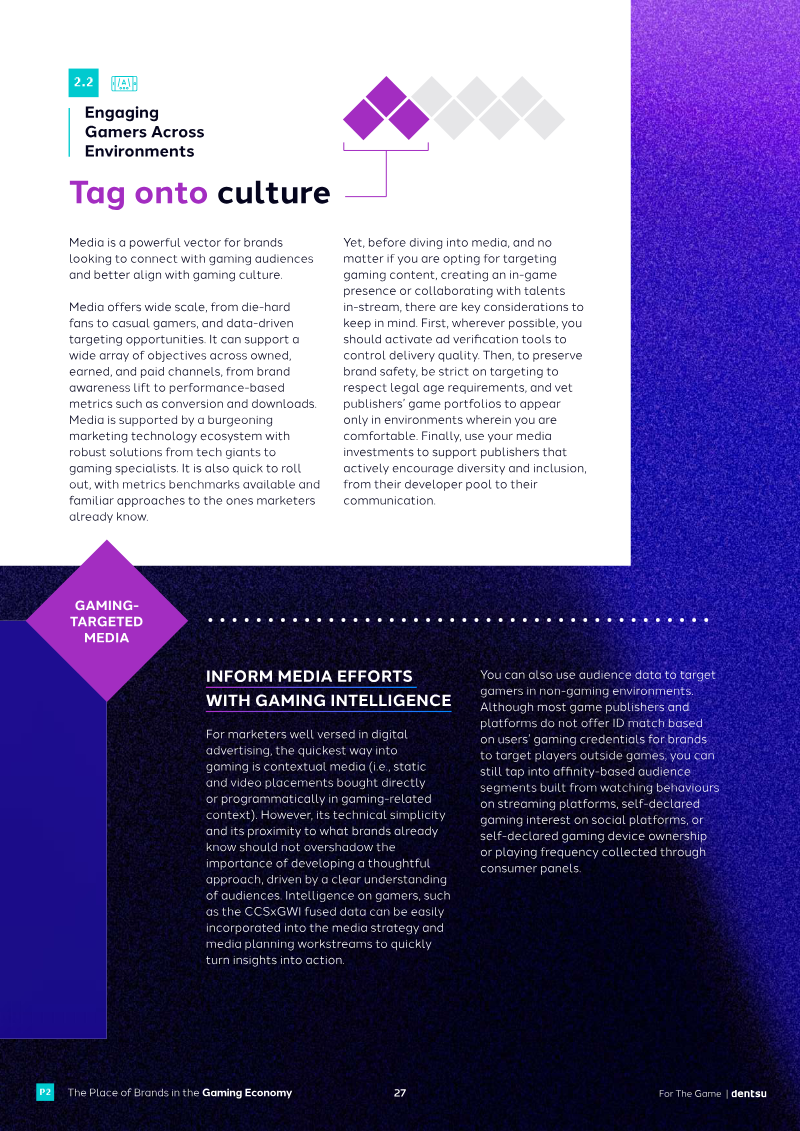
Gaming is projected to reach 3.5 billion players and generate over US$225 billion in revenue by 2025, establishing the medium as a mass‑scale platform with extensive brand opportunities. Dentsu’s data‑fusion approach merges a 420,000‑respondent consumer panel with GWI gaming insights across 21 markets to create high‑fidelity gamer portraits that link lifestyle, media habits and in‑game behaviors. This methodology enables brands to segment audiences by motivation rather than device or genre, a strategy shown to produce the most authentic and attention‑driven brand experiences. Key demographic insights reveal that 57 % of gamers are female, with gaming serving as a tool for identity reinvention and social bonding. Shooters dominate play preferences (63 %), while sports and puzzle/strategy titles attract 16 %. Device usage is nearly evenly split among console, handheld, and a growing smartphone/tablet share. Community engagement is strong: 40 % of U.S. gamers play to belong, and 63 % rely on friends for game information, with platforms such as Discord, Reddit, and Twitch amplifying fandoms. Commercially, 71 % of gamers consume gaming content across multiple devices and 55 % of esports fans welcome sponsorships, underscoring high engagement. Brands that add genuine value—through exclusive rewards, immersive metaverse experiences, or AR scavenger hunts—achieve near‑perfect ad completion rates (96 %) and significant click‑throughs. Successful activations require clear brand rules, diversity inclusion, strategic partnerships with publishers or esports teams, and a focus on authentic integration rather than intrusive advertising. The analysis spans 22 global markets, including Australia, Brazil, Canada, China and the United States, offering a comprehensive framework for brands to identify entry points and growth opportunities within the evolving gaming ecosystem.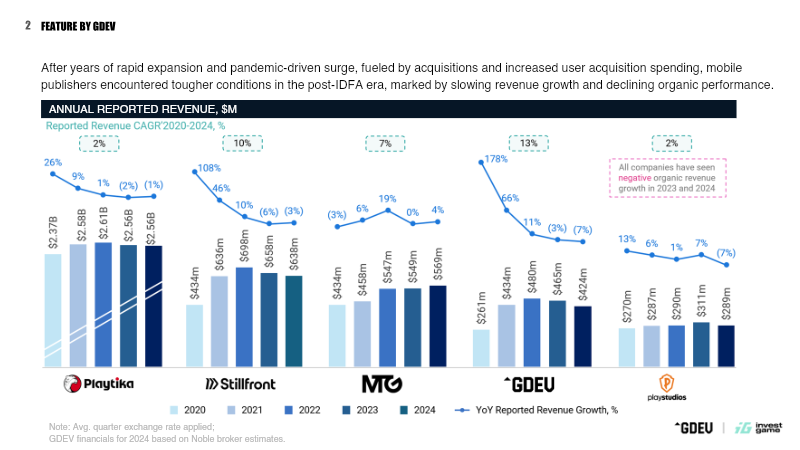

InvestGame
ReportPublic Mobile Gaming Publishers: Resilience & Adaptation in a Shifting Landscape
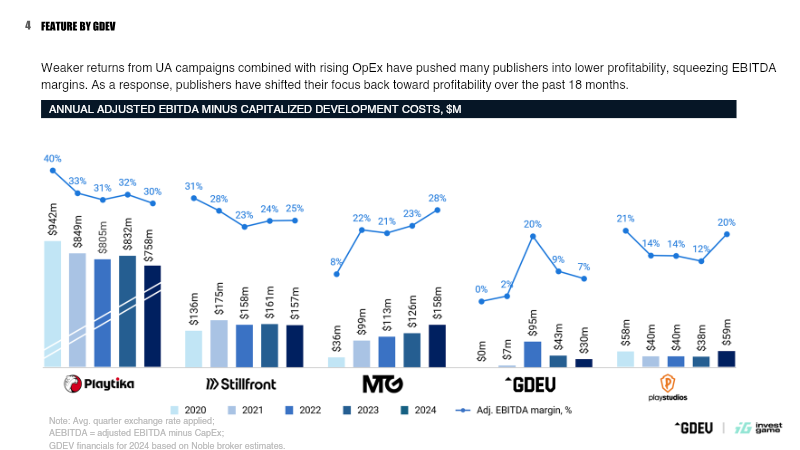
The analysis examines the post‑IDFA mobile gaming landscape, focusing on revenue dynamics, user acquisition spending, profitability trends, and market valuation shifts across key publishers. Data reveal that annual reported revenue growth has slowed markedly, with many companies experiencing negative organic revenue and overall declines in 2023‑24. User acquisition expenses have surged, reaching peaks of $40 million for some firms, yet returns from these campaigns have weakened, driving higher operating expenses and compressing EBITDA margins. Consequently, publishers are pivoting from aggressive scaling toward profitability, reflected in tighter cost controls and a renewed emphasis on player retention and lifetime value. Daily active user metrics illustrate the broader market contraction, with average DAU figures falling across the sector. Valuation impacts are stark: aggregate market capitalisation for major publishers has fallen by more than 50 % since January 2022, and most stocks remain below their pre‑IDFA peaks. An exception is MTG, whose disciplined mergers and acquisitions strategy and operational efficiency yielded 9 % organic growth in Q4 2024, translating into a 50 %+ share price increase and outperforming the S&P 500. The study covers global mobile gaming publishers over a 2022‑2025 timeframe, drawing on quarterly financial statements and market data. Methodology includes analysis of reported revenue, user acquisition spend, EBITDA adjustments for capitalised development costs, and market cap changes. The findings underscore a sector in transition, where resilience hinges on profitability focus, retention strategies, and disciplined capital allocation.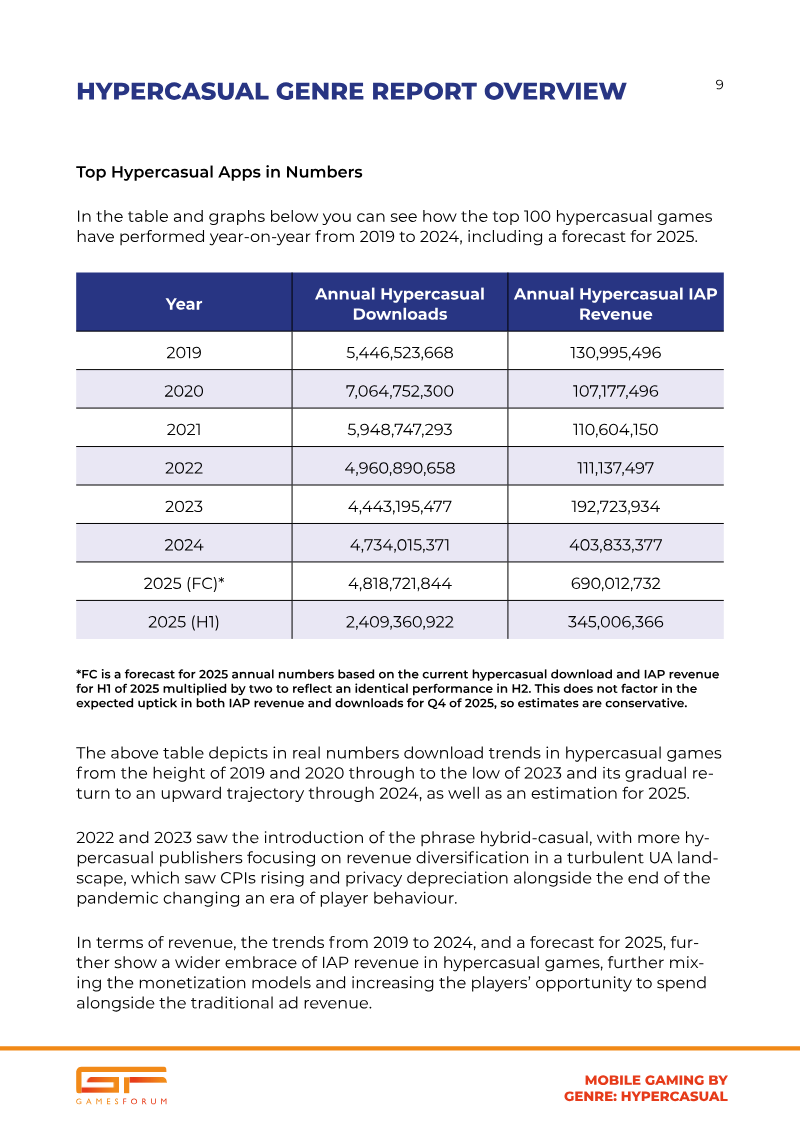


Gamesforum
ReportMobile Gaming by Genre: Hypercasual
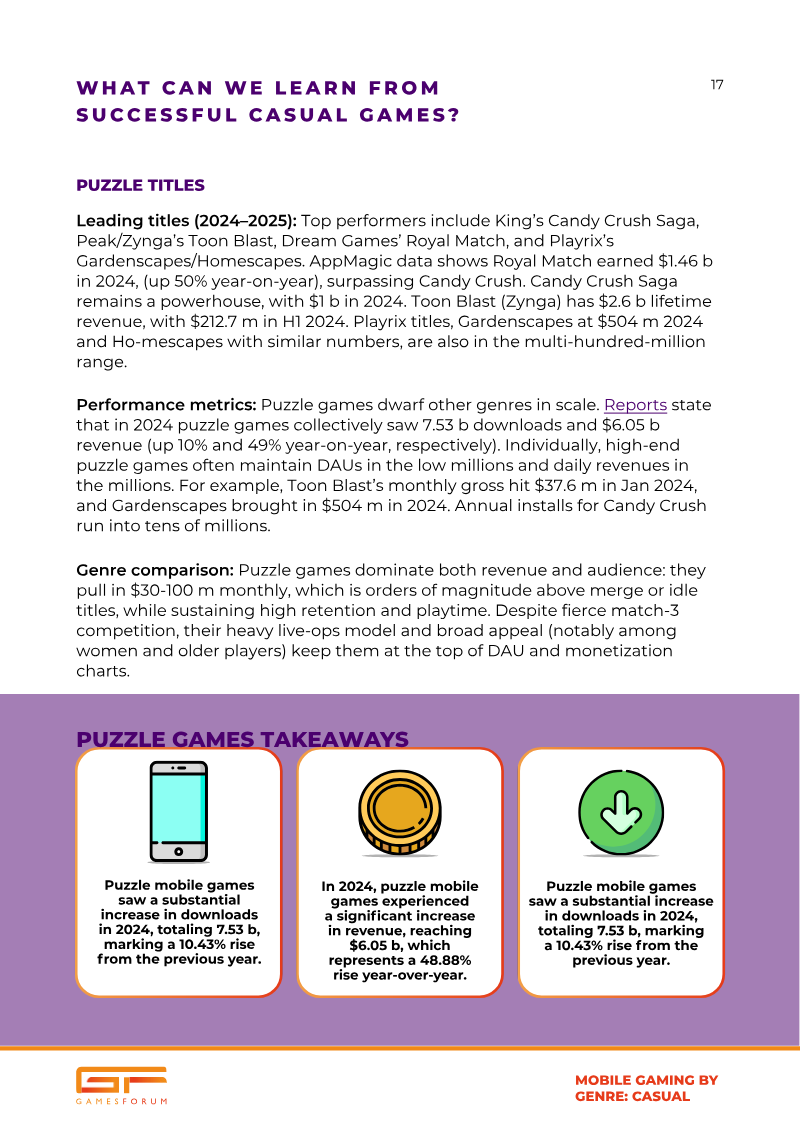
The hypercasual segment continues to dominate mobile gaming revenue, with the top 100 titles achieving 5.48 billion downloads and $345 million in in‑app purchase (IAP) revenue during the first half of 2025—double the figures from 2024 and the highest ever recorded for this genre. Leading publishers such as AZUR GAMES, Supersonic Studios, and Voodoo have secured billions of lifetime downloads and are increasingly adopting hybrid monetization models that blend advertising with growing IAP streams. This shift signals a clear trend toward revenue diversification while maintaining the ultra‑light, rapid‑development ethos that characterizes hypercasual games. Projected revenue for 2025 is expected to reach $690 million across the top 100 titles, a doubling of the H1 figure and an increase from $403 million in 2024. The analysis attributes this surge to the genre’s evolution toward hybrid‑casual, where light meta‑progression and deeper monetization extend player engagement beyond the typical 30–60 second sessions. Key performance indicators remain ultra‑low cost per install (CPI), high Day‑1 retention around 40 %, and creative‑driven user acquisition. Hybrid titles aim to lift Day‑7 retention into the teens, thereby boosting lifetime value (LTV). Case studies of Mob Control, Color Block Jam, and Pizza Ready illustrate successful pivots to hybrid‑casual models. Each title combined strong user experience design, staged monetization (ads plus IAPs), and data‑driven acquisition strategies. Tactics such as adaptive market positioning, psychological ad hooks like the Zeigarnik effect, and seamless ad integration into gameplay produced multi‑million installs, daily revenues exceeding $250 k, and sustained top‑chart performance. These examples underscore that balancing simplicity with depth, timing releases to genre trends, and iterating creatives regionally are critical for scaling hybrid‑casual titles.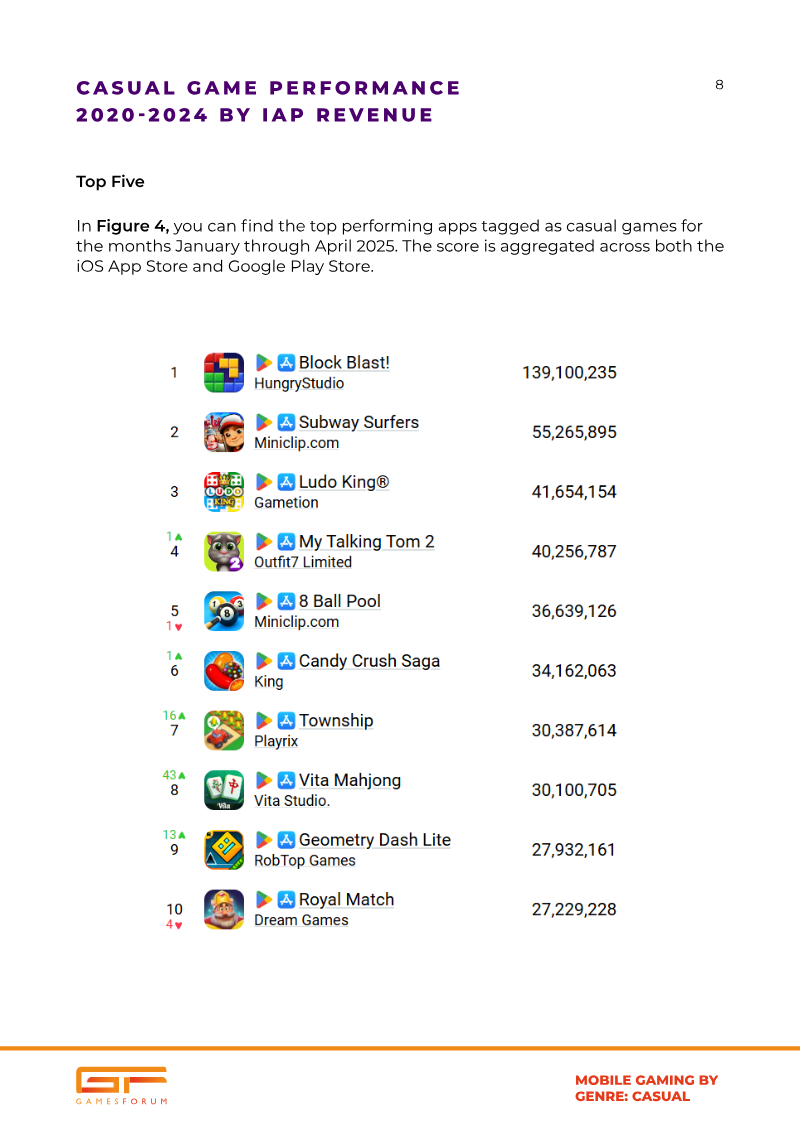

Gamesforum
ReportMobile Gaming: Casual
The analysis demonstrates that casual mobile gaming has entered a phase of mature monetization and strategic diversification. Download volumes peaked at 17.3 billion in 2020, dipped to 15.5 billion by 2024, and are projected to rebound to 16.4 billion in 2025, while in‑app purchase (IAP) revenue has risen from $16.8 billion to an expected $22.9 billion by year‑end 2025, indicating a higher revenue per user. Leading titles now blend advertising, IAPs, and brand partnerships to create multiple income streams, with celebrity‑driven campaigns further amplifying user acquisition and lifetime value. In early 2025, Royal Match topped the earnings list with $540 million in IAP revenue, followed by Monopoly Go! at $431 million and Candy Crush Saga at $421 million. These leaders illustrate divergent monetization models: Royal Match and Monopoly Go! rely exclusively on IAPs, whereas Candy Crush Saga incorporates ads. Playrix’s suite of games—Township, Gardenscapes, Homescapes, and Fishdom—collectively generated $554 million, underscoring the potency of hybrid strategies and the enduring value of established franchises. Celebrity endorsements have proven effective at generating short‑term spikes. Royal Kingdom’s A‑list television campaign produced a 112 % download surge, while Supercell’s WWE‑inspired “Clashamania” yielded $2.15 million in single‑day IAP revenue for Clash of Clans. However, long‑term return on investment hinges on sustained engagement and lifetime value; Scopely’s “Friendship Pays” campaign achieved payback within 120 days, whereas Royal Kingdom’s lift suggests a longer monetization horizon. These findings highlight that high‑profile campaigns must be coupled with robust retention loops and rigorous LTV measurement to justify multi‑million dollar spend. Overall, the casual mobile gaming sector is characterized by a shift toward higher monetization per download, diversified revenue models that combine ads and IAPs, and a strategic use of celebrity partnerships to accelerate growth. Success increasingly depends on balancing short‑term acquisition tactics with long‑term retention and monetization strategies across global markets, primarily in North America, Europe, and Asia-Pacific.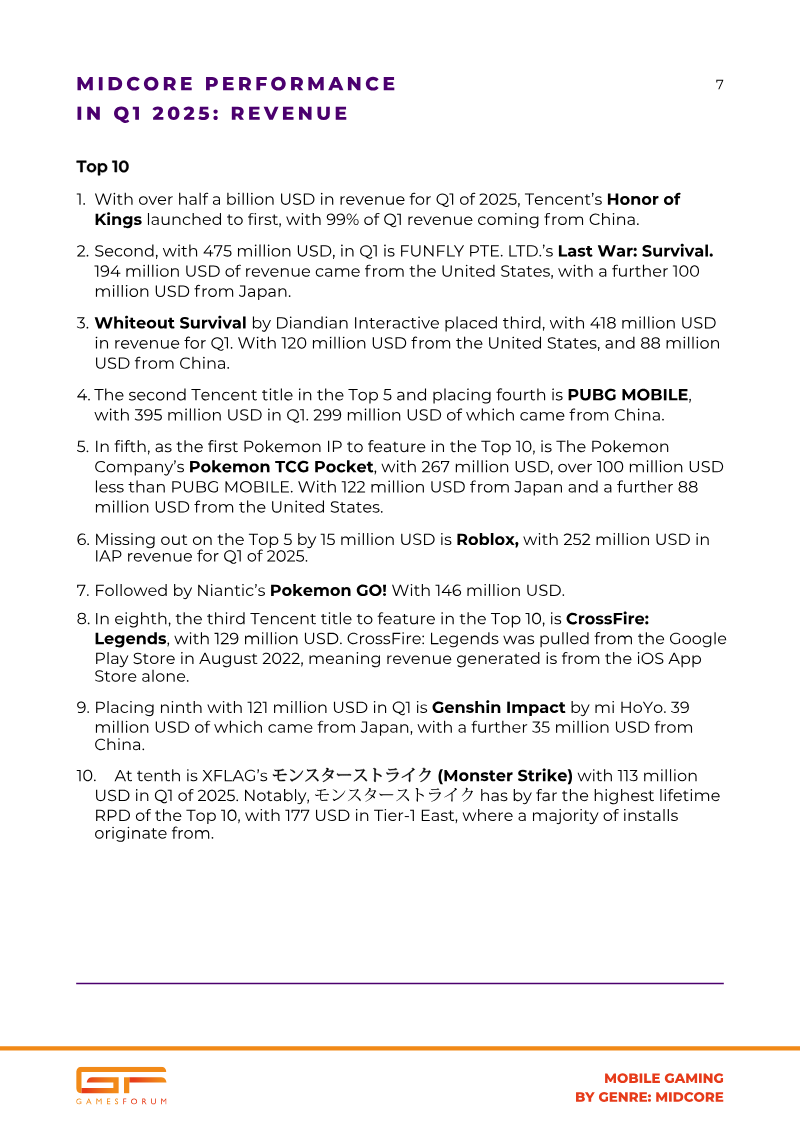

InvestGame
ReportMobile Gaming by Genre: Midcore
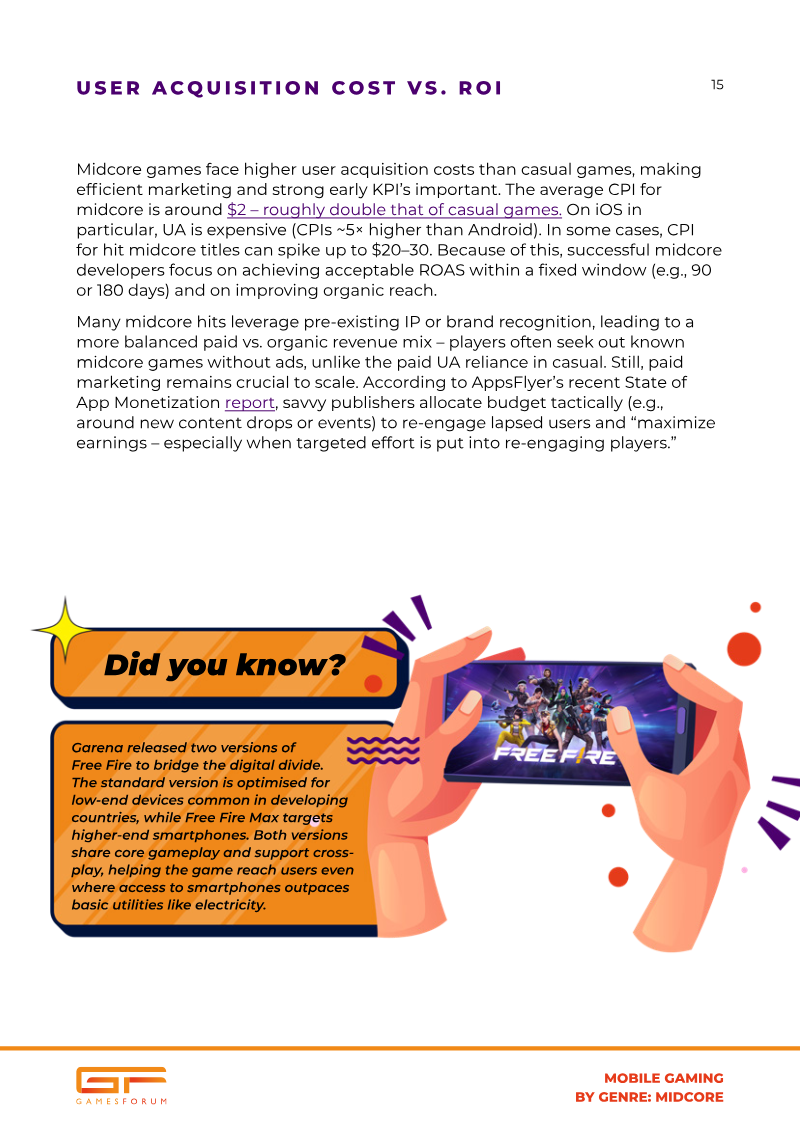
The analysis demonstrates that midcore mobile games—those offering depth while remaining accessible on handheld devices—are experiencing a post‑pandemic rebound, with Q1 2025 downloads and revenue surpassing 2024 levels. Five‑year data (2020‑2024) reveal a temporary decline during the pandemic, followed by a steady uptick in 2024 and forecasts that growth will continue into 2025. The primary thesis is that monetization success in this segment hinges on data‑driven ad integration and player‑centric design. Key findings show that midcore titles command higher eCPMs than casual games, yet player retention and in‑app purchase (IAP) conversion rates are sensitive to ad placement. A phased, A/B‑tested approach—beginning with limited rewarded videos and expanding based on performance metrics such as retention, playtime, and IAP conversions—maximizes revenue while preserving engagement. Case studies illustrate tangible benefits: Bytro Labs’ rewarded video strategy lifted average revenue per daily active user (ARPDAU) by 32.9 %, increased Day‑3 retention on iOS by 6.1 %, and achieved eCPMs of 23 (iOS) and 25 (Android). These results confirm that well‑timed ads can rival or complement IAP revenue when aligned with player incentives. The scope covers the global midcore mobile market, focusing on 2025 performance and projecting trends through 2026. It emphasizes long‑term player value, streamlined gameplay, social hooks, and frequent content updates as critical success factors. The conclusions underscore that responsive development cycles, continuous data analysis, and fair live‑service practices are essential for sustaining growth in the competitive midcore landscape.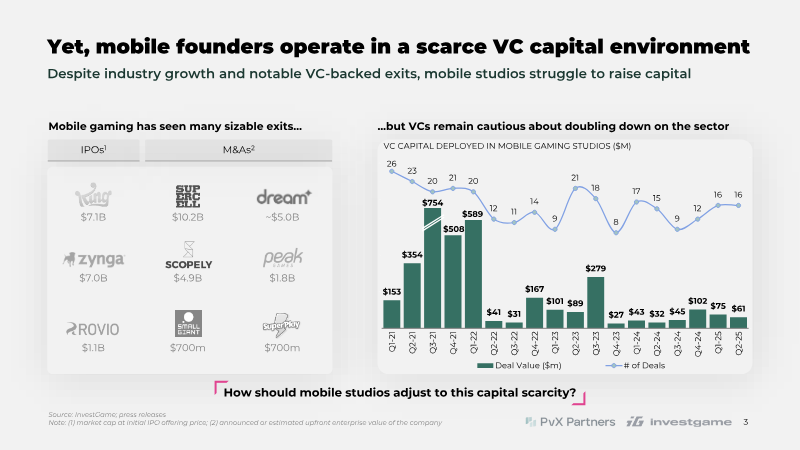

HPvX Partners
ReportEnabling Growth: Cohort User Acquisition Financing
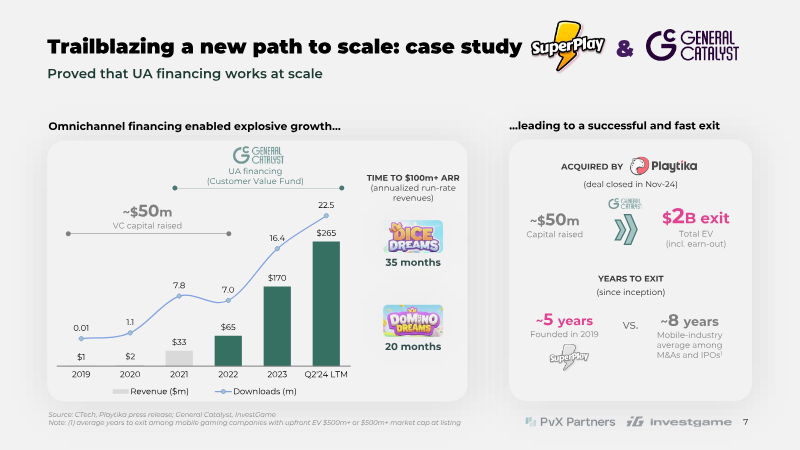
Mobile gaming has rebounded from the downturn of 2022‑23, with a projected compound annual growth rate of 5.0% from 2020 to 2025, driven largely by a 16.2% rise in in‑app advertising and the continued popularity of casual puzzle titles. The sector’s resilience is underpinned by AI‑powered ad tech, rewarded advertising platforms, multiplatform releases that bypass app‑store fees, and strategic IP licensing collaborations. Despite this growth, venture capital remains cautious; VC deployments in mobile studios have plateaued while high‑profile exits such as King, Zynga, and Playtika illustrate that capital is still scarce. Mature studios reinvest roughly one‑third of revenue into user acquisition (UA), yet only a minority secure the $30 million+ funding needed to sustain such spend, and smaller studios often allocate 70% or more of net revenue to marketing. PvX Partners’ cohort‑based UA financing addresses this gap by providing credit secured against future cohort revenues. The model offers up to 80% of monthly customer acquisition costs, recovers 80% of net revenues until repayment, and imposes a modest interest rate tied to Net Return on Ad Spend (ROAS). Case studies show that studios receiving this financing can increase monthly spend by 16–38% while boosting cash balances, achieving accelerated growth and faster exits—examples include Playtika’s acquisition of a $2 billion‑valued studio within 35 months. Overall, the analysis suggests that cohort‑based UA financing can unlock scalable growth for mobile studios that lack traditional VC backing, potentially expanding the market’s total UA spend from $143 billion to an additional $3.2 billion by 2027, while maintaining equity and IP control for founders.

Sensor Tower
ReportInvesting and Financial Management App Market and Advertising Trends 2025
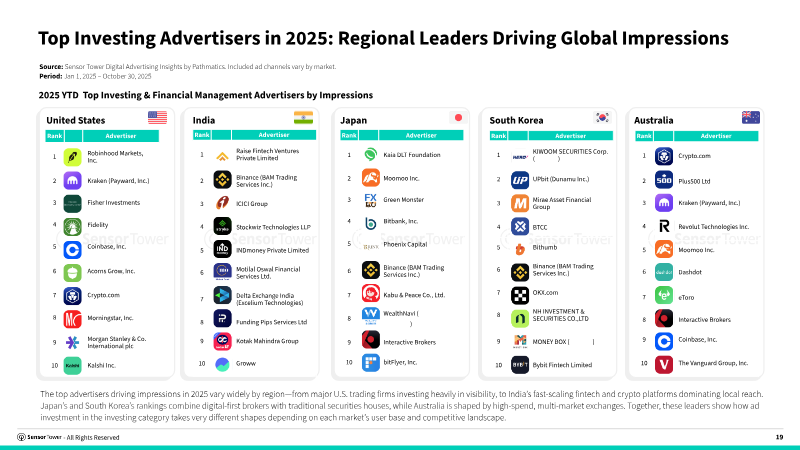
Investment‑management and crypto trading applications have accelerated growth in 2025, with global downloads rising 12 % to about five billion. The surge is driven primarily by mobile‑first trading platforms and cryptocurrency apps that attract tens of millions of new users annually, reshaping consumer access to worldwide financial markets. Market fragmentation is evident: U.S. and Japanese users prefer established brokerages, whereas India and Southeast Asian consumers gravitate toward local, mobile‑centric services. User demographics reveal a pronounced male bias across all regions, ranging from 70 % to over 90 % in crypto apps. Mature economies such as the U.S., Japan, and South Korea show a more balanced gender split (25–38 % female), while high‑growth markets like India and Vietnam have only 13–17 % female users. Age distribution centers on the 25‑44 cohort, with advanced markets featuring a larger share of users aged 35–54 and emerging markets attracting more 18‑24 year olds. Crypto platforms skew even younger, with up to 30 % of users aged 18‑24. Advertising strategies mirror these demographic patterns. In the U.S., large brokerages allocate substantial budgets to capture a mature market, whereas Indian platforms such as Groww and Angel One generate over 120 billion global impressions through low‑fee, mobile‑first experiences and relatable storytelling. In Japan and South Korea, digital‑first brokers dominate via high‑impact video and social media campaigns that align with local cultural preferences. Sensor Tower, a global mobile‑market intelligence provider headquartered in North America, Europe, and Asia, supplies four core products—App Intelligence, Store Intelligence, Ad Intelligence, and Usage Intelligence—to marketers, developers, and analysts seeking competitive insights across these rapidly evolving markets.


Sensor Tower
Report1H 2025 Amazon Retail Media: An Inside Look at How Brands Are Showing Up
Amazon Retail Media dominated the first half of 2025, capturing $618 million in ad spend—more than double Walmart’s $236 million and nearly six times Chewy’s $105 million—while attracting 9,542 unique advertisers, a figure nine times larger than Walmart’s 1,076. The network’s scale is driven primarily by consumer packaged goods (CPG) and technology brands, with Samsung leading spend ($7.1 million), followed by Unilever ($5.7 million) and L’Oréal ($5.3 million). Top product categories reflected this focus: Personal Care ($38 million), Computers & Consumer Electronics ($23 million), and Food & Beverages ($19 million). Monthly spend patterns on Amazon are largely advertiser‑driven rather than retailer‑initiated, with brand campaigns such as L’Oréal’s winter skincare and Vital Essentials’ spring dog‑treat promotion creating sharp spikes. Channel strategy analysis shows Amazon relies heavily on OnSite Display, accounting for 50 % of spend and 49 % of the network’s total advertising dollars, contrasting with a more balanced mix at competitors like Chewy and Home Depot. OffSite Display, social, and video placements are comparatively low, indicating a conversion‑focused approach that prioritizes high‑intent shoppers browsing Amazon’s own properties. Creative formats are largely formulaic, featuring “Shop Now” calls to action and discount messaging; only a few brands experiment with full‑funnel, multi‑channel activations such as Chips Ahoy’s combined OTT and OnSite strategy. These insights, derived from Sensor Tower’s Retail Media Insights platform—which aggregates spend, media mix, and creative data across retail partners—highlight Amazon’s unparalleled reach and conversion orientation while pointing to opportunities for brands to differentiate through broader channel mixes and stronger brand‑building narratives.

Gamesforum
ReportThe Future of Ad Monetization: Insights from Industry Leaders
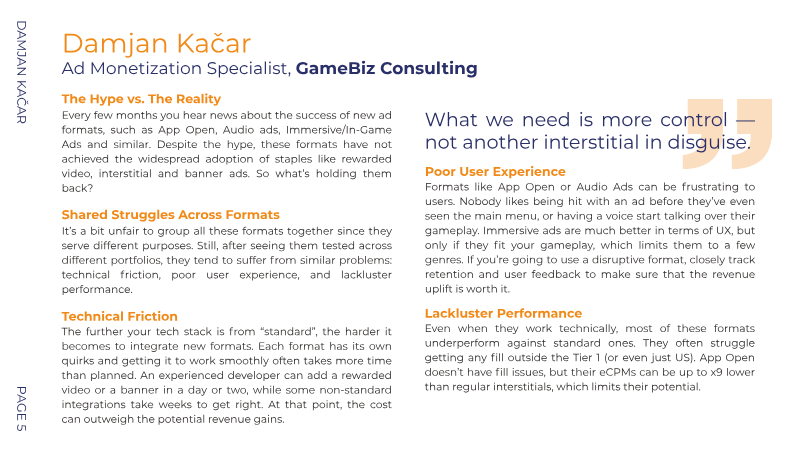
The panel “The Future of Ad Monetization” presented at Gamesforum Barcelona 2026 focuses on the evolving role of advertising within mobile game economies, arguing that ads are no longer ancillary revenue but integral to core gameplay loops. Experts from PlayPack, GameBiz Consulting, and Nekki highlight that by 2025 ad monetization has become one of the most challenging systems, requiring creative integration and data‑driven adaptivity. PlayPack’s Merge Away example illustrates how hybrid models combining rewarded ads and in‑app purchases can drive profitability, yet misaligned user cohorts can cause revenue drops of up to 30 %. The discussion stresses the necessity of real‑time visibility into ad source performance and the importance of designing ad moments as optional, rewarding side quests rather than punitive blockers. GameBiz Consulting’s specialist notes that newer formats such as App Open, audio, and immersive ads have yet to achieve widespread adoption due to user experience friction and lower eCPMs. He recommends cautious experimentation, high price floors for intrusive formats, and pairing ads with “no‑ads” purchase offers to mitigate churn. The panel also emphasizes that the future lies in contextual, segmented ad experiences—matching the player’s motivation and session flow—to transform ads from interruptions into meaningful choices. Nekki’s head of monetization projects that the most valuable in‑game currency will shift from virtual goods to player time, advocating for adaptive ad systems that respect individual player preferences. He foresees LiveOps integration of dynamic, data‑driven ad touchpoints tied to progression events. Overall, the panel concludes that sustainable revenue will stem from a balance of data insight, empathetic design, and adaptive monetization strategies that treat ads as living components of the game ecosystem.