Europe
National and regional reports on the European games industry.
328 documents
game – Verband der deutschen Games-Branche e. V. · 2021
ReportAnnual Report of the German Games Industry 2021
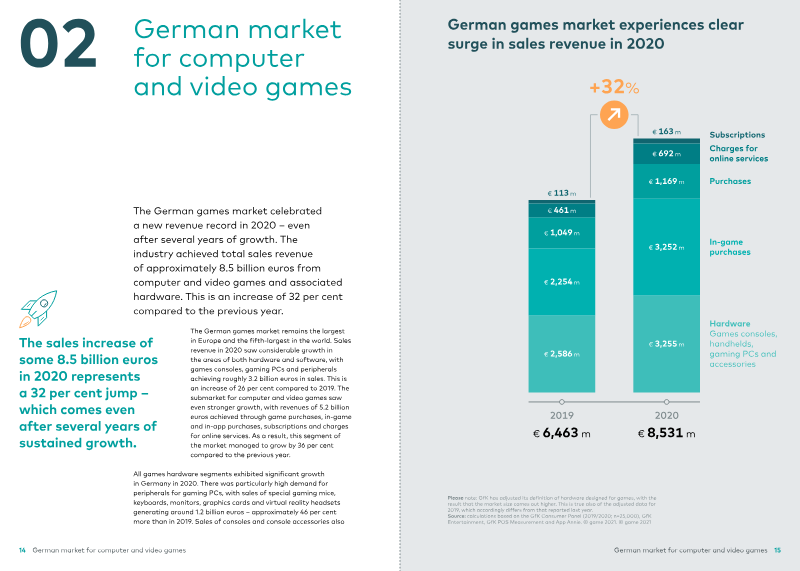
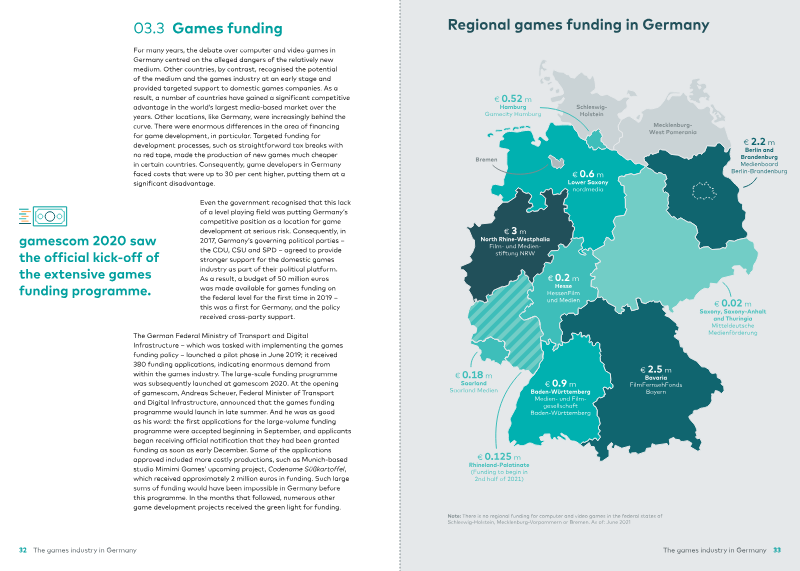
The German games industry achieved unprecedented expansion in 2020, recording a 32 percent revenue increase to approximately 8.5 billion euros. This surge was primarily catalyzed by the global pandemic, which accelerated digital adoption and expanded the domestic player base to encompass over 60 percent of the population. While hardware and software demand reached record highs, the industry also saw a 20 percent rise in the number of domestic studios, signaling a period of robust organizational growth and increased professional interest in the sector. Despite this financial success, the market share of games developed within Germany declined to 4.2 percent, underscoring a persistent competitive gap compared to international counterparts. To mitigate high production costs and foster local development, the federal government fully implemented a comprehensive funding program in 2020. This initiative, alongside a focus on specialized training and improved infrastructure, aims to bolster the domestic industry’s long-term viability. Companies remain optimistic, with widespread plans for continued hiring and investment despite ongoing supply chain constraints for hardware components. Beyond economic metrics, the industry is increasingly prioritizing social and environmental responsibility. Trade associations have successfully transitioned to digital-first engagement models, exemplified by the record-breaking international participation at virtual conferences. These platforms now serve as hubs for broader advocacy, with the sector actively pursuing initiatives related to diversity and climate neutrality. By aligning economic growth with sustainable development and favorable regulatory frameworks, Germany is positioning itself as a more competitive and socially conscious center for global game development.
European Games Developer Federation · 2021
ReportEuropean Video Games Industry Insight Report: 2021
The European video games industry experienced a period of significant expansion throughout 2021, solidifying its position as a major economic contributor across the continent. Comprising 5,500 developer studios and over 250 publishers, the sector generated a total turnover of €18.3 billion, marking a substantial increase from the €15.1 billion recorded in 2020. This growth was supported by a workforce of 85,000 professionals, with women accounting for 23.7% of total employment. While major markets such as France, Germany, and the Czech Republic served as primary drivers of this momentum, the industry demonstrated widespread resilience and growth across 22 surveyed countries between 2018 and 2021. The industry’s development is underpinned by a robust educational ecosystem, featuring over 300 institutions across 17 countries that provide specialized training for future developers. The United Kingdom, Poland, and Spain host the highest concentrations of these programs, creating a steady pipeline of talent that fuels the sector’s multi-platform strategy. Although PC and Mac remain the dominant platforms for European studios, developers frequently adopt flexible, cross-platform approaches to reach audiences on mobile and console devices. This strategic versatility, combined with varying levels of state-sponsored cultural and research-and-development aid, has allowed the industry to navigate pandemic-related challenges effectively. Data collection efforts, standardized by the European Games Developer Federation, reveal a maturing landscape characterized by increased professionalization and clearer industry definitions. By excluding service providers and retailers to focus specifically on core development and publishing activities, the analysis provides a precise view of the sector's health. Despite the positive trajectory, the industry remains sensitive to shifting economic and geopolitical trends, and the inconsistency of data availability in smaller regions suggests that continued efforts in standardized reporting are essential for maintaining a comprehensive understanding of Europe’s evolving digital entertainment landscape.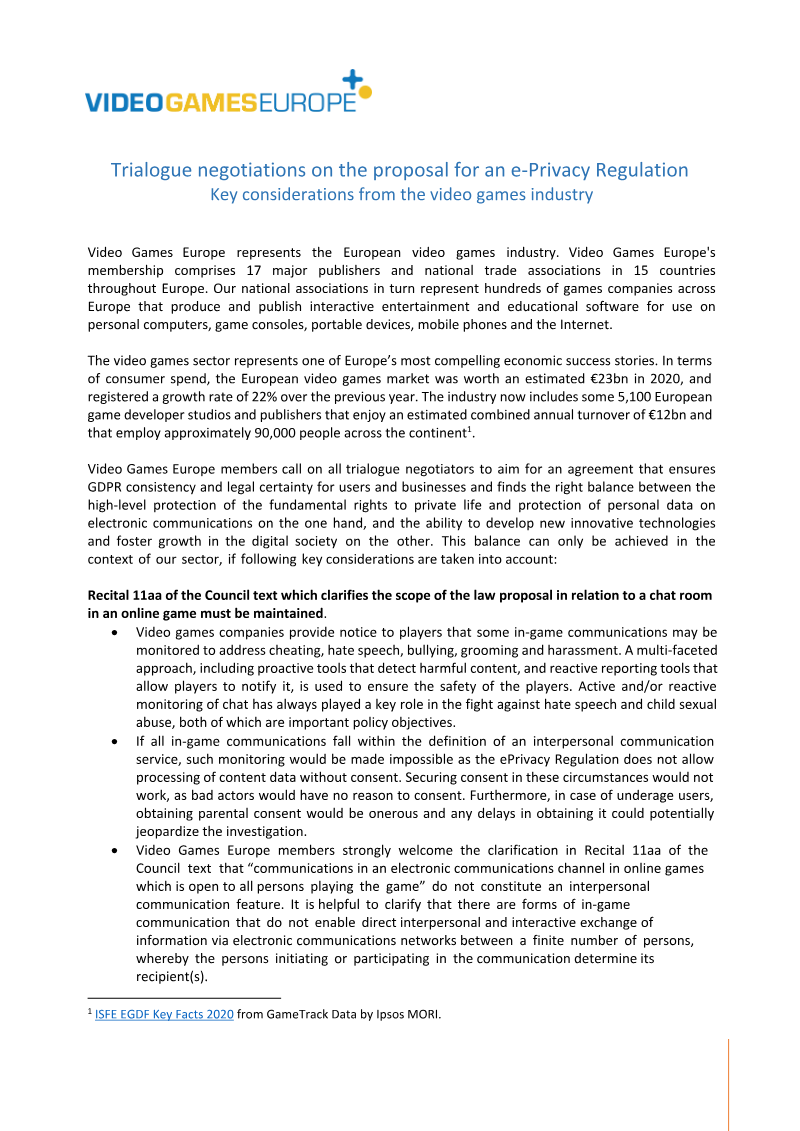
Video Games Europe · 2021
WhitepaperTrialogue Negotiations on the Proposal for an e-Privacy Regulation: Key Considerations from the Video Games Industry
Video Games Europe, representing 17 major publishers and national trade associations across 15 European countries, urges trialogue negotiators to craft an e-Privacy Regulation that aligns with GDPR consistency while preserving the sector’s capacity to innovate and protect users. The industry, valued at €23 billion in consumer spend in 2020 and growing 22 percent year-on-year, comprises roughly 5,100 developer studios and publishers with combined annual turnover of €12 billion and a workforce of about 90 000 employees. Key positions stress that in-game communications, particularly chat rooms open to all players, must remain outside the definition of an interpersonal communication service, as clarified in Recital 11aa, to enable monitoring for cheating, hate speech, bullying, grooming and child sexual abuse. Requiring consent for such monitoring would be ineffective, especially for under-age users, and could impede investigations. The industry also seeks broad adoption of the Council’s provisions in Article 8, allowing processing of terminal equipment information for performance optimisation, audience measurement, security, fraud prevention and software updates without individual consent, thereby avoiding consent fatigue and cumbersome parental authorisation. Video Games Europe opposes the introduction of mandatory privacy-setting requirements in Article 10, arguing that they would stifle competition, concentrate power among a few software providers, and impose costly technical burdens on consoles. Finally, the association calls for Article 11 to be aligned with GDPR Article 23, expanding public-interest exemptions to include protection of data subjects, enforcement of civil claims and IP enforcement, ensuring law-enforcement access while safeguarding fundamental rights.
SGA · 2021
ReportSerbian Gaming Industry Report 2021
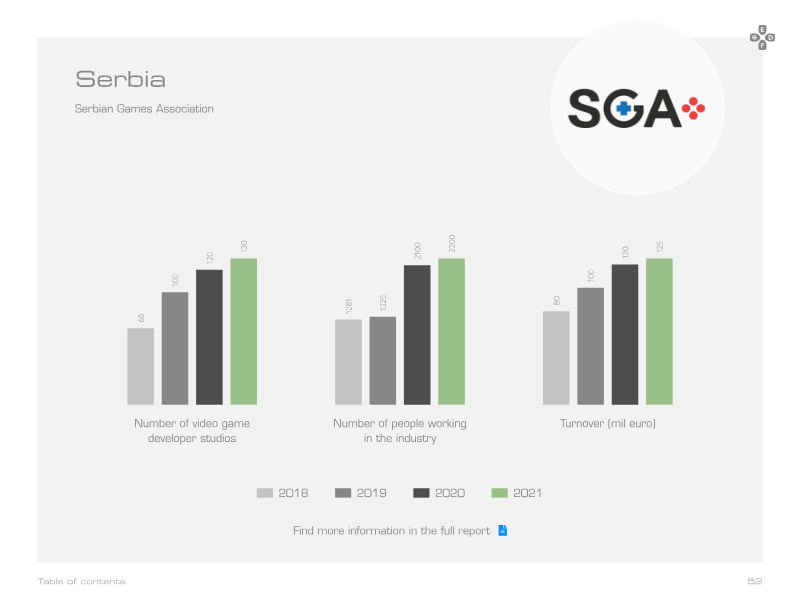
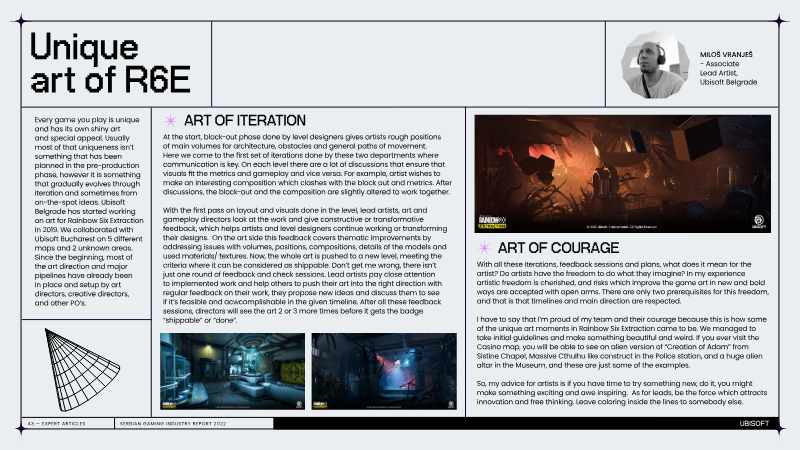
In 2021 Serbia’s gaming ecosystem emerged as a rapidly expanding, export-oriented sector that combined a sizable studio base with a vibrant indie community. Roughly 130 development studios employed 1,548 people, of whom 30% were women, and produced about 2,200 titles that generated an estimated US$125 million in revenue. The majority of earnings—between 75% and 100%—derived from markets outside the country, and 64% of games relied on a free-to-play model supplemented by advertising. Mid-sized studios such as Nordeus and Playrix RS demonstrated strong user bases, while larger contributors including Ubisoft Belgrade and the VFX house Bunker underscored Serbia’s capacity to support AAA-level production and international client work. The esports landscape, led by Fortuna’s Balkan League, attracted roughly half a million viewers and distributed €220 k in prize money, highlighting the sector’s growing competitive dimension. Indie developers, ranging from solo creators to teams of forty, pursued diverse platforms—PC, mobile, VR/AR—and increasingly leveraged tools like Epic’s MetaHuman Creator, signalling a shift toward high-fidelity, narrative-driven experiences. Policy initiatives reinforced this momentum. The “Serbia Innovates” super-cluster, backed by U.S. assistance, positioned gaming, VR, and Web3 technologies as a multidisciplinary hub, while tax-incentive reforms such as the IP-Box and double R&D deductions attracted capital and talent. Educational collaborations, exemplified by new university programs and industry-led training platforms, created a pipeline that bridges skill gaps and sustains growth. Sustainable development is viewed as dependent on three pillars: compelling IP, robust publishing partnerships, and cross-sector cooperation, suggesting that continued alignment of studio capabilities, policy support, and talent development will cement Serbia’s role as a notable exporter in the global games market.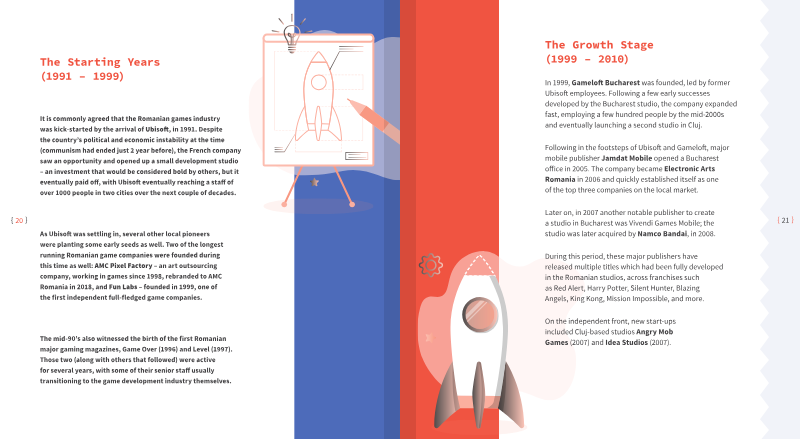
RGDA – Romanian Game Developers Association · 2021
ReportRomanian Game Development Industry Report: 2020
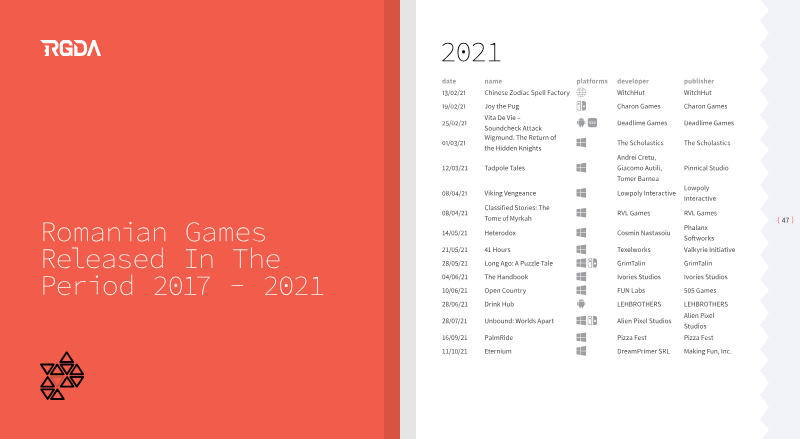
The Romanian game-development sector has emerged as a rapidly expanding component of the national digital economy, delivering €218.5 million in revenue in 2020—a 19.1% year-on-year increase that pushed total earnings beyond the €200 million threshold. This growth builds on a foundation laid in the late-1990s by early publishers such as AMC and Fun Labs and accelerated by a wave of indie activity that has diversified the market across hyper-casual, mid-core and AAA support segments. Policy measures have been pivotal: a tax-exempt status for developers introduced in 2004, a state-aid scheme for large IT investments in 2012, and the “Startup Nation” programme of 2016 have collectively fostered an IT sector employing over 113 000 people and contributing roughly 6.8% of GDP in 2020. The exemption, however, applies only to technical staff, leaving creative roles under-supported and prompting the Romanian Game Developers Association to propose dedicated incentives. The ecosystem now includes hyper-casual studios that have amassed more than 10 million downloads, mid-core and AAA support firms such as EA Romania, Ubisoft Romania and Gameloft that together employ around 750 developers and work on franchises like FIFA and Assassin’s Creed, and independent studios such as Ovilex, whose simulators have exceeded 500 million installs. Case studies illustrate the sector’s breadth: Whyttest operates a cross-border QA-outsourcing service with senior and junior testers in Bucharest and Belgrade, while XSA, an indie start-up focused on Android/iOS car games, reaches over one million players each month. The analysis draws on multiple European industry sources, including ISFE-EGDF, EGDF, Goldstein Research, and regional surveys, providing a comprehensive view of Romania’s game-development landscape during the 2020 period.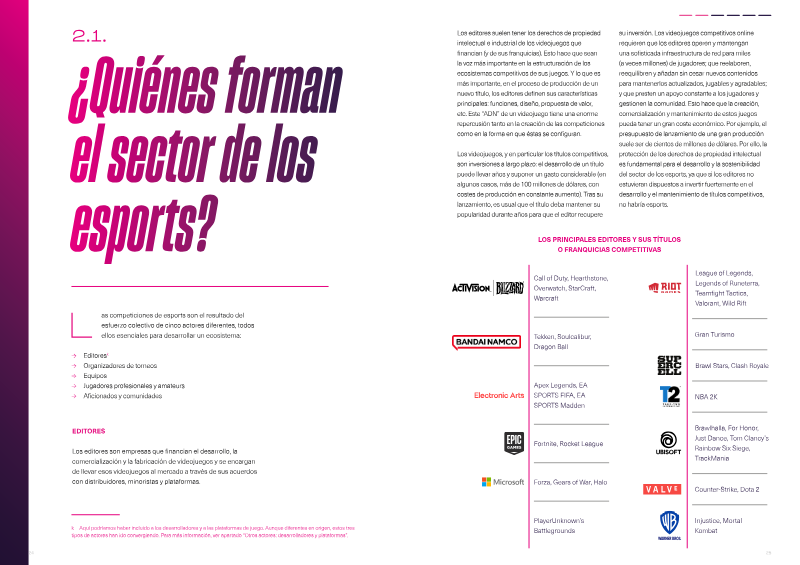


AEVI · 2021
ReportLa Guía de los Esports
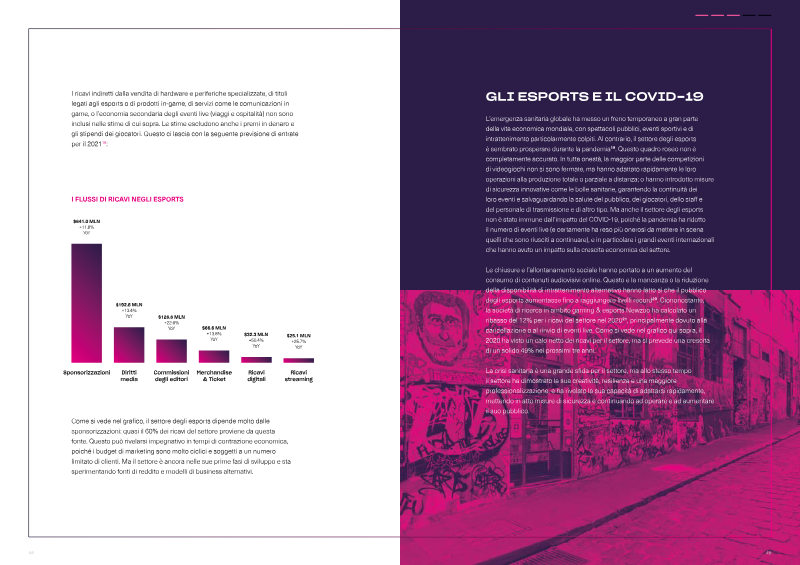
The esports industry represents a rapidly maturing global phenomenon characterized by significant economic potential, technological innovation, and social influence. With global revenues reaching 947.1 million dollars in 2020 and a projected audience of 577.2 million by 2024, the sector has demonstrated remarkable resilience despite pandemic-related disruptions. The industry functions as a complex, interconnected ecosystem where video game publishers serve as the primary architects, leveraging intellectual property rights to manage competitive franchises, ensure sustainability, and maintain the integrity of professional play. Geographically, the industry maintains a strong global footprint, with Spain emerging as a notable market that ranks 12th worldwide. The Spanish sector has shown robust recovery, evidenced by a 26% increase in sponsorship and advertising revenue in 2021. Across these regions, the industry is increasingly recognized as a legitimate investment vehicle that drives job creation, stimulates local tourism, and fosters urban revitalization. Beyond direct financial metrics, esports serve as a catalyst for educational development, particularly in STEM fields, and act as a platform for social inclusion, with women now comprising 46% of the gaming enthusiast base. Long-term success for the sector depends on a collaborative framework between private stakeholders and public authorities. Rather than imposing restrictive regulations, policymakers are encouraged to support the industry through infrastructure development, such as high-speed connectivity, and by integrating esports into educational and economic strategies. By balancing the proprietary control of publishers with the diverse needs of teams, sponsors, and a growing youth demographic, the industry is well-positioned to transition from its early developmental phase into a sustainable, high-growth pillar of the modern digital economy.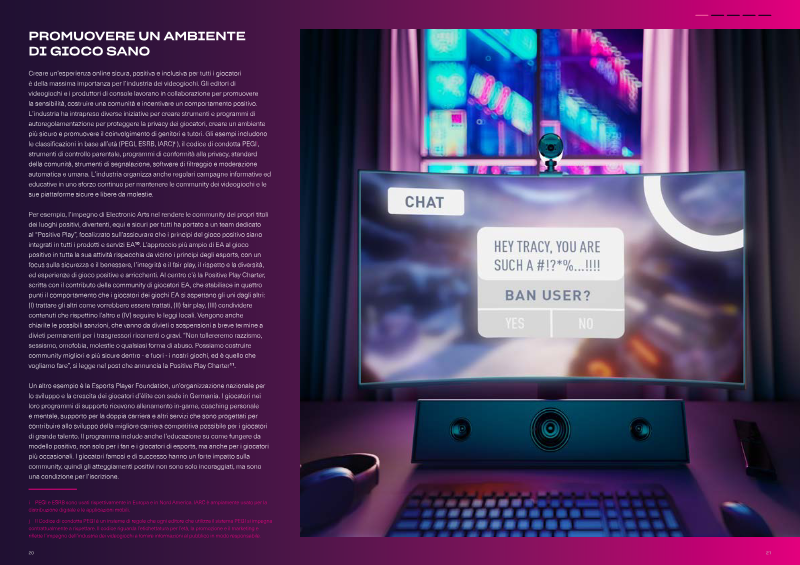

IIDEA – Italian Interactive Digital Entertainment Association · 2021
ReportGuida agli Esports: Italia
The analysis positions esports as a rapidly expanding digital sport that, in 2021, generated $947.1 million in revenue and attracted more than 215 million fans worldwide, with total direct earnings approaching $1.1 billion. Growth is concentrated in regions with advanced broadband infrastructure—East Asia, Northern Europe and North America—where titles that balance accessibility, competitive depth and spectator-friendly design dominate the market. The ecosystem is defined by five interdependent actors: game publishers, tournament organizers, professional and amateur teams, players, and fan communities, each relying on robust licensing agreements and strong intellectual-property protection to sustain competitive formats and monetisation pathways. Publishers invest heavily, often exceeding $100 million per title, and retain exclusive control over game updates, balance changes and the creation of official competitive modes, making their cooperation essential for event staging and broadcast rights. Organisers must secure these rights before launching tournaments, while fan-generated content such as streaming, casting and influencer activity drives viewership and ancillary revenue streams. The sector’s economic impact extends beyond digital earnings; flagship events have delivered measurable short-term gains—Rotterdam recorded €2.36 million in visitor revenue and Katowice generated $12.8 million—while also enhancing city branding, attracting young talent and prompting infrastructure investment. Education and social inclusion are emerging pillars, with universities offering scholarships and curricula that leverage esports to develop digital, problem-solving and teamwork skills. Initiatives targeting gender balance, including Women in Games and dedicated incubators, aim to broaden participation and address persistent representation gaps. The overarching conclusion stresses that sustained, coordinated action among industry bodies, policymakers and diversity-focused programs is vital to cement esports’ legitimacy, protect minors, and unlock its full economic and societal potential.
Finnish Game Developer Studios Association · 2021
ReportThe Game Industry of Finland 2020
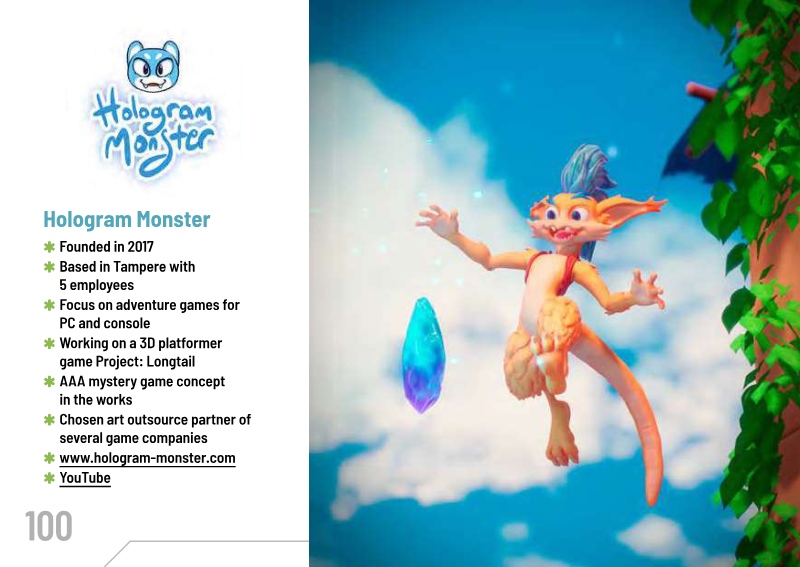
The Finnish game industry has transitioned from a hobbyist niche into the nation’s largest cultural export, maintaining an annual turnover exceeding €2 billion for six consecutive years. By 2020, the sector reached a turnover of €2.4 billion, driven by a maturing "middle class" of 46 studios generating over €1 million in annual revenue. While the total number of active studios decreased to approximately 200 due to global competition and regional funding shifts, employment reached a record 3,600 professionals. The industry demonstrates increased stability through a decreasing reliance on its largest player, Supercell, whose share of total turnover fell to 54% as other studios scaled. Geographically, the industry remains highly concentrated in the Capital Region, which accounts for 96% of turnover and nearly 80% of the workforce. However, vital regional hubs in Tampere, Oulu, and Turku provide specialized support through incubators and university programs. While mobile gaming remains the dominant sector—anchored by global giants like Rovio and Fingersoft—there is a notable shift toward a "post-mobile" era. This evolution is defined by growth in multiplatform console and PC development, led by studios such as Remedy Entertainment and Housemarque, as well as emerging interests in cloud gaming, the metaverse, and AI integration. The ecosystem is supported by a robust infrastructure, including over €150 million in R&D funding from Business Finland and a proactive private investment climate that attracted over €100 million between 2019 and 2020. Despite this strength, the industry faces challenges such as a global shortage of senior talent, increased protectionism in foreign markets, and platform volatility. Future growth is expected to stem from strong intellectual property, significant M&A activity, and a commitment to workforce diversity and social responsibility. The industry remains a resilient economic driver, characterized by high professional organization and a collaborative culture that sustains its status as a premier global hub for game development.

IDG Consulting · 2020
ReportAnálisis del Impacto del COVID‑19 y Mejores Prácticas de Teletrabajo en el Sector de los Videojuegos: Dec 2020
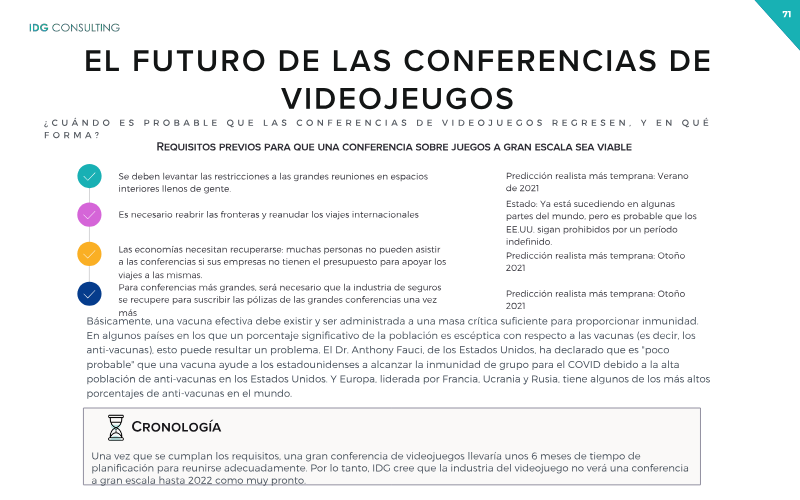
The global video game industry experienced a profound transformation during the 2020 pandemic, functioning as a critical pillar for social connection and entertainment while navigating significant operational volatility. The primary thesis posits that while COVID-19 acted as a powerful catalyst for digital adoption, streaming, and user engagement, it simultaneously introduced systemic risks, including production delays, labor instability, and heightened employee burnout. The industry’s rapid pivot to remote work—affecting 87% of studios—demonstrated the feasibility of digital collaboration but exposed vulnerabilities in creative cohesion and long-term operational efficiency. Market dynamics shifted toward digital distribution, subscription services, and cloud gaming, with a notable consumer preference for nostalgic titles. However, the initial surge in engagement faces potential headwinds from global economic recession, rising unemployment, and consumer price sensitivity. Consequently, the industry is strategically pivoting toward free-to-play models and advertising-based revenue streams to maintain accessibility. Furthermore, the transition from physical events to virtual showcases proved effective for product launches, yet the industry maintains that hybrid models are necessary to preserve the essential networking and professional relationship-building inherent in large-scale, in-person gatherings. Internally, the shift to remote environments necessitated the widespread adoption of specialized digital infrastructure, including Jira for project management, GitHub for version control, and Slack for communication. Despite these tools, the blurring of professional and personal boundaries has led to increased stress and burnout among developers. Moving forward, the sector is trending toward hybrid work models that aim to balance the flexibility of remote operations with the creative agility and cultural cohesion provided by physical office environments. Sustaining the growth observed during the pandemic will ultimately depend on the industry’s ability to manage these human capital challenges while retaining the expanded user base as global mobility normalizes.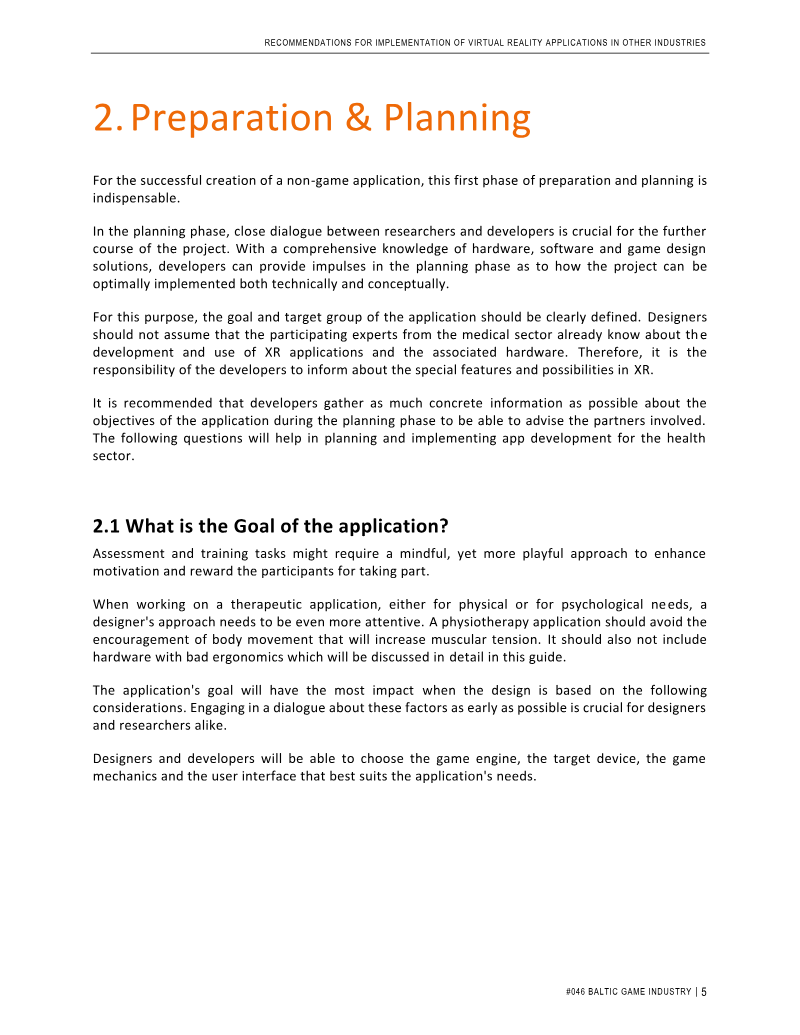

Baltic Game Industry · 2020
WhitepaperRecommendations for Implementation of Virtual Reality Applications in Other Industries
Virtual reality and extended reality technologies offer transformative potential for the healthcare sector, provided that development strategies prioritize interdisciplinary collaboration between game designers and medical professionals. The primary objective of integrating these immersive tools is to enhance therapeutic outcomes through precise data output and high-fidelity visual environments. Successful implementation hinges on clearly defined project goals, the selection of hardware tailored to the specific physical and cognitive capabilities of patients, and the design of intuitive interfaces that remain accessible to individuals without prior gaming experience. Technical and ethical rigor remains central to the deployment of these applications within clinical settings. Developers must navigate complex trade-offs between wired and wireless hardware configurations and tracking methodologies while maintaining a steadfast commitment to data security. Given the sensitivity of medical information, the creation of secure, offline environments is essential to protect patient privacy. Furthermore, the adoption of standardized workflows and the utilization of digital twins represent critical strategies for improving the scalability and cost-effectiveness of therapeutic solutions, ensuring that these technologies can be reliably integrated into broader medical practices. This framework focuses on the intersection of game development and clinical application within the Baltic region, supported by the European Regional Development Fund. By bridging the gap between entertainment-focused development practices and the stringent requirements of the medical field, these recommendations provide a roadmap for creating sustainable, high-impact XR tools. The ultimate goal is to foster a collaborative ecosystem where technical innovation directly supports clinical efficacy, ensuring that virtual reality serves as a robust, secure, and scalable asset in modern healthcare delivery.
BGZ Berliner Gesellschaft für internationale Zusammenarbeit mbH · 2020
ReportThe Game Incubation Landscape in Europe: Appraisal of the BSR in the European Context
The European game incubation landscape functions as a critical pillar of regional economic development, operating primarily through a mix of public subsidies, academic partnerships, and private-sector initiatives. These programs are categorized into three primary models: regional ecosystem development, student and alumni support, and investment scouting. While incubation focuses on long-term technical mentoring for early-stage startups, acceleration provides intensive, short-term business readiness. The industry’s unique nature as a content-oriented, project-based creative field necessitates specialized support structures that differ significantly from generic technology startup models, which often fail to account for the specific challenges of game production. Across the Baltic Sea region and broader Europe, the sustainability of these programs remains heavily dependent on institutional backing. Public-private partnerships and university-based initiatives, such as those seen in Sweden and the Netherlands, provide the stability required to nurture startups through the high-risk phases of development. While purely private, profit-driven models face significant financial hurdles, they are increasingly experimenting with subscription-based frameworks to provide specialized industry knowledge. Successful programs, such as The Game Incubator in Sweden, demonstrate that these support systems are effective drivers of job creation and regional competitiveness, having successfully professionalized hundreds of studios. Ultimately, the most effective incubation strategies balance artistic expression with rigorous business training in areas like monetization and user acquisition. By transitioning developers from creative projects to scalable companies, these initiatives serve as essential social infrastructure. The ongoing evolution of programs like the Dutch Game Garden toward modular, digital-first models reflects a broader trend of adapting to administrative scalability while maintaining the personalized mentorship necessary for success. Establishing durable, publicly supported frameworks remains the most viable path for positioning European regions as global hotspots for sustainable game innovation.

Pullup Entertainment · 2020
Report