The Sandbox
Blockchain-based user-generated virtual world and game platform, a subsidiary of Animoca Brands.
Documents
No published documents yet
Reports about The Sandbox
25 documents by other writers name The Sandbox in the title or summary.
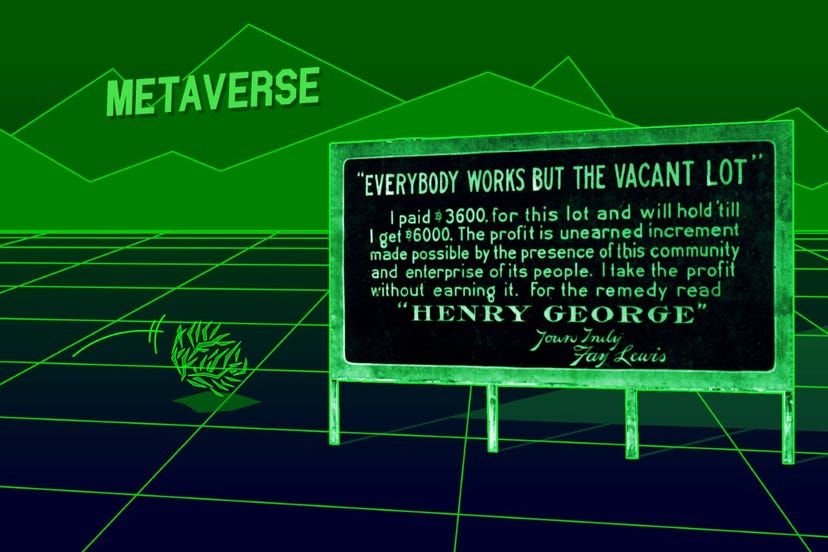
Land Value Tax in Online Games and Virtual Worlds: A How-To Guide
Lars Doucet and Dan Cook argue that virtual worlds containing land-like assets, including Ultima Online, Star Wars Galaxies, Final Fantasy XIV, and metaverse platforms, predictably suffer land crises.
- Land Value Tax (LVT) mitigates speculation by increasing the cost of holding scarce virtual assets, forcing land into the hands of players who will put it to its highest and best use.
- To calculate LVT, developers must distinguish between the value of 'improvements' (player-added value) and 'land' (inherent value), using the equation Total Market Value = Improvements Value + Land Value.
- Short-term leases with Vickrey auctions are the recommended implementation method for new games due to their simplicity and effectiveness in price discovery.
Loot: The Epitome of Composability
The Loot project, launched in August 2021 by Vine creator Dom Hoffman, is presented as a seminal experiment in composable, bottom-up, community-driven blockchain applications.
- The Loot project represents a bottom-up, community-driven approach to blockchain gaming that contrasts with the centralized, VC-funded models of projects like Axie Infinity and The Sandbox.
- Loot assets consist of simple, text-based lists of RPG-style items, with no canonical visual representation, leaving the interpretation and development of the game world entirely to the community.
- The market capitalization for original Loot bags peaked at approximately $293 million on August 6, 2021, before declining to $35 million, representing a nearly 90% loss in value.

Breaking Point
Ubisoft's decision in April 2022 to end active development on Ghost Recon Breakpoint, rendering the game's Quartz NFT cosmetics effectively worthless, anchors an argument that blockchain gaming remains small-time despite evangelist predictions of imminent dominance.
- Ubisoft has ended support for Ghost Recon Breakpoint, effectively rendering its NFT-based 'Quartz' cosmetics worthless shortly after the company claimed it was seeing the 'endgame' for the platform.
- Major blockchain gaming projects are experiencing significant user declines, with Axie Infinity daily average users falling 30% in one month to approximately 107,000, and The Sandbox reporting a 29% drop to just 1,180 daily active users.
- Activision Blizzard is transitioning temporary QA staff to full-time contracts with pay increases, though the company has excluded the unionized cohort at Raven Software from this offer, citing legal obligations.
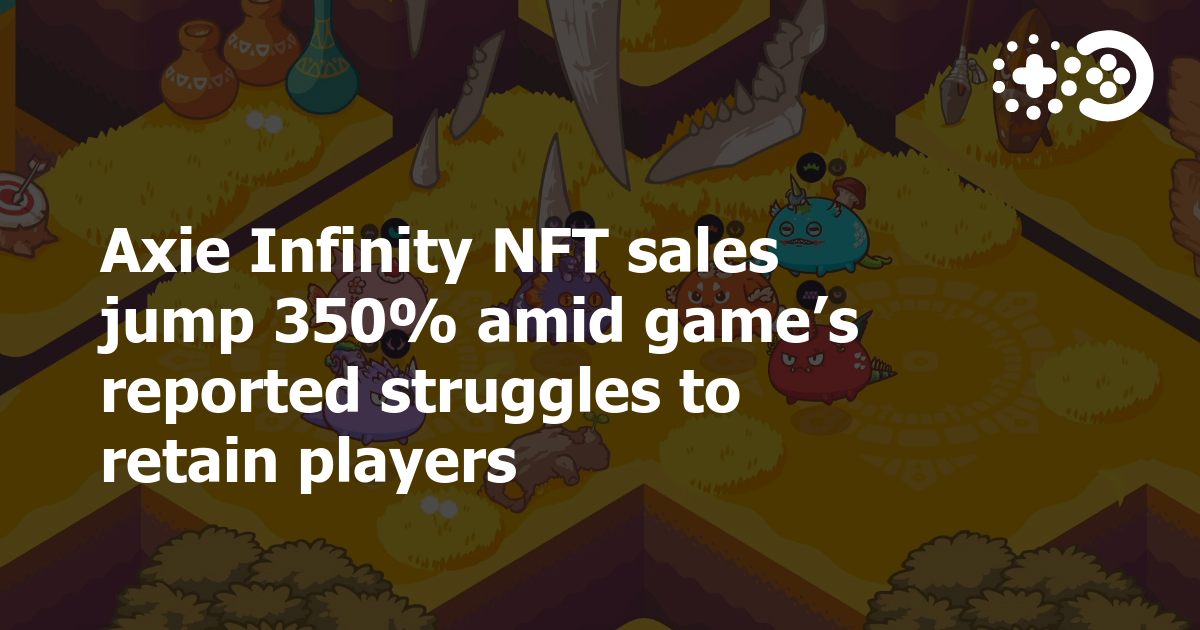
Axie Infinity NFT Sales Jump 350% Amid Game’s Reported Struggles to Retain Players
Axie Infinity's NFT sales surged more than 350% within 24 hours in early April 2022, even as the blockchain game showed signs of weakening player retention.
- Axie Infinity NFT sales volume surged over 350% in a 24-hour period following developer Sky Mavis' announcement of a $150 million fundraising effort to address a $625 million Ronin Network hack.
- Despite the spike in NFT sales, Axie Infinity experienced a 30% decline in daily active users (DAU) over the month leading up to April 2022, falling to approximately 107,240 players.
- The volatility in player retention highlights a structural reliance on financial earnings rather than organic gameplay engagement, distinguishing blockchain titles from traditional games like Fortnite or Candy Crush.
NFT games: Future or Crisis?
NFT games sit at the center of a debate in early 2022 over whether blockchain gaming represents the future of the industry or an overhyped speculative bubble.
- NFT sales reached approximately $25 billion in 2021, driven by significant capital inflows and an 800% valuation increase for major marketplaces like OpenSea following a $300 million funding round.
- Despite the financial surge, only 30% of game studios express interest in developing NFT-integrated projects.
- Consumer adoption remains cautious, with a survey of 1,500 console and PC gamers showing that only 56% of hardcore players are willing to earn NFTs through gameplay.
Tokenomics #5 Line Goes Up - What Is The Problem With NFTs Anyways?
The crypto-gaming sector is currently navigating a period of rapid institutional growth and intense public scrutiny.
- The crypto-gaming sector is scaling infrastructure through low-fee blockchain layers to support micro-transactions, evidenced by a $200 million funding round for Immutable.
- The industry is shifting toward a model where tokens act as programmable, internet-native assets that replace traditional centralized marketing with direct community rewards.
- Public and institutional scrutiny is increasing due to speculative excess, scams, and the inconsistent performance of high-profile pre-sales like Champions Ascension.

Yearly NFT Market Report 2021: How NFTs Affect the World
The "Yearly NFT Market Report 2021" provides a comprehensive analysis of the explosive growth and evolving landscape of the Non-Fungible Token (NFT) market in 2021, which saw "NFT" named Collins Dictionary's word of the year.
- The 2021 NFT market experienced explosive growth, reaching over $17.6 billion in trading volume and a 3,000% increase in active wallets.
- Gaming and the metaverse emerged as primary economic engines, with projects like Axie Infinity and The Sandbox pioneering models focused on user-generated content and digital asset ownership.
- While blockchain gaming currently occupies a small portion of the $173.7 billion global gaming industry, the adoption of play-to-earn mechanics signals a shift toward decentralized, community-driven economies.
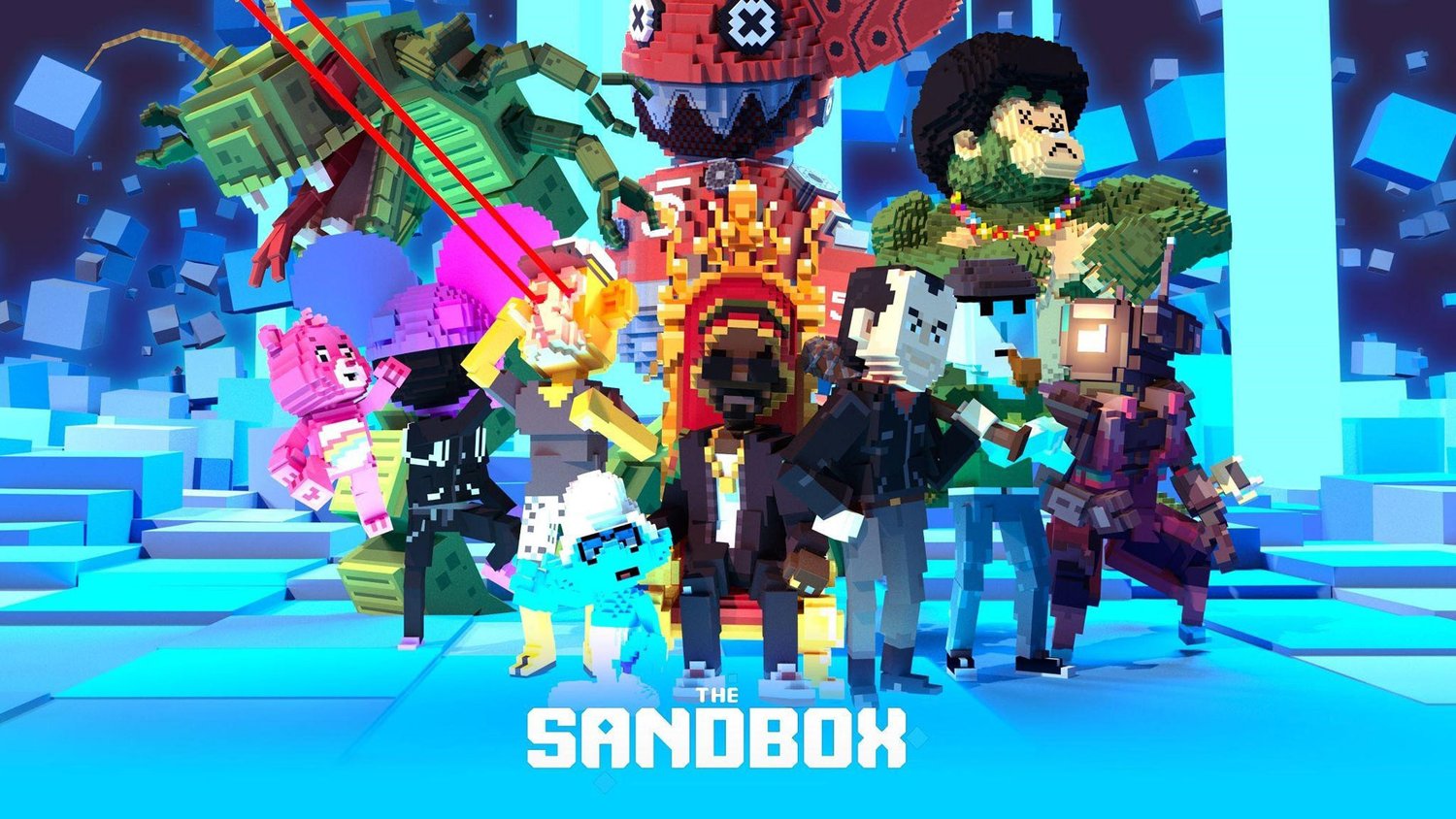
The Sandbox: Where Digital Land and UGC Collide
Blockchain-based virtual real estate has become a prominent investment theme in early 2022, with nearly a quarter of early-December NFT sales tied to digital land.
- The Sandbox is currently valued at a fully diluted market cap of $13.8 billion, despite having only 30,000 monthly active users (MAUs) and approximately 15,000 users playing more than one hour per day.
- The platform's valuation-to-MAU ratio is significantly higher than industry peers, sitting nearly 20 times higher than Decentraland and over 400 times higher than Rec Room.
- The Sandbox lags behind competitors in content density, with a capital-to-experience ratio of $24,017 per user-generated experience, compared to $36 per experience for Roblox.
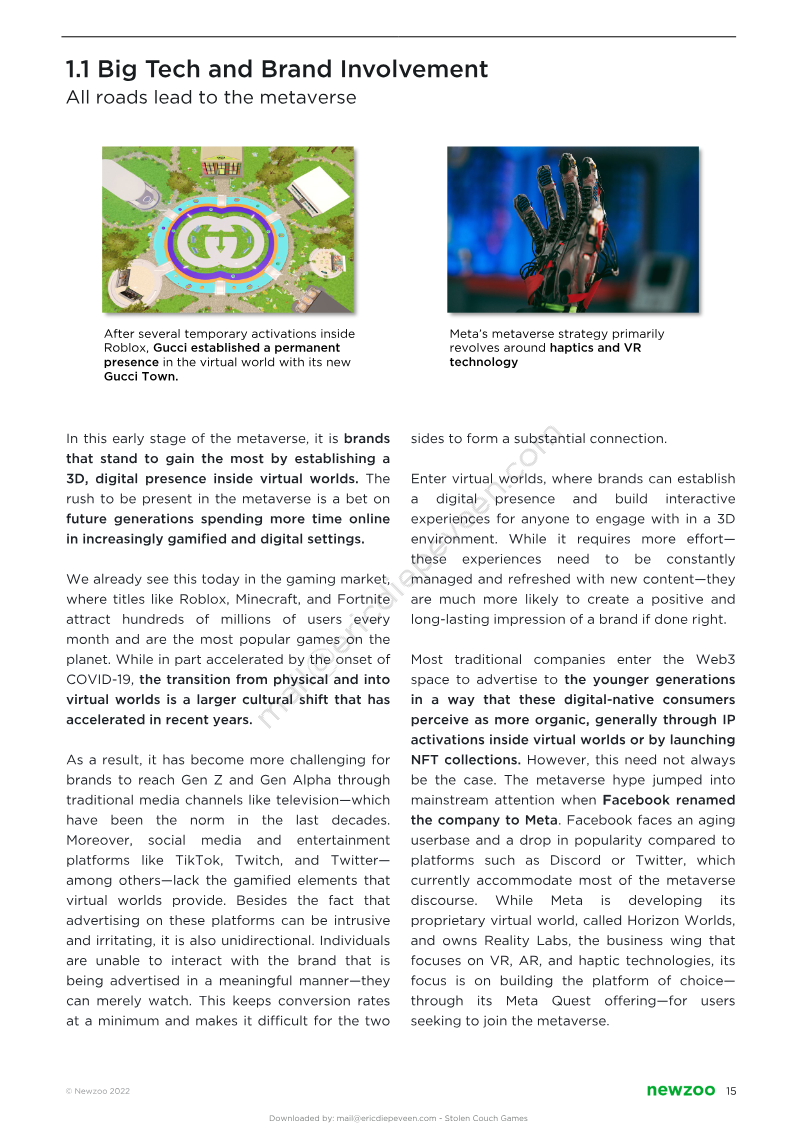
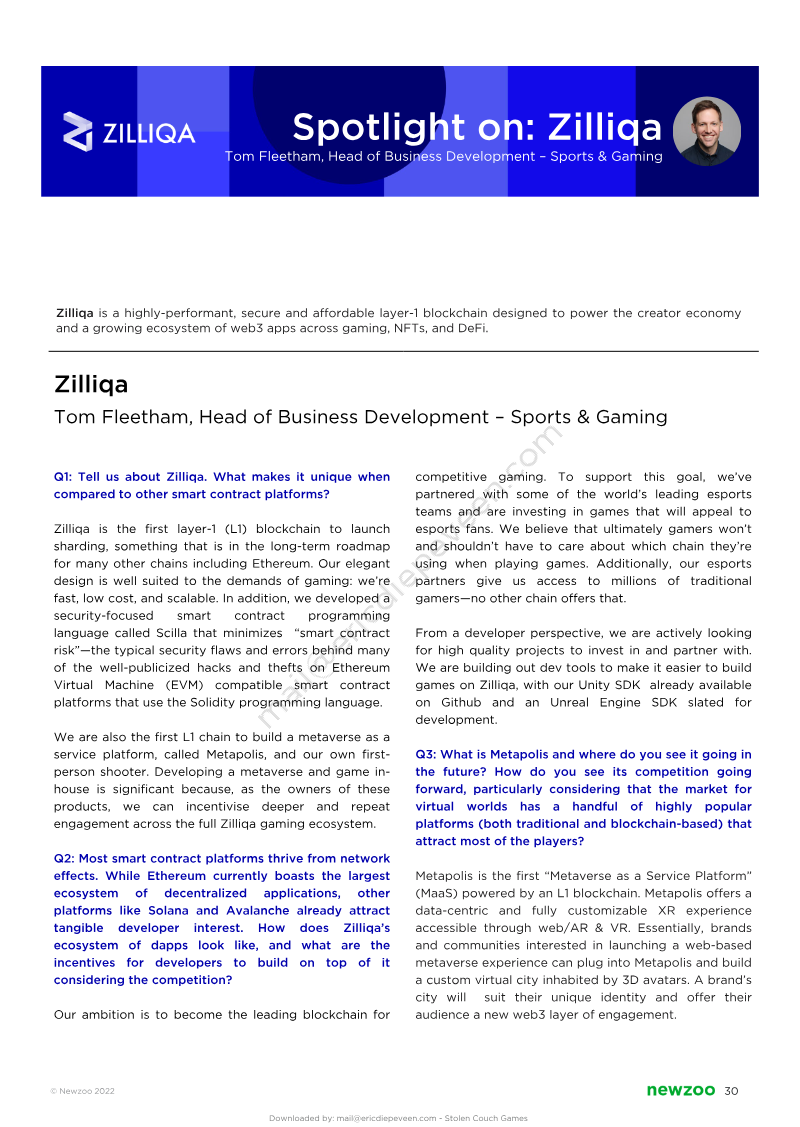
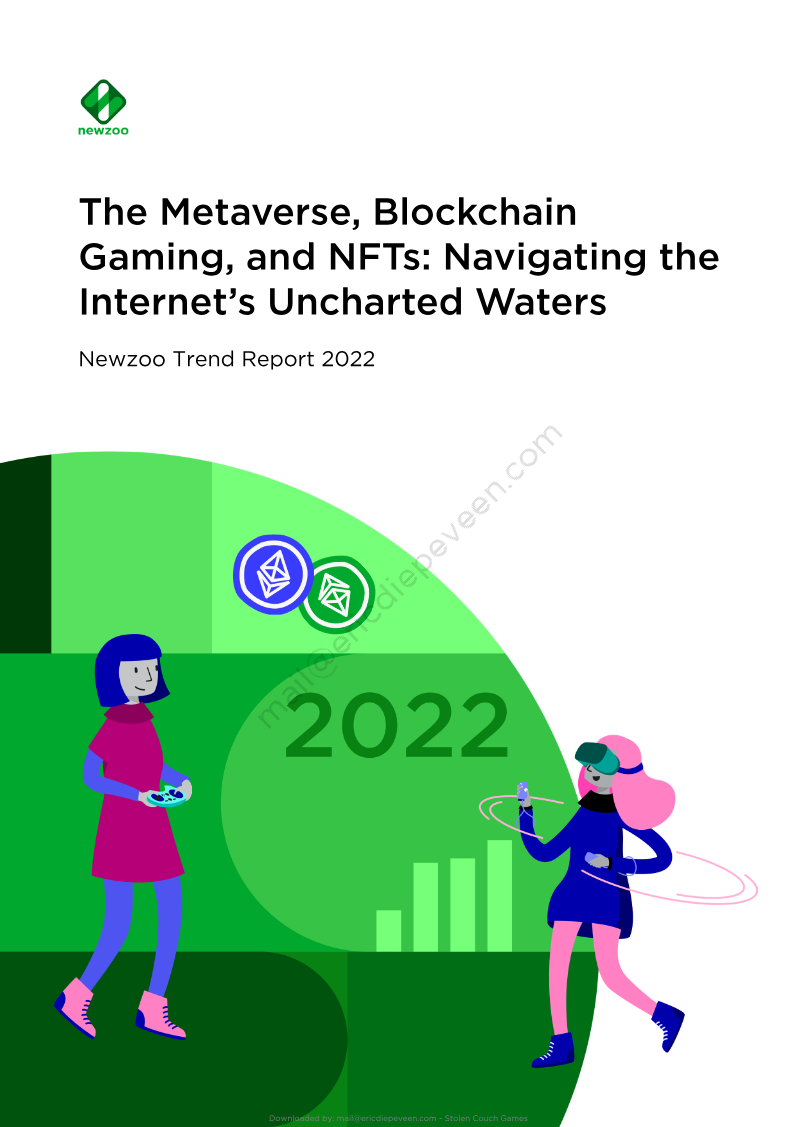
The Metaverse, Blockchain Gaming, and NFTs: Navigating the Internet’s Uncharted Waters
Newzoo's 2022 analysis examines the metaverse, blockchain gaming, and NFTs as a persistent, interoperable network of 3D virtual worlds, and assesses how the crypto downturn and recession fears have cooled hype without eliminating interest.
- The metaverse is evolving into a 3D social ecosystem led by 'game as a platform' models like Roblox, which currently sustains tens of millions of daily active users.
- Blockchain-based 'Play-to-Earn' games represented nearly 50% of all decentralized application wallet activity by late 2021, though growth is primarily driven by emerging markets seeking income rather than gameplay.
- Long-term growth for virtual platforms is hindered by high developer take rates, persistent net losses among industry leaders, and technical limitations preventing massive simultaneous user scaling.
Newzoo Trends to Watch 2022: Games, Esports, Live Streaming, Cloud and the Metaverse
Newzoo's 2022 outlook argues that games, esports, live streaming, cloud gaming and the metaverse are converging around new forms of fan engagement, monetization and brand participation, with 2022 positioned as a landmark year driven by a crowded AAA release slate.
- The global games industry generated $175.9 billion in 2021, with the Asia-Pacific region contributing $88.2 billion and maintaining an 8.7 percent compound annual growth rate.
- Publishers are shifting away from explicit NFT branding due to player backlash and regulatory scrutiny, opting instead to experiment with 'NFT-like' features under alternative labels.
- Legal pressure on Apple and Google is expected to force a relaxation of app-store steering rules, potentially creating new payment pathways that will alter distribution economics.
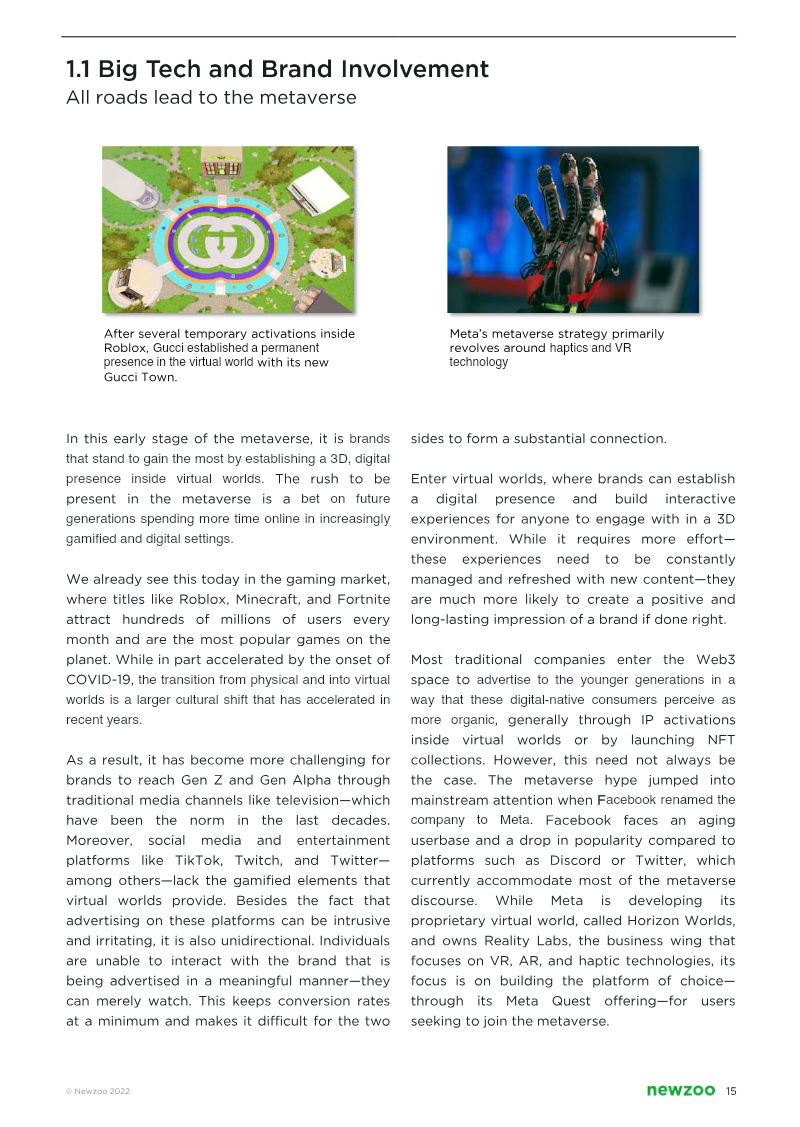
Newzoo Trend Report 2022: The Metaverse, Blockchain, Gaming, and NFTs
Newzoo's 2022 trend report examines the metaverse as a persistent, interoperable, 3D successor to the two-dimensional internet, and assesses how blockchain, NFTs, and gaming intersect with it.
- The metaverse is evolving into a persistent, 3D social ecosystem driven by Gen Z and Gen Alpha's prioritization of digital identities and direct-to-avatar commerce.
- Gaming platforms like Roblox have achieved significant scale, currently maintaining over 50 million daily active users.
- Current blockchain gaming models, particularly play-to-earn and scholarship guilds, face critical challenges regarding long-term financial sustainability and core gameplay quality.

Castles Made of Sand
Nathan Brown's Hit Points newsletter (November 29, 2021) offers a skeptical hands-on assessment of The Sandbox, a blockchain-based, play-to-earn "metaverse" platform whose public alpha launched that day.
- The Sandbox, a blockchain-based game owned by Animoca Brands, launched its public alpha in November 2021 following a $93 million funding round led by SoftBank.
- Full access to the game's 'play-to-earn' features requires an Alpha Pass, which is restricted to a limited supply of 5,000 units obtainable through raffles for LAND owners or secondary market purchases.
- The cost of entry for the game's ecosystem is high, with LAND parcels on OpenSea priced at approximately 25 Ethereum (over $107,000) and Alpha Passes trading for around 0.25 Ethereum (£800) shortly after launch.