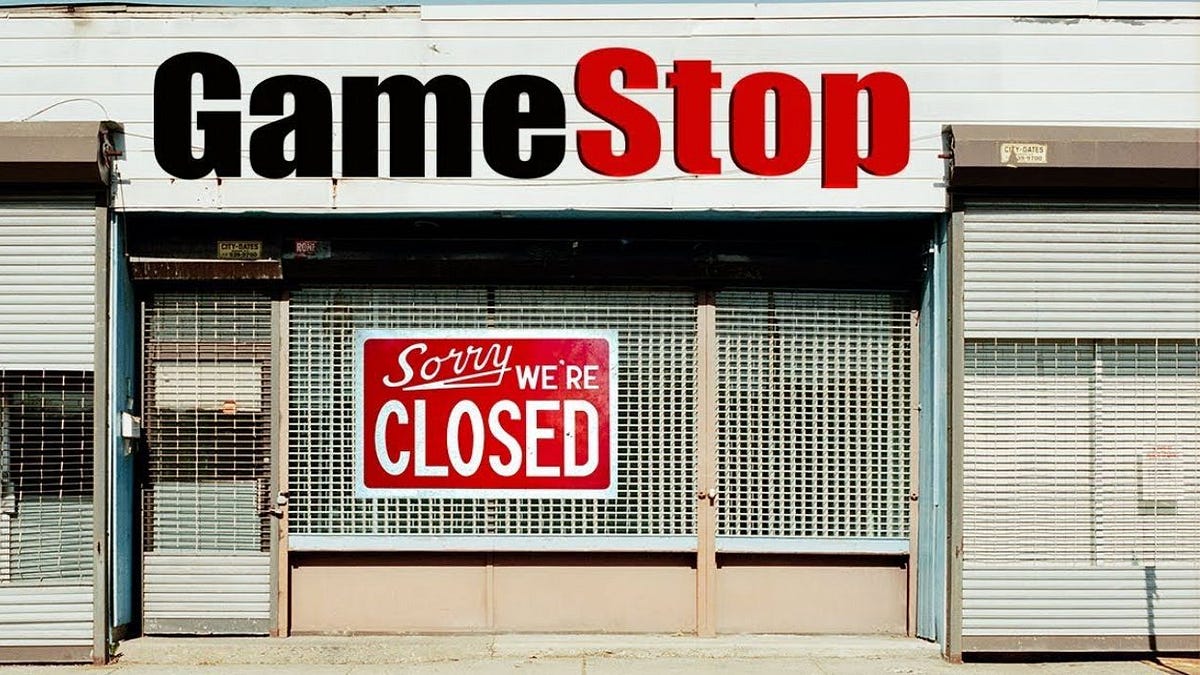
The rapid acceleration of digital distribution, compounded by the global pandemic, has placed GameStop in a precarious financial position that threatens its long-term survival as an independent entity. Since 2013, the company has experienced a precipitous decline in share price from $55 to approximately $4, leading to the elimination of dividends and a series of ineffective reorganizations. This downward trend is exacerbated by the end of the current console hardware cycle and a fundamental shift in consumer behavior that favors digital storefronts over physical browsing.
The core value proposition of the retailer—acting as a social hub and physical destination for gamers—has been severely undermined by social distancing measures and declining foot traffic. While online sales have reportedly surged by as much as 3,000% for certain retail partners, these gains are insufficient to offset the massive losses incurred by the shuttering of physical locations. The brand remains a significant asset, but the organization likely lacks the internal infrastructure to transition into a purely e-commerce entity without external intervention or acquisition.
Potential outcomes for the company include a strategic buyout by major platform holders such as Microsoft, Sony, or Nintendo, who could utilize the existing network of 6,600 global stores to create a vertically integrated retail moat similar to the Apple Store model. Alternatively, cash-rich entities like Amazon could acquire the brand for its market presence, or wait for a formal bankruptcy to purchase assets at a liquidation discount. Given the company’s relatively small market capitalization of $258 million compared to the trillion-dollar valuations of potential suitors, an acquisition represents a minor financial maneuver for a major tech firm seeking to dominate the physical entertainment retail landscape.
This industry analysis examines the strategic positioning of major gaming entities during a period of significant transition in early 2020. The primary focus is on Unity Technologies as it prepares for an initial public offering. To successfully navigate its IPO roadshow, Unity is attempting to emerge from the shadow of its primary rival, Epic Games, by diversifying into non-gaming verticals and expanding its technical capabilities through acquisitions like Bolt and Finger Food. While Unity reports approximately $500 million in revenue, it faces stiff competition from Epic’s aggressive royalty waivers and the high-profile launch of Unreal Engine 5.
The scope of the analysis covers global market leaders across North America and Asia, specifically detailing the financial performance of Tencent, Sony, and Nintendo. Key data points highlight a 31% year-over-year increase in Tencent’s online game revenue to $5.3 billion, contrasted by a 14% decline in Sony’s annual gaming revenue to $18 billion as the PlayStation 4 lifecycle nears its end. Despite hardware declines, digital services remain a growth engine, evidenced by Sony’s PlayStation Plus reaching 41.5 million subscribers and Nintendo’s digital sales accounting for nearly half of its software revenue following the massive success of Animal Crossing: New Horizons.
The findings also address emerging sectors such as cloud gaming, virtual reality, and the creator economy. While mobile publishers like Glu Mobile show resilience with record revenues from lifestyle titles, the broader industry faces uncertainty regarding the longevity of the pandemic-induced gaming boom. The analysis concludes that strategic investments in remote-access technology and immersive media integrations, such as Sony Music’s collaborations within Fortnite, are becoming essential as traditional platforms and creators like PewDiePie struggle to adapt to shifting audience engagement models.
The recent surge in global video game consumption, driven by COVID-19 lockdowns and the elimination of commutes, appears to be a temporary spike rather than a permanent structural shift. Early data indicates that the peak has already passed, with gaming activity reportedly dropping 10% week-over-week and 45% from its highest point. As lockdowns ease and competing entertainment options return, the industry faces a significant downturn exacerbated by a 4.8 percent decrease in GDP and the sharpest decline in personal spending since 1980.
The industry’s transition into the mainstream has increased its vulnerability to broader economic volatility. While gaming was once considered price-inelastic due to a dedicated fringe audience, its current mass-market status means spending is now more dependent on discretionary income. Emerging revenue models like subscriptions and advertising remain too immature to offset potential losses in traditional spending. While upcoming quarterly earnings reports may show record highs, these are viewed as lagging indicators of a period that has already reached its zenith.
Specific platform and title data support this cautious outlook. Despite the success of high-profile events like Fortnite’s Travis Scott concert, which drew 27.7 million unique viewers, the game is seeing a 26% year-over-year decline among teens and consistent drops in Twitch viewership. Furthermore, the XR market faces supply chain disruptions and a shift toward B2B applications as consumer adoption remains insufficient. While companies like Microsoft report growth in services like Game Pass, hardware discounting and broader economic pressures suggest a challenging period ahead for the global interactive entertainment sector.
The cancellation of the digital E3 event in 2020 serves as a catalyst for a broader shift in the video game industry, signaling a transition away from traditional physical conventions toward more cost-effective digital showcases. Major platform holders like Sony and Microsoft are increasingly likely to favor live-streaming and invite-only gatherings over massive trade shows, a trend accelerated by the global pandemic. This shift forces organizations like the ESA to reconsider the long-term viability of large-scale events while navigating new complexities in insurance and sponsorship.
Beyond the evolution of industry events, the current landscape is defined by the professionalization of social gaming and increased regulatory scrutiny. The emergence of professional video game coaching reflects the role of titles like Fortnite as primary social hubs, while the ESRB’s introduction of specific labels for loot boxes demonstrates a move toward industry self-regulation to preempt government intervention. These developments coincide with academic findings suggesting that expert play in real-time strategy games significantly enhances cognitive processing and visual attention.
Market activity remains robust despite global uncertainty, characterized by strategic acquisitions and strong financial performances. Apple’s potential $100 million acquisition of NextVR suggests a cautious but continued interest in the AR/VR space, while Sony’s $400 million investment in Bilibili highlights the critical importance of securing a foothold in the Chinese live-streaming and mobile gaming markets. Meanwhile, the success of CD Projekt Red, driven by the longevity of The Witcher 3 and the growth of its GOG.com storefront, underscores the potential for independent publishers to challenge established digital distribution monopolies.
This analysis examines the shifting landscape of the global video game industry during early 2020, focusing on the professionalization of gaming personalities, the entry of big tech into cloud services, and the evolving platform dynamics of streaming and digital distribution. The central thesis suggests that while the industry is experiencing a surge in engagement and cultural relevance, it faces significant growing pains in establishing sustainable career paths for creators and maintaining healthy online environments.
Key findings highlight the challenges of "celebrity gamers" like DrDisrespect, who, despite signing lucrative exclusivity deals with platforms like Twitch, face an uncertain long-term career trajectory as the industry lacks the established post-retirement infrastructure found in traditional sports. Behavioral data from titles like World of Tanks indicates that toxicity remains a systemic issue driven by skill disparities and losing streaks, while the rise of cheaters in Call of Duty: Warzone illustrates the increasing operational costs of maintaining successful social gaming platforms.
The scope of the analysis is global, with specific focus on North American tech giants, European research, and the Asian streaming market. It critiques Amazon’s Project Tempo for lacking a cohesive strategy compared to incumbents like Microsoft and Sony, and dismisses recent Steam data as lacking necessary context regarding inflation and user base growth. In contrast, the report notes aggressive vertical integration in Asia, exemplified by Tencent’s majority acquisition of Huya to link game marketing with content consumption. Methodologically, the findings rely on a synthesis of corporate financial disclosures, academic behavioral studies, and real-time streaming metrics from platforms like Twitch.
The relationship between the video game and film industries is often characterized by a fundamental misunderstanding of their respective creative and economic structures. While the announcement of high-profile adaptations like HBO’s The Last of Us generates significant industry excitement, games and movies operate on divergent logic. Games are software-driven experiences where world-building must account for active player agency, whereas film is a celebrity-centric industry where star power is used to mitigate capital risk. The games industry’s lack of a traditional celebrity culture is arguably a primary driver of its superior financial performance compared to Hollywood, suggesting that game makers should prioritize their own medium’s strengths rather than seeking validation from traditional media.
Market data and corporate activity further illustrate the evolving landscape of digital entertainment. In the measurement space, partnerships between firms like Comscore and Twitch highlight the urgent need for third-party validation to secure advertiser confidence as live streaming matures. Simultaneously, a technological arms race is unfolding between Epic Games and Unity, with both companies aggressively acquiring specialized firms—such as Cubic Motion and Artomatix—to bolster their development pipelines and lock in specific customer verticals.
The sports segment is also undergoing a shift as major leagues recognize the untapped value of gaming audiences. Take-Two’s new multi-title deal with the NFL suggests a move away from exclusive simulation rights toward more creative, arcade-style experiences. This is a strategic necessity, as the NFL currently leaves an estimated $1.4 billion on the table compared to the monetization efficiency of Major League Baseball. Furthermore, as real-world sports face disruptions, such as the 2020 NBA season suspension, service-based game revenue serves as a critical hedge against traditional industry risks. These trends collectively point toward a future where gaming increasingly dictates the terms of cultural and economic relevance.
The global gaming industry has reached a valuation of approximately $150 billion, surpassing the combined scale of the film and music sectors. This growth has attracted significant venture capital interest, exemplified by Andreessen Horowitz’s recent $4 billion valuation of Roblox. This figure represents a substantial premium over historical benchmarks, such as Microsoft’s $2.5 billion acquisition of Mojang in 2014. The primary driver behind this valuation is the transition of gaming from a pure entertainment medium into a dominant social network for younger demographics.
Roblox currently maintains a massive user base of 115 million monthly active users, representing a threefold increase over the past several years. Financial projections suggest the platform will exceed $1 billion in revenue for 2020, supported by a diverse presence across digital and physical retail channels. While console engagement remains relatively low, the platform has seen explosive growth on PC and mobile, with the latter increasing fivefold. Its cultural footprint is further evidenced by its performance on YouTube, where it ranked as the sixth most-viewed title in 2019 with 69 billion views.
The strategic trajectory for such platforms likely involves acquisition by major technology conglomerates like Google or Microsoft, or potentially a large-scale toy manufacturer. Google, in particular, could leverage such content to bolster its cloud gaming initiatives. However, the sector faces specific existential risks, including the potential for malicious activity within environments populated by minors, shifting audience trends, and increasing regulatory scrutiny. Despite these challenges, the convergence of gaming and social networking continues to redefine the industry's economic potential.
Riot Games is attempting to transition from a single-title developer into a multi-franchise publisher, a move that represents a significant shift for a company that has historically relied almost exclusively on League of Legends. This expansion, highlighted by the introduction of the tactical shooter Valorant, serves as a strategic effort to diversify a portfolio that accounts for approximately ten percent of Tencent’s gaming empire. While the developer possesses a highly skilled talent pool and vast capital resources, the sudden pivot toward a barrage of new projects suggests a reactive attempt to remedy a singular reliance on its flagship title, particularly as monthly active user numbers for its core game show signs of cooling.
The current strategy emphasizes scale and volume, contrasting sharply with the more secretive and deliberate approach of other major industry players like Supercell. By emulating established genres and mechanics seen in titles like Overwatch, Riot risks entering saturated markets where player growth is already plateauing. Furthermore, the shift from a culture of laser-focus on one game to a multi-project environment presents internal risks, including the potential for top-tier talent to depart and seek independent ventures rather than building new intellectual property under a corporate umbrella.
Ultimately, the success of this second act depends less on the technical quality of individual releases and more on Riot’s ability to foster a sustainable creative environment. Establishing a cohesive ecosystem that can consistently produce hits is a far more complex challenge than simply iterating on existing genres. The transition marks a critical test of whether a blockbuster-based entertainment firm can successfully institutionalize innovation or if its expansion is merely a forced strategic maneuver to maintain market dominance in the face of shifting consumer trends.
The console gaming industry is currently undergoing a fundamental transition as it moves toward a new hardware generation, shifting away from a traditional focus on processing power toward a service-oriented model. The central thesis suggests that the console market is beginning to mirror the mobile industry, characterized by tiered device offerings, digital-only distribution, and subscription-based "buffet-style" content. This evolution is driven by a diversifying audience that increasingly favors low-friction access and microtransactions over high-cost, serialized physical releases.
Key findings indicate that legacy platform holders like Sony and Microsoft face intensifying competition from high-quality mobile alternatives and PC ecosystems. Third-party publishers are increasingly pursuing vertical integration to bypass traditional platform holders, while tech giants such as Google, Facebook, and Amazon are entering the space via cloud gaming. Data from early 2020 highlights the fragility of this transition period, noting that while app downloads in China surged by 40 percent due to pandemic-related lockdowns, the broader industry faces significant risks from supply chain disruptions, trade tensions, and regulatory hurdles in the Chinese market.
The analysis concludes that the industry is at risk of a "negative spiral" caused by an oversaturation of subscription services and an influx of speculative capital that may eventually withdraw. To maintain growth, the console segment must move beyond its historical resistance to indirect revenue models, such as advertising and brand partnerships, which have already fueled the expansion of the mobile sector. Failure to adapt to these broader entertainment trends could result in a market correction or a loss of dominance to more agile mobile and digital competitors.
The global games industry is entering a pivotal transition year as it prepares for a new console generation defined by a more diversified audience and shifting business models. Unlike previous cycles focused primarily on hardware power, the current era is characterized by a move toward digital services, subscription-based "buffet-style" gaming, and lower-entry price points. This evolution mirrors the mobile industry, where platform holders must offer multiple device tiers and bundled content to remain competitive against high-quality mobile and PC substitutes.
The competitive landscape is expanding as non-endemic tech giants like Google, Facebook, and Amazon enter the cloud gaming space, while major third-party publishers seek vertical integration to bypass traditional retailers. This shift is occurring against a backdrop of significant macroeconomic and regulatory risks. Trade tensions between the U.S. and China, coupled with the volatility introduced by the coronavirus pandemic, threaten global supply chains and hardware releases. While some firms like Tencent and NetEase have seen short-term engagement spikes due to regional lockdowns, these disruptions may ultimately serve as a catalyst for broader economic corrections and product cancellations.
Industry success is increasingly tied to social platform dynamics rather than singular software hits. This is evidenced by the high valuation of platforms like Roblox, which functions as a social network for younger demographics, and the strategic pivot of Riot Games toward a multi-title portfolio. To sustain long-term growth, the console segment must overcome cultural resistance to advertising and brand integration. Failure to adopt indirect revenue models and diversify beyond traditional "blockbuster" sales may result in a market contraction similar to the historical disruption of Hollywood by broadcast television.
This analysis examines the shifting landscape of the global video game industry in early 2020, focusing on the tension between idealistic business models and the pragmatic financial pressures of major platforms and publishers. The central thesis posits that while industry leaders like Epic Games CEO Tim Sweeney advocate for a "puritan" move away from predatory monetization and closed ecosystems, such a stance is a luxury afforded only by massive hits like Fortnite. For the rest of the industry, the reality remains a struggle for platform dominance and recurring revenue.
The scope of the analysis covers major global players including Apple, Sony, Electronic Arts, and Activision Blizzard, with specific attention to the North American and Asian markets. Key data points highlight the financial motivations driving industry shifts, such as Apple’s 2019 services revenue of $46 billion, which boasts a 64% margin—double that of its hardware business. Despite this, the analysis suggests Apple Arcade may struggle due to a lack of exclusive blockbuster content and the potential cannibalization of its lucrative free-to-play mobile ecosystem.
Further findings address the stagnation of media rights in esports, noting that YouTube’s $160 million deal with Activision Blizzard for Overwatch and Call of Duty rights represents a lack of growth compared to previous Twitch deals. Additionally, the analysis notes Electronic Arts’ 6% decline in mobile revenue and Sony’s pricing dilemma regarding the PlayStation 5, where a projected $450 launch price is viewed as a significant risk. Methodologically, the insights are drawn from corporate earnings reports, industry news, and market performance data from early 2020.
The gaming industry is currently defined by aggressive intellectual property (IP) licensing, rapid consolidation, and a contentious push for new monetization models. Disney has shifted its interactive strategy away from internal development toward a licensing-heavy model, effectively positioning itself as a kingmaker by granting third-party developers access to its massive franchise portfolio. This approach allows Disney to extract value from its IP without the operational risks of game development, as seen in high-profile partnerships with Ubisoft and Square Enix.
Simultaneously, Electronic Arts (EA) is engaged in a significant acquisition spree, spending $4.7 billion over twelve months to acquire studios like Playdemic, Codemasters, and Glu Mobile. These moves are designed to bolster EA’s mobile presence and provide leverage against platform holders like Apple. However, the high multiples paid for these companies and the complexities of integrating diverse creative firms into a rigid corporate reporting structure present significant managerial risks.
The document also highlights the friction between platform holders and the gaming community. Facebook’s attempt to integrate advertisements into virtual reality (VR) via the Oculus platform faced immediate backlash, leading developers to pull out of ad-testing programs. This tension suggests that while in-game advertising is established in mobile markets, it remains a "perverse" fit for immersive VR environments. Furthermore, while platforms like Amazon are publicly lowering fees for small developers, these concessions often come in the form of service credits rather than cash, reflecting a broader trend of platform oligopolists attempting to mitigate antitrust scrutiny without sacrificing significant revenue. These developments span the global mobile, console, and VR segments during the mid-2021 period.