
Loading... The Journal of the Canadian Game Studies Association
Open-access peer-reviewed journal of the Canadian Game Studies Association, in English and French.
Documents
Blending Science Knowledge and AI Gaming Techniques for Experiential Learning
The Virtual Beluga Interactive project demonstrates the integration of artificial intelligence and advanced gaming technologies into informal learning institutions to enhance visitor engagement.
- The Virtual Beluga Interactive project replaces static displays with a 3D AI-driven simulation to facilitate active, non-deterministic learning about marine biology.
- Observational data shows that 90% of aquarium visitors attend in groups, necessitating the development of collaborative, camera-tracked tabletop interfaces.
- The simulation utilizes neural networks, physically based animation, and real-time rendering, all grounded in scientific ethograms and expert marine biologist interviews.
Automating Content Analysis of Video Games
Automated content analysis of video games addresses the inherent limitations of manual observation by embedding software instrumentation directly into game engines.
- Automated content analysis embeds software instrumentation directly into game engines to replace labor-intensive manual observation with scalable, quantitative data collection.
- By utilizing sensors, actuators, and a centralized coordinator, researchers can systematically track gameplay mechanics and generate precise, time-stamped logs in real-time.
- Implementation testing in Unreal Tournament 2004 confirmed that instrumentation can capture granular metrics—such as weapon usage, mortality, and offensive language—without degrading engine performance.
Game-Framed Conversationally-Articulated Modelling and Simulation
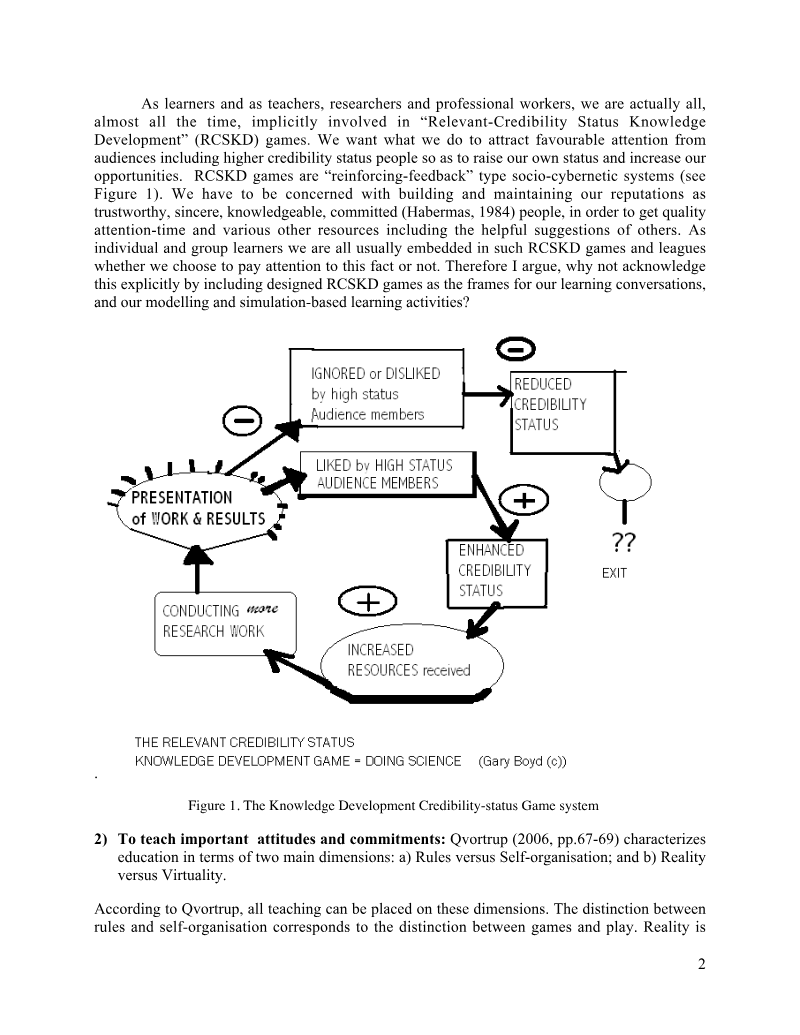
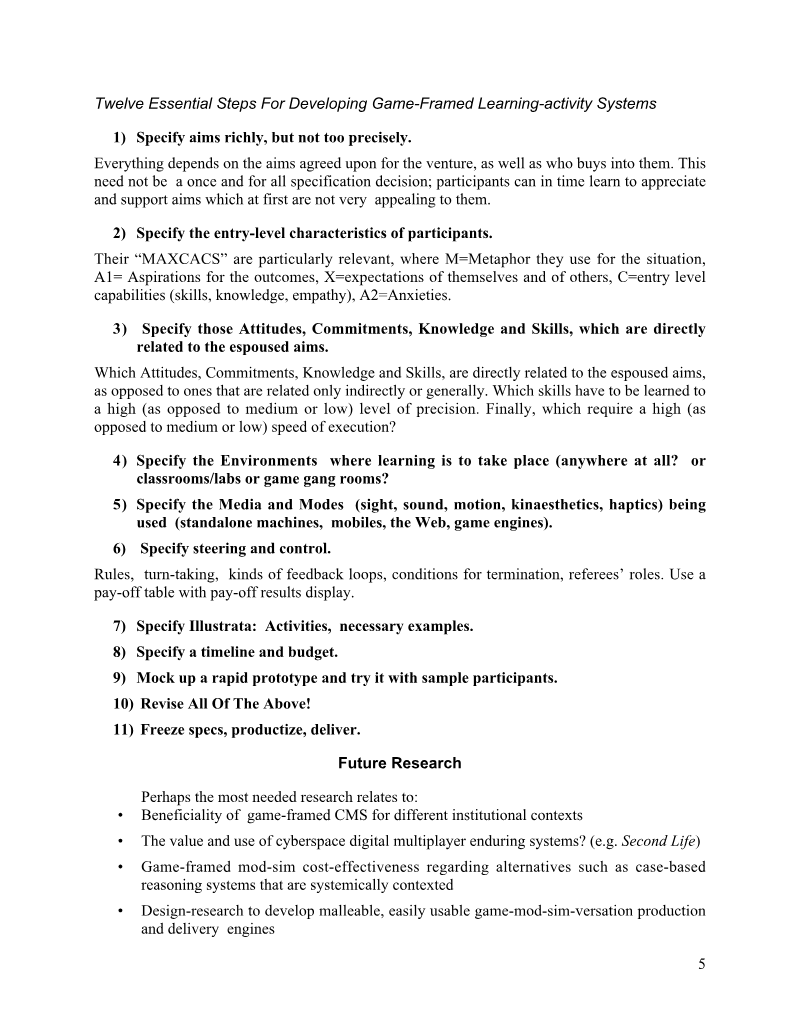
The primary purpose of this analysis is to advocate for the integration of multiplayer gaming, dynamic system modeling, and structured learning conversations as a superior framework for educational technology.
- Educational technology achieves higher engagement by framing complex socio-technical-ecological learning as multiplayer games that leverage human status-seeking and knowledge-development behaviors.
- Effective learning in these systems requires a synthesis of three specific conversational types: discussions on subject necessity, exploration of core content, and metacognitive regulation.
- The optimal development methodology for these environments is design-based research, which prioritizes evolutionary prototyping and formative evaluation over rigid, fully engineered production cycles.
Stacking the Deck for Learning: What Educational Game Designers Can Learn From Card Games
Educational game design achieves its highest potential when learning content is woven directly into the core mechanics of play rather than being treated as an external layer.
- Educational games achieve the highest efficacy when learning content is integrated as a functional component of the game’s core rules and mechanics rather than as an external reward system.
- Endogenous design, which weaves subject matter into the game's internal logic, forces players to interact with educational content to progress, resulting in deeper engagement than exogenous designs.
- Exogenous designs, which rely on superficial mapping of facts onto unrelated mechanics, often fail to provide the meaningful, play-centered experience required for effective learning.
Classifying Learning Objectives in Commercial Games
Commercial video games function as sophisticated learning environments that utilize inherent instructional strategies, often achieving educational efficacy without explicit pedagogical intent.
- Effective learning in games relies on embedding instructional objectives directly into core mechanics rather than treating them as arbitrary additions.
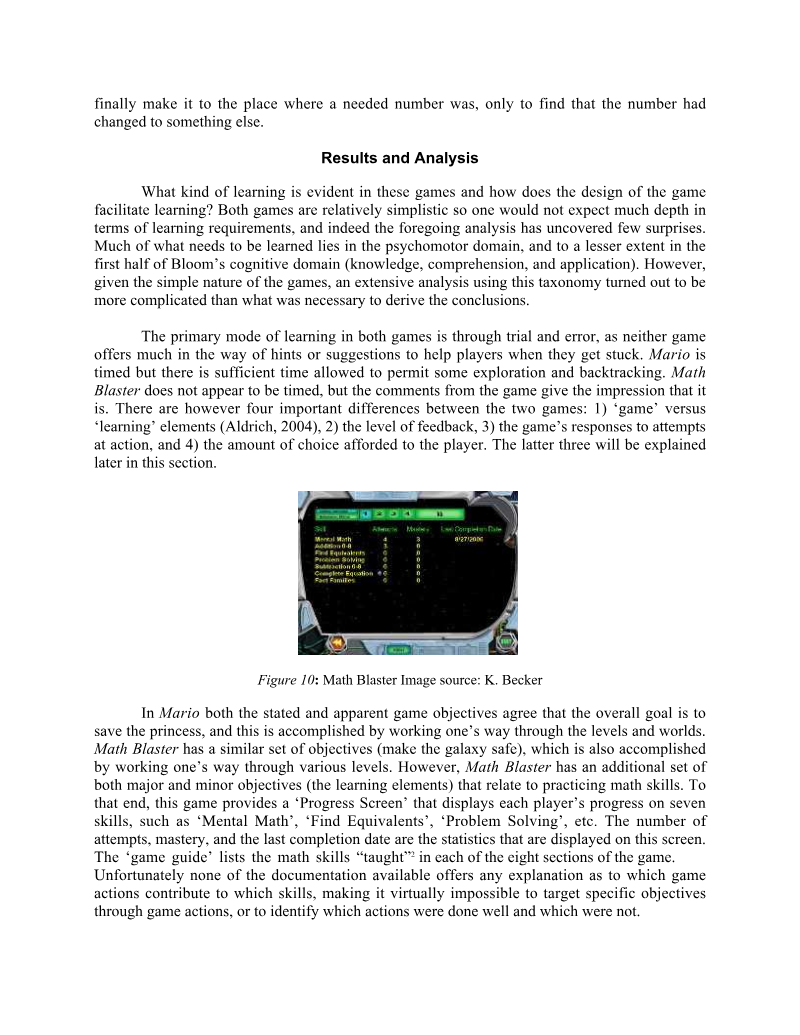
- Commercial titles like New Super Mario Bros. outperform educational games like Math Blaster by integrating challenges, feedback, and player agency into the gameplay loop.
- Successful learning environments utilize iterative trial-and-error processes, allowing players to master complex skills through natural difficulty progression.