
Game Developers Conference
Game Developers Conference (GDC, now the GDC Festival of Gaming) is the professional event for the games industry. It publishes recorded talks and interviews, annual industry survey reports such as the State of the Game Industry, and news articles.
Documents
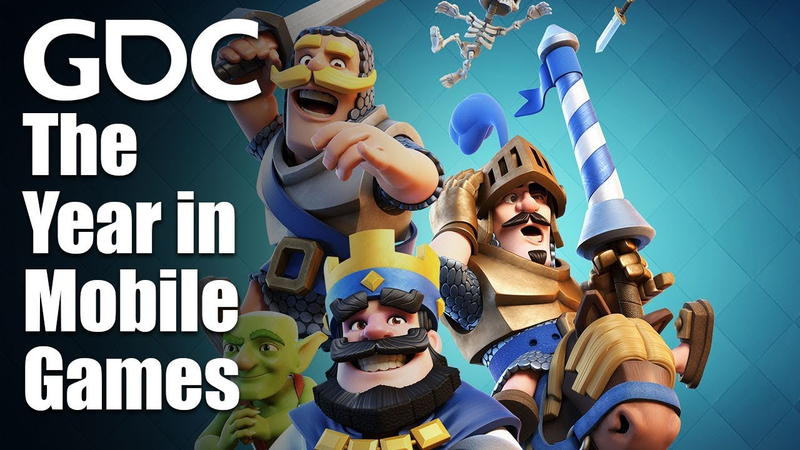
The Year in Mobile Games
The mobile gaming industry in 2018 underwent a significant transformation characterized by the decline of legacy top-grossing titles and the emergence of innovative engagement models.
- Long-term retention in 2018 mobile gaming is increasingly driven by meta-game structures like social guild systems and collection mechanics rather than traditional progression maps.
- Developers are successfully utilizing a 'meta-game transplant' strategy, which involves integrating competitive progression loops from core games into casual genres like sports.
- Traditional social integrations are failing, with adoption rates for connecting personal accounts falling below 50% due to user friction.

Writing Modular Characters for System-Driven Games
System-driven games often struggle to move beyond repetitive, procedurally generated characters that lack depth.
- Prioritize trait orthogonality by ensuring character traits function independently to maximize the variety of combinations and prevent repetitive, generic outcomes.
- Shift from simple data stacking to higher-order meaning by designing systems where disparate traits coalesce into coherent and memorable personalities.
- Broadcast character identity across multiple distinct channels—such as visual posture, UI elements, and dialogue—rather than relying on a single narrative stream.
Let's Be Realistic: A Deep Dive into How Games Are Selling on Steam
This analysis examines the current state of the PC game market on Steam, focusing on the financial realities for independent developers in the post-Steam Direct era.
- Approximately 82% of games released on Steam fail to generate revenue equivalent to the American minimum wage.
- Only 7% of developers earn enough revenue from their titles to fund the development of a subsequent project.
- For viable commercial titles, the average game generates roughly $12,500 in revenue during its first month and approximately $30,000 in its first year.
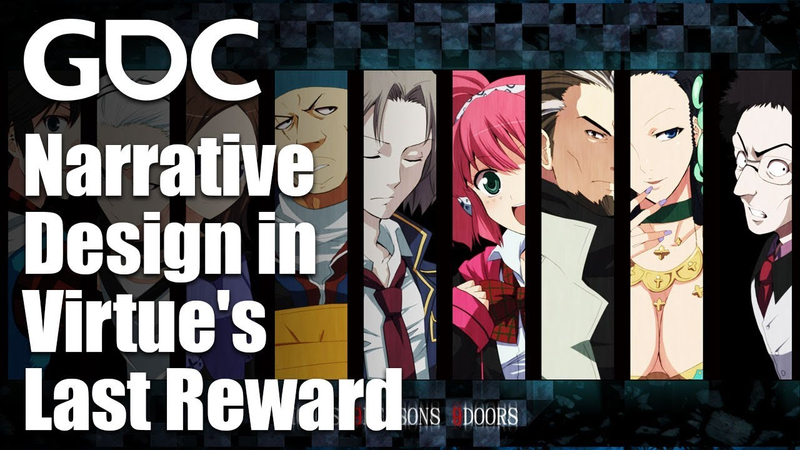
Visual Novels: Narrative Design in Virtue's Last Reward
Visual novels represent a distinct sub-genre of adventure games defined by a primary focus on narrative-driven selectivity.
- Visual novels differentiate themselves from passive media by using narrative-driven selectivity, where player choices fundamentally alter event progression within established rules.
- Advanced narrative design in titles like Virtue's Last Reward and Kamaitachi no Yoru shifts from rigid programming flags to mechanics that require players to apply knowledge gathered across disparate timelines.
- By blurring the line between player intellect and protagonist capabilities, developers can manipulate player discomfort to deepen thematic resonance and narrative immersion.
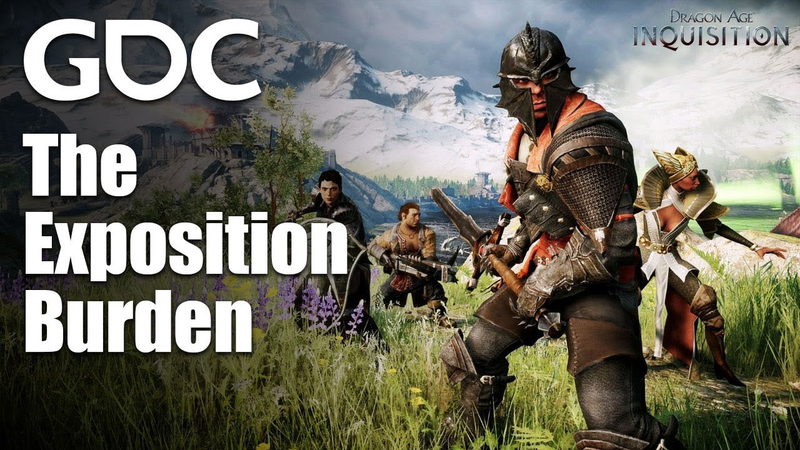
The Exposition Burden
Effective game narrative design requires a strategic approach to exposition, moving away from lengthy, static dialogue blocks that players often ignore.
- Exposition should be framed as a functional tool for solving immediate player problems rather than static information delivery.
- Implement a 'breadcrumb trail' methodology to break complex lore into sequential, bite-sized pieces that align with the player's current progression goals.
- Avoid including red herrings in narrative content, as players perceive all provided information as a promise of future relevance that must be fulfilled.
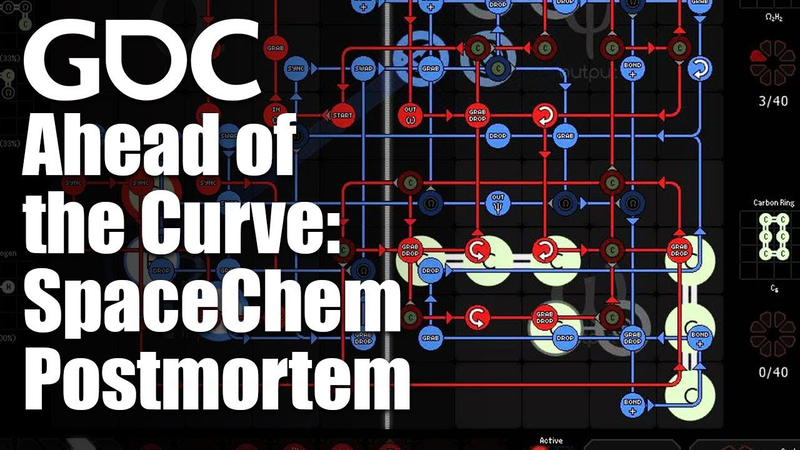
Ahead of the Curve: The SpaceChem Postmortem
The 2013 GDC session on the development of SpaceChem explores the design philosophy behind "design-based puzzle games," a genre characterized by open-ended problem solving rather than a single, fixed solution.
- SpaceChem generated approximately $700,000 in revenue, with Steam serving as the primary driver for its commercial success.
- The game pioneered 'design-based puzzle' mechanics, which prioritize open-ended problem solving and emergent tools over fixed, singular solutions to foster player ownership.
- Implementing performance histograms instead of traditional leaderboards allowed for egalitarian player comparison and optimization without fostering community toxicity.
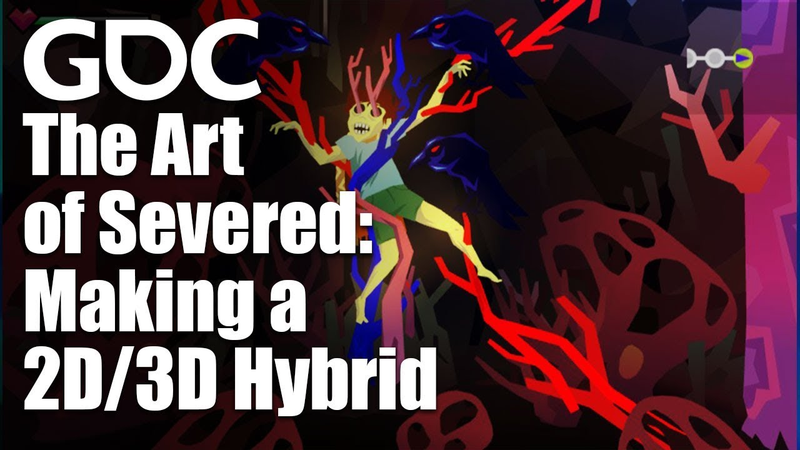
The Art of Severed: Making a 2D/3D Hybrid
Severed represents a deliberate departure from traditional platforming, functioning as a first-person, touch-based dungeon crawler that prioritizes a dark, minimalist aesthetic.
- Severed utilizes a cylinder-based camera system that maps 2D assets across three distinct layers to simulate 3D depth and rotation.
- The development team maintained the illusion of a seamless 3D environment by using a node-based movement system paired with cross-dissolves to mask visual deformations.
- The project prioritized a rapid prototyping schedule that mandated the creation of one enemy per week to ensure diverse and responsive combat behaviors.
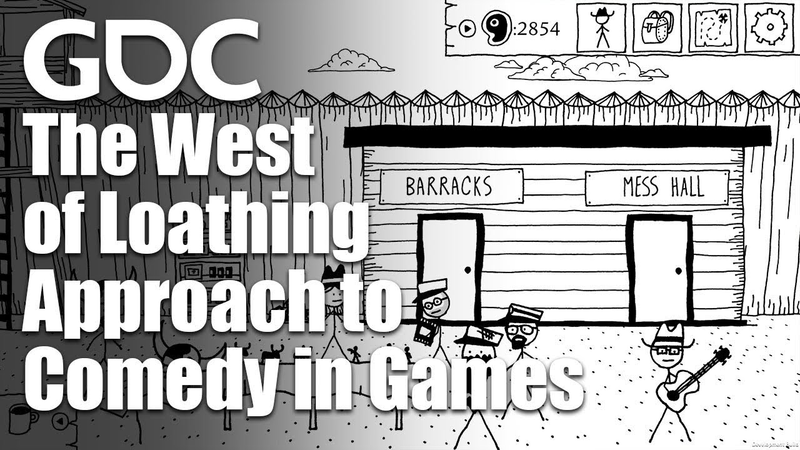
There's Goofs in Them Thar Hills: The West of Loathing Approach to Comedy in Games
The primary objective of game design in the context of comedic titles is to prioritize the integration of humor into every facet of the player experience, transforming the medium into a vehicle for consistent, high-volume wit.
- Prioritize humor as the primary design objective by embedding jokes into every element, including menus, item descriptions, and environmental interactions.
- Simplify gameplay mechanics like combat and puzzles to ensure they remain accessible and do not obstruct the delivery of the writing.
- Utilize a consistent, conversational narrator voice that breaks the fourth wall to guide the player and address design limitations through self-deprecation.
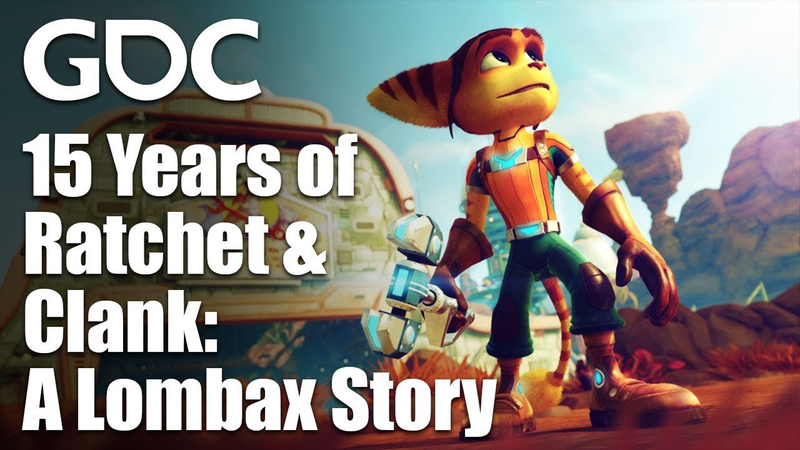
15 Years of Ratchet & Clank: A Lombax Story
The Ratchet & Clank franchise serves as a definitive case study in long-term brand management and iterative design within the action-platformer genre.
- The Ratchet & Clank franchise evolved from a loose, improvised narrative in the early PlayStation 2 era to a structured, lore-heavy universe, requiring the hiring of a dedicated senior writer in 2007 to standardize mythology across games, comics, and film.
- Insomniac Games transitioned the protagonist Ratchet from a sarcastic, snarky character in the original 2002 title to a more empathetic and curious hero to improve player connection and emotional depth.
- To maintain consistency across a growing team, the studio moved away from oral tradition and implemented standardized design documentation, such as a four-page manual specifically detailing the placement and stacking of crates.
Level Design Workshop: Balancing Action and RPG in Horizon Zero Dawn Quests
The development of Horizon Zero Dawn required a strategic reconciliation between the expansive freedom of open-world role-playing games and the precise, linear requirements of cinematic action titles.
- Horizon Zero Dawn adopted a funnel-based world structure that expands as the narrative progresses to resolve the conflict between open-world freedom and the pacing requirements of cinematic storytelling.
- Designers integrated linear shooter principles—specifically clear sightlines, verticality, and deliberate enemy placement—to transform static RPG environments into dynamic action spaces.
- The development team utilized a dual-focus strategy that balanced macro-level quest pacing with micro-level combat readability to reconcile disparate RPG and action design philosophies.

How to Build Nightly When There is No Night
The transition to globally distributed development teams has rendered the traditional nightly build cycle obsolete, as continuous, 24-hour check-in patterns create constant integration conflicts and degraded branch health.
- Global development teams have rendered traditional nightly build cycles obsolete because continuous, 24-hour check-in patterns lead to constant integration conflicts and degraded branch health.
- Large-scale projects like the FIFA franchise, which manage game assets exceeding 150GB, must abandon traditional branching in favor of a single-branch model supported by high-speed infrastructure.
- To maintain productivity in a single-branch environment, engineering teams must implement local proxies, snapshot-based backups, and strict sync-size limitations to prevent network saturation.

Primal Rage II from Heartbreak to Resurrection: The Journey After Cancellation
Primal Rage II represents a significant, albeit ill-fated, attempt by Atari Games to evolve the fighting game genre during the mid-1990s.
- Primal Rage II was a $2.3 million arcade project initiated on March 1, 1995, featuring a team of 20 developers and specialized stop-motion animation that ultimately led to its cancellation on December 5, 1996.
- The game's development was hindered by the high cost and time-intensive nature of stop-motion animation, which made character pre-visualization impossible and prevented the creation of a polished vertical slice.
- The project was effectively lost for nearly two decades due to the use of custom hardware and unorthodox graphics delivery methods that made standard emulation impossible until the game was discovered and leaked by fans.