Report2 pages
Videogiocatori in Italia
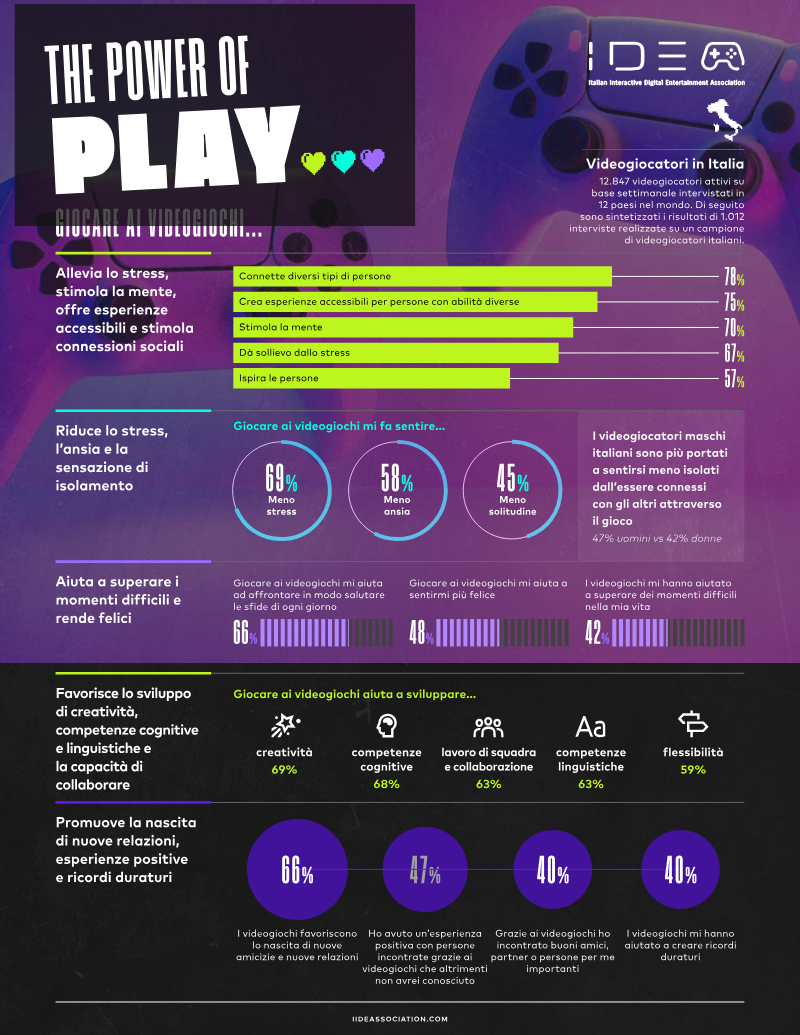
The Italian gaming landscape is characterized by a strong emphasis on the psychological and social benefits of interactive entertainment. Based on a survey of 1,012 Italian gamers, which forms part of a broader 12-country study involving 12,847 active weekly players, the research highlights that gaming serves as a vital tool for stress relief, cognitive stimulation, and social connection. A significant majority of respondents report that gaming alleviates stress and anxiety, fosters creativity, and enhances problem-solving skills, with 69% of participants noting that the medium stimulates the mind and improves teamwork capabilities.
Social interaction remains a cornerstone of the Italian gaming experience. While solitary play is common on a daily basis, approximately half of the respondents prefer engaging with others through online platforms on a weekly basis. This social dimension is particularly prevalent among male gamers, who show a higher propensity for online multiplayer interaction. Furthermore, the data indicates that gaming acts as a bridge for building new relationships, with many users reporting that they have formed lasting friendships or met significant partners through in-game experiences.
The demographic reach of gaming in Italy is broad, though usage patterns vary by age and gender. Engagement is most concentrated within the 19-34 age bracket, and there is a notable adoption of in-game communication tools, particularly among male players. Ultimately, the findings suggest that gaming is perceived not merely as a pastime, but as a constructive activity that supports mental well-being, facilitates personal development, and provides a reliable framework for community building in an increasingly digital society.
- 69% of Italian gamers report that interactive entertainment stimulates the mind and improves teamwork capabilities.
- Gaming is primarily utilized as a tool for stress relief, anxiety reduction, and the enhancement of cognitive skills like creativity and problem-solving.
- Approximately 50% of Italian gamers engage in online multiplayer sessions on a weekly basis, highlighting the medium's role as a social platform.
- The 19-34 age demographic represents the most concentrated segment of gaming engagement in Italy.
- In-game environments serve as significant social hubs, with many users reporting the formation of lasting friendships and romantic partnerships through digital play.
IIDEA
Report1 pages
Video Games as a Tool for Mental Resilience: Italy
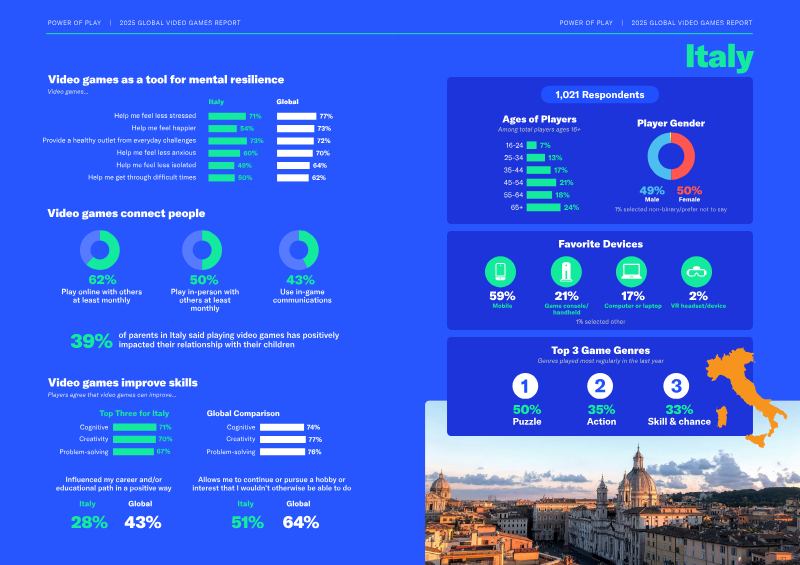
Video games serve as a significant mechanism for mental resilience and emotional regulation among the Italian population. A survey of 1,021 respondents aged 16 and older reveals that a substantial majority of Italian players utilize gaming to mitigate negative psychological states. Specifically, 71% of participants report that gaming helps reduce stress, while 60% use it to manage anxiety and 49% rely on it to combat feelings of isolation. These figures demonstrate that gaming functions as a vital outlet for navigating everyday challenges and difficult life transitions, with 50% of respondents explicitly noting that the medium helps them endure personal hardships.
The demographic profile of the Italian gaming community is broad, with the largest segment of players falling into the 45-54 age bracket at 21%, followed closely by those aged 65 and older at 24%. Mobile devices remain the primary platform for 59% of users, significantly outpacing consoles and computers. Social connectivity is a core component of the experience, as 62% of players engage in online multiplayer sessions at least monthly. Beyond emotional support, gaming is perceived as a tool for cognitive development, with 71% of players reporting improvements in cognitive function, 70% in creativity, and 67% in problem-solving skills.
The impact of gaming extends into familial and professional spheres, fostering positive interpersonal dynamics and skill acquisition. Approximately 39% of parents in Italy report that shared gaming experiences have strengthened their relationships with their children. While the influence on career paths remains lower in Italy at 28% compared to the global average of 43%, the medium continues to provide a unique space for pursuing hobbies and educational interests. Puzzle, action, and skill-based games represent the most popular genres, underscoring a preference for interactive experiences that challenge the mind while providing a structured environment for relaxation.
- Gaming is a primary tool for mental health in Italy, with 71% of players using it to reduce stress, 60% to manage anxiety, and 49% to combat isolation.
- The Italian gaming demographic is older than often assumed, with the 65+ age group representing 24% of players and the 45-54 bracket accounting for 21%.
- Mobile devices are the dominant gaming platform in Italy, utilized by 59% of the population compared to consoles and computers.
- Beyond emotional regulation, 71% of Italian players report improvements in cognitive function, 70% in creativity, and 67% in problem-solving skills.
- Social connectivity is a key driver of engagement, with 62% of players participating in online multiplayer sessions at least once a month.
IIDEA – Italian Interactive Digital Entertainment Association
Whitepaper13 pages
Gamer Motivation Profile: Empirical Research and Data Insights
The Gamer Motivation Profile provides a comprehensive empirical framework for understanding player behavior through a psychometric model that categorizes gaming preferences into twelve distinct motivational drivers. These drivers—organized into six primary clusters including Action, Social, Mastery, Achievement, Immersion, and Creativity—allow developers and marketers to quantify why specific audiences engage with particular game titles. By linking psychometric data with demographic variables and specific game franchises, the model offers a data-driven approach to audience segmentation and product positioning.
The research is built upon a robust dataset derived from over 1.75 million global participants who have completed the Gamer Motivation Profile survey. This large-scale, ongoing collection of data enables real-time analysis of player demographics, such as age, gender, and play frequency, alongside their psychological motivations. The methodology utilizes factor analysis to identify how various gaming preferences cluster together, providing a statistically sound basis for comparing individual titles against broader genre norms.
The primary utility of this research lies in its ability to generate actionable insights for game development and player acquisition. Through a dynamic dashboard, users can perform side-by-side comparisons of different franchises, identify "game neighborhoods" based on shared motivational profiles, and filter titles by specific criteria to uncover underserved market segments. By mapping how individual games deviate from genre benchmarks, the model helps stakeholders prioritize development features, refine marketing messaging, and identify potential competitors even across disparate genres. This analytical toolset is designed to assist industry professionals in making evidence-based decisions regarding portfolio management and the strategic targeting of core and mid-core gaming audiences.
- The Gamer Motivation Profile utilizes a dataset of over 1.75 million global participants to categorize player behavior into twelve distinct motivational drivers across six primary clusters.
- The psychometric model employs factor analysis to link player demographics, such as age and gender, with specific gaming preferences to enable precise audience segmentation.
- Developers can use the framework to compare individual game franchises against broader genre benchmarks to identify how specific titles deviate from industry norms.
- The research enables the identification of 'game neighborhoods' based on shared motivational profiles, allowing stakeholders to uncover underserved market segments across different genres.
- The analytical toolset supports evidence-based decision-making for portfolio management, feature prioritization, and the strategic targeting of core and mid-core gaming audiences.
+1
Quantic Foundry
Presentation18 pages
Gamer Motivation Profile: Empirical Research Methodology
The Gamer Motivation Profile provides an empirical framework for understanding player behavior by categorizing gaming preferences into twelve distinct motivational factors. Developed through psychometric techniques and factor analysis, the model identifies how specific gaming desires—such as competition, immersion, or mastery—cluster together to drive player engagement. The primary thesis posits that gaming motivations exist on a spectrum, where both high and low scores serve as critical indicators of a player’s preferences, allowing for a nuanced analysis of why individuals gravitate toward specific titles or genres.
The research is underpinned by a robust dataset of over 1.25 million unique gamers worldwide, with a demographic composition of 74% male, 22% female, and 3% non-binary, and a median age of 23. The geographic scope is global, with the largest concentrations of participants in North America (33%) and Western Europe (14%). Data collection relied on a five-minute online survey, which achieved high internal and test-retest reliability. By mapping these motivations against a 50th-percentile industry norm, the model allows analysts to visualize which factors are disproportionately important for specific game audiences, effectively linking demographic data with franchise-specific engagement.
The twelve motivations are grouped into six thematic clusters: Action-Social (Destruction, Excitement, Community, Competition), Mastery-Achievement (Challenge, Strategy, Completion, Power), and Immersion-Creativity (Fantasy, Story, Discovery, Design). Each factor is defined by its behavioral anchors, providing a clear distinction between high-intensity, goal-oriented play and more relaxed, expressive, or exploratory experiences. By utilizing this standardized methodology, the research offers an actionable tool for developers and industry analysts to decode player behavior, predict engagement patterns, and better align game design with the psychological needs of diverse gaming audiences.
- The Gamer Motivation Profile categorizes player behavior into twelve distinct factors grouped into six thematic clusters: Action-Social, Mastery-Achievement, and Immersion-Creativity.
- The model is built on a global dataset of over 1.25 million unique gamers, providing a statistically significant foundation for analyzing player engagement.
- The participant demographic is 74% male, 22% female, and 3% non-binary, with a median age of 23 and a primary geographic concentration in North America (33%) and Western Europe (14%).
- Gaming motivations exist on a spectrum where both high and low scores serve as critical indicators, allowing analysts to map specific player preferences against a 50th-percentile industry norm.
- The framework uses psychometric techniques and factor analysis to link demographic data with franchise-specific engagement, enabling developers to predict player behavior and align design with psychological needs.
+2
Quantic Foundry
Report23 pages
Gaming the Future: How to Make an Impact With Younger Generations
Gaming has become the dominant entertainment medium for younger generations, with 80 % of under‑18s actively gaming and Gen Z allocating up to 22 % of free time to play. The study, combining first‑party data from SuperAwesome and Anzu with social listening, qualitative research, quantitative surveys, syndicated data, brand lift studies and parent‑tracking panels, covers the UK, France, Germany, the United States and global markets from 2023‑24. A sample of 30 000 children, teens and young adults (ages 4‑24) plus parent responses informs the analysis.
Key findings show that gaming captures more attention than social media for Gen Z, with 55 % of under‑18s reporting a strong affinity for branded in‑game experiences. Younger gamers are highly receptive to ads, with 75 % of Gen Z players in the UK and US saying in‑game ads improve their experience, compared to 34 % of older adults. In‑game advertising drives higher brand recall (+7 pts) and purchase intent (+9 pts) for audiences under 34, and generates a “halo effect” that boosts brand affinity by up to 86 % among under‑18s. Parents report that children influence household spending, with 86 % saying their child’s opinions matter in purchases and 82 % prioritising items for children.
The report recommends a multi‑platform, contextual approach that respects emerging data‑protection regulations and Age Appropriate Design Codes. It emphasizes early engagement before brand loyalties lock at age 16, contextual targeting over behavioural profiling, and rigorous creative vetting to avoid manipulative design. The analysis underscores gaming’s strategic importance for reaching Gen Alpha and Gen Z, offering measurable lift across awareness, consideration and purchase stages.
- Gaming has become the primary entertainment medium for younger demographics, with 80% of under-18s actively gaming and Gen Z dedicating up to 22% of their free time to play.
- In-game advertising significantly outperforms traditional metrics for younger audiences, driving an 86% boost in brand affinity among under-18s and increasing brand recall by 7 points and purchase intent by 9 points for those under 34.
- Younger gamers are notably more receptive to in-game ads than older adults, with 75% of Gen Z players in the UK and US reporting that ads improve their gaming experience compared to only 34% of older adults.
- Children exert substantial influence on household economics, as 86% of parents report that their child’s opinions impact household purchases and 82% prioritize spending on items for their children.
- Gaming captures more attention than social media among Gen Z, with 55% of under-18s expressing a strong affinity for branded in-game experiences.
+4
AnzuApr 2026

Report80 pages
PC & Console Gaming Report 2026
1. Market trajectory What direction is the PC and console market heading in 2026? 8 What direction is the PC and console market heading in 2026? 2. Attention & value allocation Where do players spend time and money on PC and console? 17 3. Market concentration What happens if you are not a top-20 game? 45 4.
- PC player base is projected to exceed one billion by 2028, with a CAGR of 2.9% from 2025-2028, while console player growth moderates with a 2.2% CAGR in the same period.
- Almost two-thirds of console revenues (PlayStation and Xbox) go to the top 20 games, whereas on PC, over half of revenue comes from games ranked 21+.
- PC is the only platform effectively monetizing Free-to-Play (F2P) games, with revenue holding stable despite falling playtime in the west; on console, F2P revenue is dropping faster than engagement.
- Games ranked 21+ are capturing a growing share of playtime across platforms, with PC showing the strongest shift since 2022, indicating market disaggregation and growth from outside the top 20 titles.
- Premium game revenue is growing on PC and PlayStation, but Xbox's more modest growth cannot offset declines in F2P and Call of Duty.
+3
NewzooApr 2026
Report25 pages
Let’s Play! 2024: The Esports Market in Southeast Asia
The report examines the esports market across Southeast Asia (SEA) for 2024, drawing on a summer‑2024 consumer survey of 14,250 respondents representing the region’s online population aged 16–65. The study focuses on audience reach, engagement maturity, demographic composition, consumption habits, and monetisation challenges. SEA emerges as the world’s most extensive esports market, with a 75 % overall reach but only 32 % of viewers engaging regularly; about half of those regular viewers watch more than seven hours per week. Mobile gaming dominates, accounting for roughly 55 % of esports consumption and driving the shift toward digital-first viewing platforms such as YouTube Gaming, Facebook Gaming, and local streaming services. Gender distribution shows 43 % female viewership, slightly higher than in traditional sports, while the audience is markedly younger—81 % of viewers are Millennials or Gen Z. Compared to traditional sports, esports has a comparable male share but a younger demographic profile and higher urban concentration.
Country‑level snapshots reveal Vietnam, Malaysia, and the Philippines as leaders in regular viewership (over 70 % of aware audiences), whereas Singapore lags behind. The report highlights a significant drop‑off from sporadic to regular viewership, underscoring the need for brands and tournament organisers to build stronger brand equity and leverage influencers. Engagement data indicate that esports audiences are highly willing to pay for free‑time activities, yet they also maintain many hobbies, presenting both opportunity and competition for attention. Overall, the findings suggest that SEA’s esports ecosystem is maturing into a mainstream entertainment sector, offering substantial growth potential for advertisers, publishers, and league operators willing to invest in mobile‑centric, data‑driven engagement strategies.
- Southeast Asia is the world's largest esports market by reach at 75%, though regular viewership remains limited to 32% of the total audience.
- Mobile gaming drives 55% of all esports consumption in the region, fueling a shift toward digital-first platforms like YouTube Gaming, Facebook Gaming, and local streaming services.
- The audience is predominantly young, with 81% of viewers belonging to the Millennial or Gen Z generations, and features a 43% female viewership share.
- Vietnam, Malaysia, and the Philippines lead the region with regular viewership rates exceeding 70% among those aware of esports, while Singapore shows lower engagement levels.
- Approximately half of all regular viewers consume more than seven hours of esports content per week.
+2
DeloitteFeb 2026
Report19 pages
Southeast Asia Gaming Consumer Economy
The Southeast Asia Gaming Consumer Economy report, produced jointly by Telekom Malaysia and twimbit in Q2 2022, examines the region’s rapidly expanding gaming market. Six key economies—Indonesia, Malaysia, the Philippines, Singapore, Thailand and Vietnam—account for 85 % of SEA’s gamer population, which is projected to reach 367.8 million by 2025, representing more than half of the region’s total population. Mobile gaming dominates, with 70 % of in‑game revenue and a 13.7 % CAGR in consumer spend from 2018 to 2021, totaling US$5.57 billion. Urbanisation and a youthful demographic drive high willingness to spend, with 64 % of gamers willing to pay; average annual spend varies from US$9 in Indonesia to US$189 in Singapore.
Genre preferences skew toward action, strategy and casual titles; 86 % of players engage in the top five genres. Gender parity is notable, especially on mobile where female gamers constitute 47 % of the market and are highly spend‑active. eSports viewership is nascent but growing, with SEA tournaments ranking among the world’s most‑watched events; mobile eSports is expected to lead future growth as 5G and cloud gaming mature. Monetisation remains dominated by free‑to‑play with in‑app purchases (86 % of revenue), supplemented by hybrid and subscription models.
Methodologically, the study synthesises industry interviews, published data, annual reports, and platform analytics. The report recommends that developers adopt edge computing for low‑latency play, deliver cross‑device flexibility, and build scalable cloud architectures to meet the region’s dynamic demand.
- The Southeast Asian gaming population is projected to reach 367.8 million by 2025, with Indonesia, Malaysia, the Philippines, Singapore, Thailand, and Vietnam accounting for 85% of the total regional gamer base.
- Mobile gaming is the dominant market force, generating 70% of in-game revenue and achieving a 13.7% CAGR in consumer spending between 2018 and 2021, reaching a total of US$5.57 billion.
- Monetization is heavily reliant on free-to-play models with in-app purchases, which account for 86% of total revenue, though hybrid and subscription models are increasingly utilized.
- 64% of gamers in the region are willing to pay for content, though average annual spending varies significantly by market, ranging from US$9 in Indonesia to US$189 in Singapore.
- Gender parity is high in the mobile sector, where female gamers represent 47% of the market and demonstrate high levels of spending activity.
+2
Telekom MalaysiaFeb 2026

Report88 pages
Gaming and Esports in Vietnam: A New Arena for Brands
Vietnam’s gaming and esports landscape has evolved into a high‑growth, culturally resonant channel for brands targeting the country’s youthful, tech‑savvy population. With one‑third of the populace engaged in esports and an adult gamer rate of 85 %—the highest globally—the market is driven by widespread smartphone penetration, robust 4G coverage, and a demographic where roughly 70 % are under 25. Mobile titles dominate, particularly MOBAs and FPS games, while PC gaming remains significant; casual players account for nearly half of the audience.
Consumer behavior shows intense engagement: gamers spend 1–3 hours per session, seek entertainment (85.9 %), stress relief (74.7 %), and social interaction (46.5 %). Streaming platforms such as YouTube Gaming and Facebook Gaming lead, with Twitch lagging behind. Brands that sponsor mobile esports events or partner with key opinion leaders (KOLs) can tap into this high‑interaction environment, especially as 51 % of gamers trust KOL recommendations and 42 % purchase endorsed products.
Investment trends confirm the sector’s appeal. Global esports spend reached $844 million in 2021, with 9.9 % allocated to Vietnam. In‑game advertising that offers prizes (49 %) and video content (40 %) yields the strongest purchase intent, particularly for electronics, tech, and gaming accessories. Best practices emphasize customized creative assets, reward‑based incentives, and authentic collaborations—examples include Adidas “Time In” with Ninja, Dashing’s team sponsorship, and Mastercard’s League of Legends partnership—demonstrating higher recall than traditional sports ads.
Practical engagement strategies recommend experiential pop‑ups, in‑game placements, and co‑creation with publishers (e.g., Louis Vuitton’s LVxLOL) to deliver authentic touchpoints. Cause‑based campaigns resonate with Gen Z’s social consciousness, while treating esports as a “co‑business” encourages integrated, audience‑centric messaging. Overall, Vietnam’s rapidly expanding mobile and PC gaming ecosystem offers brands a fertile arena for digital fluidity, agile research, influencer partnerships, and localized media strategies to capture high‑growth engagement.
- Vietnam has the world's highest adult gamer rate at 85%, with a demographic where 70% of the population is under 25 and one-third of citizens are engaged in esports.
- Mobile gaming dominates the market, supported by high smartphone penetration and 4G coverage, with gamers typically spending 1–3 hours per session.
- Influencer marketing is highly effective, as 51% of gamers trust key opinion leader (KOL) recommendations and 42% report purchasing products endorsed by them.
- In-game advertising featuring prizes (49%) and video content (40%) generates the strongest purchase intent, particularly for electronics, tech, and gaming accessories.
- Vietnam captured 9.9% of the $844 million global esports spend in 2021, signaling significant market appeal for international investment.
+3
Decision LabFeb 2026

Report9 pages
Mobile App User Trends: MENA Ramadan 2026
The analysis focuses on mobile application usage patterns observed during the Ramadan period of 2026 across the Middle East and North Africa (MENA) region. The primary objective is to quantify shifts in user engagement, subscription behavior, and platform preference relative to the preceding year and a broader baseline average. Key metrics examined include overall app usage, subscription growth, in‑app purchases, and social media interaction.
Findings indicate a pronounced rise in overall app engagement during Ramadan 2026, with total usage increasing by approximately 111 % compared to the same period in 2025. Subscription activity shows a 42 % uptick, while in‑app purchase volume climbs by 91 %. Social media engagement metrics—measured through likes, shares, and comments—exhibit a 63 % increase. When benchmarked against the average growth rate for the same timeframe (2025‑2026), these figures represent a significant acceleration, suggesting heightened consumer activity during the holy month.
The data set covers all MENA markets and aggregates daily usage logs from a representative sample of mobile devices. The methodology involved longitudinal tracking of app sessions, transaction records, and social media interactions over the 30‑day Ramadan period. Comparative analysis was performed against both the previous year’s Ramadan metrics and a rolling 12‑month average to isolate seasonal effects.
In conclusion, the Ramadan period of 2026 drove substantial growth across multiple facets of mobile app consumption in MENA, with overall usage and monetization metrics surpassing historical trends. These insights underscore the strategic importance of tailoring app offerings, promotional campaigns, and user experience enhancements to align with cultural and religious calendars in the region.
- Overall mobile app engagement in the MENA region during Ramadan 2026 increased by 111% compared to the same period in 2025.
- In-app purchase volume saw a significant surge, rising by 91% during the 30-day Ramadan period.
- Social media interaction, measured by likes, shares, and comments, grew by 63% compared to the previous year.
- Subscription activity experienced a 42% uptick during the 2026 Ramadan period.
- Growth metrics across usage and monetization significantly outperformed both the previous year's Ramadan data and the rolling 12-month baseline average.
+2
InvestGameJan 2026

Report45 pages
Why Chance-Based Mechanics Keep Us Hooked
Chance-based mechanics drive player engagement by prioritizing the psychological thrill of anticipation over the actual value of rewards. This engagement is rooted in the release of dopamine during the period of uncertainty, where the wait for a result creates more neurological stimulation than the prize itself. By utilizing unpredictable reward schedules and the "near-miss" effect, developers foster a persistent belief that a significant win is imminent. This strategy is exemplified by the commercial success of Monopoly GO!, which generates between $100 million and $125 million in monthly revenue through a "saw-tooth" gameplay loop that oscillates between resource depletion and sudden, event-driven recovery.
The effectiveness of these systems relies on a "pressure and release" cycle designed to maintain emotional tension without causing player burnout. High-volatility mechanics, such as digital wheels and randomized heists, are tuned to prioritize emotional impact over mathematical fairness. For instance, probabilities are often manipulated to limit low-tier prizes—sometimes to as little as 13%—while visually emphasizing jackpots to maximize excitement. Even traditionally negative outcomes are reframed as positive opportunities; in certain high-performing titles, escape rates from penalty mechanics like "Jail" are set as high as 80% to ensure the player remains within the rewarding flow of the game.
Ultimately, long-term retention is achieved through the careful management of sensory-rich animations and gacha-style collection systems that create frequent "emotional spikes." By blending live events with boosters that temporarily alter the odds, developers create a dynamic environment where the player feels a constant sense of progression. This sophisticated orchestration of risk, hope, and visual feedback ensures that the psychological journey toward a potential reward remains compelling enough to sustain high levels of monetization and daily active usage across the mobile gaming landscape.
- Monopoly GO! generates $100 million to $125 million in monthly revenue by utilizing a 'saw-tooth' gameplay loop that alternates between resource depletion and sudden, event-driven recovery.
- Player engagement is driven by the dopamine release associated with the anticipation of rewards rather than the intrinsic value of the prizes themselves.
- Developers manipulate game probabilities to prioritize emotional impact over mathematical fairness, such as limiting low-tier prize outcomes to as little as 13%.
- Penalty mechanics are often tuned to ensure player retention, with some titles setting escape rates from negative states like 'Jail' as high as 80%.
- High-volatility mechanics, including digital wheels and randomized heists, are paired with sensory-rich animations to create frequent 'emotional spikes' that sustain daily active usage.
+1
Sensor TowerJan 2026

Report8 pages
India Player Behavior & Market Insights: August 2026
The Indian gaming landscape is undergoing a significant demographic and structural transformation as of August 2026. Female participation has reached near parity, climbing to 49% of the total player base, up from 43% in 2023. This shift is accompanied by a diversification in revenue streams, as non-battle royale mobile titles have successfully expanded their market share from 53.2% to 62.8% over the past three years. Younger demographics are increasingly gravitating toward user-generated content platforms like Roblox and Minecraft, driven by a preference for integrated social interaction and viral, minigame-based gameplay loops.
Payment behaviors in the region remain heavily localized, with the Unified Payments Interface serving as the primary transaction method for 84.6% of players. This reliance on digital infrastructure far outpaces traditional credit card usage, which sits at 31.5%. Furthermore, a notable segment of the market, totaling 31.5%, actively bypasses standard app stores in favor of web stores, third-party platforms, and top-up cards to acquire in-game content. These trends suggest a maturing ecosystem where players prioritize convenience and alternative payment channels over legacy distribution models.
Sentiment regarding generative artificial intelligence has shifted toward increased caution among both players and developers. This cooling of enthusiasm is largely attributed to economic anxieties surrounding the potential displacement of jobs within the industry. As the market continues to evolve, stakeholders must navigate these changing consumer attitudes toward technology while adapting to a gaming population that is increasingly diverse, socially connected, and technologically savvy. These insights reflect a broader trend of market stabilization and professionalization within the Indian digital entertainment sector.
- Female participation in the Indian gaming market has reached near parity, rising to 49% of the total player base as of August 2026, up from 43% in 2023.
- Non-battle royale mobile titles have successfully expanded their market share from 53.2% to 62.8% over the past three years.
- The Unified Payments Interface (UPI) is the dominant transaction method, utilized by 84.6% of players, significantly outpacing credit card usage at 31.5%.
- Approximately 31.5% of the market now bypasses standard app stores, opting instead for web stores, third-party platforms, and top-up cards.
- Younger demographics are increasingly shifting toward user-generated content platforms like Roblox and Minecraft, favoring integrated social interaction and minigame-based loops.
+3
Niko PartnersJan 2026
Report10 pages
Reconnecting with Gen Z Mobile Gamers: UK
Mobile gamers aged 18 to 24 represent a critical demographic for the UK gaming industry, characterized by high engagement levels but increasing volatility. While 79% of this cohort plays mobile games at least several times a week, their overall time investment is declining, dropping to an average of 4.4 hours per week. This shift is driven by intense competition from other digital entertainment channels, with 57% of Gen Z players reporting that social media, streaming, and short-form video content are actively displacing their mobile gaming time.
The research, based on an online survey of 1,605 UK residents, reveals that Gen Z exhibits significantly lower title loyalty than the general population. Approximately 57% of these players frequently rotate between games, constantly seeking new experiences. This churn is exacerbated by dissatisfaction with current industry practices; 71% of Gen Z players cite intrusive monetization and advertising as primary deterrents, while 62% feel there is a lack of fresh, appealing content in the current market.
To recapture this audience, developers must pivot toward discovery strategies rooted in social proof and authentic gameplay. Gen Z discovery is increasingly spontaneous, relying on creator content and peer recommendations rather than traditional marketing assets. Successful engagement strategies require front-loading immediate rewards, designing for shareable social moments, and implementing fair, non-intrusive monetization models. By prioritizing short-form satisfaction and consistent content updates, developers can better align with the fragmented attention spans and high expectations of this demographic, ultimately fostering more sustainable long-term retention.
- 71% of UK Gen Z mobile gamers cite intrusive monetization and advertising as the primary reason for abandoning games.
- Gen Z mobile gaming time is declining to an average of 4.4 hours per week as 57% of players shift their attention to social media, streaming, and short-form video.
- Title loyalty is low among this demographic, with 57% of players frequently rotating between games in search of new experiences.
- 62% of Gen Z players report a lack of fresh, appealing content in the current mobile gaming market.
- While 79% of 18- to 24-year-olds play mobile games at least several times a week, engagement is increasingly volatile and reliant on spontaneous discovery through creator content and peer recommendations.
+2
BryterJan 2026
Report23 pages
The State of Web Gaming Report 2026: A Data-Driven Guide to the Untold Reality of Contemporary Web Gaming
Web gaming is currently undergoing a significant renaissance, driven by a growing consumer preference for frictionless, instant-access experiences that bypass the cumbersome download and update requirements characteristic of traditional PC and console platforms. This shift reflects a broader evolution in gaming habits, where time-poor users increasingly favor rapid, cross-platform engagement. As of 2026, the sector has transitioned from a legacy medium into a high-value discovery layer, serving as a vital top-of-funnel acquisition tool for the wider gaming ecosystem.
Data indicates that web gaming audiences are remarkably engaged, with 37 percent of users playing multiple times daily. This high level of interaction is complemented by a strong conversion pipeline, as 62 percent of players eventually purchase or download titles they initially encountered through a browser. Despite these compelling metrics, a persistent perception gap remains among some developers who view the web as a low-quality channel. However, the industry is actively correcting this bias, with 53 percent of developers planning to port mobile titles to the web within the coming year to mitigate widespread discoverability challenges.
The global market for web gaming is characterized by low barriers to entry and high competition, yet HTML5 development provides a cost-effective strategy for reaching deeply engaged audiences. By leveraging the web as a primary discovery channel, developers can effectively bridge the gap between casual browser play and long-term ecosystem investment. Ultimately, the integration of web-based gaming into broader distribution strategies is no longer optional but a critical growth imperative for developers seeking to maintain relevance in an increasingly fragmented digital landscape.
- Web gaming has evolved into a primary top-of-funnel acquisition tool, with 62 percent of browser-based players eventually purchasing or downloading the titles they first encountered on the web.
- The web gaming audience demonstrates high retention, with 37 percent of users engaging with content multiple times per day.
- To combat mobile discoverability challenges, 53 percent of developers plan to port their mobile titles to the web within the next year.
- The shift toward web gaming is driven by a consumer preference for frictionless, instant-access experiences that eliminate the need for traditional platform downloads and updates.
- HTML5 development serves as a cost-effective strategy for developers to reach highly engaged audiences while navigating a market defined by low barriers to entry and high competition.
+1
PokiJan 2026
Report66 pages
State of India Mobile App Market 2026 Report
India has solidified its position as the world’s largest mobile app market by volume, with annual downloads stabilizing at approximately 25 billion. The market is currently undergoing a structural transition from aggressive user acquisition toward habit-driven engagement and monetization. In-app purchase revenue surpassed $1 billion in 2025 and is projected to reach $1.25 billion by 2026. This financial growth is increasingly fueled by non-gaming sectors, specifically Utilities, Media, and Generative AI, alongside a notable rise in subscription-based models for premium digital services.
Geographically, the center of growth has shifted toward Tier-2 and Tier-3 cities, where localized services in beauty, apparel, and quick commerce are seeing outsized success. Quick commerce and food delivery have become dominant engines of daily habit, with engagement growing 55% year-over-year as platforms pivot toward retention-led strategies. In the mobility sector, the rise of affordable, localized options like bike taxis and autos reflects a broader consumer demand for cost-efficient digital solutions tailored to the Indian infrastructure.
The financial and entertainment landscapes are also evolving into mobile-first ecosystems. Fintech platforms now lead in engagement over traditional banks, with a strategic shift toward credit, lending, and investment services for younger demographics. In media, short-form video and "short drama" apps are outpacing traditional streaming platforms in both download growth and monetization efficiency. Ultimately, the Indian mobile economy is maturing into a value-led market where success is defined by high-frequency utility, social discovery, and the integration of AI tools into daily routines.
- India remains the world’s largest mobile app market by volume with 25 billion annual downloads, shifting focus from user acquisition to habit-driven engagement and monetization.
- In-app purchase revenue is projected to reach $1.25 billion by 2026, driven increasingly by non-gaming sectors like Utilities, Media, and Generative AI.
- Quick commerce and food delivery platforms have seen a 55% year-over-year increase in engagement as they transition toward retention-led strategies.
- Growth is shifting toward Tier-2 and Tier-3 cities, where localized services in beauty, apparel, and quick commerce are achieving outsized success.
- Fintech platforms are outpacing traditional banks in engagement by targeting younger demographics with credit, lending, and investment services.
+1
Sensor TowerJan 2026
Report25 pages
Live Streaming Basics: A Comprehensive Introduction
The global live-streaming landscape underwent a transformative shift in the third quarter of 2025, characterized by record-breaking viewership and a significant redistribution of market power. Total viewership reached 9.6 billion hours across traditional platforms, representing a 13% year-over-year increase. However, the most profound development was the emergence of TikTok Live as a dominant force, recording 9.1 billion hours watched and nearly doubling the output of Twitch. This surge reflects a broader consumer pivot toward mobile-integrated content and has resulted in Twitch’s market share falling below 50% for the first time, a decline exacerbated by aggressive internal crackdowns on fraudulent viewbotting.
Content trends during this period favored non-gaming categories and massive live events over traditional gameplay. Non-gaming content led with 1.7 billion hours watched, while Ibai’s La Velada del Año V set a new industry benchmark with 9.2 million peak concurrent viewers. Although esports viewership grew by 8% to 805 million hours, the sector saw a notable migration of audiences from Twitch toward YouTube and TikTok, largely driven by the Esports World Cup. In the gaming sector, EA Sports FC 26 emerged as the quarter's premier release, generating 62.3 million hours watched within its first month.
Individual creator performance and brand integration reached new heights of commercial impact. Kai Cenat dominated the landscape, leading all creators with 91.4 million hours watched and setting a record with 1.1 million subscriptions during his "Mafiathon 3" event. This level of engagement translated into significant brand visibility, as evidenced by a 26,000-mention surge for Crocs during Cenat’s broadcast. While female viewership was led by ExtraEmily and the VTuber category saw Usada Pekora reclaim the top spot, the overarching trend indicates that high-production marathons and cross-platform accessibility are now the primary drivers of growth and monetization in the streaming economy.
- TikTok Live has emerged as a dominant market force with 9.1 billion hours watched, causing Twitch’s market share to drop below 50% for the first time.
- Total global live-streaming viewership reached 9.6 billion hours in Q3 2025, marking a 13% year-over-year increase.
- Non-gaming content is now the primary driver of viewership with 1.7 billion hours watched, while massive live events like 'La Velada del Año V' set new records with 9.2 million peak concurrent viewers.
- Esports viewership grew 8% to 805 million hours, though audiences are increasingly migrating from Twitch to YouTube and TikTok, influenced by events like the Esports World Cup.
- High-production marathon events are driving record engagement, exemplified by Kai Cenat’s 'Mafiathon 3' which generated 1.1 million subscriptions and significant brand spikes.
Stream HatchetOct 2025
Report133 pages
Vorhaus Digital Strategy Study: All Findings 2025
The digital landscape in the United States has reached a pivotal turning point as smartphones and connected televisions officially surpass traditional broadcast media as the primary vehicles for entertainment. With smart TV penetration reaching 63% and subscription services now more prevalent than cable or satellite, the American household is firmly rooted in a digital-first ecosystem. This transition is fueled by a surge in spending among younger consumers aged 18–34, who have increased their annual digital media expenditure by $235 over the past year. While the average household maintains 3.5 subscription video services, a growing trend of "subscription cycling" suggests consumers are becoming more price-sensitive and strategic with their digital commitments.
Gaming has emerged as a near-universal activity, with 80% of the population engaging across various platforms and over half of the country playing mobile games daily. The industry is seeing a significant rise in social and cloud gaming, alongside a burgeoning interest in user-generated content and non-programmer creation tools. Although traditional game discovery channels are losing influence, total annual in-game spending has risen dramatically. Notably, 70% of computer gamers now spend $30 or more annually, and there is a growing consumer appetite for the ability to trade virtual goods between different titles, potentially facilitated by blockchain technology.
Emerging technologies reveal a stark generational divide in adoption and sentiment. While the 18–34 demographic shows double-digit increases in familiarity and interest regarding the Metaverse and Virtual Reality, interest in Augmented Reality has declined sharply across all age groups. Cryptocurrency remains a niche expertise, yet a significant portion of younger investors plan to commit substantial capital to the sector in the coming year. Despite these advancements, privacy remains a critical barrier; over 60% of Americans express deep concerns regarding information security and the use of personal data for advertising. This tension between high digital engagement and data anxiety defines the current state of the American digital consumer.
- Digital-first entertainment has become the US standard, with smart TV penetration at 63% and connected devices officially surpassing traditional broadcast media.
- Gaming is now a near-universal activity with 80% of the population participating, driven by daily mobile play and a significant rise in total annual in-game spending.
- Consumers are adopting 'subscription cycling' to manage costs, despite the average household maintaining 3.5 video services and younger consumers (18–34) increasing annual digital media spending by $235.
- Privacy concerns are a major market friction, with over 60% of Americans expressing deep anxiety regarding information security and the use of personal data for advertising.
- 70% of computer gamers now spend at least $30 annually, with a growing consumer demand for cross-title virtual goods trading potentially enabled by blockchain.
+1
Vorhaus AdvisorsAug 2025

Report31 pages
Les Français et le jeu vidéo: 2025
The French video game market has reached a historic peak in engagement, with 40.2 million individuals—representing 66% of the national population—identifying as players. The demographic profile of the average gamer has stabilized at 40 years old, characterized by near gender parity. Notably, women now constitute a 55% majority within the 16-30 age bracket, while the senior segment has expanded to 5.4 million participants. This broad adoption is accompanied by an increase in weekly playtime to nearly eight hours, driven largely by a preference for social and multiplayer experiences. Approximately 86% of players utilize multiplayer modes, and 60% report forming direct friendships through gaming, illustrating the medium's role as a primary driver of social cohesion across generations.
Professional interest in the sector is also rising, particularly among young adults, over a third of whom have considered industry careers. This cultural integration is supported by a robust regulatory and educational framework. Parental involvement is high, with 67% of parents actively monitoring their children’s gaming habits and 95% expressing awareness of parental control systems. The PEGI classification system remains the cornerstone of consumer protection, utilizing independent verification bodies to ensure content appropriateness across more than 35,000 titles. This system facilitates informed purchasing decisions and maintains safety standards for the nation's "digital native" demographics.
The industry’s operational landscape is anchored by the Syndicat des Éditeurs de Logiciels de Loisirs (SELL), which represents major publishers and manages significant cultural milestones such as Paris Games Week. Beyond market intelligence and event organization, the sector emphasizes social responsibility through initiatives like PédagoJeux and various inclusion-focused partnerships. These efforts ensure that the French gaming ecosystem remains both economically vibrant and socially responsible, balancing rapid growth with a commitment to player safety and diversity.
- The French video game market has reached 40.2 million players, representing 66% of the national population with an average player age of 40.
- Social and multiplayer gaming are primary engagement drivers, with 86% of players using multiplayer modes and 60% reporting the formation of direct friendships through gaming.
- Gender parity is a defining characteristic of the market, with women now comprising a 55% majority of players in the 16–30 age demographic.
- Parental engagement is high, as 67% of parents actively monitor gaming habits and 95% are aware of parental control systems.
- The PEGI classification system serves as the primary consumer protection framework, covering more than 35,000 titles to ensure content appropriateness.
+1
SELL – Syndicat des Éditeurs de Logiciels de LoisirsJul 2025
Report38 pages
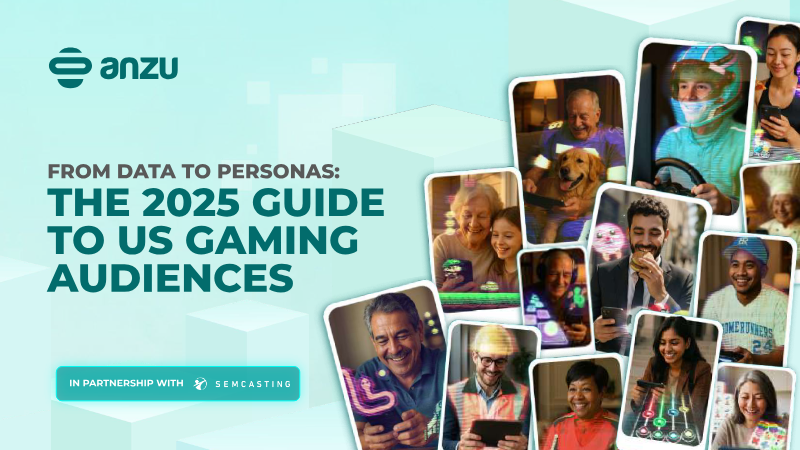
From Data to Personas: The 2025 Guide to US Gaming Audiences
The modern gaming landscape in the United States has evolved into a diverse, cross-generational ecosystem that fundamentally challenges outdated stereotypes of the solitary, young male player. Current data indicates that today’s gaming population is characterized by middle-to-high-income individuals who prioritize quality, convenience, and social connectivity. Far from being sedentary, these consumers frequently integrate digital play with active, outdoor lifestyles, sports participation, and family-oriented activities. This shift reflects a broader demographic reality where gaming serves as a primary form of entertainment across all age groups and socioeconomic backgrounds.
Consumer behavior within this segment extends well beyond the digital realm, as gamers demonstrate significant purchasing power and a strong affinity for premium brands, casual dining, and higher education. Analysis reveals a consistent tendency for these audiences to over-index on online shopping and delivery services, favoring mainstream, value-oriented brands across the retail and fitness sectors. These habits suggest that gaming is not an isolated hobby but a central component of a lifestyle defined by convenience and digital-physical integration.
Segmentation reveals distinct behavioral patterns that allow for more nuanced marketing strategies. For instance, sports-oriented gamers gravitate toward fast-food and convenience-driven brands, whereas those who favor board, puzzle, and trivia games tend to be older, more education-focused, and financially prudent. By moving past monolithic industry tropes, advertisers can leverage these granular insights to execute more precise, data-driven campaigns. Ultimately, the gaming audience represents a highly active, diverse, and economically influential consumer base that requires sophisticated engagement strategies tailored to specific lifestyle personas rather than generalized assumptions.
- The US gaming population is characterized by middle-to-high-income individuals who integrate digital play into active, outdoor, and family-oriented lifestyles rather than operating as a sedentary, isolated demographic.
- Gamers demonstrate significant purchasing power with a strong affinity for premium brands, higher education, and convenience-based services like online shopping and delivery.
- Gaming has evolved into a cross-generational, mainstream form of entertainment that transcends traditional age and socioeconomic stereotypes.
- Consumer behavior within the gaming segment is highly segmented, with sports-oriented gamers favoring fast-food and convenience brands, while puzzle and trivia gamers skew older and more financially prudent.
- Effective marketing in 2025 requires moving away from monolithic industry tropes in favor of granular, data-driven strategies tailored to specific lifestyle personas.
+2
AnzuJan 2025

Whitepaper11 pages
Gaming's Cheating Crisis: The Impact on Players and Profit
The gaming industry is currently facing a widespread crisis regarding online cheating, which significantly undermines player retention, community trust, and developer revenue. This analysis, based on a survey of 2,013 gamers across the United Kingdom and the United States, reveals that cheating is no longer a fringe issue but a pervasive challenge affecting the majority of the gaming population. The findings underscore a critical need for industry-wide accountability measures to restore fair play and protect the financial health of game studios.
Data indicates that 80% of gamers have encountered cheating in online environments, with over half experiencing it at least monthly. This prevalence has direct consequences for business performance: 42% of players have considered quitting games entirely due to the presence of cheaters, and 55% have either reduced or ceased in-game spending. The impact is particularly acute among high-value players who spend between $11 and $50 monthly, a segment that represents the revenue backbone for many developers.
Despite these challenges, the gaming community remains highly receptive to robust solutions. A significant 83% of respondents expressed a greater likelihood to play games marketed as cheat-free, and 73% are willing to undergo identity verification to ensure a fair environment. Furthermore, there is strong support for systemic accountability, with 79% of gamers advocating for penalties that apply across multiple titles to prevent ban evasion.
The research concludes that while traditional anti-cheat measures are necessary, they are insufficient without mechanisms that enforce persistent, cross-game consequences. By adopting identity-based verification and unified accountability systems, developers have a clear opportunity to mitigate the negative financial impacts of cheating, improve player retention, and foster more sustainable, trustworthy gaming communities.
- Cheating is a pervasive issue, with 80% of gamers encountering it and over 50% experiencing it at least monthly.
- The presence of cheaters directly impacts revenue, as 55% of players have reduced or stopped in-game spending, particularly among high-value spenders.
- Cheating is a significant churn driver, with 42% of players reporting they have considered quitting games entirely due to unfair play.
- There is strong consumer demand for stricter security, with 83% of players more likely to play games marketed as cheat-free and 73% willing to undergo identity verification.
- 79% of gamers support systemic, cross-title penalties to prevent ban evasion and ensure persistent accountability.
+2
PlaySafe IDJan 2025