
Report20 pages
Match-3 Genre Snapshot Report: May 2021
The document presents a comprehensive analysis of the mobile match‑3 puzzle segment for Q1 2021, focusing on revenue performance, genre characteristics, and player motivations. It identifies the top five match‑3 titles—Candy Crush Saga, Homescapes, Project Makeover, Gardenscapes, and Toon Blast—detailing their market share changes, revenue per download (Rev/DL), and year‑over‑year growth. Candy Crush Saga leads with a 16.74% share and a Rev/DL of $11.27, while Project Makeover shows the strongest growth at 10.57% share and a Rev/DL of $45.51, reflecting its premium monetization strategy.
The analysis breaks down genre features, noting that Royal Match and Project Makeover exemplify modern match‑3 design: fast‑paced gameplay, quick animations, and a progression system tied to home or makeover themes. Monetization models emphasize consumable boosters, lives, and continue options, with special events such as guilds, recurring tournaments, and exclusive levels driving engagement. The document also highlights unique mechanics—bonus “no‑fail” levels, mystery boxes, and avatar customization—that differentiate titles within the subgenre.
Player motivation data from a US sample classify drivers into escapism, mastery, social interaction, and management. Match‑3 games score high on mastery (completing milestones) and escapism, while social competition scores lower. The report’s methodology relies on GameRefinery’s SaaS dashboard, aggregating download and revenue metrics across the US market for Q1 2021. Overall, the document underscores that successful match‑3 titles combine rapid core loops with layered progression and event systems to sustain high monetization rates.
- Candy Crush Saga remains the market leader with a 16.74% share and a revenue per download (Rev/DL) of $11.27 as of Q1 2021.
- Project Makeover demonstrates the most aggressive growth in the sector, capturing a 10.57% market share with a high-premium monetization strategy yielding a $45.51 Rev/DL.
- Modern match-3 success is driven by fast-paced core loops, quick animations, and progression systems integrated with home or makeover themes, as seen in titles like Royal Match and Project Makeover.
- Monetization in the genre relies heavily on consumable boosters, lives, continue options, and recurring engagement events like guilds and tournaments.
- Player motivation data indicates that match-3 users are primarily driven by mastery of milestones and escapism, while social competition remains a lower priority.
+1
GameRefineryJan 2025

Report23 pages
Mobile Gaming Benchmarks 2025
Mobile Gaming Benchmarks 2025 delivers a comprehensive, data‑driven reference for developers seeking to refine acquisition, monetization and content strategies across the global mobile market. The study aggregates 11 600 titles spanning nine regions, two platforms (iOS and Android), and 16 genres, capturing roughly 1.48 billion monthly active users and an average of 4.7 regions per game. By offering global, regional and genre‑specific metrics—retention at D1, D7 and D28; playtime; session length; and session count—the report positions retention as the pivotal driver of long‑term engagement, revenue, and user acquisition return on investment.
Key findings reveal a pronounced shift toward bite‑size play. Average session lengths have fallen, with top‑tier games averaging 8–9 minutes and the median tier around 5–6 minutes. Midcore titles generate the highest daily session counts (six to seven sessions per day), while Android users exhibit higher session frequency than iOS, reflecting the dominance of casual titles on that platform. These trends underscore the necessity for design that supports rapid, repeated engagement loops.
The benchmark framework is underpinned by GameAnalytics’ processing of over 27 billion daily events across 100,000 active games. Percentile data for playtime (98 % quantile), session length (97 % quantile) and new‑user acquisition are segmented by genre, platform, region and spending tier. Real‑time analytics, LiveOps tools and customizable reporting enable studios to scale optimization efforts, tailoring strategies to the nuanced performance profiles identified in the 2025 benchmarks.
- Retention is the primary driver of long-term engagement, revenue, and user acquisition ROI across the 11,600 titles analyzed.
- Average session lengths have decreased, with top-tier games averaging 8–9 minutes and median-tier games averaging 5–6 minutes.
- Midcore titles lead in engagement frequency, generating six to seven sessions per day.
- Android users exhibit higher session frequency than iOS users, a trend attributed to the prevalence of casual titles on the Android platform.
- The 2025 benchmark data is derived from 1.48 billion monthly active users and the processing of 27 billion daily events across 100,000 active games.
+1
GameAnalyticsJan 2025

Report10 pages
Hyper-Casual Games – Industry Snapshot 2020
The snapshot presents a quantitative overview of the hyper‑casual mobile game sector for 2020, drawing on data from over 140 000 titles and more than 2 billion monthly sessions. The analysis disaggregates key performance indicators—day‑one and day‑seven retention, average playtime, ARPPU, ARPDAU, and conversion rates—across four dominant sub‑genres: timing, traversal, physics, and shooting. Timing games achieve the highest day‑one retention (≈44 %) but lower playtime, while traversal titles show slightly higher day‑seven retention (≈41 %). Average revenue per paying user ranges from $18 for physics games to $42 for timing titles, with conversion rates consistently below 1 % across all sub‑genres.
Geographically, France and Germany dominate early retention metrics (≈49 % day‑one), whereas Japan leads in average daily playtime (63 minutes). The United States, China, and South Korea exhibit moderate retention but lower playtime. In 2020, the most successful titles—such as “High Heels!” (traversal) and “Slap Kings” (timing)—combined high download volumes with strong engagement scores, reflecting the importance of low production effort and rapid iteration.
Methodologically, the report aggregates network data from GameIntel’s Explorer platform, employing a cross‑title average approach to benchmark performance. The findings underscore that hyper‑casual games thrive on brevity, simplicity, and forgiving mechanics; developers are advised to monitor day‑one retention thresholds (≈40 %) early in development and prioritize high‑impact, low‑effort optimizations to maximize user acquisition and monetization.
- Hyper-casual developers should target a day-one retention threshold of approximately 40% early in the development cycle to ensure viability.
- Timing games lead the sector in day-one retention at roughly 44%, while traversal titles demonstrate superior long-term engagement with day-seven retention near 41%.
- Monetization performance varies significantly by sub-genre, with ARPPU ranging from $18 for physics-based games to $42 for timing titles, despite conversion rates remaining consistently below 1%.
- Geographic performance metrics show France and Germany leading in day-one retention at 49%, while Japan records the highest average daily playtime at 63 minutes.
- Successful 2020 titles like 'High Heels!' and 'Slap Kings' validate a development strategy centered on low production effort, rapid iteration, and simple, forgiving mechanics.
+2
GameIntelJan 2025
Report41 pages
Mobile Growth and Monetization Report 2023
The report establishes that mobile game monetization is most effective when focused on early‑stage conversion and strategic ad placement. Analysis of 31 billion in‑app purchase events shows that 77 % of players who convert do so within the first two weeks, with currencies and limited‑time sales accounting for 22–23 % and 15–20 % of revenue respectively. Pricing the first purchase between $1 and $5 maximizes conversion efficiency, while targeting tier‑2 markets and deploying offerwalls can further enhance retention.
Rewarded‑ad data, derived from 31 billion monthly impressions and 158 million installs, identifies high‑engagement placements between levels, in the IAP store, and lobby screens. Extra‑reward, currency, and gacha offers drive the greatest engagement. Offerwalls contribute roughly 33 % of total ad revenue, delivering about $4.68 per converted user; multi‑reward offers generate 60–82 % of conversions and can yield up to $68 per completion. These insights suggest that placing high‑visibility rewarded ads and integrating offerwalls can simultaneously boost retention and monetization.
Complementary tactics such as custom store pages further improve player engagement. Offerwall conversions can increase day‑7 to day‑120 retention by up to fivefold, especially for high‑engagement segments. Custom store pages allow developers to align in‑game messaging with ad creatives, reducing resource costs and enhancing conversion rates. Targeting genre‑specific markets—sports in Japan or trivia in South Korea—can lift click‑through rates above tier‑2 averages, underscoring the importance of data‑driven audience and creative optimization.
Overall, the findings emphasize a focused strategy: early conversion pricing, strategic rewarded‑ad placement, offerwall integration, and tailored store experiences. These combined tactics deliver measurable gains in retention, revenue, and campaign efficiency across iOS and Google Play platforms worldwide.
- 77% of players who make in-app purchases convert within the first two weeks, with the highest conversion efficiency achieved by pricing initial offers between $1 and $5.
- Offerwalls contribute approximately 33% of total ad revenue and can increase day-7 to day-120 player retention by up to fivefold.
- Multi-reward offerwall campaigns generate 60–82% of conversions and can yield up to $68 per completion, while delivering an average of $4.68 per converted user.
- In-app currencies account for 22–23% of revenue, while limited-time sales contribute 15–20%.
- High-engagement rewarded ad placements are most effective when positioned between game levels, within the IAP store, or on lobby screens.
+2
UnityJan 2025

Report40 pages
The Gaming App Insights Report: 2025 Edition
The 2025 Gaming App Insights Report presents a resilient mobile gaming market that rebounded strongly in 2024, projecting global revenue of $126.1 billion for 2025 and a 49% share of total gaming revenue, eclipsing console (28%) and PC (23%). AI‑driven personalization, dynamic monetization models, and cross‑platform play emerge as key drivers of higher retention, session length, and in‑app spending, particularly within battle royale and strategy genres. New acquisition channels—TikTok, connected TV, and influencer marketing—are reshaping player discovery, while studios that invest in AI for predictive churn mitigation and long‑term relationship building are positioned to capture the largest growth opportunities, especially as mobile gaming expands into LATAM and MENA regions.
Privacy compliance shows modest improvement, with global ATT opt‑in rates rising to 37.9 % in Q1 2025; arcade titles lead the surge (42.4 → 59.3 %). Regional gains are strongest in Indonesia (58.6 %) and Malaysia (51.9 %), whereas markets such as the UAE, Japan, Saudi Arabia, and the Philippines experienced slight declines. Despite these gains, compliance remains uneven across genres and geographies.
Advertising performance improved in 2024: installs per mille increased from 8.1 to 8.86, click‑through rates rose from 7 % to 9 %, and median cost per install fell slightly (0.38 → 0.36 USD). Median cost per mille dropped to $3.41, indicating more efficient ad spend. However, revenue‑per‑user metrics declined overall—ARPM fell across most categories and ARPMAU dropped from $0.31 to $0.28—though casino and strategy games bucked the trend with higher monetization.
The report concludes that mobile gaming’s next growth wave will hinge on AI‑driven, culturally tailored experimentation and hyper‑personalized user journeys. Precise targeting—through dynamic difficulty, hybrid monetization, and live events—combined with community‑building tactics drives higher lifetime value. Teams that leverage cross‑platform measurement and analytics to iterate on data‑driven decisions will be best positioned to scale and shape the future of mobile gaming.
- Mobile gaming is projected to generate $126.1 billion in 2025, capturing 49% of total global gaming revenue compared to console (28%) and PC (23%).
- Global ATT opt-in rates reached 37.9% in Q1 2025, with arcade titles showing significant growth from 42.4% to 59.3%.
- Advertising efficiency improved in 2024 as median cost per install fell from $0.38 to $0.36, while click-through rates increased from 7% to 9%.
- Despite improved ad performance, monetization metrics declined, with average revenue per monthly active user (ARPMAU) falling from $0.31 to $0.28.
- Growth in mobile gaming is shifting toward LATAM and MENA regions, with Indonesia (58.6%) and Malaysia (51.9%) leading in privacy compliance opt-in rates.
+2
AdjustJan 2025

Report66 pages
How UGC, AI, & Cloud Are Transforming Gaming Report
The report argues that user‑generated content (UGC), artificial intelligence (AI) and cloud gaming are reshaping the industry by lowering entry barriers, democratizing creation and expanding cross‑platform reach. Data show that Gen Alpha and Gen Z spend a majority of their daily gaming time, with UGC platforms such as Roblox attracting 85 million active users and cloud‑gaming subscribers rising from 62.5 million to nearly 396 million in four years. AI‑driven tools are projected to generate $4.2 B by 2029, while cloud‑gaming revenue grew from $1.1 B in 2020 to $6.9 B in 2024 and is expected to reach $18.7 B by 2027.
Indie developers benefit from cloud infrastructure that allows anyone to play AAA titles and AI engines such as Unity Muse or Unreal Engine that reduce development costs. Indie releases on Steam generated $4 B in 2024, matching AAA revenue streams, and UGC has extended the life of titles like Fortnite and Roblox, boosting retention by up to 10 % in some cases. However, quality control, cross‑platform compatibility and monetization remain challenges; dedicated mod QA teams, “mod hub” interfaces and transparent pricing are recommended to sustain high‑quality ecosystems.
Player surveys reveal mixed feelings about AI, with 54 % seeing more benefits than drawbacks but 52 % feeling nervous. Creators view AI as a productivity aid, with 83 % adopting it and reporting improved content quality (66 %) and asset variation speed (70 %). Cloud gaming is praised for cost savings (47 %) and accessibility (44 %), yet latency (76 %) and bandwidth (68 %) issues persist, underscoring the need for edge computing, AI‑based compression and better economic models.
The analysis projects cloud gaming as the dominant play model within a decade, initially targeting B2B use cases before expanding to consumers. Advances in 5G and internet infrastructure are expected to unlock low‑latency streaming, enabling cross‑platform play and the convergence of AI, UGC and live‑service models into socially connected gaming ecosystems. The report concludes that while continuous evolution and community engagement will drive growth, depth in specific genres may ultimately define the next wave of innovation.
- Cloud gaming revenue grew from $1.1 billion in 2020 to $6.9 billion in 2024, with projections reaching $18.7 billion by 2027 and a trajectory to become the dominant play model within a decade.
- Cloud gaming subscribers have surged from 62.5 million to nearly 396 million over the last four years, while AI-driven development tools are projected to generate $4.2 billion by 2029.
- Indie developers are increasingly competitive, with indie releases on Steam generating $4 billion in 2024, a figure that now matches AAA revenue streams.
- UGC platforms like Roblox have reached 85 million active users, with UGC integration in titles like Fortnite and Roblox boosting player retention by up to 10%.
- While 83% of creators have adopted AI to improve asset variation speed (70%) and content quality (66%), player sentiment remains divided, with 52% expressing nervousness regarding the technology.
+1
Room 8 GroupJan 2025

Report88 pages
Genre and Great Games: Understanding Audiences and Designing Better Mobile Games
The study demonstrates that genre is the primary factor influencing mobile game adoption, with puzzle and matching titles dominating in North America and East Asia, while card‑casino games lead elsewhere. Within these markets, strategy players—comprising 12–26 % of the player base—exhibit high retention when titles incorporate live events, achievements, and daily rewards. Their spending patterns favor direct purchases over random loot boxes, especially in Japan, and they tolerate rewarded ads only when infrequent and longer. Strategy games also deliver the highest lifetime value, largely through aggressive use of battle passes (present in 92 % of top titles) and character or gear upgrades.
Role‑playing games attract players motivated by accomplishment, collection, and social interaction; churn is driven by repetitive gameplay and aggressive monetization. Successful RPGs mitigate this through frequent live events, multiple leveling paths, robust guild systems, and a balanced mix of loot boxes and bulk‑discount options. Monetization sensitivity varies regionally: U.S. players accept rewarded videos when they provide tangible benefits, whereas Korean and Japanese audiences are more tolerant of longer, character‑centric ads.
Puzzle players skew female (≈70 %) and older (≈60 % aged 35+), favoring short solo sessions for stress relief. Retention gaps stem from boredom and slow progress; top performers address this with live events, diverse level goals, and event currencies. While community engagement is low overall, a majority welcome developer communication and leaderboard features. Hyper‑casual audiences similarly value frequent updates, social cues, and ad‑friendly monetization that avoids pay‑to‑win perceptions.
Across all genres, the analysis identifies key mechanics—battle passes, VIP tiers, guilds, live‑event currencies, and ladder systems—that create recurring revenue streams and community retention. Combining season‑based progression with social collaboration and limited‑time rewards maximizes player lifetime value and monetization potential.
- Strategy games deliver the highest lifetime value in mobile gaming, driven by battle passes—which are present in 92% of top-performing titles—and character or gear upgrades.
- Strategy players, who make up 12–26% of the mobile base, prefer direct purchases over loot boxes and exhibit high retention when games feature live events, achievements, and daily rewards.
- Puzzle games, which dominate North American and East Asian markets, attract a demographic that is approximately 70% female and 60% aged 35 or older, favoring short sessions for stress relief.
- RPG player churn is primarily driven by repetitive gameplay and aggressive monetization, which successful titles mitigate through multiple leveling paths, guild systems, and a mix of loot boxes and bulk-discount options.
- Monetization sensitivity varies by region: U.S. players prefer rewarded videos with tangible benefits, while Japanese and Korean audiences show higher tolerance for longer, character-centric advertisements.
+1
Facebook GamingJan 2025

Report49 pages
Target. Connect. Engage: Driving Profitable App Growth with Revenue-Boosting Strategies
The primary purpose of the analysis is to demonstrate how a strategic partnership between a mobile measurement partner (MMP) and TikTok’s advertising ecosystem can unlock profitable growth for app marketers. By integrating real‑time attribution, privacy‑preserving measurement, and value‑based optimization, brands can accurately credit campaigns, reduce fraud, and maximize return on ad spend (ROAS) across the entire customer journey.
Key findings show that cross‑platform visibility is essential for identifying high‑value users and optimizing acquisition budgets, especially amid tightening privacy regulations on iOS and Android. AppsFlyer’s comprehensive measurement suite, combined with TikTok’s SKAdNetwork tools and self‑reporting network, delivers precise audience targeting and cost‑effective user acquisition. Case studies from Burger King, Casas Bahia, and Carrefour illustrate tangible results: a 7× ROI for coupon activations, a 44 % lift in conversion rates with a 55 % ROI gain, and a 29 % increase in in‑app revenue with triple the return compared to other channels.
The document outlines best practices for app install and retargeting campaigns, recommending the use of App Event Optimization (AEO) and Value‑Based Optimization (VBO) to focus spend on high‑value actions. Automated Smart Performance Campaigns and real‑time ROAS measurement via AppsFlyer integrations further enhance efficiency and lifetime value.
Geographically, the insights apply globally across major mobile markets, with a focus on the U.S., Europe, and emerging regions where TikTok’s user base is rapidly expanding. The time frame covers current privacy‑driven advertising environments and anticipates ongoing downturns, positioning the partnership as a resilient growth strategy for 2024‑2026.
- Integrating AppsFlyer’s measurement suite with TikTok’s advertising ecosystem enables brands to maximize ROAS through real-time attribution and privacy-compliant user acquisition.
- Case studies demonstrate significant performance gains, including a 7x ROI for Burger King, a 44% conversion lift for Casas Bahia, and a 29% increase in in-app revenue for Carrefour.
- App marketers should prioritize App Event Optimization (AEO) and Value-Based Optimization (VBO) to focus advertising spend on high-value user actions.
- Automated Smart Performance Campaigns and real-time ROAS measurement are recommended strategies to maintain growth and efficiency through 2026 despite tightening privacy regulations.
- Cross-platform visibility is essential for identifying high-value users and optimizing acquisition budgets across both iOS and Android environments.
+2
AppsFlyerJan 2025
Report24 pages
Key Insights into Shooter Games
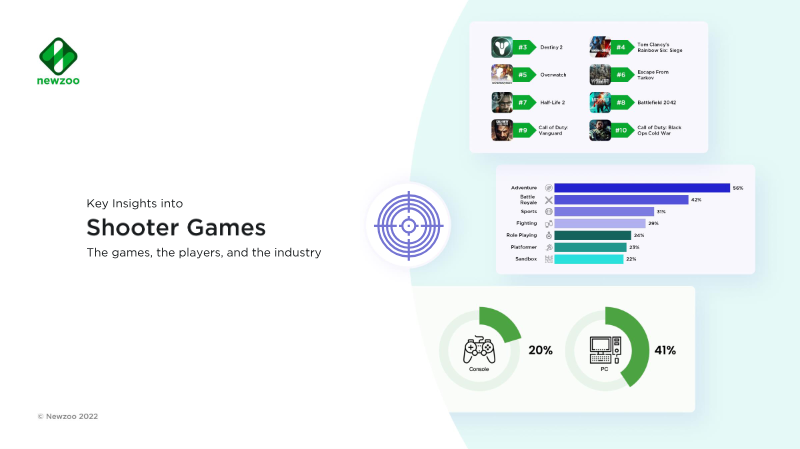
Shooter games represent the fifth highest‑earning genre worldwide, generating approximately $2.24 billion in 2022 across all platforms. The report focuses on the genre’s popularity, player demographics, engagement patterns, and monetization strategies within a global context that excludes China and India. Data derive from Newzoo’s Global Games Market, Consumer Insights – Games & Esports 2022, and the Newzoo Expert platform, covering 37 markets with a sample of 19,544 recent shooter players and 60,020 broader gamers.
Key findings show that shooters dominate PC and console play, with 68 % of monthly active users (MAU) on these platforms also engaging in shooter titles. Player overlap with other genres is high: 56 % of shooter players also play adventure games, while strategy and simulation overlap remains low. The contemporary war theme and level‑based mechanics are the most common in shooter titles. Monetization is overwhelmingly pay‑to‑play; 97 % of shooter players experience in‑app purchases, and advertising is the least used model.
Demographically, core personas—Ultimate Gamers and All‑Round Enthusiasts—account for the largest shooter player base, yet nearly all persona groups play shooters. Motivations to spend include social interaction and access to special offers, with 13,659 of the 19,544 shooter players identified as payers. Live‑streaming data indicate that shooters rank highly on Twitch and Facebook Gaming, reinforcing the genre’s strong community presence. The report underscores shooters’ robust revenue streams, broad demographic appeal, and central role in competitive online play.
- Shooter games generated approximately $2.24 billion in 2022 across 37 global markets, excluding China and India.
- Shooters are a dominant force on PC and console platforms, capturing 68% of monthly active users.
- Monetization in the genre is heavily driven by in-app purchases, which are experienced by 97% of shooter players, while advertising remains the least utilized revenue model.
- Shooter players exhibit high cross-genre engagement, with 56% of the player base also participating in adventure games.
- The genre maintains a strong community presence and competitive profile, consistently ranking highly on streaming platforms like Twitch and Facebook Gaming.
+2
NewzooJan 2025

Report21 pages
Newzoo's Generations Report: How Different Generations Engage with Games
The report examines how gaming engagement varies across generational cohorts, drawing on a representative online sample of 72,068 respondents from 33 global markets (North America, EMEA, APAC). Data were collected via Computer Assisted Web Interviewing between January and April 2021. Findings show that younger generations devote a larger share of leisure time to gaming, with Gen Z and Millennials spending 11–12% of their free time on games versus 18% for Baby Boomers. Weekly playtime averages 7 hours and 20 minutes for Gen Z, 6 hours and 30 minutes for Millennials, dropping to just over 2 hours for Baby Boomers. Gaming remains the dominant entertainment medium across all ages, though motivations shift: younger players cite competition, socializing and achievement, while older players prioritize relaxation.
Platform preferences differ markedly; Gen Z spends 77% of gaming spend on mobile, whereas Baby Boomers allocate 73% to PC. Younger gamers also engage more with game‑related content, with 71–67% of Gen Z and Millennials both playing and watching games, compared to 44–51% for older cohorts. Persona segmentation reveals that “Ultimate Gamers” and “Community Gamers” dominate among Gen Z, whereas older groups are more likely to be “Time‑Fillers” or “Bargain Buyers.”
The report highlights the metaverse as a growing trend, with 70% of Gen Z and 63% of Millennials expecting to spend more time in virtual worlds. Overall, the study underscores a generational shift toward immersive, social gaming experiences and signals expanding opportunities for brands to reach diverse gamer audiences.
- Gen Z and Millennials spend significantly more time gaming weekly, averaging 7 hours 20 minutes and 6 hours 30 minutes respectively, compared to just over 2 hours for Baby Boomers.
- Platform spending habits are polarized by generation, with Gen Z allocating 77% of their gaming budget to mobile while Baby Boomers direct 73% of their spend toward PC.
- Engagement with game-related content is higher among younger cohorts, as 67–71% of Gen Z and Millennials both play and watch games, compared to 44–51% for older generations.
- Motivations for gaming diverge by age, with younger players prioritizing competition, socializing, and achievement, while older players primarily seek relaxation.
- The metaverse is a significant growth area, with 70% of Gen Z and 63% of Millennials anticipating increased time spent in virtual worlds.
+1
NewzooJan 2025

Report5 pages
Mobile Gaming M&A Playbook: How to Identify and Target High‑Growth Gaming Companies
The playbook outlines a systematic approach for mobile gaming publishers and investors to identify, evaluate, and acquire high‑growth developers. It argues that the mobile gaming market—projected to reach $138 billion in 2025—has become a prime arena for mergers and acquisitions, citing recent deals such as Zynga’s $2 billion purchase of Peak Games, EA’s $2.1 billion acquisition of Glu Mobile, and Embracer Group’s multi‑year funding round for future buys. The document stresses that M&A serves dual purposes: portfolio diversification and the acquisition of talent, expertise, and new IPs that can accelerate growth beyond a publisher’s core genres.
Key findings highlight the importance of data‑driven target selection. Sensor Tower’s Game Intelligence platform is promoted as a tool for tracking genre trends, revenue trajectories, and market share across regions. The playbook recommends establishing clear acquisition criteria—budget limits, company size, geographic focus—and using custom alerts and taxonomy filters to surface promising titles. It also advises building structured lead‑tracking workflows, labeling qualified versus unqualified prospects, and continuously monitoring portfolio performance to spot strategic shifts or revenue declines that may signal acquisition opportunities.
The scope covers the global mobile gaming industry, with particular emphasis on North America and Southeast Asia, over a recent five‑year period marked by accelerated M&A activity. Methodologically, the playbook relies on Sensor Tower’s proprietary analytics, supplemented by industry news feeds from outlets such as Pocket Gamer, VentureBeat, and Crunchbase. The conclusion urges publishers to leverage analytics, maintain rigorous criteria, and stay alert to market movements in order to secure advantageous acquisitions that align with long‑term growth objectives.
- The mobile gaming market is projected to reach $138 billion by 2025, driving significant M&A activity as publishers seek to diversify portfolios and acquire new talent and intellectual property.
- High-profile acquisitions demonstrate the scale of industry consolidation, including Zynga’s $2 billion purchase of Peak Games and EA’s $2.1 billion acquisition of Glu Mobile.
- Effective target identification requires a data-driven approach using platforms like Sensor Tower to track specific genre trends, revenue trajectories, and regional market share.
- Publishers should establish rigorous acquisition criteria—including defined budget limits, company size, and geographic focus—to systematically filter potential targets.
- Strategic lead-tracking workflows are essential for distinguishing qualified prospects from unqualified ones and monitoring existing targets for revenue declines or shifts that signal an acquisition opportunity.
+1
Sensor TowerJan 2025
Report8 pages
Global Gaming Industry Takes Center Stage
The provided text does not contain the content of the document titled Global Gaming Industry Takes Center Stage, as the source link is restricted and inaccessible. Consequently, it is impossible to extract the main thesis, key findings, or methodological details required for an analytical summary. The available information consists solely of a server-side error message indicating a lack of authorization to view the requested file.
To provide a professional and accurate summary, the full text of the report must be made available. Once the content is accessible, the analysis will focus on identifying the primary industry trends, geographic scope, and statistical data points presented by the authors. Please provide the complete text or a functional link to the document to facilitate a comprehensive review of the gaming industry's current market position and future outlook.
- The provided report content is currently inaccessible due to a server-side authorization error.
- No factual data, market statistics, or industry trends are available for analysis from the provided source text.
- The document failed to load, preventing the extraction of any concrete insights regarding the global gaming industry.
- A comprehensive summary cannot be generated until the full text of the report is provided.
- The current input contains only an error message rather than the intended industry research.
+1
Morgan StanleyJan 2025

Report37 pages
Games 2025: The Industry Quest for Growth
The global games market reached a record $199.4 billion in 2024, cementing its status as the preeminent force in the entertainment sector. Despite this scale, the industry faces a period of moderated growth, with projections for 2025 hovering at approximately 1%. This deceleration stems from a combination of high-profile release delays, such as the postponement of major titles, and a tightening early-stage funding environment. To navigate this landscape, firms are shifting their focus from aggressive expansion toward operational efficiency, lean development cycles, and the optimization of existing intellectual property.
Strategic growth in 2025 will rely heavily on geographic diversification and demographic expansion. Emerging markets in the Middle East and Southeast Asia represent significant frontiers, while developers are increasingly targeting underserved cohorts, including older gamers and young adult females. Furthermore, the industry is leveraging user-generated content platforms like Roblox to maintain engagement among younger audiences. Hardware cycles, particularly the anticipated launch of the Nintendo Switch 2, remain a critical catalyst for consumer spending, providing a necessary boost to the broader market ecosystem.
To combat the dual pressures of escalating AAA development costs and fragmented consumer attention, publishers are adopting more conservative financial models. This includes a heavy reliance on remakes, remasters, and multi-platform porting to extract maximum value from established assets. Simultaneously, companies are pursuing margin expansion through diversified monetization strategies, such as hybrid mobile models and direct-to-consumer web shops that bypass traditional app store fees. By transitioning toward holistic franchise management that spans licensing, subscription services, and cross-media integration, the industry aims to stabilize revenue streams and ensure long-term sustainability in an increasingly competitive global environment.
- The global games market reached $199.4 billion in 2024, but growth is projected to decelerate to approximately 1% in 2025 due to release delays and reduced early-stage funding.
- Publishers are prioritizing operational efficiency and asset optimization, focusing on remakes, remasters, and multi-platform porting to mitigate the rising costs of AAA development.
- Strategic growth is shifting toward geographic expansion in the Middle East and Southeast Asia, alongside targeting underserved demographics like older gamers and young adult females.
- Companies are pursuing margin expansion by implementing hybrid mobile monetization models and direct-to-consumer web shops to bypass traditional app store fees.
- The industry is leveraging user-generated content platforms like Roblox to maintain engagement among younger audiences while managing fragmented consumer attention.
+1
Ampere AnalysisJan 2025

Report34 pages
The Mobile App Growth Report: 2025 Edition
Global mobile app growth remains resilient in 2025, characterized by an 11% year-over-year increase in installs and a 10% rise in user sessions. This expansion is increasingly defined by a shift from pure volume-based acquisition toward a value-driven model that balances cost efficiency, engagement, and long-term retention. The Asia-Pacific region has emerged as the primary engine of this global momentum, achieving the highest regional growth score of 45, with India specifically leading all individual nations with a score of 49. While established markets like North America show more modest growth metrics, they remain critical hubs for high-value user monetization and sophisticated optimization strategies.
Gaming continues to be the dominant vertical worldwide, particularly within the hyper-casual and hybrid-casual subgenres. This sector is especially potent in emerging markets; India’s gaming growth score of 52.2 underscores its status as a premier expansion target, while the Latin American and Middle Eastern markets are projected to reach significant revenue milestones of $35.9 billion and $3.73 billion respectively by 2030. Beyond gaming, the publications and utilities sectors have demonstrated consistent strength across Western markets, indicating a diversified landscape where functional and content-driven apps maintain high engagement levels.
The current mobile ecosystem requires a strategic pivot toward sophisticated analytics and retention-focused operations. In regions like North America, where user acquisition costs are higher, success depends on maximizing average revenue per user and leveraging artificial intelligence to refine marketing spend. Meanwhile, specific regional opportunities, such as the rise of card and arcade games in Türkiye, highlight the importance of localized content strategies. Ultimately, the global market is transitioning into a phase where sustainable growth is achieved through the integration of high-quality user experiences and data-driven efficiency rather than simple install volume.
- Global mobile app installs grew 11% year-over-year in 2025, with user sessions increasing by 10% as the industry shifts from volume-based acquisition to value-driven retention.
- The Asia-Pacific region is the primary driver of global growth with a score of 45, led by India, which holds a national growth score of 49 and a gaming-specific growth score of 52.2.
- Gaming remains the dominant global vertical, with Latin American and Middle Eastern markets projected to reach revenue milestones of $35.9 billion and $3.73 billion respectively by 2030.
- In high-cost markets like North America, profitability now relies on maximizing average revenue per user and utilizing AI-driven analytics to optimize marketing spend.
- Hyper-casual and hybrid-casual subgenres are the most potent gaming categories, particularly within emerging markets.
+1
AdjustJan 2025
Report39 pages
Playing to Win: 2025 Digital Game Advertising Report
The 2025 digital gaming market is defined by a strategic pivot toward user quality and high-velocity creative iteration, with global advertising expenditure reaching $8.7 billion. Despite a year-over-year decline in total mobile and PC downloads, the industry remains robust through the resurgence of the shooter genre and the continued dominance of 4X Strategy and Casual titles. Geographically, growth is concentrated in North American and Asian markets, fueled by high-profile releases such as Battlefield 6 and Valorant Mobile. This landscape reflects a shift where major publishers like Microsoft and Dream Games utilize aggressive spending to maintain market share in an increasingly competitive environment.
Advertising strategies have evolved to prioritize "instantly legible" gameplay and the rapid deployment of creative assets to combat audience fatigue. Static image ads remain a resilient tool due to their cost-effectiveness, while generative AI is increasingly employed to test and iterate high volumes of creative concepts. Intellectual property collaborations, featuring franchises like Naruto and Teenage Mutant Ninja Turtles, serve as a primary mechanism for lowering acquisition costs. Furthermore, platforms like YouTube have become essential for reaching PC and console audiences, while Apple Search Ads are leveraged tactically to capture competitor keywords and dominate search visibility.
The digital ecosystem also highlights the growing influence of internal discovery and content creators. Roblox maintains a massive web presence with over 187 billion visits, driven largely by organic traffic and internal discovery mechanisms rather than traditional external advertising. Meanwhile, viral indie titles and major releases like Marvel Rivals achieve commercial success by leveraging creator-led marketing. Ultimately, the industry in 2025 is characterized by a sophisticated blend of data-driven acquisition, aggressive platform-specific tactics, and a reliance on established IPs to navigate a market where engagement quality has surpassed sheer scale as the primary metric for success.
- Global digital gaming advertising expenditure reached $8.7 billion in 2025, with major publishers like Microsoft and Dream Games utilizing aggressive spending to maintain market share.
- The industry has shifted its primary success metric from sheer download scale to engagement quality, despite a year-over-year decline in total mobile and PC downloads.
- Roblox continues to bypass traditional external advertising, generating 187 billion visits through organic traffic and internal discovery mechanisms.
- Advertising strategies now prioritize 'instantly legible' gameplay and the use of generative AI to rapidly iterate high volumes of creative assets.
- Intellectual property collaborations, such as those featuring Naruto and Teenage Mutant Ninja Turtles, are being used as a primary mechanism to lower user acquisition costs.
+1
Sensor TowerJan 2025

Report28 pages
Mobile Game Genre Report: Comparing and Contrasting Eastern and Western Markets
This analysis explores the hypercasual mobile gaming landscape, comparing market dynamics between Western regions, such as the United States and United Kingdom, and Eastern markets, specifically Japan and South Korea. Utilizing 2021 download data and consumer insights from Newzoo and Pangle, the findings reveal that hypercasual games accounted for 36 of the top 100 most-downloaded mobile games globally. While the genre dominates Western charts—representing nearly half of the top 100 downloads in the U.S. and U.K.—it maintains a smaller footprint in Japan and South Korea, where it comprises approximately 20% of top downloads.
The sector is characterized by rapid evolution and high competition, with only eight of the top 36 hypercasual titles from 2020 remaining in the 2021 rankings. A significant shift in subgenre popularity occurred during this period, as runner and racing mechanics overtook simulation and ASMR themes. Demographically, hypercasual players across all four key markets skew male and are younger than the general mobile gaming population, with an average age below 30. These players often engage with midcore and hardcore genres, such as RPGs and strategy games, making them a valuable audience for cross-genre user acquisition.
To combat historically low retention rates—often falling below 10% by day seven—developers are increasingly adopting "hybrid-casual" strategies. This involves integrating lite meta features, progressive difficulty, and live operations to deepen engagement. Monetization remains heavily reliant on in-game advertising, with interstitial videos being the most prevalent format. However, the rise of hybrid models has introduced new revenue streams, including "remove ad" IAPs and battle passes. Success in Eastern markets specifically requires deep localization, including busier user interfaces and culturally specific live events, to effectively scale and improve lifetime value.
- Hypercasual games represent 36% of the top 100 global mobile downloads, though they command nearly 50% of top charts in the U.S. and U.K. compared to only 20% in Japan and South Korea.
- The hypercasual sector suffers from high volatility, with only eight of the top 36 titles from 2020 maintaining their positions in the 2021 rankings.
- Developers are shifting toward 'hybrid-casual' models—incorporating lite meta features and live operations—to address retention rates that typically drop below 10% by day seven.
- Runner and racing mechanics have overtaken simulation and ASMR themes as the dominant subgenres in the hypercasual market.
- Hypercasual players skew male and under 30 years old, frequently engaging with midcore and hardcore titles like RPGs and strategy games.
+3
PangleJan 2025
Report80 pages
State of Mobile 2025: TikTok Edition
The mobile industry reached a significant milestone in 2024, generating a record $150 billion in in-app purchase revenue, representing a 12.5% year-over-year increase. While global downloads experienced a marginal 1% decline to 136 billion, user engagement reached an all-time high of 4.2 trillion total hours. This growth was primarily fueled by non-gaming sectors, specifically Entertainment, Productivity, and Photo & Video, alongside a recovering mobile gaming market where eleven titles surpassed $1 billion in annual revenue. Geographically, North America and Europe remain the strongest monetization hubs, though nearly 80% of total consumer spend now occurs outside an app’s home country, signaling a highly globalized marketplace.
Artificial Intelligence has emerged as the primary catalyst for industry transformation, with AI chatbots recording a 200% revenue surge and generative AI apps reaching $1.3 billion in annual spend. This technology is being integrated across diverse verticals, from productivity tools to dating apps like Tinder and Grindr, which are utilizing AI to streamline user experiences and facilitate real-world connections. The Productivity and Utility sector specifically benefited from this trend, seeing a 35% revenue increase to $15 billion. Furthermore, niche categories such as short-form drama apps and fitness reward platforms are gaining significant traction, with the latter benefiting from a shift toward social "run clubs" and outdoor exercise.
The 2024 landscape also highlights a shift in monetization strategies and user behavior. In the dating sector, revenue grew by 14% despite a decrease in time spent, suggesting that users are prioritizing efficient, high-value interactions over passive scrolling. Meanwhile, the Health and Fitness category continues to see strong seasonal surges and global expansion in markets like Germany and Australia. Across all sectors, the industry is moving toward community-focused retention and sophisticated subscription models, leveraging AI to maintain high per-user monetization even as traditional download growth stabilizes in mature markets.
- The mobile industry generated a record $150 billion in in-app purchase revenue in 2024, marking a 12.5% year-over-year increase despite a 1% decline in global downloads.
- Artificial Intelligence is the primary industry catalyst, evidenced by a 200% revenue surge for AI chatbots and $1.3 billion in annual spend on generative AI applications.
- The Productivity and Utility sector grew 35% to reach $15 billion in revenue, driven largely by the integration of AI tools.
- The mobile gaming market is recovering, with eleven individual titles surpassing $1 billion in annual revenue during 2024.
- The marketplace is increasingly globalized, with nearly 80% of total consumer spend now occurring outside of an app’s home country.
+1
Sensor TowerJan 2025
Report47 pages
Impact Report 2025
The FY 2025 impact analysis presents Electronic Arts’ comprehensive ESG strategy, arguing that responsible stewardship of people, planet, and data is integral to sustainable growth in the interactive‑entertainment sector. By quantifying progress across talent, climate, privacy and security, the report demonstrates how the company translates corporate responsibility into measurable outcomes while maintaining its global market position.
Across a workforce of more than 6,000 employees worldwide, 83 % now have access to internal AI tools, and 17 % of new hires are returning staff, contributing to an industry‑leading attrition rate of –0.1 %. Expanded benefits—including paid parental leave and bereavement support—paired with a balanced gender composition, underpin the talent‑focused results. Community engagement generated 18,000 volunteer hours and $5.9 million in investments, reinforcing the social dimension of the strategy. Environmental performance shows a clear downward trajectory: total operational emissions fell to 6.6 Mt CO₂e in FY25, down from 7.3 Mt in FY24 and 10.6 Mt in FY23, with Scope 1 emissions at 2.98 Mt and Scope 2 (market‑based) comprising the remainder, while energy consumption reached 380,859 GJ, fully sourced from office operations. The company’s carbon‑neutral status and renewable‑energy initiatives address identified climate risks such as acute physical events, volatile energy prices, rising carbon costs and emerging reporting regulations.
Data‑privacy and security are governed by a privacy‑by‑design framework overseen by the Audit Committee, delivering explicit player notice, consent and control, data‑minimisation, and partner‑risk contracts. The security management system aligns with ISO, NIST and CIS standards, undergoes annual independent validation, operates a 24‑hour SOC and mandates annual training for all staff. An articulated AI governance model completes the governance pillar, ensuring responsible deployment of emerging technologies. Collectively, these initiatives illustrate a holistic, globally scoped commitment to ESG excellence throughout FY 2025.
- Electronic Arts achieved a net-zero attrition rate of -0.1% in FY2025, supported by a workforce of over 6,000 employees and a 17% rate of returning staff among new hires.
- Operational carbon emissions decreased to 6.6 Mt CO2e in FY2025, down from 7.3 Mt in FY2024 and 10.6 Mt in FY2023, maintaining the company's carbon-neutral status.
- 83% of the global workforce now has access to internal AI tools, supported by a formal AI governance model to ensure responsible technology deployment.
- The company invested $5.9 million and logged 18,000 volunteer hours in community engagement initiatives during the 2025 fiscal year.
- Total energy consumption reached 380,859 GJ in FY2025, with all office operations fully sourced from renewable energy.
+1
Electronic ArtsJan 2025

Report8 pages
Plan Your Chart-Topping Game Launch: Monster Hunter Case Study
The case study demonstrates how Capcom leveraged Stream Hatchet’s campaign platform and Sideqik’s influencer‑management tools to create a viral cultural moment for the launch of Monster Hunter Wilds. The core strategy combined a 12‑hour marathon live stream hosted by high‑profile YouTube creator iShowSpeed, bespoke in‑game weapon and armor designs from cosplay influencers, and a DLC‑code giveaway that directed viewers to a custom landing page. Data‑driven planning, contract coordination, and cross‑team communication were used to ensure seamless execution and to maximize both paid and earned reach across YouTube, TikTok, Instagram and Twitch.
Performance metrics show the initiative generated 5.03 million earned‑media views, placing iShowSpeed at the fifth‑most‑watched Monster Hunter Wilds streamer on launch day, and achieved a 7.1 percent engagement rate on earned media. Seventy‑two earned‑media posts contributed to the view total, while platform‑level analysis recorded earned‑view shares of roughly 3.8 percent and paid‑view shares of 3.7 percent, with an overall engagement rate of 3.2 percent. Overlap analysis identified a low‑overlap, large‑audience segment of approximately 7.2 million Twitch users, informing future audience‑targeting decisions.
The methodology relied on Stream Hatchet and Sideqik SaaS platforms to capture real‑time chat sentiment, viewer overlap, benchmark comparisons, and code‑distribution analytics. A dedicated team of data analysts produced a comprehensive post‑campaign report that highlighted strengths, weaknesses, and actionable modifications for subsequent launches. The campaign’s geographic scope was global, focusing on the major streaming ecosystems active in early 2025, and targeted the core gaming and esports audience segments associated with action‑RPG titles.
- Capcom’s Monster Hunter Wilds launch campaign generated 5.03 million earned-media views and achieved a 7.1 percent engagement rate on earned content.
- A 12-hour marathon stream featuring iShowSpeed positioned him as the fifth-most-watched creator for the game on launch day.
- The campaign utilized a multi-platform strategy across YouTube, TikTok, Instagram, and Twitch, resulting in an overall engagement rate of 3.2 percent.
- Audience overlap analysis identified a distinct, low-overlap segment of 7.2 million Twitch users, providing a data-backed foundation for future targeting.
- The initiative combined high-profile influencer partnerships with bespoke in-game content and DLC-code giveaways to drive traffic to a custom landing page.
Stream HatchetJan 2025
Report16 pages
Fighting Game Live Streaming Report
The analysis evaluates live‑streaming activity for fighting games worldwide, concentrating on the period from July 2024 through June 2025 and tracking quarterly trends back to Q1 2019. By aggregating data from Twitch, YouTube Gaming and other platforms, the study isolates titles that generated at least 100 000 hours watched in the preceding twelve months, yielding a focus on 28 arcade‑fighter franchises and the most active streamers across multiple regions.
Street Fighter 6 emerges as the clear market leader, delivering 204 million hours watched and representing roughly 71 % of total fighting‑genre viewership. Since its launch, the title adds an average of 40 million hours each quarter, outpacing legacy champions such as Super Smash Bros. Ultimate, which historically hovered around 10 million hours per quarter. Platform fighters like Super Smash Bros. and Brawlhalla alternate in the top‑five positions, while newer anime‑styled entries such as Bleach: Rebirth of Souls sustain modest but steady audiences. YouTube’s share of fighting‑game streams now exceeds one‑quarter of all quarterly viewership, driven largely by Japanese VTubers and streamers.
Streamer analysis shows Japanese personalities dominate the arcade‑fighter space, with fps_shaka leading at 6.4 million hours watched, followed closely by VTuber Kuzuha (6.3 million) and other Japanese pros. Western contributors remain significant; Maximilian_DOOD ranks fifth with 5 million hours and distinguishes himself by covering at least eight different arcade fighters, totaling 24 titles. The data set excludes any streamer who has not met a 1 000‑hour threshold per game, ensuring a focus on sustained engagement.
Esports events reinforce the genre’s appeal, with EVO and EVO Japan generating the highest peak‑viewer counts—up to 377 thousand concurrent viewers. Street
- Street Fighter 6 dominates the fighting game genre with 204 million hours watched, accounting for 71% of total viewership and averaging 40 million hours per quarter since its launch.
- Japanese streamers and VTubers lead the market, with fps_shaka and Kuzuha generating 6.4 million and 6.3 million hours watched respectively.
- YouTube Gaming has captured over 25% of total quarterly fighting game viewership, largely driven by the popularity of Japanese content creators.
- EVO and EVO Japan remain the genre's primary viewership drivers, reaching peak concurrent viewer counts of up to 377,000.
- Legacy titles like Super Smash Bros. Ultimate have been eclipsed by newer entries, maintaining a historical average of approximately 10 million hours watched per quarter.
Stream HatchetJan 2025