Radiant Historia
Game
2 documents in the library are about Radiant Historia, from writers such as DiGRA. Each has a summary and key insights with the page they come from.
Connections
Each row is a game or company named alongside Radiant Historia, each column a document, oldest first. A mark means that document names it. Select a row to see those documents.
Documents about Radiant Historia

Time vs. History in JRPGs
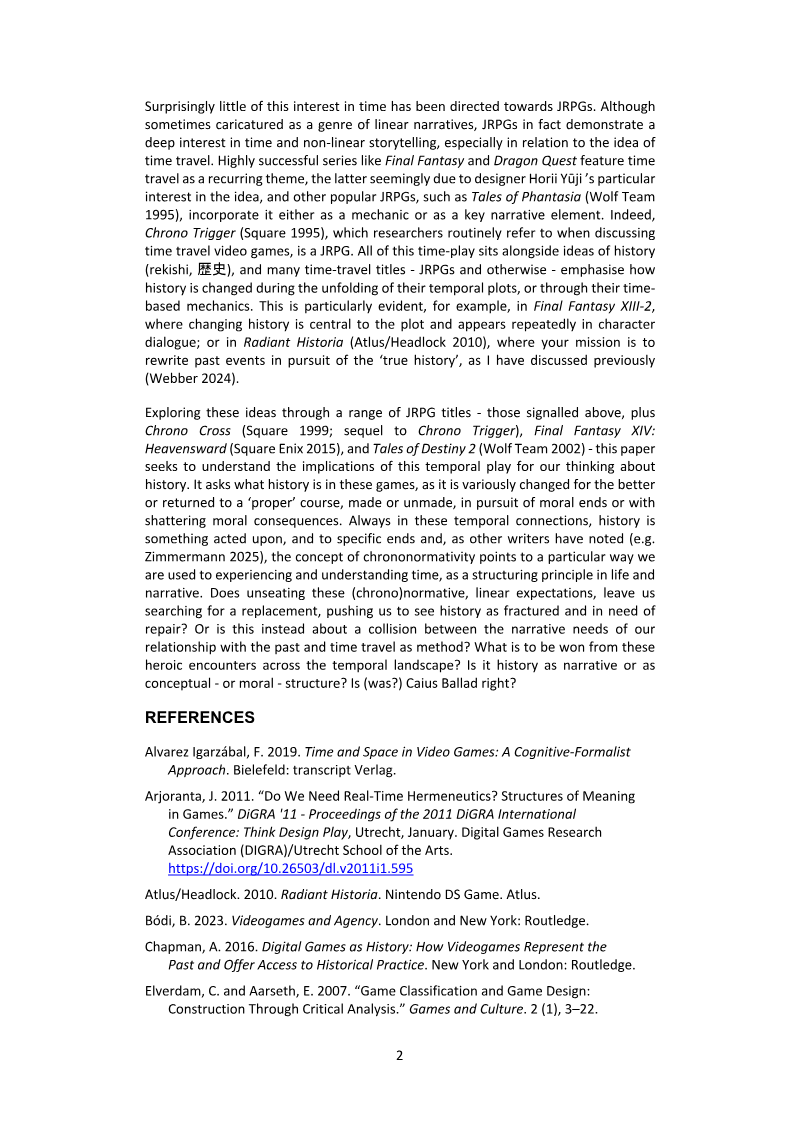
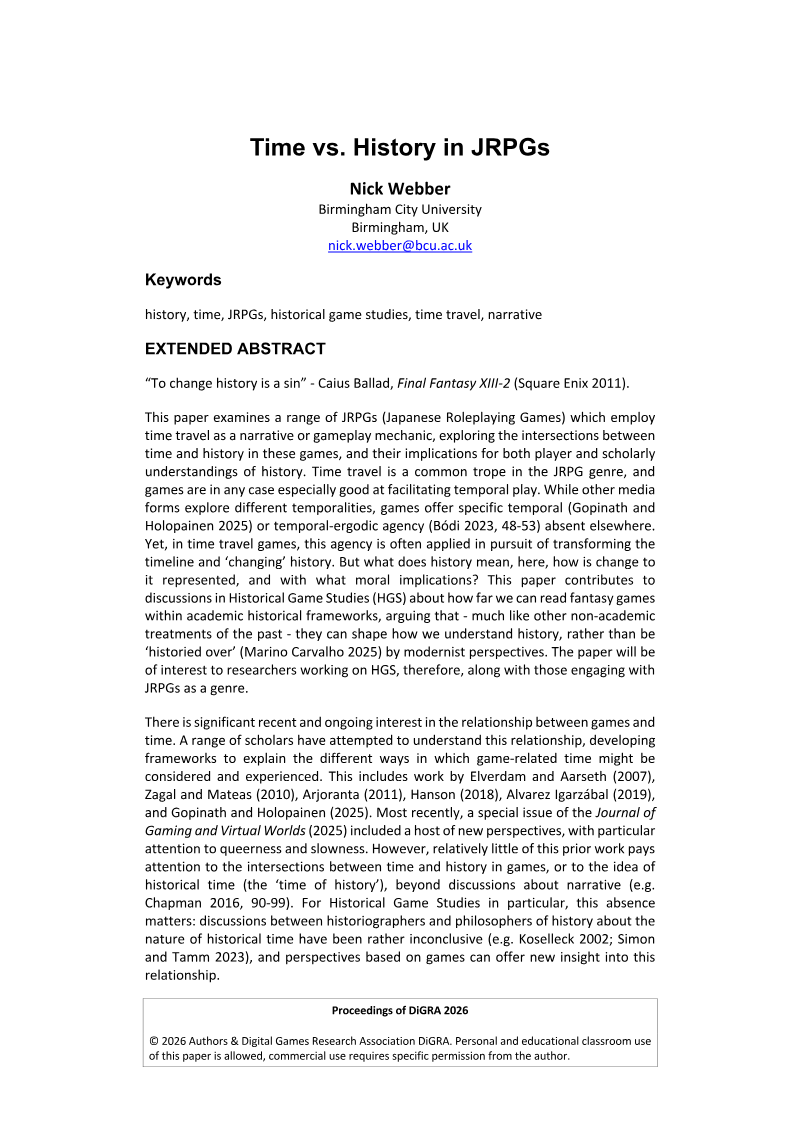
This paper examines how Japanese Roleplaying Games (JRPGs) that use time travel as a narrative or gameplay mechanic represent history, and what those representations imply for both players and scholars of Historical Game Studies.
- The paper argues that fantasy JRPGs with time-travel mechanics shape how players understand history, rather than merely being interpreted through modernist academic frameworks.
- It introduces the concept of chrononormativity, the conventional linear expectation about time, and asks whether departures from it lead players to see history as fractured and in need of repair.
- The analysis closely reads a selected set of titles, including Final Fantasy XIII-2, Radiant Historia, Chrono Trigger, Chrono Cross, Final Fantasy XIV: Heavensward, Tales of Phantasia, and Tales of Destiny 2.
History, Time and the Past in Radiant Historia
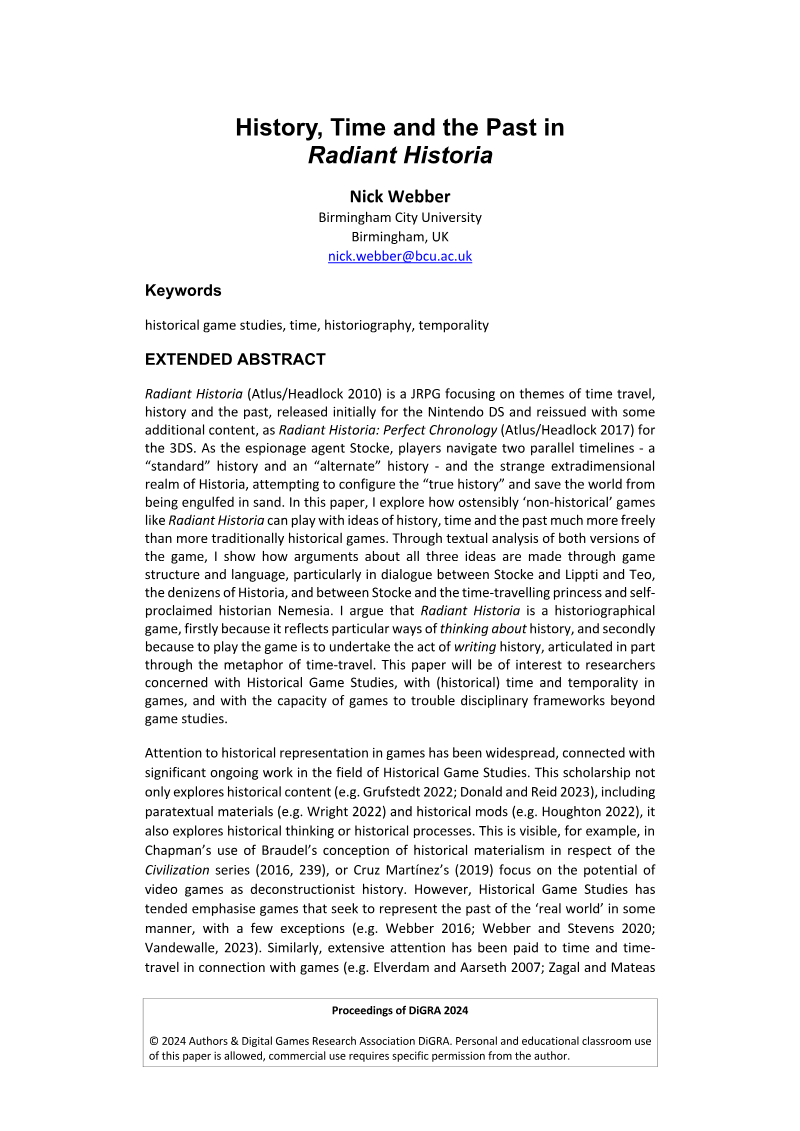
The document analyzes how the Japanese role-playing game Radiant Historia (2010, 2017) explores themes of history, time, and the past, arguing that it functions as a historiographical game.
- Radiant Historia, a Japanese RPG released for the Nintendo DS in 2010 and reissued as Perfect Chronology for the 3DS in 2017, is argued to be a historiographical game rather than merely a time-travel narrative.
- The paper contends that the game's non-historical premise frees it to engage with questions of history, time and the past more openly than conventionally historical games, which are constrained by player expectations about accuracy and 'facts'.
- The central claim is that playing Radiant Historia constitutes an act of writing history, since much of the gameplay involves reconfiguring events toward outcomes the player finds acceptable.
Companies behind it

As the documents state it.