1 free read left. Create a free account for unlimited reading + AI research.
Create free account
Why You Can't Put Your Favorite Games Down
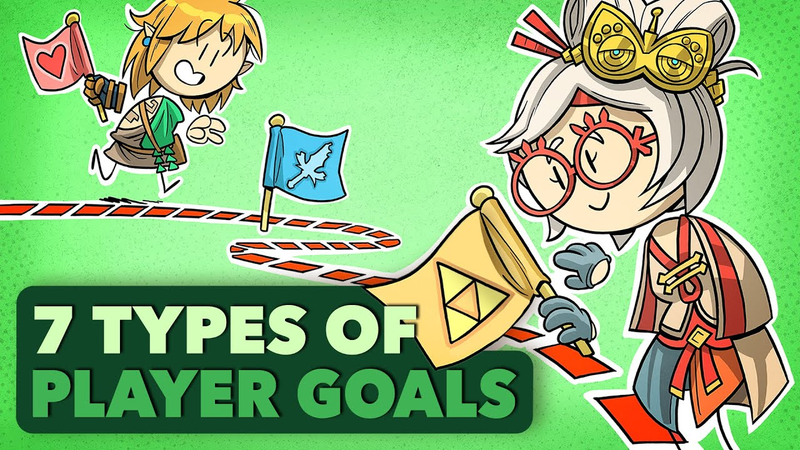
Key insights
6 takeaways- 01Effective game design requires a granular hierarchy of six goal levels—instant, immediate, short-term, medium-term, long-term, and ultra-long-term—to maintain player motivation.
- 02Short-term goals drive the core gameplay loop, while long-term and ultra-long-term goals are essential for engaging players seeking mastery or meta-knowledge.
- 03End-game goals must maintain thematic consistency with smaller, granular tasks to ensure that minor actions feel meaningful and connected to the overall experience.
- 04End-game goals provide a definitive conclusion, allowing players to finish the experience without needing to exhaustively engage with every system.
- 05The goal hierarchy should facilitate a natural progression where players shift their focus from mechanical, instant tasks to broader, strategic objectives.
- 06Designers must actively structure and refine these goals rather than allowing them to emerge organically from game mechanics.
Ask AI about this video
Transcript
There's a basic fundamental aspect of game design that even the biggest budget games often mess up. Any guesses on what that is? No? Oh, you in the back. No, get your mind out of the gutter. The answer is player goals. In fact, a few episodes back when we were talking about escape looters, as we responded to people who wrote us, the idea of correctly crafting goals came up again and again. Now, of course, the concept of player goals seems simple, right? You want to give the player something to do, so you give them some goals. Easy peasy. But what separates decent games from great games and good designers from great ones seems to directly tie to how much they can break down the player's goals. Thanks so much to Skillshare for helping us level up our creativity game. Player goals are often thought of in either the most sweeping terms, like beat the bad guy, save the kingdom, etc., or in the slightly less sweeping, beat the dungeon, kill the boss at the end of the level sort of stuff. But when designing, if you're only thinking of those sorts of things as your goals for your players, you're really thinking far
too broadly. The truth is, to make your game as engaging as possible, you need to ensure your players have something they're aiming to achieve from the most immediate moment all the way to the end goal of your game. Honestly, the best game design builds in goals for the player at every level of play and refines those goals not only to make them satisfying, but to make the player flow seamlessly from one to the next. But of course, before we can talk about how to do that, it might be helpful to break down the spectrum of goals in video games with a little bit of granularity. Now, of course, there are plenty of ways to do this, and the best method will vary based on your game, but as a general starting point, here's what James uses. Instant: hit the enemy, dodge this shot. Instant goals are literally what the player's trying to achieve in a specific moment. These can fly by at the speed of reflex, faster than even conscious thought, but if these goals aren't engaging, it's definitely going to be hard to keep the player playing. Immediate: win this fight, jump over this pit. Immediate goals are what you're thinking about most of the time when you're playing the game. It's what you're stringing your instant goals together to achieve.
Short-term, get to the next checkpoint, acquire a better piece of gear, find more health. Short-term goals like these are the basic loop that drives the player through the game. The player essentially moves from short-term goal to short-term goal until they find themselves at the end of the game. Medium-term, complete a level, finish a quest, hunt down a specific monster for loot. These are where the player's most strategic thinking usually comes in once they're comfortable achieving some of the short-term goals. They'll start to think about how to string those together to achieve a victory that's truly meaningful to them. Long-term goals, complete a multi-session objective, learn a new role or character, master a complex mechanic used to achieve your instant goals. This is where the player is truly thinking about the game holistically. They've played through enough to understand what's really going to improve their play, and they're willing to take the time and be a little worse in the short-term to achieve it. And good long-term goals change the game from simply being fun to play to giving the player moments that feel truly satisfying. Ultra long-term goals, collect a specific piece of gear, defeat
a raid boss, learn every move of every character so you can counter all of them. These types of ultra long-term goals usually involve a lot of meta knowledge of the game, plus a ton of thinking and planning. They also frequently involve the player being so invested in the game that they're willing to go outside of the game to search for information on how to achieve said goal, meaning these are for the player who really want to see the boundaries of what the game has to offer. And finally, end game goals, beat the big bad, solve the mystery, read the whole visual novel. These are the goals that wrap up the player's experience. They give the player a far horizon to look towards and a general reason for moving forward. Plus, they differ from the rest of the goals in that they're less part of a sequential pattern of player growth and more of something that simply gives context to the player and a point at which they can be finished with the game. End game goals are also often achievable if the player simply gets to the point where they're repeatedly succeeding at their medium-term goals. No long-term or ultra-long-term goals necessary, which is actually great when you think about it because it makes the
game accessible and allows many players to beat it without having to go so deep into the game that they may quit before getting to the end. End game goals should simply serve as a guidepost to the player, something to direct them for how to sew everything together more immediately. I.E. end game goals give each of these shorter-term goals meaning and direction. Oh, and one last note about end game goals. A good end game goal makes every quest and even every shot have weight and meaning. It's the reason that you're fighting each enemy and what you're striving for by clearing each level, which is actually a really good reminder to think about when developing it because if your game's end goal is to say beat the big bad who's going to cast a spell that's going to destroy the world, maybe you should think about how many round up the farmer's escaped chicken quests you're going to put in the game along the way as those goals will feel trivial in the face of the end goal and won't organically lead the player any closer to achieving it. You know, probably. Okay, so now that we've broken all that down, here is the really fascinating part. Accepting only the end goal, the
great thing about breaking down your game's goals is how a player is going to mentally progress through your game. At first, players have to concentrate almost exclusively on the instant play. They're getting a feel for the controls. They're learning the moves, that sort of thing. Then, they'll start to think about the immediate play. Things like okay, how do I beat this monster? Then once they're comfortable with those basic immediate goals, they can start thinking more broadly, actively and consciously pursuing short-term objectives. Then as they start to understand the game, to really internalize those actions, and it doesn't take them a lot of mental bandwidth to go after the short-term goals, they're going to start to think more broadly about what they'd like to achieve. And from there, it's really up to them how far they want to take it. And when you, the designer, steps back and looks at the big picture like this, you can more easily direct the experience your player will have with your game by ensuring each goal is leading them where you want them to go. Of course, how long this all takes or how quickly the player should graduate up the ladder depends on the game. Sometimes you'll find your game doesn't even need long-term or ultra-long-term
goals, and that's totally fine. Though in those cases, you'll often find yourself just breaking down the space between immediate and medium-term goals even farther. So, there's that. However you break up your goals though, the important thing is this. You need to be providing the player with goals for each stage of play, and you need to be actively designing, or at least actively refining those goals to be engaging, rather than just hoping they emerge out of your mechanics. Your design should also help the player graduate from one stage of goal to the next, and make sure they can naturally string together small goals to be achieving larger ones. And once you've got that, then try playing around with your goals and seeing what meaning you can impart by changing them up, or even inverting them entirely. Because when you do, who knows what kind of fun design surprises you might find. And if you need a little help getting started, that's okay. Actually, a great resource we've just found to jumpstart your design thinking process is this Andy Budd class, Design Thinking: How to Use Creative Problem Solving for Better Design, which we've been digging into thanks to the folks at Skillshare. Of course, by now you've heard of Skillshare, right? The online community
for creative and curious people that's home to a ton of classes that can level up things like your photography, film and video editing, and illustration skills. But, if you haven't tried it for yourself, did you know that Skillshare also has hundreds of other courses focusing on creative activity, and even professional advancement as well. So, let's say you want to gain greater control over your current career with some extra skills, or maybe you want to break into a creative industry that you know you'd love, but you really don't know where to start. Well, Skillshare is structured in a way that understands that jobs are not one-size-fits-all, so their learning paths are curated around classes built on one another, helping you gain the skills that you need to design a career that fits perfectly for you. And you know, one class I watched early on in my Skillshare journey, and honestly that I love recommending to folks as a great starting off point, is my boy Thomas Frank's Mastering Productivity: Create a Custom System That Works. And y'all, it seriously not only helped me manage my personal goals better, but also helped me build and implement some awesome strategies into our Extra Credits and Extra History pipelines that have saved myself and the
team just a ton of time. Heck, it's so good, I'll even forgive Tom for wiping the floor with me in Magic the Gathering. Yeah, that good. So, if you'd like the opportunity to join the Skillshare community at zero risk and explore their inspiring course of catalogs for yourself, the first 1,000 folks to use our link below will get a 1-month trial membership absolutely free. You can check it all out no cost to you. And when you do, not only will you be directly helping our channel continue to make the content that we love to create, but you yourself will be starting down the path to make whatever you're passionate about creating professionally or even personally a reality. So, click that link below and get creative. A million big old thanks to Skyler Holmes, Kuya Koi, Joseph Blaine, Dominic Valenciana, Casey Muessig, Arclight Games, Angela Valenciana, and Ahmadzia Turk for being fantastic legendary patrons.
Summary
Effective game design relies on the intentional structuring of player goals to create an engaging, seamless experience. Rather than focusing solely on high-level objectives like defeating a final boss, designers must implement a granular hierarchy of goals that guide the player from moment-to-moment actions to long-term mastery. By providing clear, tiered objectives, developers can ensure that players remain motivated and mentally engaged throughout the entire duration of the game.
The proposed framework categorizes goals into six distinct levels. Instant goals involve immediate reflexes, such as dodging or attacking, while immediate goals encompass the primary actions of a specific encounter. Short-term goals drive the basic gameplay loop, such as reaching a checkpoint, whereas medium-term goals involve strategic tasks like completing a quest or level. Long-term and ultra-long-term goals cater to invested players seeking mastery or meta-knowledge, often requiring planning beyond the immediate game session. Finally, end-game goals provide necessary context and a definitive conclusion, allowing players to finish the experience without requiring deep, exhaustive engagement with every system.
Successful design requires that these goals be actively refined rather than left to emerge organically from mechanics. Designers should facilitate a natural progression where players graduate from focusing on instant, mechanical tasks to pursuing broader, more strategic objectives. Furthermore, end-game goals must remain thematically consistent with the smaller tasks throughout the game to ensure that minor activities do not feel trivial or disconnected. By carefully balancing this spectrum, designers can create a cohesive experience that directs player behavior and imparts meaningful weight to every action taken within the game world.















Comments