Transcript
Hello, One Take Shrier here. Last week I had kind of an emotional moment about the death of physical games that is looming thanks to Sony's decision to eliminate PlayStation discs and go entirely digital. I was on vacation with my family in Lancaster, Pennsylvania, Amish country, which is actually pretty fun. The kids had a really good time going to Hershey Park and swimming in the pool and doing a whole bunch of other cool things. We stopped at the Crayola experience in Easton, Pennsylvania, which is also pretty cool. But I was standing in this kind of this thrift shop, which is this huge huge kind of quirky store that's just full of random tchotchkes and trinkets you can buy. And it's kind of like it's it's set up as this big almost warehouse looking store space and then there's like these little rooms, each of which has just like have a bunch of random crap from
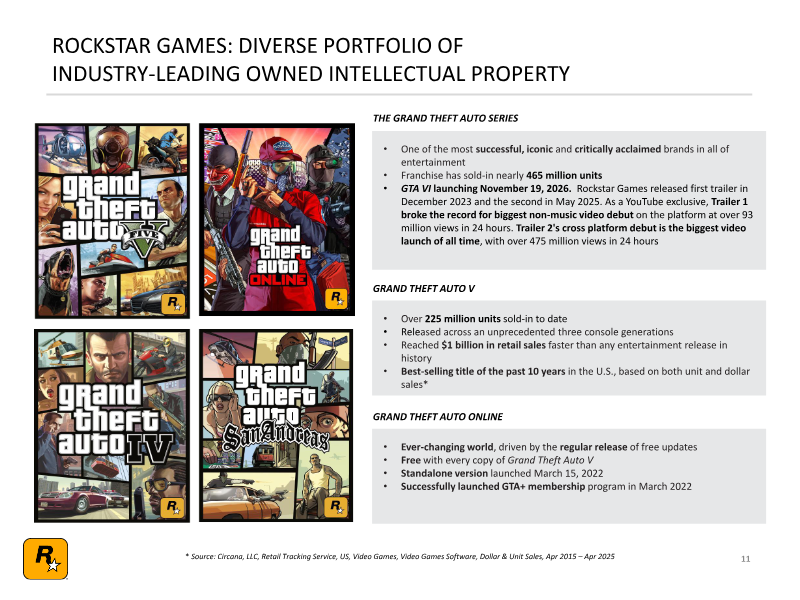
just kind of these I don't know random squishy ducks you could buy in different themes to commemorative plates to t-shirts to books. And there's one section that had a bunch of video games. I saw just saw this kind of random hodgepodge of games, this collection of PS2 games and Wii games and PS3 games, Xbox 360 games, etc. etc. I saw stack, it was funny, GTA V and GTA IV both for the PlayStation 3 and was reminded that those were both PlayStation 3 games and we skipped an entire generation between those and GTA VI, which is now PlayStation 5 game. But anyway, I had this kind of this weird emotional moment where I was looking at them and I was like this will never happen again after 2028 after PlayStation decides to eliminate discs. I've been thinking about that lot recently about the real hidden downsides
and it's kind of for me personally it's been interesting to reconcile because I play almost all of my games digitally. I find digital releases and purchases to be way more convenient. Most of my gaming I do on either my PC or my Steam Deck, occasionally on the Switch, um but it's almost entirely through digital codes, which is where the PC has been for many years. Now, um it's more convenient to be able to especially if you're you're taking your Steam Deck on the go is more convenient to be able to cycle through icons on a library than it is to have to carry a giant set of discs around. I still remember the old days when I would bring my Game Boy different places and had to bring a giant carrying case with all the different cartridges that I wanted to take with me. Um that said, despite my kind of personal preference for digital games, I think you really lose something in this transition. And it also it kind of it's
there's something that squares into some of the stuff we've been seeing recently that I think can kind of be explained and all of these decisions can kind of be explained by a sea change that is happening in the video game industry. A few weeks ago I did a video about why Sony has made this decision to eliminate discs and I pointed to the numbers and how much more money they make from each digital sale than they do from each disc, especially when they're selling games from third parties. Really every publisher benefits from skipping retail and skipping the production costs and just selling digitally. Not that it's free to sell digitally, you still have to pay bandwidth costs, but compared to production costs and compared to paying retail, it is it is much much cheaper. Now if you're Ubisoft or EA, instead of paying both GameStop and Sony or Microsoft or Nintendo, you just pay Sony or Microsoft and Nintendo. And for Sony
or Microsoft and Nintendo, they get the bulk of uh their margins are much higher. Um, and I think a lot of this is explained by a simple fact, which is that at some point over the last few years, the video game industry turned from what is called a growth market into a mature market or a mature industry. And you might have seen that term bandied around a little bit. It's a little confusing. You're kind of like, a mature market? Like, what does what does that mean exactly? And essentially, the short version is that a growth market is a market or an industry um where you are seeing double-digit growth. You are seeing untapped potential. You are seeing customers who would potentially be interested in this world, but have not gone over yet. And that was the case for the majority of the video game industry's existence, because the video game industry is still so new. It really started in, let's say the '80s is when the video game industry as we know it
today started. then, we were talking about audiences in the millions. It grew over the '90s and the 2000s, it grew into audiences buying consoles in the tens of millions and then the hundreds of millions. And uh by the time we got to the PlayStation 4 era in 2013, we were seeing um more than 100 million people buying consoles. Uh the Wii really was one of the biggest examples of kind of like a growth market, something that reached brand new audiences. But now we settled into this groove where that number of people who buy and play games has not really changed much in the kind of traditional console space. Um and so people have been looking for growth opportunities elsewhere. Um mobile uh was a big one, and that led to a ton of of new audiences that wouldn't play traditional games. VR was an attempt to reach to get back to a growth market, didn't work so well. There wasn't quite as much interest as as people maybe anticipated. Um
one of the newest attempts that has never really gotten off the ground is cloud gaming because there's a belief that there's a belief among some video game executives and people running the show that if they can reach people who can't afford consoles, then there will be all sorts of potential growth, especially in developing countries, but that hasn't quite shaken out the way that it's expected. So we're at this point where the video game industry is mature. We are no longer seeing double-digit growth. We're seeing single-digit growth if any growth on a year-to-year basis. And so that leads to something really interesting that Sony said two weeks ago in an interview with the Wall Street Journal. So Sony CEO Hiroki Totoki said to the Wall Street Journal in this video, um he said he was asked by the Wall Street Journal about the memory crunch and how that's affected things. And he was talking about how they were talking about how the PlayStation 5 is kind of
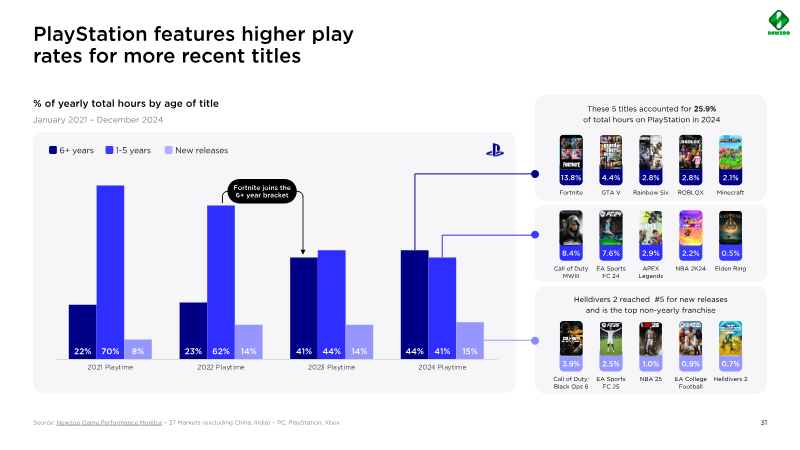
in the latter part of its life cycle and has already reached a large audience of 90-plus million units. And so he essentially said uh because we're in the latter half of this lifetime cycle, that means we do not need to aggressively sell the console today and rather than that, we're focusing on recurring revenue from the current user base. And already the PlayStation has more than 125 million monthly active users and finding ways to monetize those users is quite important for us. Um so essentially, what Sony is saying there is really interesting. What they're saying is that they're not expecting a ton more growth from the PlayStation 5. They're not expecting to reach way more than 93 million users. They're not expecting to double that number or see 20% growth year over year or anything like that. They are expecting that to hit a similar cap as the PlayStation 4 and therefore, in order to boost their margins, in order
to get their revenue up, in order to show their own company's growth, they need to find ways to monetize individual users, people who already own PlayStations. Which leads to another reason that we are seeing this transition to digital from Sony is because that is one way to say, "Hey, whether it's because of mem- the memory shortage, which has caused this crunch and led to console shortages and console supply issues and console price issues, where we're raising the price on these things, so we're not going to sell as many PlayStations anymore, um or whether it's because the market is capped in the first place and we're never really going to get that much more than 100 to 120 million consoles sold off of store shelves, we are at this point now where we have to monetize the individual users more and get more money out of them, milk them for more money, um and transitioning from physical to digital is a way to do that because if we can get those people all buying digitally instead of physically, then that helps
us boost our margins. And there are other things that I'm sure will come along the way too, whether it's raising the place prices of their subscription services like PlayStation Plus Plus, whether it's um uh including other forms of monetization. I mean, really, you could point to uh I talked about PlayStation's failed live service initiative a couple of weeks ago. That itself is a way to monetize users more because if you get someone hooked on a live service game, in a game that is designed for recurring revenue, then you are going to get more money out of them than uh than if you are just selling them a game one time and they just play that and move on to the next one. Um you're getting more money out of your users if they are paying ongoing for your game. So, I mean, that's that's kind of a a big deal, and helps I think add a little context surrounding these issues. We are now no longer in a growth market. We are in a mature market. We are in a market where companies like Sony, where video game companies don't expect to reach that
many more millions of people than they already do. So, they have to find ways to get more money out of their existing customers. I'm going to read a quote from Matt Piscatella, who is a great analyst at Circana, great follow on Blue Sky. He says, "Quote, so everything is going to be designed to squeeze more from the existing user base, and this has already been the case for some time. Whatever happens next should not come as a shock or surprise to players if they're paying attention." Um a few months ago in Well, was it February or March? I reported on Bloomberg that Sony was withdrawing from PC. They are moving away from the PC market for their single-player narrative games. One of the reasons they are doing that is because their PC games never sold all that well, or at least some of them never sold all that well, um which is kind of like that hot dog suit meme, like we're all trying to find the guy who did this because they decided to
release their PC games on this completely inconsistent cadence. Um They tied them up with PlayStation Network accounts. They did all this stuff that just made them uh destined to underperform, um but still, uh that was a reality. But, I also think that this whole this this kind of ongoing theme of this being a mature market is another reason for that, because if you are trying to monetize the hell out of your existing PlayStation customers, you're trying to get more money out of people who are using the PlayStation every day, yet another way to do that is to get is to avoid other markets, is to get away from the PC market despite dipping your toe in that water. Um, by the way, it's now what? August 31st this video is going to be published. It's almost September, many months later, seven, six, seven months since Come on. Six or seven months since I first reported that PlayStation was going to ditch PC. They haven't officially confirmed it yet. Um, so I think there's
still some people out there who have who have been in denial of that reporting, but I can assure you that it is true. Um, anyway, so so that's another kind of like it all feeds into this same kind of pie of like the video game industry just kind of believing or understanding or accepting the reality that there is no longer this just kind of untapped blue ocean is a term often used in in the business world to describe these customers. Um, there's no longer a world where you are reaching hundreds of millions of people or tens of millions of people out there who were not who have not bought a console before but are now going to. So instead, you have to get more money out of your existing player base. Um, it's hard to imagine that being a good thing for customers in general because when a company needs to find ways to monetize individual users rather than reaching new audiences, um, that's I mean
[laughter]
It It's There are very few examples of that being a good thing for customers. It's kind of like EA with the leverage buyout, which we'll talk about down the road when there's a little bit more news or more kind of insight to talk about. But a leverage buyout, um, is essentially what happened EA was EA was taken private by this kind of group of companies including mostly Saudi Arabia, 90 something percent Saudi Arabia, and essentially they said, "Hey, we're going to buy EA to take it private, and to do that we are going to do a leveraged buyout, which means that essentially we are paying for that purchase with a large percent with a large chunk of debt that we are then going to put on the company we are buying. And that's what happened with EA, and EA now has something in the way of $18 billion in debt, and they're going to have to service that interest by paying whatever percent it winds up being. It's a complicated number because there are all sorts of tranches of debt that they've taken out and bonds they've taken out to do this, but essentially they're going
to be paying more than a billion dollars in interest to service that debt every single year, which which will mean a lot of cost-cutting. And you can look at a leveraged buyout and say, "Well, I don't know, maybe it could work for us without causing any negative ramifications." That kind of Tobias Funke thing. Well, it hasn't worked for anyone else, but could work for us. And I think that's the same sort of thing when you're looking at like increased monetization, finding ways to {quote} exploit customers on a more individual like individual customers rather than reach new markets. It is not going to be a good thing. As Piscatella Piscatella, I believe, used the word "squeeze more from existing user base," which is a scary thought because I think there are a lot of people out there who are playing games and feel like they're already being squeezed in as many ways as possible. So, yeah, we'll see what happens here.
It will certainly be interesting to watch, but I think that just understanding a little bit more about where the industry is and that kind of this feeling among a lot of executives. There was a quote actually from Phil Spencer, the former head of Xbox, a few years ago where he talked about how like he, in his view, and he was prescient about a lot of things, in his view, the number of people who could potentially buy a console is between 100 and 150 million people, and it's you're not going to reach much more than that. We This industry has reached its cap, essentially. And when an industry has reached its cap of new people, but uh the companies involved still need to show year-over-year growth, that means they need to monetize their existing users more, and that is what we we are going to see, whether it's with shifting away from physical or whatever other microtransactions and price increases and issues come along over the coming months and years. Um all that said, like I said, uh I was
a little bummed out thinking about the future of like no longer being able to go to a thrift store and find some uh incredible deal on some used PS3 game or like find some hidden gem from the past, and how sad it is that that just won't be possible anymore. Um I I occasionally I go to retro game stores. That's also something that like, I mean, the PS6, assuming it is digital only, there will 30 years from now, there will be no such thing as finding a PS6 game in a retro store. That is sad. I'm actually I'm going to Japan for the first time in a couple of weeks, and I was hoping to check out Akihabara, which is known as like the the the nerd Mecca of like all these retro games and stores and electronics and all that cool stuff, and it's a bummer to think that stuff like that just won't be present in a few years, in 10, 15, 20 years. But that's where we are, unless Sony somehow
decides to reverse course and find somewhere to keep printing discs. That's where we are, and it's because the people need to be exploited. All right, uh I'll have more coming this week, including a couple of fun stories about games that are really good, so look forward to some positive videos later this week, and I'll see you next time.
Auto-generated captions from YouTube — names and numbers may be misheard.
Key insights
6 takeaways · ~2 min read- 01The video game industry has transitioned from a high-growth market to a mature market, meaning companies no longer expect significant expansion in the number of new console users.
- 02To maintain revenue growth in a stagnant user base, companies like Sony are shifting to digital-only distribution to eliminate retail costs and capture higher margins per sale.
- 03Sony’s strategy for the PlayStation 5 focuses on maximizing revenue from its existing 125 million monthly active users rather than aggressively pursuing new hardware adoption.
- 04Increased monetization efforts, such as rising subscription prices for services like PlayStation Plus and the development of live-service games, are being implemented to extract more value from individual players.
- 05The shift toward digital-only ecosystems, exemplified by the planned elimination of physical discs by 2028, will effectively end the secondary market for games and the future viability of retro gaming retail.
- 06Financial pressures, such as the $18 billion debt load associated with leveraged buyouts in the industry, are forcing companies to prioritize aggressive cost-cutting and user monetization strategies.
Ask AI about this video
Cite this video
Citation
Generating citation…

















Comments