1 free read left. Create a free account for unlimited reading + AI research.
Create free accountArticle American Journal of Play
1 free read left. Create a free account for unlimited reading + AI research.
Create free accountArticleAmerican Journal of Play
The paper tests MMORPG engagement against established criteria for play, including rules, make-believe, fun, and voluntariness.
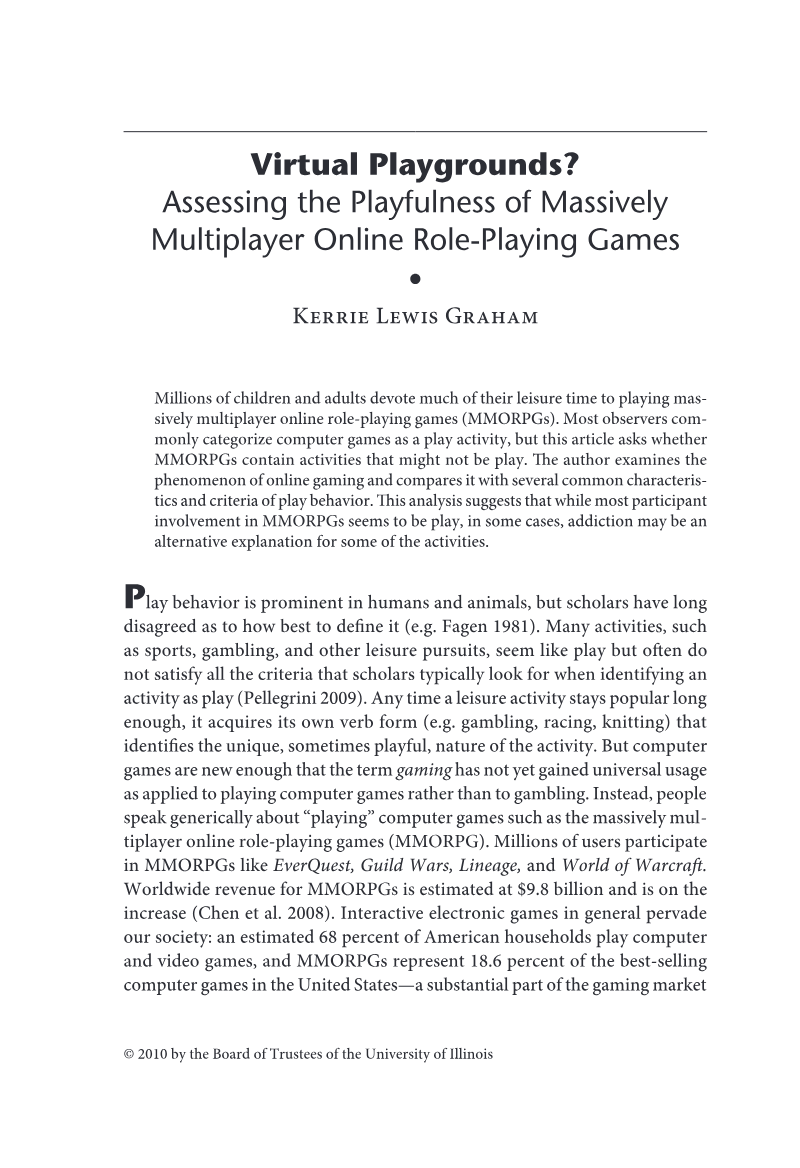
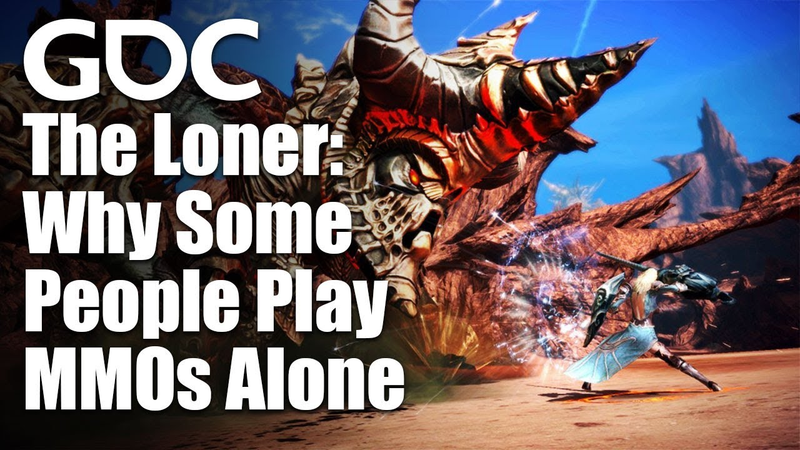
Virtual Playgrounds? examines whether participation in massively multiplayer online role-playing games (MMORPGs) qualifies as play, testing the activity against established criteria such as rules, make-believe, fun, and voluntariness. The central thesis holds that MMORPG engagement is playful for most participants, though the boundary between play and compulsive overuse is real and depends heavily on the individual and the context in which the game is played. The analysis draws on reported figures, including that 79 percent of gamers form guilds, that the average player is 26 years old, and that players invest roughly 22 hours per week, to support the claim that most activity meets the defining features of play.
The argument finds that MMORPG play is largely nonfunctional and voluntary, although obligations such as guild raiding and the blending of in-game economies with real-world money can make some activity feel closer to work. To assess the risk of overuse, the paper applies R. I. F. Brown's six facets of addiction, namely salience, euphoria or relief, tolerance, withdrawal, conflict, and relapse. It concludes that play and addiction lie at opposite ends of a continuum rather than representing a clear binary. The paper notes that more than half of players have occasionally played for over ten continuous hours, yet it does not establish how prevalent pathological overuse actually is, leaving that question open.
The authors frame the matter as a "play-addiction continuum" in which context determines where a given player falls. They observe that popular and marketing usage of the term "addictive" tends to blur the distinction, while critics emphasize addiction risks and proponents highlight social and intellectual benefits. The work draws on a range of existing research rather than presenting original quantitative findings. Its geographic and temporal scope is not explicitly bounded, but its focus is the contemporary MMORPG player population, which the authors argue is large enough that the question of whether these games are truly playful carries significant cultural and social implications.
American Journal of Play · 2025
American Journal of Play · 2025
American Journal of Play · 2024
American Journal of Play · 2024
American Journal of Play · 2024
American Journal of Play · 2023
American Journal of Play · 2022
American Journal of Play · 2022
American Journal of Play · 2021
American Journal of Play · 2020
American Journal of Play · 2020
American Journal of Play · 2019
The Game Business · 2026