1 free read left. Create a free account for unlimited reading + AI research.
Create free account
Virality and organic growth for games
Key insights
6 takeaways- 01Systematically engineering virality is a necessary response to rising user acquisition costs and market saturation, as it provides a more trusted and targeted alternative to traditional broad-reach marketing.
- 02A K-factor exceeding one is the primary benchmark for success, as it indicates that each existing player is bringing in more than one new user, leading to exponential growth.
- 03Developers should integrate high-arousal emotional triggers, such as excitement from team-based mechanics or frustration from extreme difficulty, to naturally compel users to share their experiences.
- 04Sharing prompts must be strategically timed to occur immediately after significant gameplay milestones, such as achieving a high score, to avoid the negative impact of spamming users.
- 05Implementing structured referral programs that offer in-game rewards for inviting friends can increase daily new installs by approximately 10 percent.
- 06Generic 'download this game' messaging is ineffective; developers should instead prioritize context-specific or user-generated content that aligns with the community's language.
Ask AI about this video
Transcript
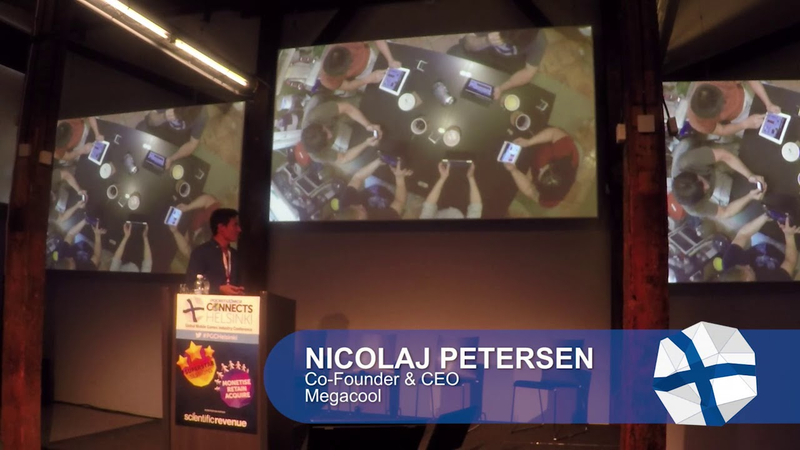
[Music] [Music] hi everyone thank you for attending this talk my name is Nick and I'm the co-founder of mega cool and we provide the service that makes it easier for users to share animated gifs from mobile games and to make it easier to invite friends and so this talk is about royalty and organic growth and prior to the company I'm working on now I experienced something that every game developer would kill for a game we made called fun run went viral and it was made by only six college students and we didn't only get to the top free app of the u.s. after once it almost happened
the year after again and so this was it was at a time when the market wasn't that saturated but it still required hundreds of hundreds of thousand new installs per day to reach those rankings and as students we didn't have money to spend on marketing or ads so this was all organic so after this happened I decided to dig into the phenomena or Pharrell's here why did it happen to us and what can we learn from it from its so that is what this presentation is about the goal is to break down what 4lc is and how you can use it in your games to give you some inspiration and you might ask why we even care about this well the answer is that the user acquisition costs today are really expensive and they're still rising so you really need to get this part right to have an good organic growth for your games
so oops Before we jump into morality when a user decides to download a game or not the decision is based on some rational factors like surprising the quality and the marketing and so because the app store is full of games it's really hard to compete on pricing because most games out there are free and the quality is also pretty good so what's left is marketing and that's why so many billion dollars every year is spent on marketing just to get users attention but at the same time there's an other sides of this and that that is the irrational factors and word-of-mouth for instance is one thing that triggers a decision to download the game or not like if I recommend the game to a friend and the social impacts is like if everyone is saying Pokemon go then you
just have to do it too otherwise you're an outsider so it doesn't matter the price does matter or the quality doesn't matter if the social impact is strong then that also triggers to the decision to download and so what's great about ads is that you can just pour money into it and get a broad reach instantly if you have a good enough LTV and a large enough budgets but what adds is not Google is to target the right users and that's because that's why you spent so much money on us so you get the broad reach so people don't really or we don't really trust us but we trust our friends so the value of me recommending a friend sir game is pretty big and that's the targeting benefit of word-of-mouth [Applause] so Before we jump into what triggers Peralta it's important to distinguish between the two terms going viral and
morality because every game out there has some kind of morality it's defined by something called the K factor which means that how many users is one single user bringing in and so for instance the K factor might be 2.2 and that means it requires five people to bring in just one more person and if the K factor is over one as you see on this kind of expansion of exponential growth graph and that that means that the game is going viral because for every user that installs the game at least one more is brilliant and so the first tip to make your game or to trigger morality is to include emotional moments into your game because it turns out that some certain emotions both positive and negative triggers the Iger of sharing or to talk
about it and the common term for this is that they need to have some high arousal like excitement or amusement or even anger those emotions trigger sharing so an great example of a game that brings excitement is the game called space team which you might have played it's a team-based game where your goal is to control this spaceship and you have to communicate with each other to be able to do it so let's take a look at what the gameplay looks like for in this game so as you can see they're freely excited while playing the game and the hearts were probably pumping right after expiry
so that excitement brings in more or increases the likelihood of sharing with friends and they probably talked about it after and played it with a little more friends as well and so another emotion is anger and a game that you might remember called flappy bird went viral a couple of years ago and that game brought a lot of anger to it because the normal game introduces you to a smooth like has a smooth introduction so you get used to play the game and it feels challenging afterwards as well but with flappy bird it was just plain impossible to play it from the beginning like if you got more than five points you'll be happy and but you'll still be angry because you couldn't get more than five points so you asked your friends hey are you able to get more than five points and they'll be like yeah of course but they couldn't do it so the world worker kind of spread out
because of this so the problem will staff apart is that the long-term quality game quality wasn't that good so it became this one-hit wonder that eventually faded away again but maybe you can find ways to bring up emotions into your games like excitement and and anger next up is to add triggers to the right places because a lot of people probably would like to talk about your games but they sometimes need to be reminded of it so what you can do is to trigger them to talk about your game when it makes sense and they'll be like oh yeah great now I can brag about my gameplay for instance so one game that does this really well is the game called steppin pants and as you can see when you reach a new high score there's this gif that is
being generated and it's prompted to the user only when a new high score it's a switch if you don't reach new high score then it's not there so it triggers at the right place when the people or the users are more likely to share next one is to focus on the message a lot of games have this share button included which is great so people can share content from the game but the predefined text is often pretty boring it can be like download this game or check out my score and people don't get really excited about those texts so they need to think of a new message and that's that increases the barrier of sharing so if you could help them along the way to do that that's even better an example of that which is included in fun run is that we look through Twitter and look at what people tweeted about the game by
looking up the hashtag fun run and then we add that into a pool of texts in the game so every time you hit the Twitter share button and you random text would appear to the to Twitter forum and for instance like having a blast or all those guys just got washed or get on my level son or wants to catch an L I don't know what that means but that's the language of the users or I'll just be the golden fox so we will see users clicking the sweet battle button a couple of times just to find the right text and then never tweet it so that makes it more likely to be to be shared the last one is to add referrals its your games because some other services like Dropbox and uber and airbnb have included referrals so that the sender's get a reward for inviting friends and
you can do that to increase liberality of your games so what you can do is for instance adding a option to refer a friend when users are going into stores to buy more currency so instead of having the option to either buy or not to buy to get the option to refer a friend or to pay for the currency so you would get a user or revenue in that way and so this is easily done by adding a link that can be shared and tracked to see if the installs happened or not and if you think about it the same thing happens in we do ants today where people or users are being incentivized to show or to look at the video ads and then yeah they get a reward for doing that so you can apply the same principle to referrals so
as a quick summary tried to include emotional moments into your game if it makes sense to include anger or excitement that can trigger the sharing add the triggers at the right places don't spam the users with the option of sharing only find the right places to trigger them and prompt them right there and focus on the message try to avoid the generic text like download this game or check out my score and find something more unique and add referrals that increases where else yeah a lot we've seen some really implemented this in a couple of games and seen an increase of 10% of daily new installs by by doing that so that's a great way to increase the viral T as well so yeah that was it thank you so much
that's great so first you start early and now it's a very short talk my morning was so easy compared to this slows anybody any questions there's a load of really interesting advice shared there and perhaps clevice on on on missing games does anybody have a question for Nikolai about anything they can implement in the games I asked you on just a little bit so of the other care four or five things you mentioned which is the kind of you know if you can't implement everything that you suggest to which is the the most important thing you think to you have to do I pens in the game I guess but it does differ is the easiest ones to implement because it's pretty hard to add excitement or anger to your game play if you don't have it included already there but referrals is easy to add to all the games yeah okay fair enough all right on that note I'm gonna never scholar the question I'm gonna ask us to one more round of applause for Nikolai off you go thank you [Applause] [Music]
you [Music]
Summary
Organic growth and virality are essential strategies for mobile game developers facing rising user acquisition costs and a saturated market. While traditional marketing provides broad reach, it often lacks the trust and precise targeting inherent in word-of-mouth recommendations. The primary thesis is that developers can systematically engineer virality by leveraging emotional triggers, strategic timing, and incentivized referral systems to lower acquisition costs and increase organic installs.
The core metric for measuring this success is the K-factor, which represents the number of new users each existing player brings into the game. A K-factor exceeding one indicates exponential growth. To achieve this, developers should integrate high-arousal emotional moments—such as excitement or frustration—into gameplay, as these states naturally compel users to share their experiences. For instance, team-based mechanics can foster excitement, while extreme difficulty can generate the type of frustration that encourages social comparison and peer-to-peer challenges.
Execution is equally critical. Developers must place sharing prompts at optimal moments, such as immediately following a high score, rather than spamming users. Furthermore, the quality of the shared content matters; generic messages like "download this game" are ineffective. Instead, developers should curate or allow for user-generated, context-specific messaging that resonates with the community's language. Finally, implementing referral programs—where users receive in-game rewards for inviting friends—serves as a powerful, easily implemented tool that can increase daily new installs by approximately 10 percent. While emotional design is foundational, referral systems are identified as the most accessible and universally applicable tactic for developers looking to improve organic growth immediately.



















Comments