1 free read left. Create a free account for unlimited reading + AI research.
Create free accountArticle International Journal of Esports
1 free read left. Create a free account for unlimited reading + AI research.
Create free accountArticleInternational Journal of Esports
Researchers analyzed the 2019 League of Legends World Championship Series finals. The study drew on 77 games.
This study examines which in-game variables distinguish winning from losing teams in the 2019 League of Legends World Championship Series finals, drawing on 77 games analyzed through t-tests, Mann-Whitney U tests, chi-square tests, and a classification and regression tree model. The central finding is that objective-based performance is closely tied to victory. Securing the first Baron Nashor kill showed a very strong association with winning (χ²(2) = 43.44, p < .001, Cramér's V = .751), and teams that took the first Baron or destroyed more than six main structures had a markedly higher probability of victory. Turrets destroyed, inhibitors, kills, deaths, and gold earned also differed significantly between winning and losing sides, with large effect sizes.
Within the classification tree, red-side turret destruction emerged as the strongest single predictor of outcome, achieving 96.1% correct classification, with six or fewer red-side turret kills favoring a blue-side win and seven favoring a red-side win. These results suggest that prioritizing neutral objectives and structure pressure may be a meaningful strategic lever for competitive teams.
The authors are careful to characterize these findings as correlational and based on a small sample drawn from a single tournament. The analysis is confined to one championship series and one game version, patch 9.19, and the authors caution that frequent patches can shift the relative importance of variables over time. Format differences across BO1, BO3, and BO5 series and regional playstyle variation further limit generalizability and cross-study comparison.
Taken together, the study offers a data-driven foundation for understanding objective control at the professional level, while acknowledging that a reliable predictive model will require additional international tournament data and longitudinal research spanning multiple patches and regions. The research received no funding, and the authors report no conflicts of interest.
Each row is a game or company this document names, each column a document, oldest first. A mark means that document names it. Select a row to see those documents.
International Journal of Esports · 2026
International Journal of Esports · 2026
International Journal of Esports · 2026
International Journal of Esports · 2026
International Journal of Esports · 2026
International Journal of Esports · 2026
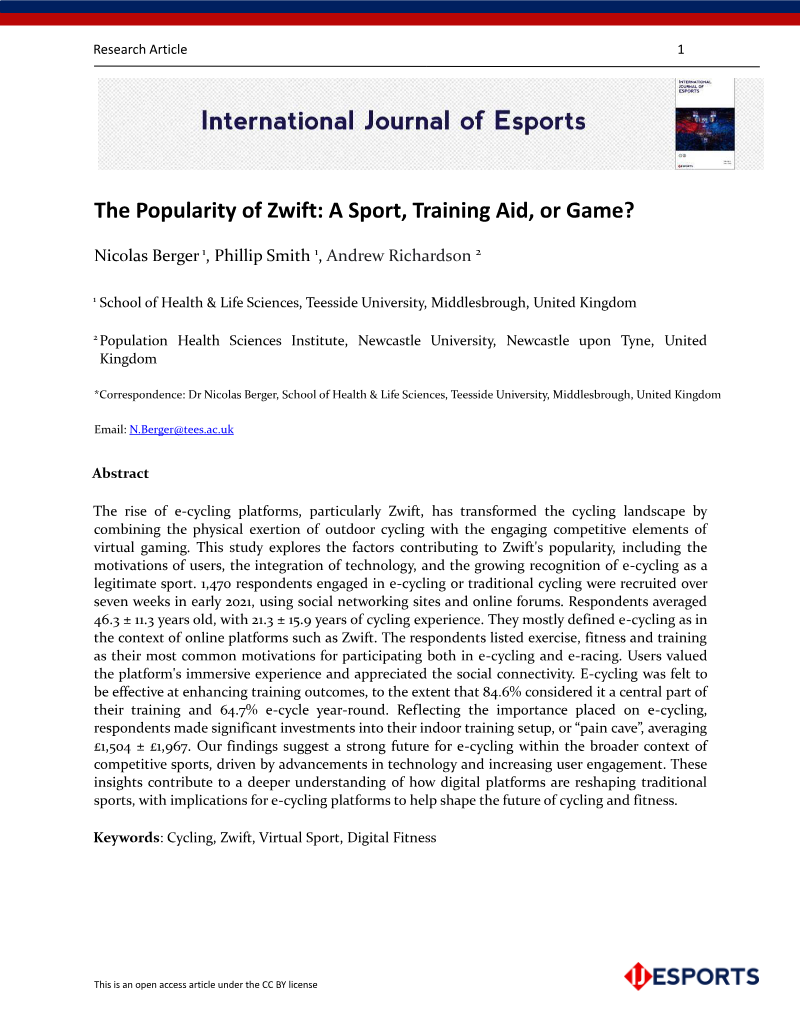
International Journal of Esports · 2025
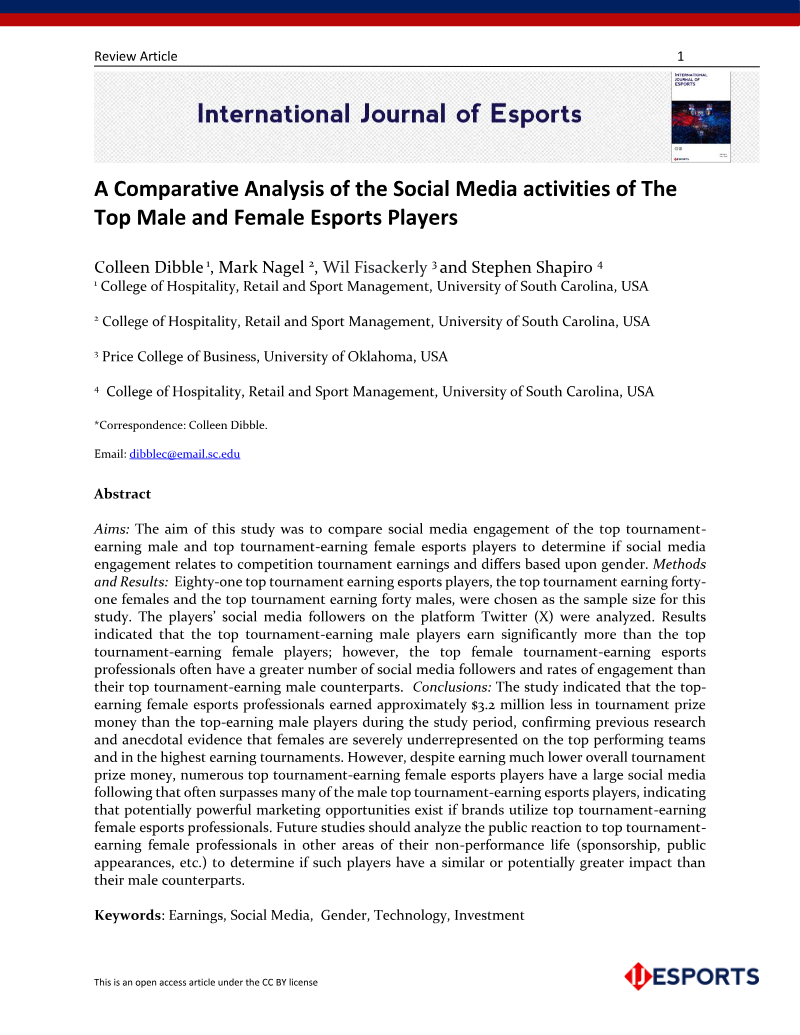
International Journal of Esports · 2025
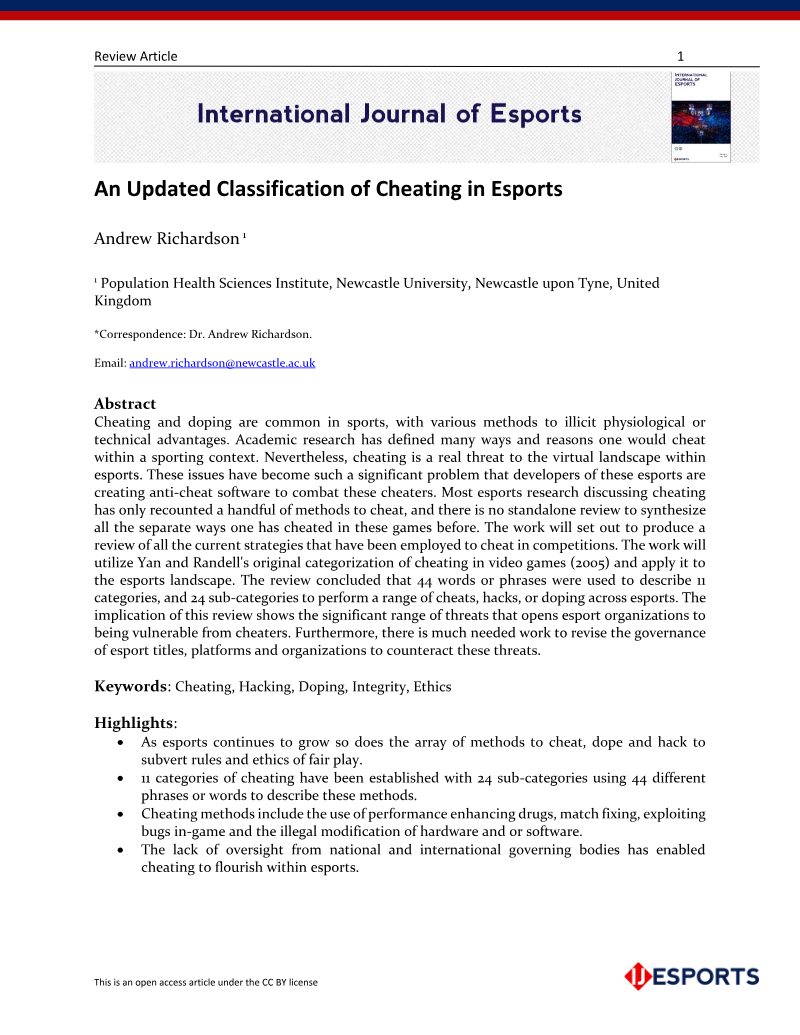
International Journal of Esports · 2025
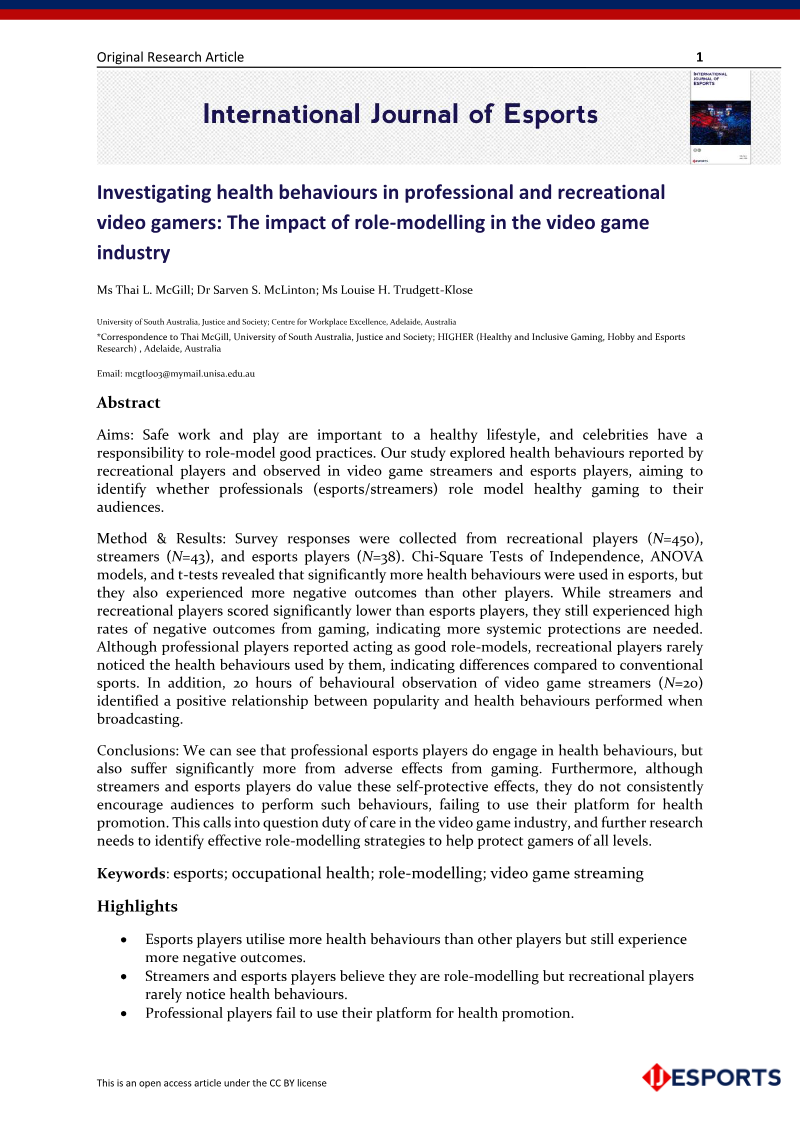
International Journal of Esports · 2025
International Journal of Esports · 2025
International Journal of Esports · 2025
DiGRA · 2016