Unity Software Inc.’s FY 2022 filing presents a company that has expanded its top line to $1.39 billion, a 26 % increase driven by growth in its Create Solutions and the newly acquired Grow Solutions portfolio from ironSource. Revenue growth is supported by a broad, globally distributed creator community and cross‑platform deployability, yet operating expenses rose sharply—particularly in research and development, sales and marketing, and acquisition‑related amortization—to $1.83 billion, resulting in a net loss of $919 million (or $66 million after adjustments). Gross margin contracted as hosting, personnel, and intangible amortization costs offset revenue gains. The company’s balance sheet reflects significant goodwill ($3.20 billion) and convertible notes of $2.71 billion, while cash and equivalents stand at $1.49 billion, leaving a modest liquidity cushion.
Risk disclosures underscore persistent challenges: intense competition, macroeconomic uncertainty, and customer retention pressures; integration risks from recent acquisitions such as ironSource, Parsec, Weta Digital, and strategic investments; and the need for continued investment in R&D and sales to achieve profitability. Operational risks include partner churn, service‑level failures, collection and currency exposure, and limited hedging. Regulatory risks span data‑security compliance (GDPR, CCPA), platform policy shifts from Apple and Google, export controls, anti‑corruption obligations, and evolving gaming‑regulation statutes that could trigger fines or litigation. Cybersecurity threats and intellectual‑property disputes also pose potential financial and reputational damage.
Geographically, Unity’s revenue is concentrated in the United States (≈$348 m) but remains globally diversified, with significant exposure to EU and emerging markets. The filing covers FY 2022 (calendar year ending December 31, 2022) and focuses on the gaming, film, automotive, and broader creative industries. Overall, Unity’s financial performance reflects rapid growth tempered by high operating costs, integration complexity, and a broad spectrum of regulatory and market risks that could materially affect future profitability.
Unity · 2026
Unity · 2026
Unity · 2026
Unity · 2025
Unity · 2025
Unity · 2025
Unity · 2025
Unity · 2025
Unity · 2024
Unity · 2024
Unity · 2024
Unity · 2024
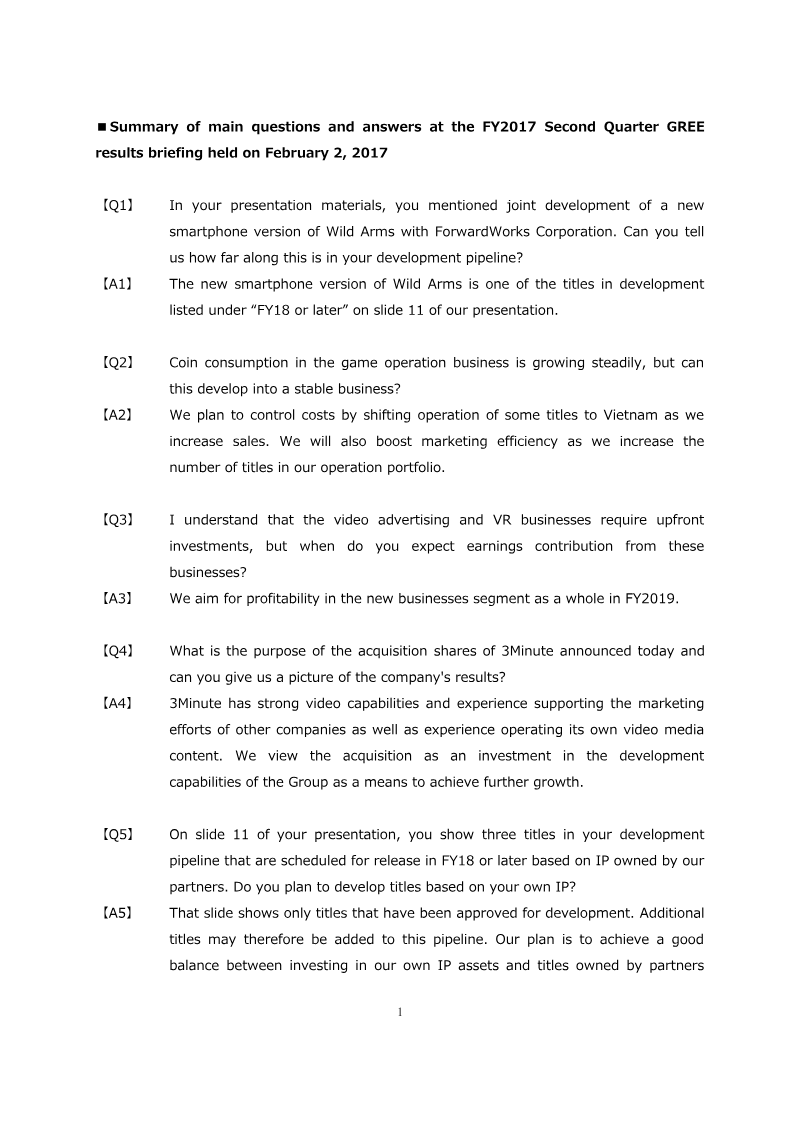
GREE · 2017
Modern Times Group · 2026

G5 Entertainment AB · 2025
Thunderful · 2025
InvestGame · 2024

Koei Tecmo · 2024

Electronic Arts · 2024

Drake Star Partners · 2024

Paradox Interactive · 2024

PitchBook · 2024

Sony Group · 2024
Koei Tecmo · 2024