1 free read left. Create a free account for unlimited reading + AI research.
Create free accountArticle Eludamos: Journal for Computer Game Culture
1 free read left. Create a free account for unlimited reading + AI research.
Create free accountArticleEludamos: Journal for Computer Game Culture
The paper argues that an AI system's usefulness depends on whether players can perceive its affordances. The gap between designer intent and player perception is treated as a critical design concern.
This paper offers a framework for understanding how players experience artificial intelligence in games, drawing together human-computer interaction theory and game studies. Its central argument is that an AI system's usefulness depends on whether players can perceive its affordances, and that the gap between what designers intend and what players actually perceive is a critical design concern. Building on Janlert and Stolterman's notion of character and Hassenzahl's distinction between intended and apparent product character, the authors contend that hedonic and pragmatic qualities are tightly intertwined in games, so design decisions about AI must account for both enjoyment and clarity.
A recurring theme is that players bring prior experiences and expectations to every interaction, which shapes how they interpret a game's signals. When these interpretations diverge from designers' intentions, false affordances, cues that suggest actions which do not work, prove especially damaging, and empirical work cited in the paper links such mismatches to frustration and reduced enjoyment. To organize the field, the authors sort AI-in-games research into three affordance categories, character, situation, and narrative, and propose design heuristics including visual complexity signaling importance, attention to cultural differences in game preferences, and the use of speech acts. Several of these heuristics, notably the provision of space for attention, rest on limited evidence and are identified as priorities for further study.
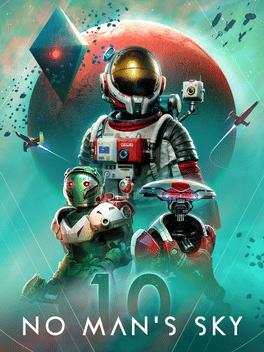
The paper's conclusions emphasize coherence: AI artifacts must align with a game's narrative, audiovisual design, and communicative cues, because discordant signals can lead players to misread both micro-narratives and intended mechanics. The authors argue that AI should be treated as a means of improving the player experience rather than as a selling point in itself, pointing to the backlash against No Man's Sky's emphasis on generative content as a cautionary case. The typology is presented openly as an incomplete theoretical framework whose heuristics still await systematic empirical verification.
Each row is a game or company this document names, each column a document, oldest first. A mark means that document names it. Select a row to see those documents.

Eludamos: Journal for Computer Game Culture · 2026

Eludamos: Journal for Computer Game Culture · 2026

Eludamos: Journal for Computer Game Culture · 2026

Eludamos: Journal for Computer Game Culture · 2026

Eludamos: Journal for Computer Game Culture · 2026

Eludamos: Journal for Computer Game Culture · 2026

Eludamos: Journal for Computer Game Culture · 2026

Eludamos: Journal for Computer Game Culture · 2025

Eludamos: Journal for Computer Game Culture · 2025

Eludamos: Journal for Computer Game Culture · 2025

Eludamos: Journal for Computer Game Culture · 2025

Eludamos: Journal for Computer Game Culture · 2025