1 free read left. Create a free account for unlimited reading + AI research.
Create free accountFinancial report Ubisoft
1 free read left. Create a free account for unlimited reading + AI research.
Create free accountFinancial reportUbisoft
Ubisoft’s financial performance during the first half of fiscal year 2014 reflects a deliberate strategic transition toward high-budget, open-world titles designed to anchor the next generation of console gaming. By prioritizing massive, interconnected experiences that integrate social features and digital services, the company seeks to capitalize on the hardware transition while fostering long-term player retention. This approach emphasizes the utilization of a vast, 26-studio production network to maintain a consistent cadence of high-quality franchise releases, which remain the core engine of the firm’s competitive strategy.
Financial results for this period reveal a complex landscape characterized by a 5% increase in sales, bolstered by strong back-catalog performance and digital growth. However, the company recorded a net loss of €62.3 million and a non-IFRS operating loss of €98 million. These figures stem primarily from a 43% surge in R&D depreciation and the costs associated with project cancellations, alongside a 7% rise in total cash R&D investment. Despite these short-term fiscal pressures, management maintains a positive outlook, projecting a return to profitability in fiscal year 2015 with a target operating income of at least €150 million.
The long-term growth strategy centers on lowering barriers to entry through cross-platform accessibility and asynchronous gameplay. By incorporating user-generated content to extend product lifespans and employing sophisticated player analytics to personalize engagement, the company aims to optimize retention rates and reduce customer acquisition costs. This focus on digital expansion, free-to-play models, and deep social integration represents a fundamental shift toward creating sustainable, service-oriented ecosystems that extend well beyond the initial point of sale.
Each row is a game or company this document names, each column a document, oldest first. A mark means that document names it. Select a row to see those documents.
Ubisoft · 2026
Ubisoft · 2026
Ubisoft · 2026


Ubisoft · 2026
Ubisoft · 2026
Ubisoft · 2026
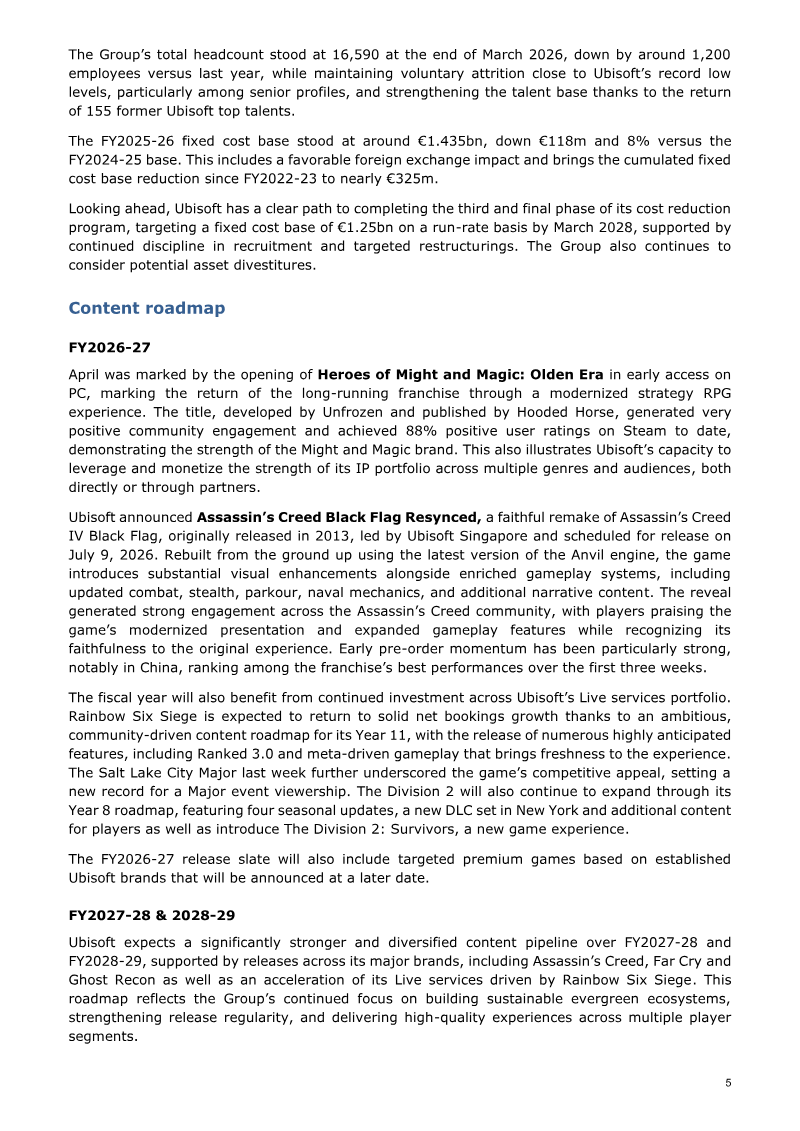
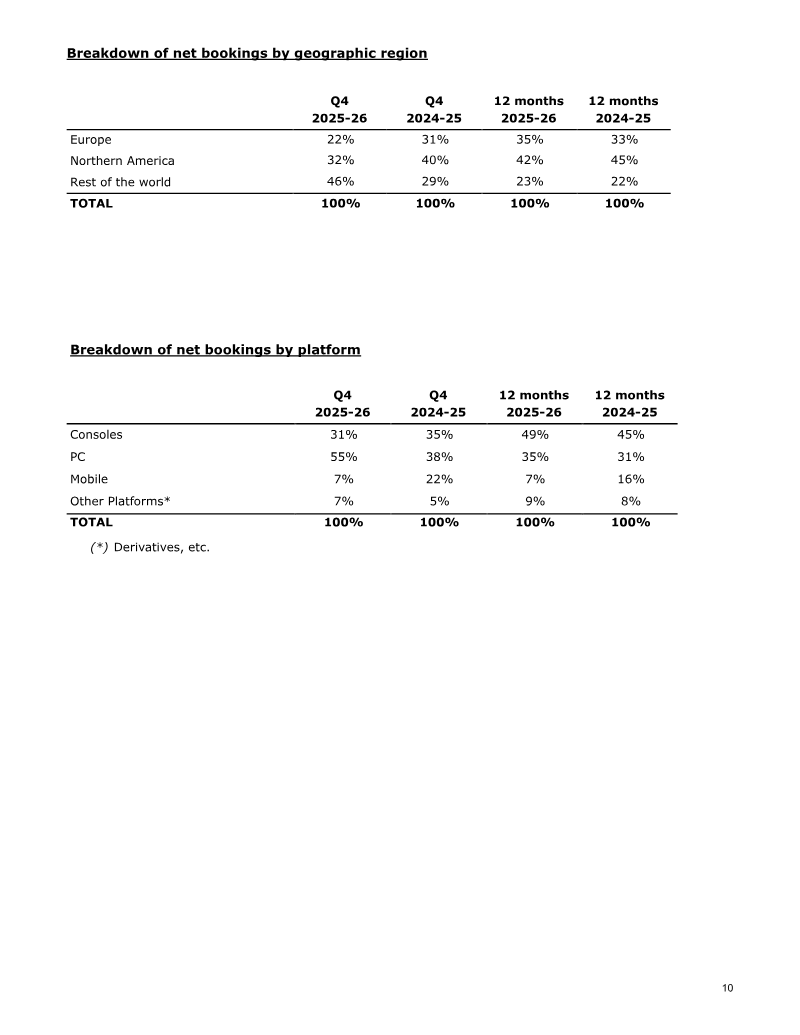
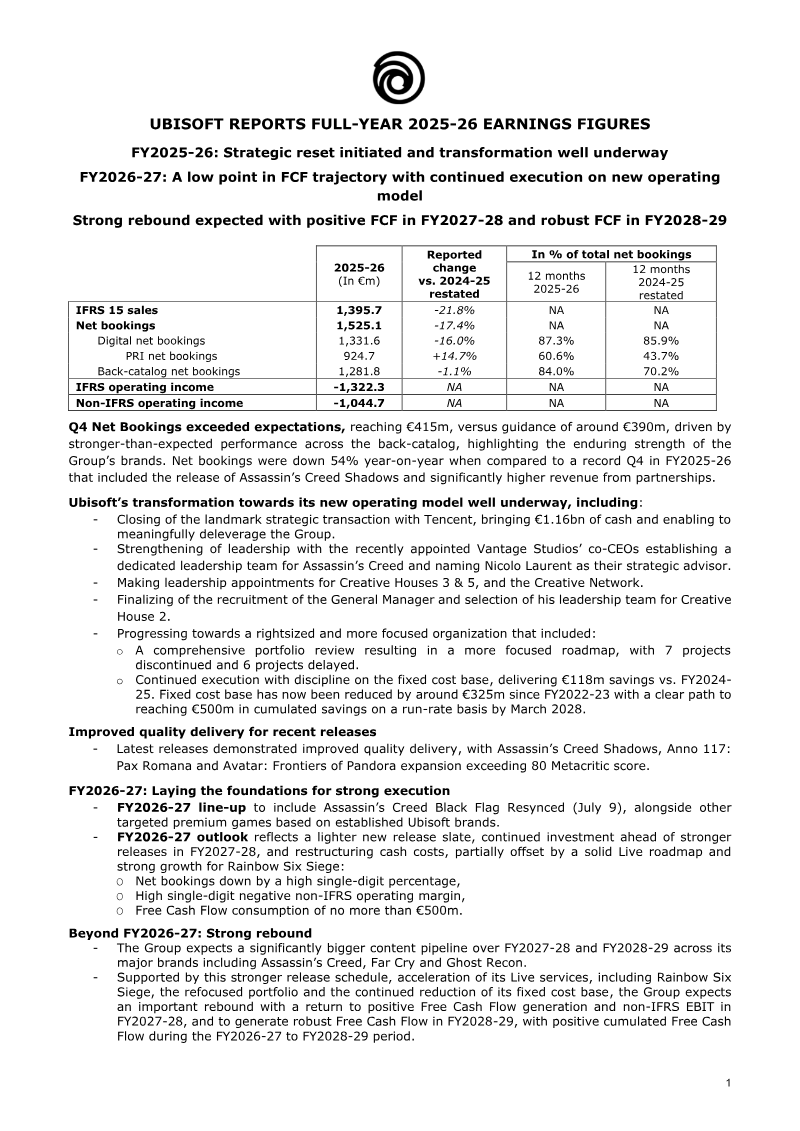
Ubisoft · 2026
Ubisoft · 2026
Ubisoft · 2026
Ubisoft · 2026
Ubisoft · 2026
Ubisoft · 2025
DeNA Co. · 2026