1 free read left. Create a free account for unlimited reading + AI research.
Create free accountArticle American Journal of Play
1 free read left. Create a free account for unlimited reading + AI research.
Create free accountArticleAmerican Journal of Play
The work is typically home-based and economically precarious.
Core claim. Live streaming transforms private play into public entertainment and a new form of work.
T. L. Taylor's "Twitch and the Work of Play" examines live streaming as a hybrid practice that fuses play with professional media production and labor. Its central thesis is that streaming transforms private play into public entertainment and a new form of work, typically home-based, economically precarious, and dependent on social, emotional, and technical labor. Through an ethnographic portrait of a popular streamer running a one-person production studio, Taylor shows how streamers manage setup, chat interaction, subscriptions, donations, and raids alongside their gameplay, layering set design, performance, critique, and sociality into a single enterprise.
A key finding is that live streaming is best understood as an assemblage of human and nonhuman components, including hardware, software, platform infrastructure, and monetization systems, which together make both play and labor possible. Drawing on interviews with streamers, Taylor reports that participants regard their broadcasts as transformative, cocreative works that blend commercial and creative aims. Their vernacular understanding of intellectual property frequently diverges from formal legal frameworks, and the analysis cautions that commercialization and rationalization may erode the autonomy and pleasure traditionally associated with play.
The book's most distinctive contribution lies in its engagement with theoretical debates about play and work. It challenges critics such as Roger Caillois and Tom Brock, who argue that professionalization corrupts play, by showing that players themselves describe streaming in terms of pleasure, creativity, and social connection. Drawing on Max Weber, Taylor contends that the "work of play" is often transformative and that players' meaning-making should be weighed alongside structural constraints rather than dismissed as false consciousness. In doing so, the study uses live streaming to interrogate work-play dichotomies and to deepen understanding of labor and leisure on commercialized networked platforms.
Each row is a game or company this document names, each column a document, oldest first. A mark means that document names it. Select a row to see those documents.
American Journal of Play · 2025
American Journal of Play · 2025
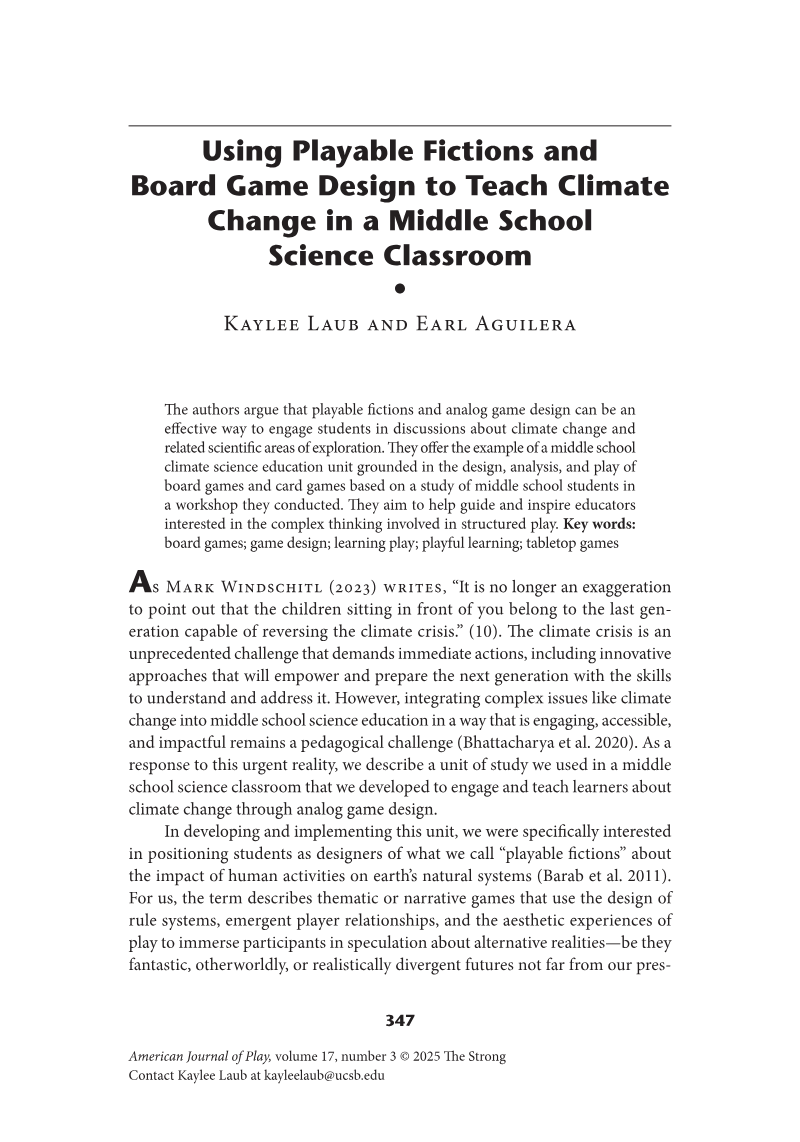
American Journal of Play · 2024
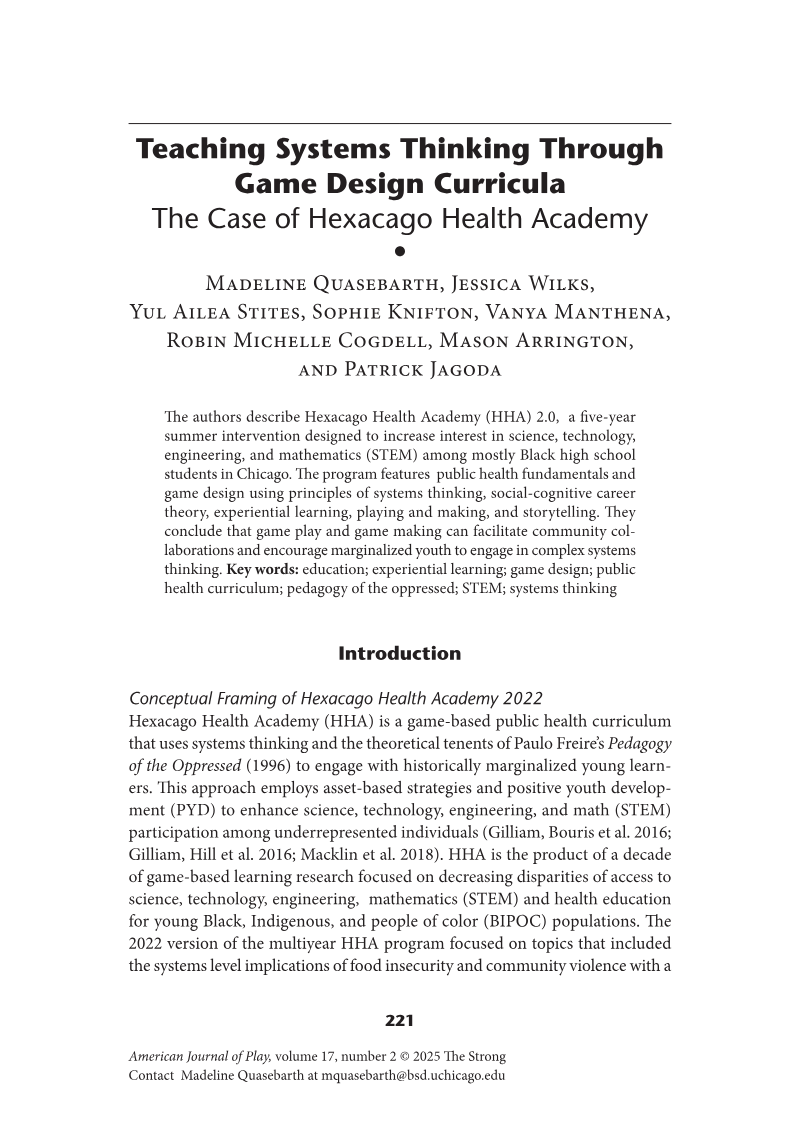
American Journal of Play · 2024
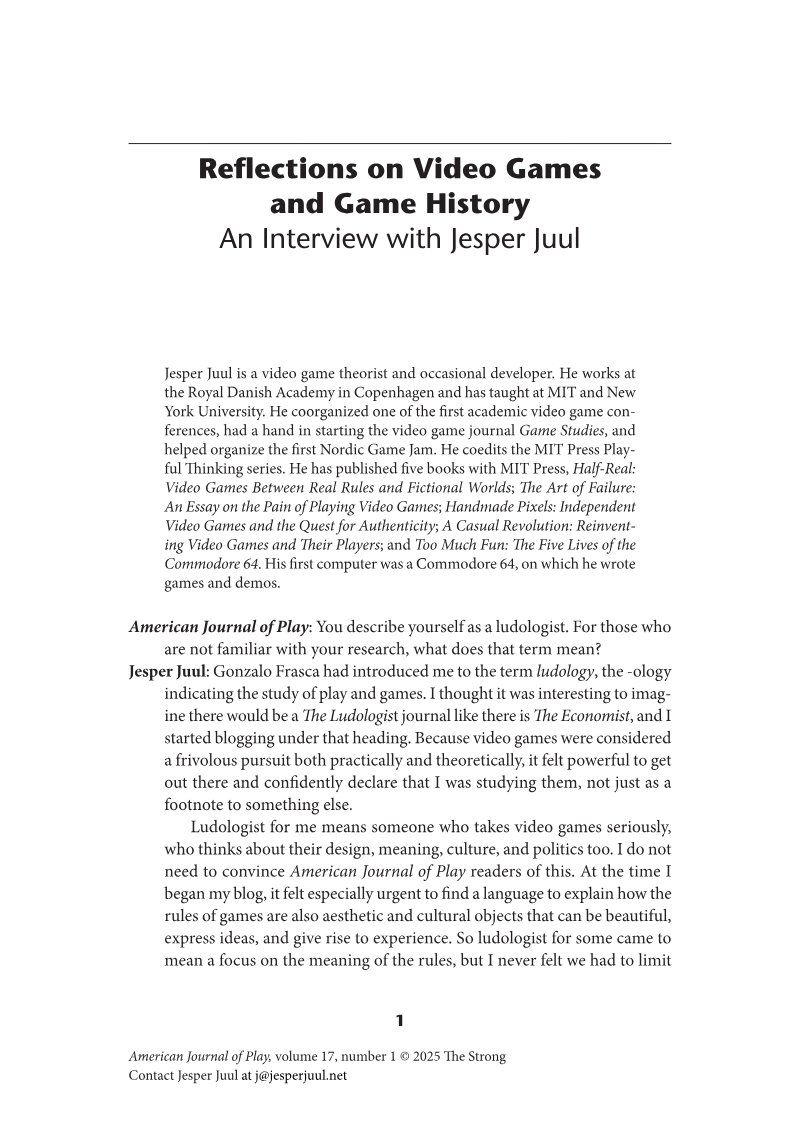
American Journal of Play · 2024
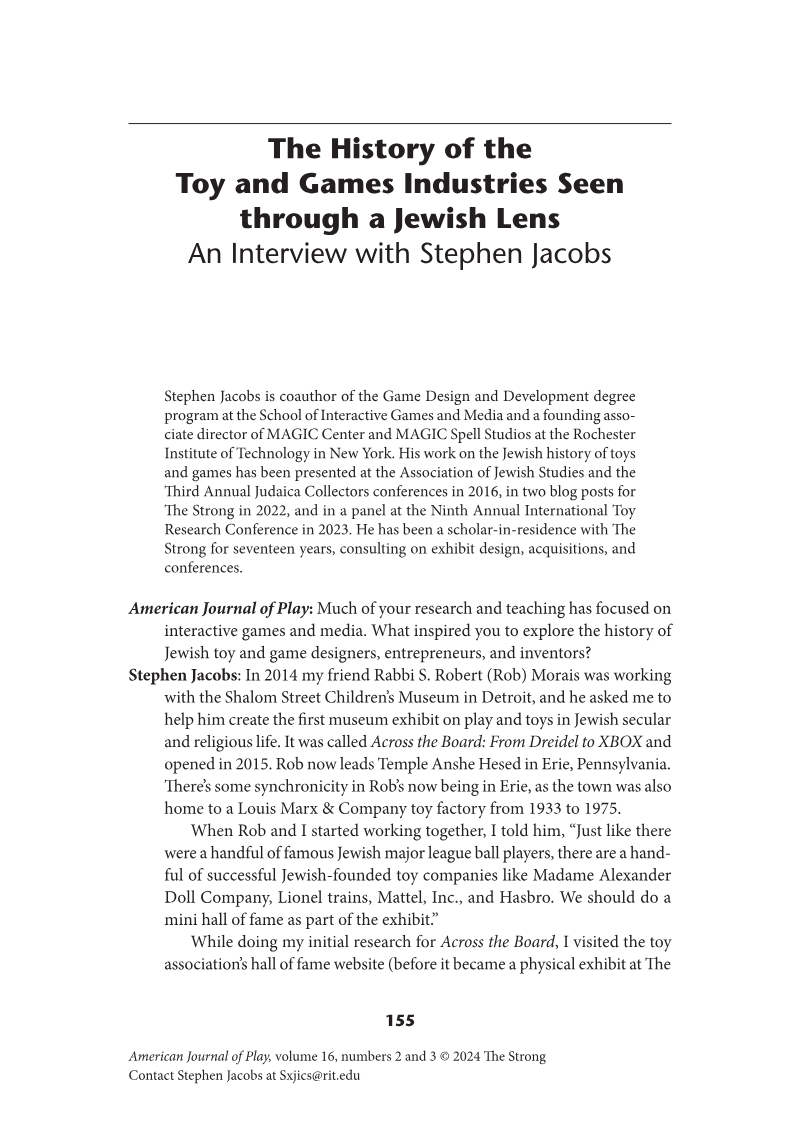
American Journal of Play · 2023
American Journal of Play · 2022
American Journal of Play · 2022
American Journal of Play · 2021
American Journal of Play · 2020
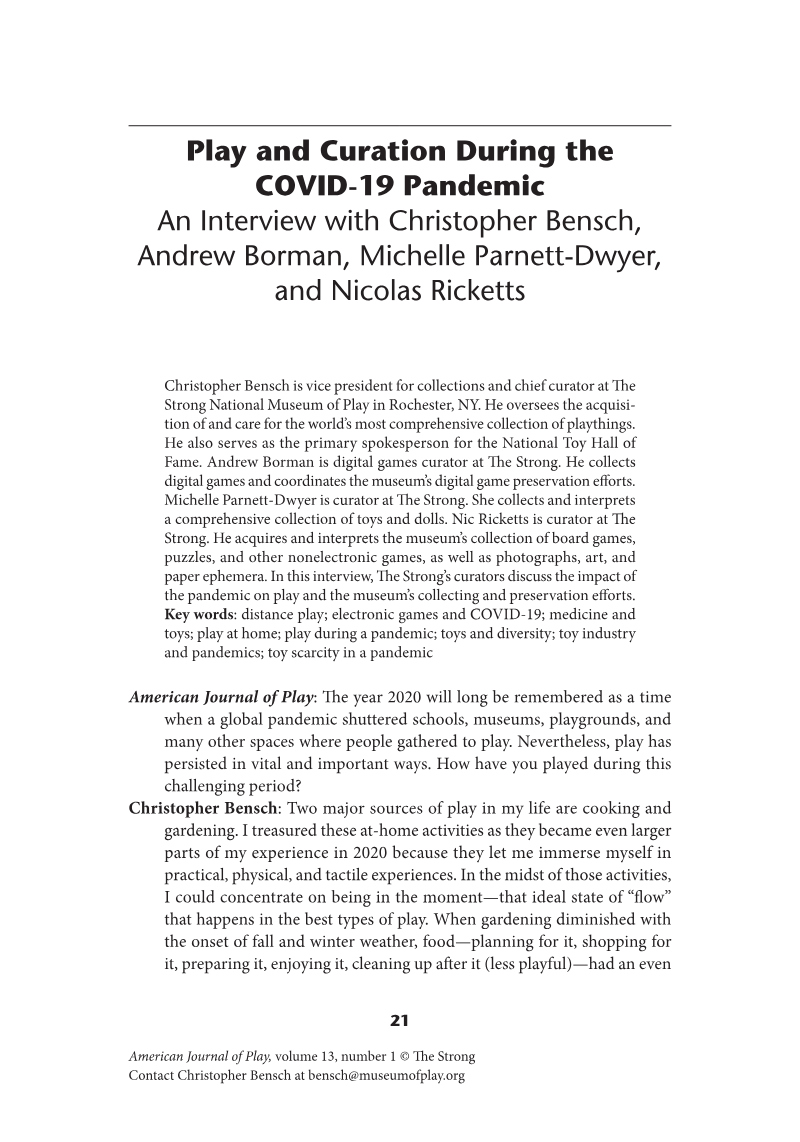
American Journal of Play · 2020
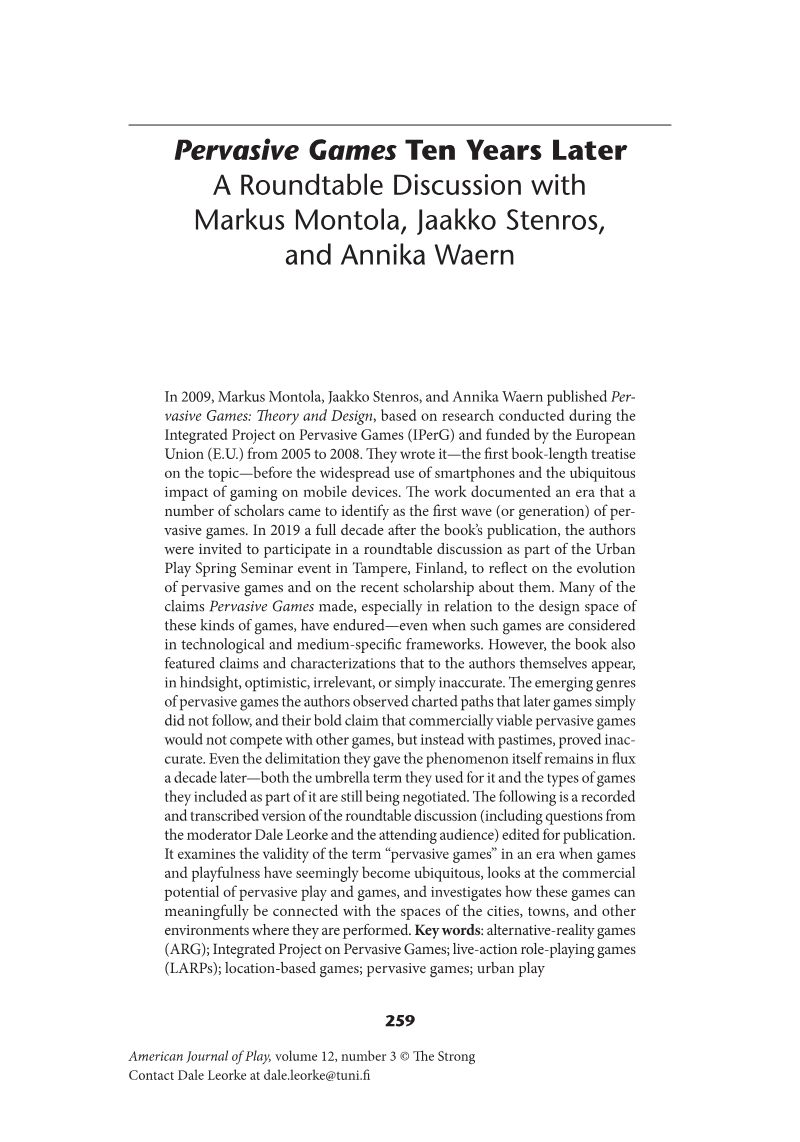
American Journal of Play · 2019
DiGRA · 2026