More from Entertainment Computing
View all
Whitepaper
Conceptualizing Fun as Motivation to Play Video Games
Entertainment Computing · 2026
Whitepaper
Decoding the Mechanisms of the Hattrick Football Manager Game Using Bayesian Network Structure Learning
Entertainment Computing · 2026

Whitepaper
Examining the Influence of Target–Distractor Similarity on Difficulty in a Working Memory Game
Entertainment Computing · 2025
Whitepaper
Gamifying Museum Exploration: A Virtual Reality Approach to Enhancing Visitor Engagement
Elsevier · 2025
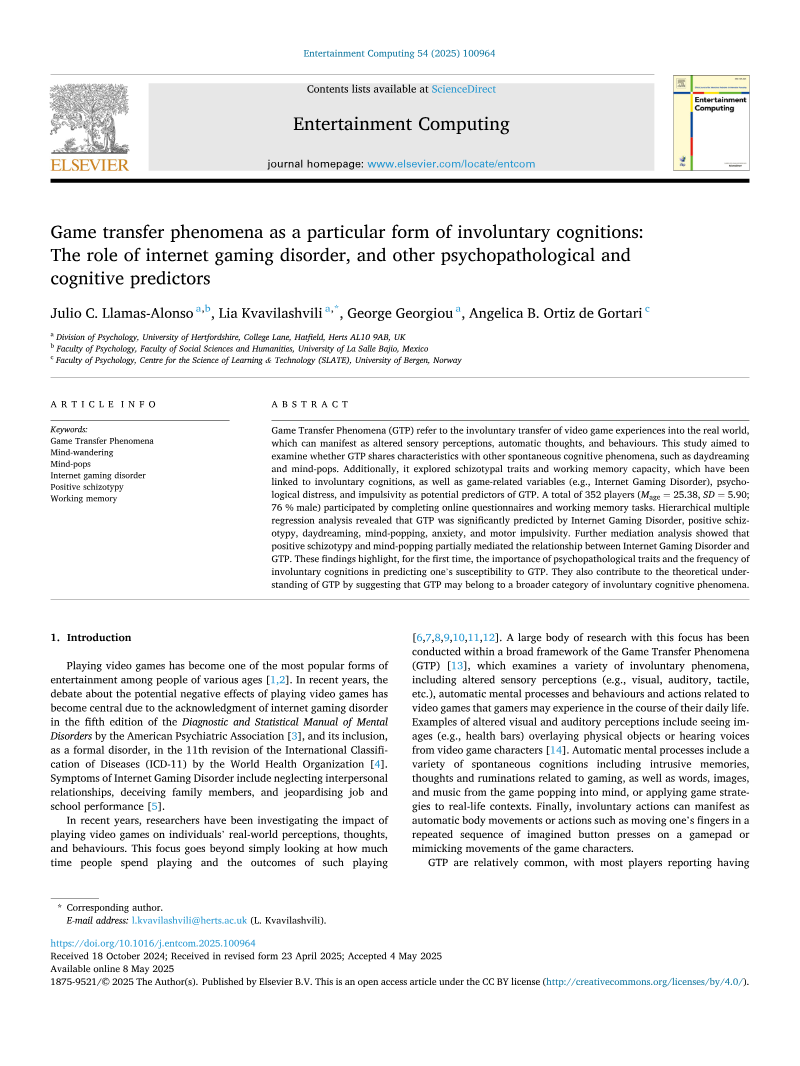
Whitepaper
Game Transfer Phenomena as a Particular Form of Involuntary Cognitions: The Role of Internet Gaming Disorder and Other Predictors
Elsevier · 2025
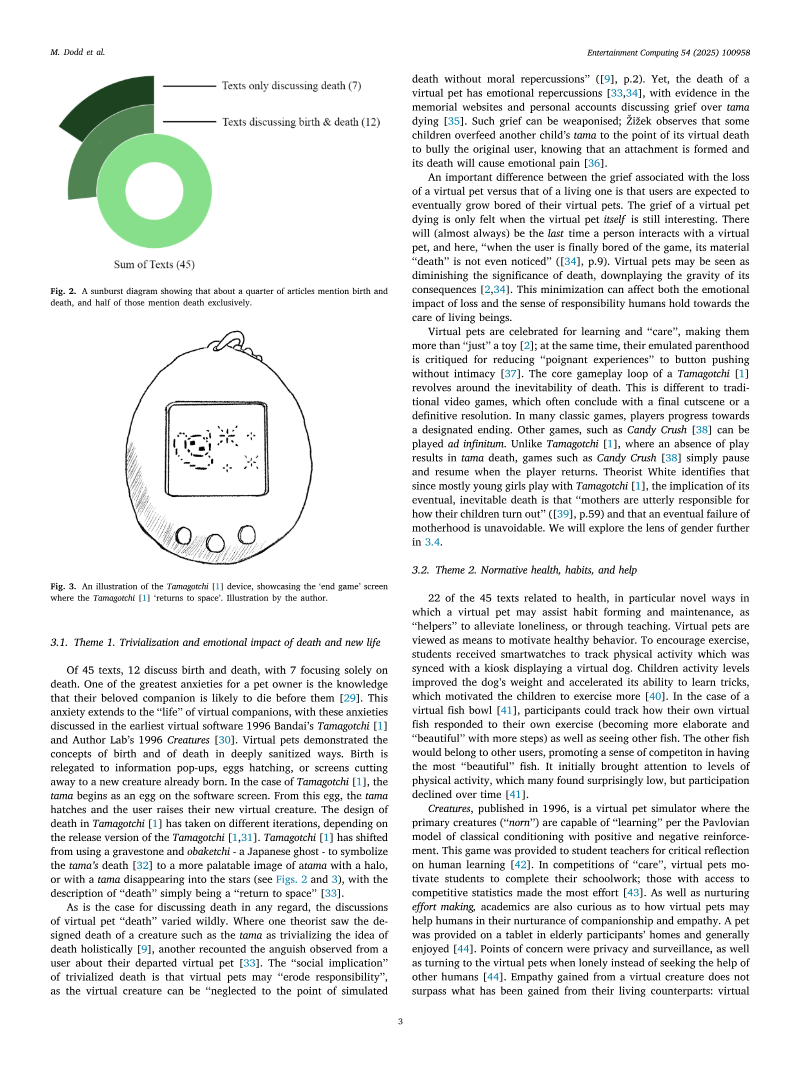
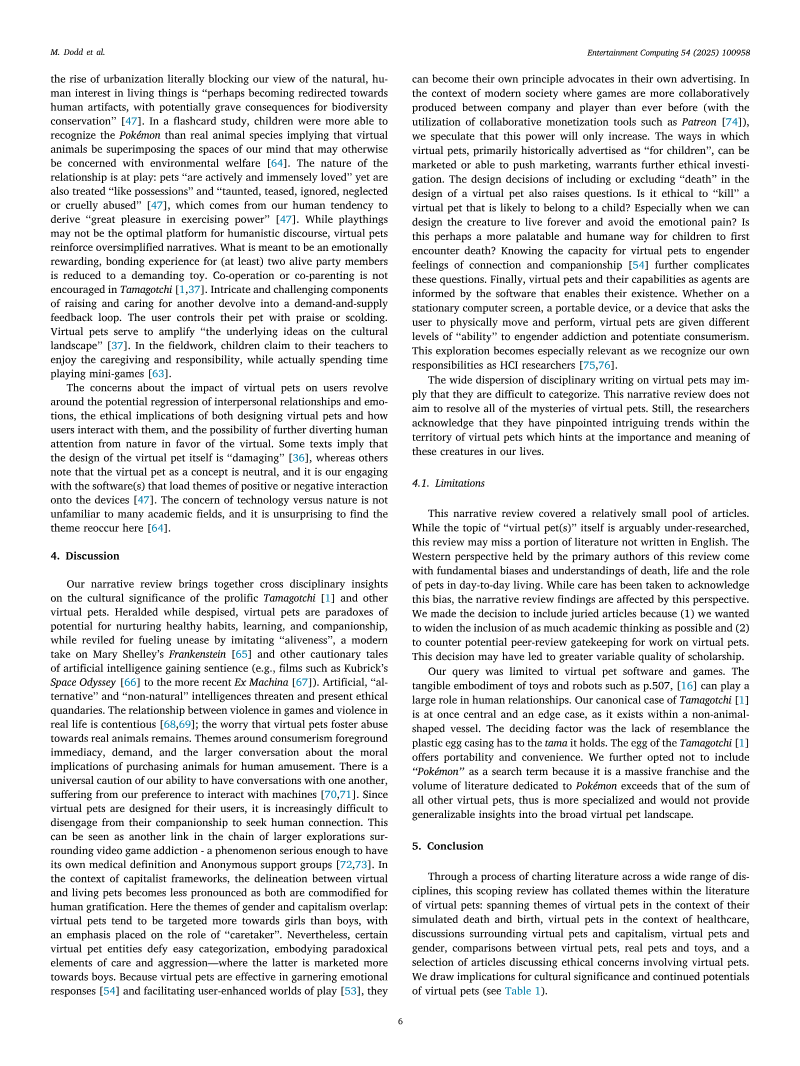
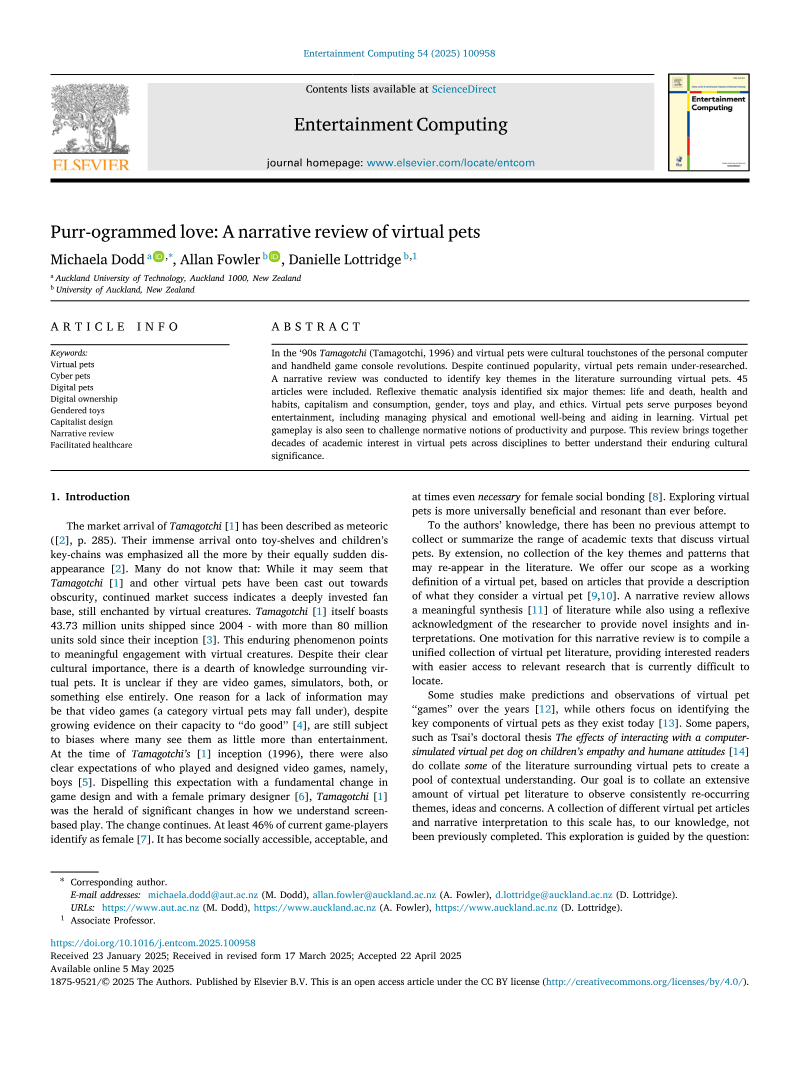
Whitepaper
Purr-ogrammed Love: A Narrative Review of Virtual Pets
Elsevier · 2025

Whitepaper
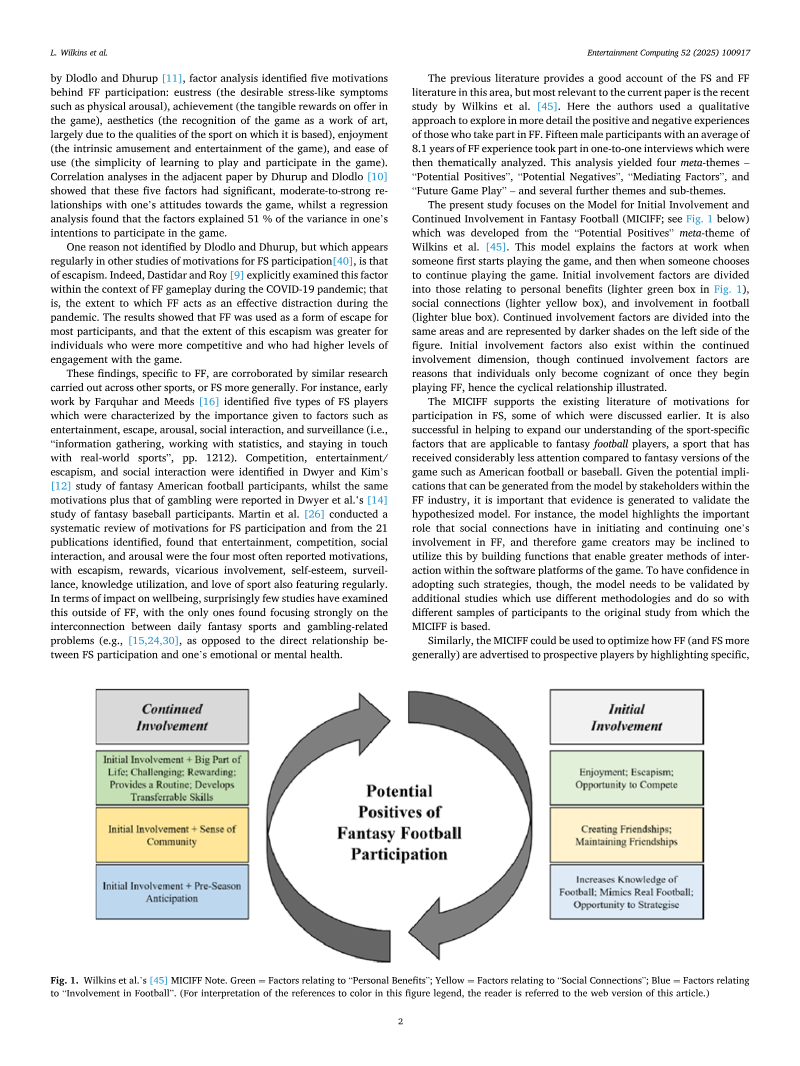
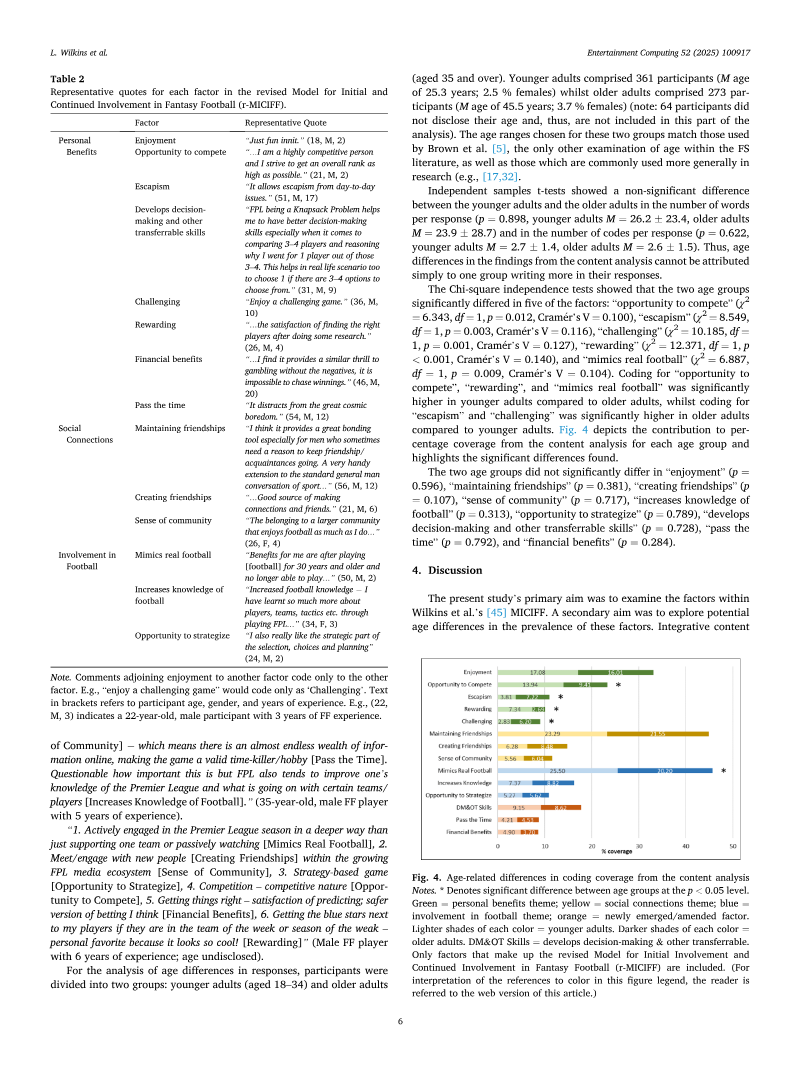
The Revised Model for Initial and Continued Involvement in Fantasy Football
Entertainment Computing · 2024
Article
Interactive Digital Narratives for Mental Resilience: Understanding the Player Experience of Betwixt
Entertainment Computing · 2024
Whitepaper
Eight Types of Video Game Experience
Entertainment Computing · 2024

Whitepaper
Theories, Methodologies, and Effects of Affect-Adaptive Games: A Systematic Review
Entertainment Computing · 2023
Whitepaper
The Effect of Fantasy on Learning and Recall of Declarative Knowledge in AR Game-Based Learning
Entertainment Computing · 2023
Whitepaper
The Mediating Effect of Fantasy on Engagement in an AR Game for Learning
Entertainment Computing · 2022