1 free read left. Create a free account for unlimited reading + AI research.
Create free accountArticle G|A|M|E – The Italian Journal of Game Studies
1 free read left. Create a free account for unlimited reading + AI research.
Create free accountArticleG|A|M|E – The Italian Journal of Game Studies
The essay argues that acknowledging torture as play is essential to a more inclusive and reparative definition of play.
Aaron Trammell's essay challenges the dominant theorization of play in Western scholarship, arguing that foundational thinkers such as Huizinga, Caillois, Piaget, and Sutton-Smith have framed play as overwhelmingly positive while excluding torture and violence as taboo. This framing, the work contends, renders the experiences of Black, Indigenous, and People of Color invisible within games discourse. The central claim is that torture should be understood as a form of play, one that disciplines and subjugates, and that acknowledging this is essential to a more inclusive and reparative definition of play.
The argument rests on the premise that play is voluntary only for the player and not necessarily for the one being played, making it a subject-object relationship rather than a subject-subject one. Drawing on Sicart and Caillois, and using the children's game "tag" as an illustration, the analysis shows how play can reduce a participant to an object. It critiques play theory's longstanding emphasis on consent and pleasure, observing that morally uncomfortable forms of play have often been omitted or policed. Building on W.E.B. Du Bois's concept of double-consciousness and Foucault's account of torture, the work argues that play, like the historical dehumanization of Black Americans, can strip people of subjectivity.
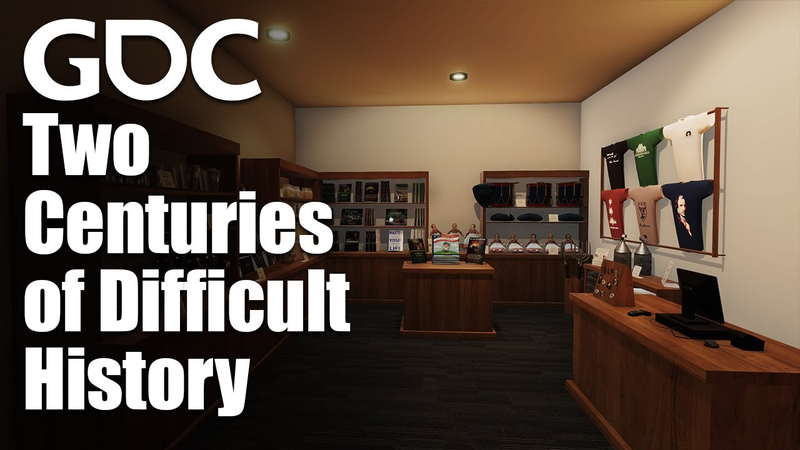
The historical anchor of the analysis is "Hide the Switch," a game practiced by enslaved Black children in the antebellum and post-Civil War United States. Its interpretation reveals how traumatic histories, including slavery, resist being neatly framed as play and are therefore frequently excluded from institutions such as museums that celebrate games. The work situates these claims within contemporary concerns, including the 2020 Black Lives Matter protests, racialized harassment in online gaming as documented by Kishonna Gray, and the theatrical work of Jeremy O. Harris. Its concluding position is that recognizing violence and cruelty within play is necessary to avoid aestheticizing it and reinforcing racial power structures.
G|A|M|E – The Italian Journal of Game Studies · 2026
G|A|M|E – The Italian Journal of Game Studies · 2026
G|A|M|E – The Italian Journal of Game Studies · 2026
G|A|M|E – The Italian Journal of Game Studies · 2026
G|A|M|E – The Italian Journal of Game Studies · 2026
G|A|M|E – The Italian Journal of Game Studies · 2026
G|A|M|E – The Italian Journal of Game Studies · 2026
G|A|M|E – The Italian Journal of Game Studies · 2026
G|A|M|E – The Italian Journal of Game Studies · 2026
G|A|M|E – The Italian Journal of Game Studies · 2026
G|A|M|E – The Italian Journal of Game Studies · 2026
G|A|M|E – The Italian Journal of Game Studies · 2026
DiGRA · 2026