1 free read left. Create a free account for unlimited reading + AI research.
Create free accountArticle Eludamos: Journal for Computer Game Culture
1 free read left. Create a free account for unlimited reading + AI research.
Create free accountArticleEludamos: Journal for Computer Game Culture
Veugen and Quérette argue that how gamespace is represented shapes what players can do within it. They frame this through Stockburger's five modalities of space.
Veugen and Quérette's article, published in Eludamos in 2008, examines how spatial representation shapes gameplay in classic point-and-click adventure games, using the Gabriel Knight series as its central case. The authors take up the debate over whether the way gamespace is represented determines what players can do within it, and they frame their analysis through Stockburger's five modalities of space. Their core argument is that gameplay and audiovisual representation of space cannot be separated, and that the transition from fixed two-dimensional screens to navigable three-dimensional environments changed both how narrative space is experienced and how players search for clues and move through the world.
The analysis contrasts Sins of the Fathers (1993), which presents New Orleans through fixed, stage-like screens with mapped travel and icon-bar control, with Gabriel Knight 3 (1999–2000), Sierra's first fully 3D adventure. The latter offers freely explorable environments, a player-controlled camera, and off-screen space, yet the authors find its locations, tied to a less familiar Grail narrative, less evocative than the Voodoo-inflected New Orleans of the first game. They argue that skills honed in earlier adventures do not always transfer, since visual cues such as detailed but non-functional objects misled players accustomed to the older visual grammar, and film-derived lighting was unfamiliar to gamers at the time.
The study's scope is focused on these two or three titles within the Sierra adventure line, drawing on design-level analysis rather than broad industry data, and it situates them within an academic debate about gamespace. The closing discussion notes the modern frustration with pixel hunting in the first game and the variety of representational strategies across the series, including full-motion video in the second entry. The authors conclude that the series' spatial flexibility sits atop a constant narrative structure, and that GK1 and GK2 achieved commercial success and awards even as player reactions to the audiovisual presentation of all three games remained mixed.
Each row is a game or company this document names, each column a document, oldest first. A mark means that document names it. Select a row to see those documents.
Eludamos: Journal for Computer Game Culture · 2026
Eludamos: Journal for Computer Game Culture · 2026

Eludamos: Journal for Computer Game Culture · 2026
Eludamos: Journal for Computer Game Culture · 2026
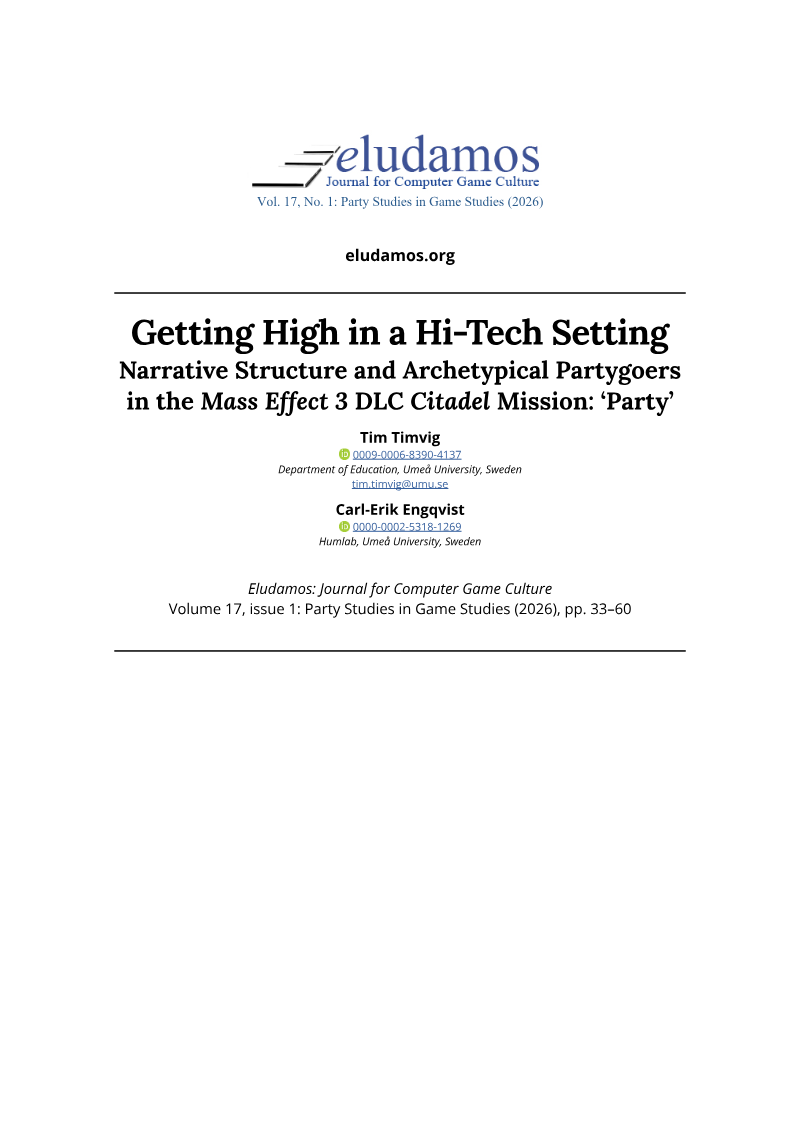
Eludamos: Journal for Computer Game Culture · 2026
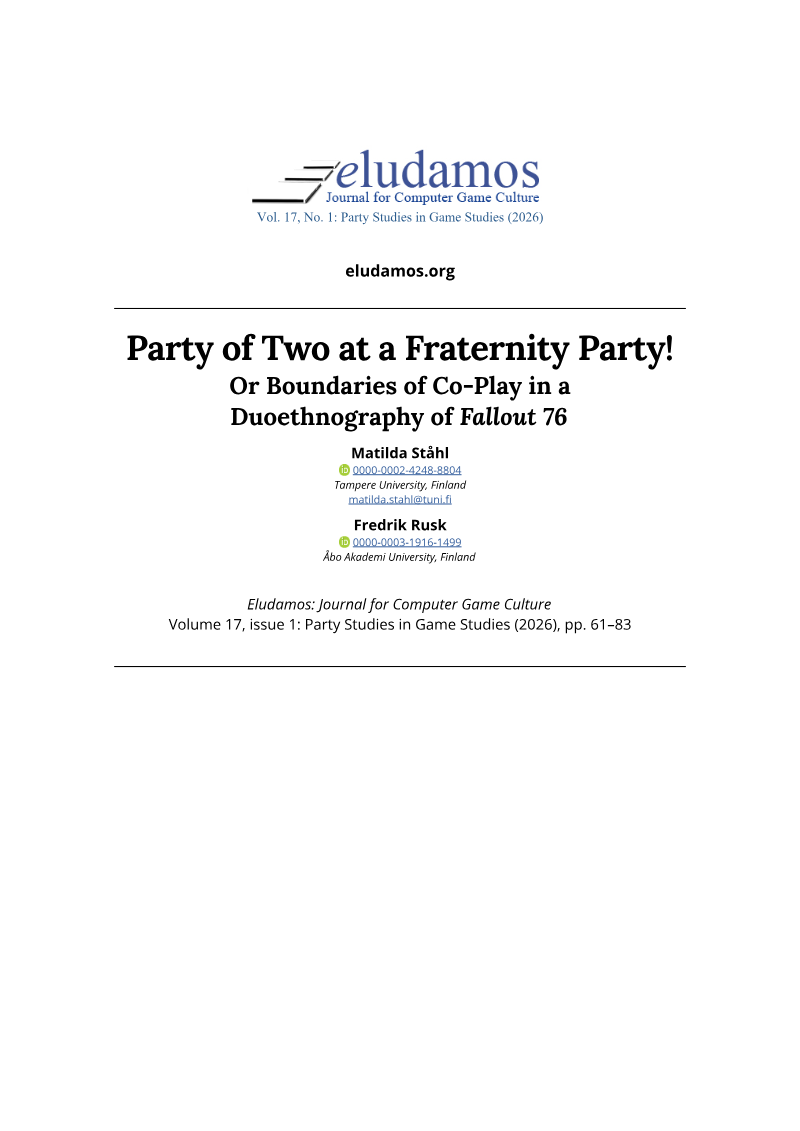
Eludamos: Journal for Computer Game Culture · 2026
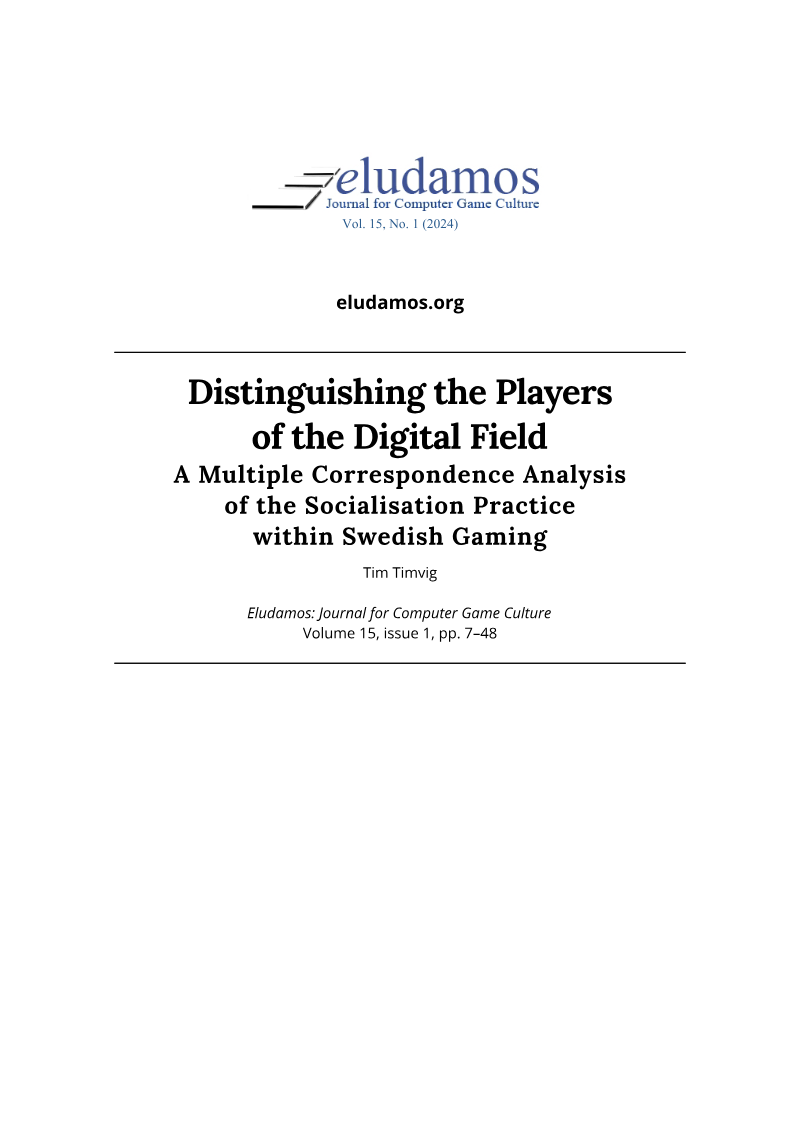
Eludamos: Journal for Computer Game Culture · 2026
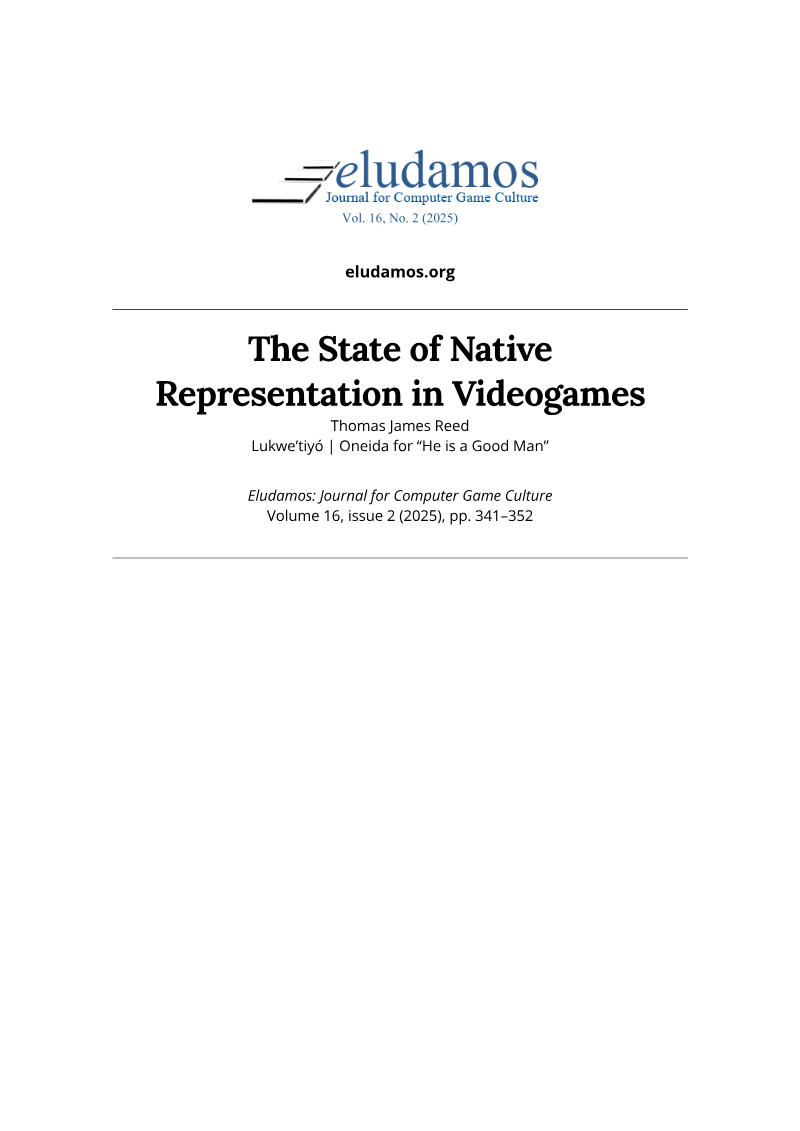
Eludamos: Journal for Computer Game Culture · 2025
Eludamos: Journal for Computer Game Culture · 2025
Eludamos: Journal for Computer Game Culture · 2025
Eludamos: Journal for Computer Game Culture · 2025
Eludamos: Journal for Computer Game Culture · 2025
DiGRA · 2026