Key insights
5 slides
Beyond entertainment
Videogames can cultivate eudaimonic experiences, moving beyond simple mechanical mastery.
These experiences prioritize reflection, personal growth, and complex emotional engagement.
New focus. Designers should shift focus from simple mechanical mastery toward fostering eudaimonic experiences.
1 / 5
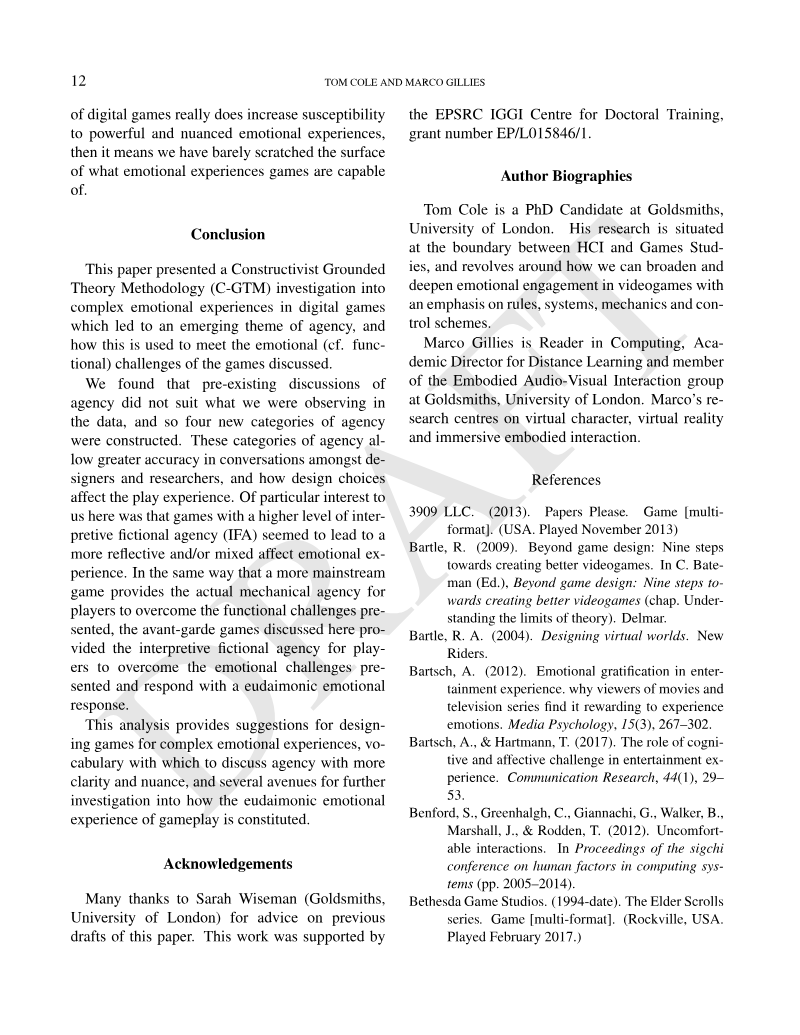
- 01Designers should shift focus from simple mechanical mastery toward fostering eudaimonic experiences, which prioritize reflection, personal growth, and complex emotional engagement.See it on page 12
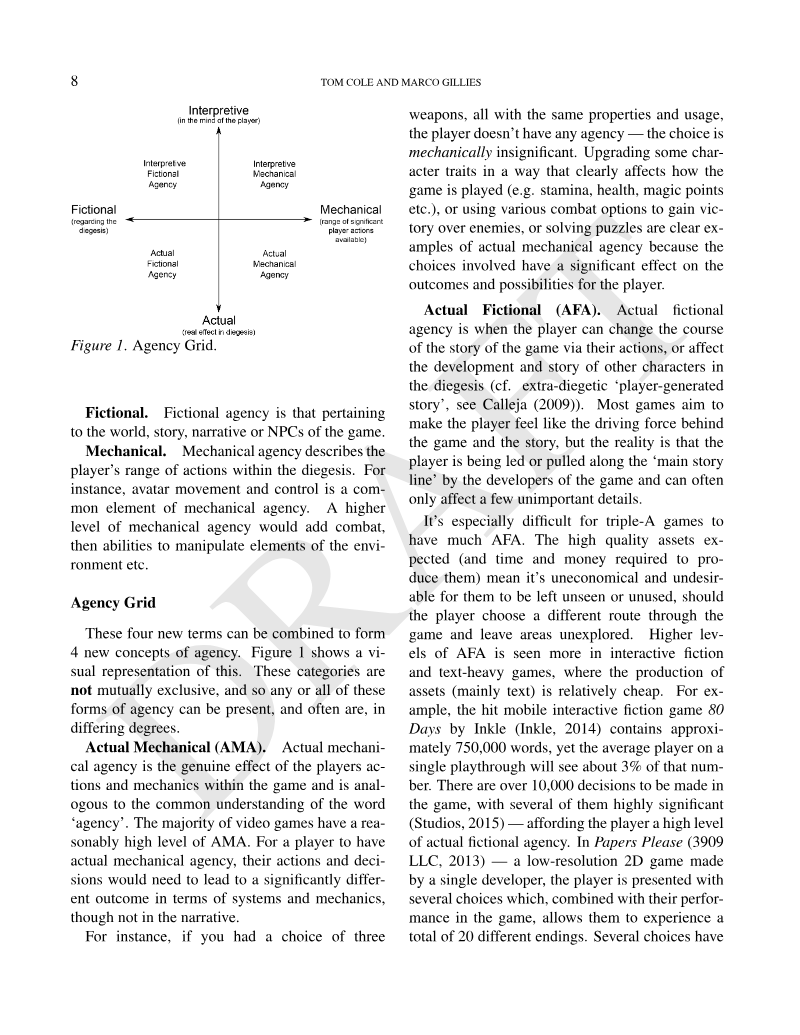
- 02The 'Agency Grid' framework categorizes player interaction into four types: actual mechanical, actual fictional, interpretive mechanical, and interpretive fictional.See it on page 8
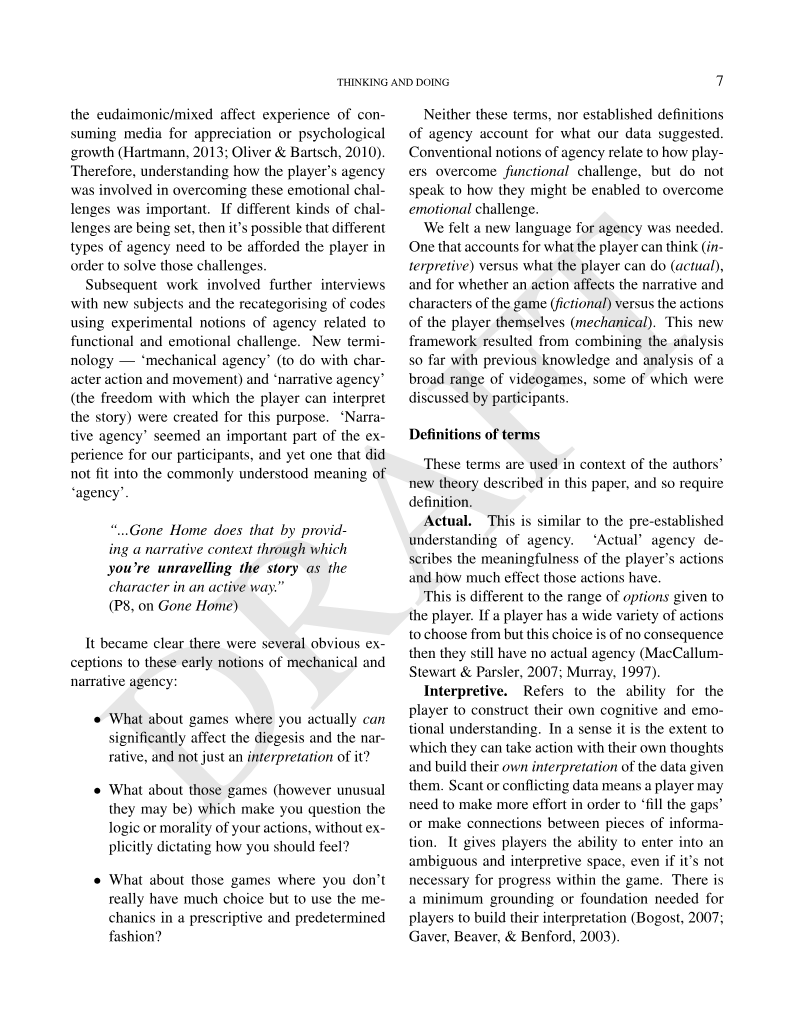
- 03Interpretive fictional agency is the most critical component for inducing eudaimonic states, as it encourages players to construct their own meaning within the game's diegesis.See it on page 7
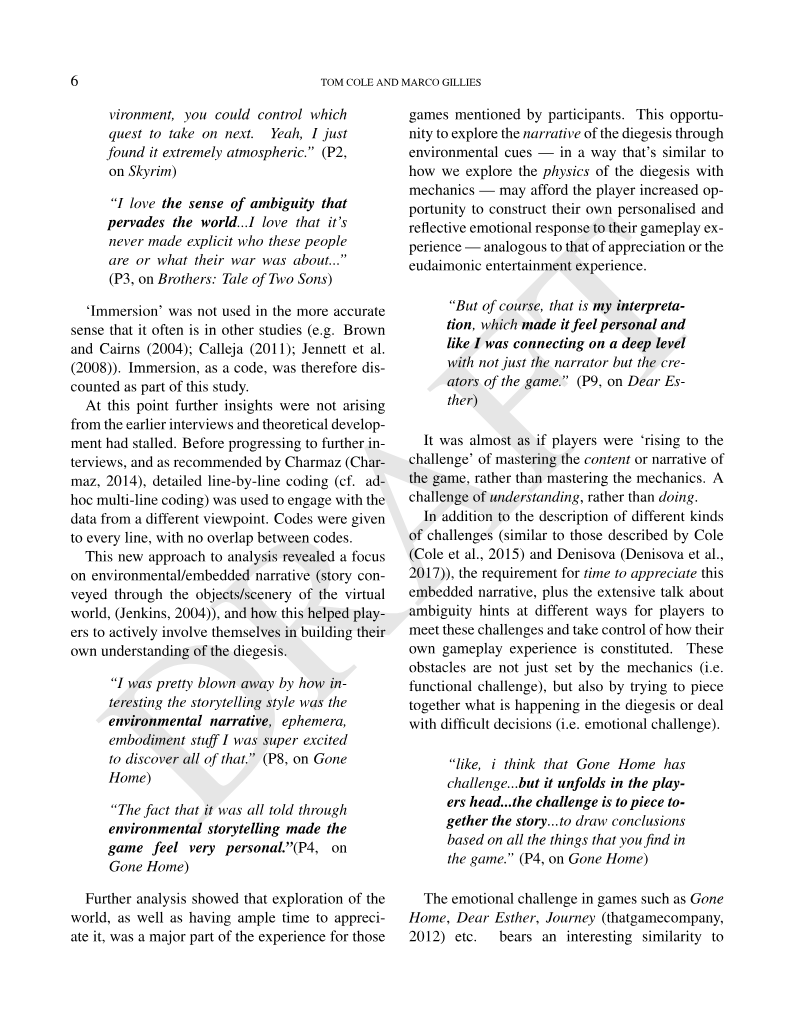
- 04Moving beyond traditional entertainment loops requires integrating environmental storytelling and moral complexity to empower players to engage in reflective play.See it on page 6
- 05Games can function as vehicles for profound psychological exploration by allowing players to navigate narrative ambiguity rather than focusing solely on task completion.See it on page 7
Ask AI about this report
Summary
Videogames frequently prioritize hedonistic fun, yet a significant opportunity exists to cultivate eudaimonic experiences characterized by reflection, growth, and complex emotional engagement. By shifting the design focus from simple mechanical mastery to the construction of personal meaning, developers can foster deeper player connections to interactive narratives. This approach moves beyond traditional notions of entertainment, positioning games as vehicles for profound psychological and imaginative exploration.
To facilitate this shift, a new analytical framework categorizes player interaction into four distinct types of agency: actual mechanical, actual fictional, interpretive mechanical, and interpretive fictional. This Agency Grid allows for a nuanced understanding of how players navigate both functional challenges and narrative ambiguity. While mechanical agency relates to direct interaction with game systems, interpretive fictional agency proves particularly vital for fostering eudaimonic states. By allowing players to construct their own understandings of a game’s diegesis, designers enable a reflective process that transcends standard gameplay loops.
This research, which draws upon qualitative interviews and an analysis of avant-garde titles, provides a necessary vocabulary for designers aiming to create more sophisticated interactive experiences. The findings suggest that when games embrace environmental storytelling and moral complexity, they empower players to move beyond mere task completion. Ultimately, the integration of these agency categories offers a robust methodology for developing games that prioritize long-term emotional resonance and intellectual growth, effectively bridging the gap between functional design and meaningful, reflective play.