1 free read left. Create a free account for unlimited reading + AI research.
Create free account
The UX of game tutorials
Key insights
6 takeaways- 01The primary goal of onboarding is to transition players from guided instruction to autonomous play while avoiding information overload.
- 02Effective tutorials balance front-loaded essential mechanics with contextual triggers that introduce new systems only when the player encounters them.
- 03Qualitative playtesting should focus on verifying player comprehension of specific mechanics rather than relying on subjective feedback about the tutorial's quality.
- 04A/B testing is the most reliable method for measuring tutorial performance because it isolates variables and provides statistically significant data on retention rates.
- 05Developers should build modular, flexible frameworks that allow for rapid iteration and the ability to revert to previous versions if new designs fail.
- 06Tutorials must be treated as living systems that are continuously refined through data-driven comparisons rather than static assets.
Ask AI about this video
Transcript
[Music] [Music] thank you so at the you exit tutorial first let me introduce myself my name is a no I work for a game love Montreal I started out as a UI programmer and then B game became a game designer and I am now a user experience designer and for the past five years I've built stores for these three games and that's what we're gonna talk about today we'll cover the basics of tutorials the user experience of it mostly testing and then the right mindset you have to to have to build a great tutorial so you can use the word
tutorial onboarding experience for a time first time user experience it all means the same to me but I think onboarding experiences most use for apps but it doesn't really matter basically it's the first few minutes you get to spend with your user so super critical moment because it has a huge impact on on day 1 retention and since you want to keep your user as much as possible into your game you need to focus on that that first moment when I talk about tutorial I like to talk about holding the end so the user comes into your game and then you're holding is I'm showing him showing him around in your game and these first few steps needs to be super clear the user needs to know what to do our all time needs to feel safe and like like it was taught and the previous start if if we could perform it in any language because the user don't read it
would be even better there's different level of and holding if you take for example a clash Royale they don't force the user to do anything and they just make him focus on what his next action should be but their game is kind of simple there's one action phase and then one game mode and then there's a few menus the user cannot really get lost so it works for them if your game is more complex it has a lot of a user can get lost then it might be okay to to force the user to do actions but if we we were talking about and holding at some point you have to let go and that's a very crucial moment if the user really feels it it can be a major turning point the user might might leave because he's been told what to do before and now he's left alone in their game and he doesn't know what to do so you have to be very careful about that moment it needs to be as painless as
possible and as seamless as possible a very good example for that is Final Fantasy 15 and you Empire by Machine zone they in when you do the objective in that game you trigger tutorials that have about like four steps and when you start the game they make you do all four steps but as you progress through the game they make you do less and less step either at the end when you're leveled up and you've been in the game for a few days they just open up their menu for you and the user knows what to do because he's been doing it all along so there's you never sees that there was a separation also other good concept to know for buildings toriel front loading and a contextual tutorial front loading is about showing everything up front and when you have core concept that you want your user to to really know to play the game and you can force the user to do them at the beginning but you have to be careful not to bore your user or overwhelm them with
information the other thing is constant context roll tutorial so these this small tutorial app happen at key moment in your game so let's say you unlock a new game mode and then you want to teach the user how to play it or he founds a new he finds a new item and you want to tell them what it's used for so you can use a smart tutorial at some point and then to build that grade first-time user experience you might want to use a mix of those two depending on what your game is so to move on to the UX part of it the first thing you have to know is that you know nothing it's you think you know a lot and then but you mostly assume what you and you also you might build story all for you and not for the user itself so as an example for that when I was working on Dungeon Hunter 5 we I had
build a first story and then later on during the updates we said we wanted to improve on that so we built a second one and from the user opinions we thought that the story was too long so we decided to make it shorter cut on some steps and just make it shorter in general and we pushed that if it felt like a good thing and it seemed like a logical thing to do but the numbers showed that it wasn't same amount of players finished that tutorial but since it was shorter they didn't engage as much as the longer tutorial and then the retention numbers after that went down problem was that was that we couldn't go back to the old story at that point but I'll talk more about that later on so to overcome the fact that you know nothing you need to test everything so that's the the UX part of it is that you're gonna check with your user if what you're doing is right and
so there's two types of tests qualitative tests and quantitative tests so for qualitative test I'm talking about play test this is kind of easy to do you just get players to play your game and then you see how they react to it you can do this just by having players come to your office or there's platform out there where you could do it in a cloud also it's very useful you should do it during production I like like every two three months you should play test your game or and as fast as possible too because it really makes you focus on on what the player needs to know like we did it on our the game I'm working on right now and we really found that one area that the powerup system users they understand it properly so we really focused on that it's really good for getting insights but and and and testing if something is really understood but you have to be careful
when when engaging with your user when when asking them question nice to ask them opinions like let's say yeah well how do you like the tutorial like nobody's gonna say they like that story but and and they might not even know what it's toriel is for them it might be means something totally different so you should rather ask them question about if they understood some concept or ask them to redo tasks that the that you've shown in the tutorial if they can get it then you probably did right so qualitative test is about inside a quantitative test is about data so you you check if you did right with data afterwards but before we go into it I have to go over quality of traffic because it impacts how you should test your game so quality traffic means that as as the time goes by the quality of user you get into your game decrease so a user that comes into
your game at day one will be of higher quality than then two years after you launch your game and so you can see that with with like if you did nothing in your game your retention would normally decrease your KPIs would normally decrease what that means for testing is that you cannot test something one after the other so you cannot do version 1 of the tutorial in update 1 and then version 2 and update 2 because the you won't be able to put them on the same scale too to see which one performed better this means you need to do a V test so I finally be test funny because right now like when when I'm working is like the solution for everything like if you don't know anything we'll just some if you don't know something you just say I will a be test it but not everything is good for a/b testing like if you have something that led that matters that impacts the player after one year it's gonna be pretty hard to a/b test but for
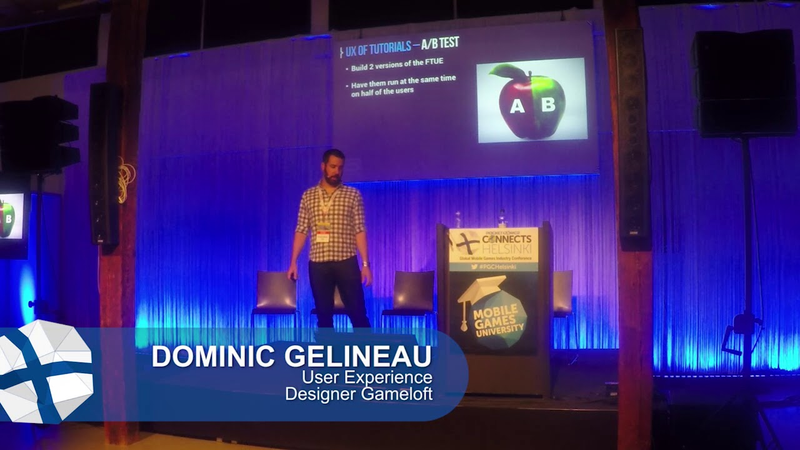
tutorial since it's like the beginning of the game that they want in and day 0 of the user it works really well so what you do is you build 2 version in the same bill and then you assign a different version to the user randomly their systems to do that but like if you really want to get right to it you just assign them randomly like after I have that there will get version a and then after player will get version B and after that you check for retention like food story there metric to look for is is or is retention I might want to when you're building a be test is to make very different version just don't don't just change the color of a button or change a word or a sentence here and there that won't be enough make very different version like one that starts in the action phase one that that's in the menu one that is very very long because it takes a long time to build a
tutorial it also takes a lot of time to analyze the data and and if your change is too small it might they might be statistically insignificant exiting insignificant if it's like 0.3 percent retention after therefore this Ivan retention it might be something else it might be in the margin of error so so now we're moving on to the mindset you have to be in to build story oh you have to to be in a mindset of change and and testing stuff and you have to to tell your team about it you're upfront what that that's out it's gonna it's gonna happen because if if you tell them or we're building this tutorial and that's the end of it when you're gonna go back and try to change it there they won't want to do they'll feel bad about it but if you told them from the first time that I don't have
all the answer we're gonna attest and then we're gonna build different version or all the time then it's gonna go better when you're gonna ask for a new version and so so you need to be able to build to build new version fast the frameworks needs to be versatile and if if you you might take a bit longer in the beginning to do but after that it's gonna go faster to make a B test like the framework we built is based on excel at game F and and I can basically do its toriel all by myself so it speeds up the profit the process really really really fast and yeah last slide is give yourself the chance to fail it's okay you're gonna be testing stuff anyway and and since you're doing a/b test it doesn't really matter if you fail because you're one of the versions gonna
succeed is gonna be better than the other one and and if you keep on testing you always be testing against a version so you always have a backup so you're not in the position I was in done generator 5 where we made a new version but then we couldn't go back to the old one which was better so if you do a/b test you'll be able to just okay no B is wrong we'll just keep on a and then we do C and OKC is wrong d okay these better so if you keep doing it and you succeed at some point and then you'll improve your retention numbers and that wizard [Applause] in as usual questions yes thank you you said at one point that you can basically
build a tutorial by yourself and I don't believe you how do you design the game around keeping the tutorial in mind from the beginning because work designing the game around the fact that you're gonna have a tutorial at some point because if you come in at a later stage like I did for example and they ask you to build a tutorial then it's a huge thing to change everything to make yeah yeah well since we talked about playtesting early so if you put your game in the ends of user early then yeah like the first version we did that it was just an action phase didn't really need something but when we added their Maeda into it the core loop and everything and the user pretty much needed that story at that point so we knew from the beginning that we were gonna build a tutorial very fast and it's good and it was gonna be in and we knew we were gonna do a B test so so right from the start we built the framework correctly
but yeah I'm also a programmer so I can like if I need like a little tweak I can go in and and and do it also but yeah [Music] you [Music]
Summary
Effective game onboarding, or tutorial design, serves as a critical bridge between a player’s first interaction and long-term retention. The primary objective is to guide users through core mechanics without overwhelming them, essentially "holding their hand" until they are comfortable enough to navigate the game independently. Successful onboarding balances front-loading essential information with contextual tutorials that trigger only when a player encounters new systems or items. Designers must avoid the pitfall of assuming they know what the player needs; instead, they should prioritize a seamless transition from guided instruction to autonomous play, ensuring the player never feels lost or forced into unnecessary actions.
Methodologically, developers should rely on a combination of qualitative playtesting and quantitative A/B testing. Qualitative testing, conducted throughout production, provides insights into whether players actually understand specific concepts, rather than merely asking for subjective opinions on the tutorial's quality. Because player quality naturally degrades over time post-launch, A/B testing is the most reliable way to measure performance. By running two distinct versions of a tutorial simultaneously within the same build, developers can isolate variables and gather statistically significant data on retention rates.
A successful development mindset requires accepting that initial designs are rarely perfect. Teams should build versatile, modular frameworks that allow for rapid iteration and the ability to revert to previous versions if a new design fails. By treating tutorials as living systems rather than static assets, developers can continuously refine the user experience. Ultimately, the goal is to create a flexible environment where failure is mitigated by data-driven comparisons, ensuring that every iteration moves the game toward higher retention and a more intuitive player experience.