1 free read left. Create a free account for unlimited reading + AI research.
Create free account
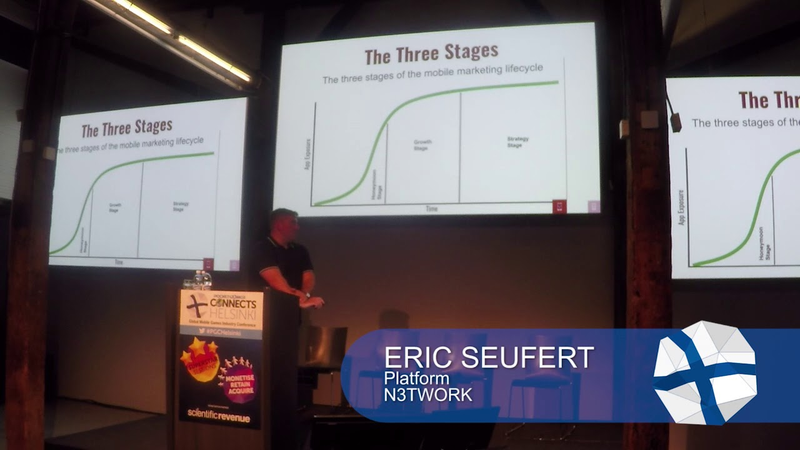
The three stages of a game’s marketing lifecycle
Key insights
6 takeaways- 01Long-term survival in the current mobile ecosystem depends on a firm's ability to transition from performance-based user acquisition to complex, brand-centric marketing frameworks.
- 02The mobile gaming market is increasingly difficult to penetrate, as most smartphone users downloaded zero new apps per month as of 2017.
- 03Rising cost-per-mille (CPM) rates and competition from non-gaming entities for top-grossing positions necessitate a shift from simple user acquisition to sophisticated, multi-stage marketing strategies.
- 04The honeymoon phase represents the initial market entry, characterized by low acquisition costs and high click-through rates that should be leveraged via top-tier advertising networks.
- 05The growth phase requires scaling beyond top-tier networks into lower-quality channels, which demands increased automation, larger teams, and more complex data analysis to maintain profitability.
- 06The strategy phase is reached when direct response advertising saturates, forcing a pivot toward brand-building, influencer partnerships, and traditional media like television or out-of-home advertising.
Ask AI about this video
Transcript
[Music] [Music] hey good morning if you want to see me be funnier than Oscar again if hecho Kucha it's today at 6:45 I think yeah so this presentation is it's called three stages of the mobile games marketing lifecycle so this this kind of this topic is something that I'd been thinking about a lot over the past year having worked as a consultant before doing what I'm doing now I just saw a lot of companies do really well launching a game and then get stuck and that kind of launch mentality when trying to scale it and wasting a lot of money and and and sort of being at being
like unable to move the game into a position where they could kind of profitably grow it with the sort of different sets of skills and tactics that you need at the second stage and then the third stage so I I built this presentation to kind of address that so Who am I I work for a company called network network is a mobile gaming developer we have a game called legendary game of Heroes kind of consistently top 100 grossing I joined Network through the acquisition of my own company called Agamemnon and I'm building our Lula's a publishing platform at Network I also run the website mobile dev memo and I wrote a book called freemium economics prior to doing what I'm doing now I worked at Skype Rovio and Agamemnon which is my own my own company so the structure of the presentation I'll start with just kind of an overview of what it means to do mobile ua4 games in the year 2017 and
then I'll move into the three stages of the mobile marketing lifecycle which I identify as the honeymoon stage the growth stage and strategy stage so what does it mean to do mobile you a for games in 2017 this kind of a market overview this is from a report that comScore released a few weeks ago it if you haven't seen it I'd recommend downloading it it's really good so basically this graph on the Left shows the share of individual users time spent on apps by rank so like the rank meaning the the app they used most kind of in ascending order and you see that for smartphones almost half of users time is spent in their favorite app right and then it there's kind of like a long tail and it sort of it drops off very quickly and then the top-right graph is is kind of like a pretty impactful one that I've
been using in presentations for years and this gets published every year so it's not really changing and it says that the majority of smartphone users download 0 apps for a month right so you kind of put these two things together it means that people aren't really downloading new stuff because they have all the stuff that they like and they spend almost half of their time in the one thing that they like the most on their on the phone right which kind of for you a means it's really hard to compete for that attention and hard being well okay people aren't actively going to download apps and so the only way to really get someone are download your app is to put an ad in front of them but that said there are you know there are some reasons to be optimistic so I think a lot of people kind of have this belief that engagement has decreased especially in mobile games over the last few years and that's actually not true so unity did a study with sensor tower and they found that actually engagement was up 20% from q4 2015 in q4 2016 so people actually spending more time in games they're just spending more time in their favorite
game or their favorite set of games rather than downloading a bunch of new games and increase the amount of time they spend that way and then one interesting thing happened recently which i think is kind of portends a broader trend in the marketplace which is that in late august the day after the Conor McGregor fight there was only one game in the top five grossing and this has happened a couple of times since then which is I think if you know if you would have looked at the top five breasts and two years ago it would be all games and now there's only one game at one point and and this contender was number one at one point so games don't sort of dominate the top grossing in the way that they did two years ago and maybe even one year ago games are a participant in the top grossing but they it's not exclusively games at this point which is cool if if you work outside of games but if you work in games it could be kind of scary because all these big companies now are competing in the ads marketplace against you the flip side of that is that actually that top grossing amount
of money generated now is even higher right so you don't have to necessarily be top one grossing to make a lot of money you could be top ten and still make a pretty substantial amount and so kind of putting all that together you can see that the amount of money being spent on mobile ads is increasing year-over-year and its projected to grow pretty consistently through the end of this decade and then one kind of interesting chart so my friend Ben put this together from man against data and this just basically shows kind of average CPM for these two categories so the bottom is gaming the top is ecommerce I think those are kind of relevant because well especially kind of prior to the you know the the rise of all these streaming apps you know competing for the top grossing slots ecommerce would have been the category that gaming would have competed with most directly and you see like the CPM czar just kind of consistently rising month-over-month and I wouldn't expect
that to change you know Facebook isn't really growing that fast in the developing world in terms of new users and so the more advertisers that advertisers that pile in to reach those users that the higher CPMs go and so kind of taking all that as like a backdrop in you know a backdrop of the advertising marketplace I kind of put together this this graph of kind of where I see the the gaming ecosystem in terms of you know acquisition cost versus unit monetization and if you kind of would draw a line like a diagonal line from the origin of this graph through like the top right corner I think you could kind of see where you know what these these the distribution of these these dots would kind of show where like the sort of potential is in terms of running profitable UA so this just some context for this I kind of see this as being
like if you consider all of these categories as being like run well and operating at scale this would be like the kind of placement would represent where the marginal acquisition cost is right so the cost of one more user right so not starting from zero a hyper casual game is going to have a lower obviously gonna have a really low acquisition cost but like when I when I when I when I draw these dots to represent the game categories I mean think of these as like any game in this category being like at max possible scale and so you see that you know for some game types it would be more costly at like the marginal level to acquire a user I don't think that's like contra most people probably Intuit intuitively know that but the size of these dots represents what I believe to be kind of like scale right so like you're gonna get you you have more possible scale for a hyper casual game than a social casino game that's just I feel like that's kind of intuitive and it's kind of just like a truism and it's cheaper to acquire a marginal user at scale for a hyper casual game than a
social casino game the question is okay well that unit cost minus the acquisition cost at scale what what actually drives more money for me and like what if I'm a studio and I'm thinking about what game categories to invest in or like whether to continue to invest in a game category how should I do that why and and what kind of decisions should I make and what kind of information should inform that decision and I think like thinking about it this way helps you take a look at like well okay if I have a ton of cash in the bank it's okay to go for anything that is high on the is like farther it's further up right because I have money to spend on that if I don't have a lot of cash in the bank I need to go for something that's further down and then the further right I go that generally corresponds with how much money I have to pay to acquire somebody right assuming the market is rational and people are pricing their ads at the level of what they think those users are worth and so then kind of taking a step
back from that what what are the components of a growth strategy for a mobile gaming company so I see one point I wanted to make so any so if you think about these game categories if you attach an IP to sup to these and the IP fits with a game category and it makes sense and it's it's beneficial to that game you could potentially move these dots down right so an IP would like at best it could drag the dot down and give you like basically better acquisition costs for the same level of monetization at worst it could move it like up and to the left right so you actually decrease the monetization and increase the acquisition cost so I think that's that's one thing that you need to consider when if you're thinking about IP if it doesn't work for you we could definitely work against you it wouldn't necessarily just be like a net a net zero like addition something kind of thinking about the different components of a growth strategy for a mobile game I kind of bucket them this way so there's
sort of like direct response user acquisition such buying ads on for example Facebook or Unity cross promoting within your own network and then using brand reach to kind of touch more users than you otherwise could have some instead of like if you think about companies that are using these strategies like I think these games you could say probably only really use direct response user acquisition like they don't cross promote they don't really have brands attached to them it's just buying ads right ketchup would be a good example of a company's kind of represents all ketchup games example of a company that really only uses cross promotion they have a big network they don't really run ads they don't have any brand it's just launching a game and cross promoting it and then you know Pokemon go or class Royale they don't really run you a they don't really do any cross promotion it's just the brand reach right I mean Nanta didn't do any UA when they launched Pokemon Go is just the Pokemon brand that got them users and then some companies use
combinations of these things so like Marvel contest of heroes or cuts of Champions or galaxy heroes they use both brand reach and direct response UA as well as yes madden game you know Angry Birds use a combination of all three King uses a combination of all three for the the candy crush titles and so these are you know if you think about your growth strategy you could piece it together from all three of these components using some combination of of two or three of them or just one right so moving in to the three stages of the user acquisition lifecycle so I kind of map it out like this so the y-axis is kind of app exposure like you could call that like cumulative act app exposure like total app exposure over times it's basically how many people has this app ever been this game ever been exposed to and on the right is this time right so what how long has it been since I've been promoting the app and then I split
the stages up this way so the honeymoon stage you see kind of like the rapid increase in exposure in a pretty limited amount of time the growth stage is kind of like you know growing exposure but less less quickly and more more kind of like steadily and consistently and then the strategy stage is where you're basically just like very very incrementally increasing exposure over a longer period of time and I think you could the points at which these stages start would be different for like multiple types of games and it would also depend on the strategy you're using so there's not like a fixed timeline for these it's not like you know honeymoon stage just last six months I've seen games especially on Facebook where like Facebook canvas games where the honeymoon stage lasted years or it lasted like weeks so the honeymoon stage some kind of characteristics of that so the game is new to everybody so everybody you show an ad to for the game is seeing that for the first time right and so by definition the people that are the best fit for that game are seeing the game for the first time and they're
clicking pretty readily right because they hey this game is awesome for them this is the first time they're ever hearing about it I'm definitely gonna click on this and install it right so you're getting the high CTR s at that point because well after the best people have seen it the not best people seeing it and they're not gonna click so readily right so the CTR zero is gonna be highest in the honeymoon stage which generally means the CPI's are gonna be lower and so it also in this stage you know if your marketing spend is constrained for some reason right you just you have a limited amount of money in the bank to spend on marketing the game then what happens is your team only focuses on like the top to your channels right so like I only have X amount of money to spend like let's say I only have a million to spend over the next month right well I mean I could easily spend a million just on Facebook in a month and so I'm gonna start with the highest tier at distribution channels and I'll move down as I saturate those channels with budget and have to move beyond the best
right but an on even stage if you are constrained by budget then you'd only be working on the highest to your channels and so you'd be getting like the best traffic right so that's why it's called the honeymoon stage you have the highest here you have the highest CTR is the lowest CPI is and also you're getting those low CPI is off of like the best possible users and so everything looks really great and you can do this with just a pretty small team because if you're only working on like three four or five channels you don't need that many people to run you a so one question though I see people bump into is is kind of considering like well okay the honeymoon stage is great I get I see TRS low CPI is I don't need to grow the team should I aim to blow through this as fast as possible and spend as much money as fast as possible before I hit the CPI pressure before I before I saturate those great channels or should I do it more slowly so that I can enjoy this honeymoon stage for longer in the end I would have acquired the same number of users but it was just like in the I would leave more kind of gas in the tank
if I only try to hit here with my with you know the first month rather than hit here in the first month and I think I think it makes more sense to try to to try to go through the honeymoon stage as quickly as possible because a I mean you're gonna need to do that just strategically you're gonna have to figure out a way to acquire users off of like a broad spectrum of networks and grow the team and if you think about your game as being you know a long lasting like 10 year product that generates revenues you I would I would I would argue that it makes sense to move as quickly as possible into that you know growth machine phase but there are pros and cons so the pros are that if you move really quickly through that stage there's not a lot of time for fast followers to copy you and potentially unseat you as the person or the company that owns that game type the market doesn't have time to get bored with that type of game and high absolute
spend equals high absolute ver a plurality of saturation so the more you spend the more users you acquire the more absolute viral users you're gonna get and that obviously equates to like an absolute value of money that you're getting the cons though is that the game could get better right so if I'm spending all this money on a game that's not optimal I'm kind of leaving money in the table there's kind of like an opportunity cost of not just improving the game and then spending money but you could always make that argument that argument is not exclusive to this anything probably gets better over time so yeah that's kind of okay I think that's kind of a weak argument so the next stage is the growth stage so this is the stage at which the game is scaled to sort of the max profitable the max possible profit of all profitable volume across the tier 1 networks and you have to the only way to really acquire more users is to onboard new networks and so you kind of go down the priority list of like networks in terms of quality and so I've saturated the best possible networks and I'm sort of like operating
on max volume on those and now I have to add in more networks and the more networks you add in the more people you generally have to bring out of the team so it introduces not only just some challenges for you know dealing with less lower quality traffic but now you've got like HR headaches you have to hire people you have to unboard them and all that stuff so you know in this phase you're increasing the number of channels you're also increasing your UA head counts and this is generally when people move into like automating UA especially reporting right so if you're only operating on five networks or so you can do reporting manually if you're operating on 10 or 12 or 15 you generally have to bring in some form of automation to pull all the data and analyze it and so again this is just a different focus now you're not just having one person doing direct response marketing but you've got an analytics person or maybe you've even got an engineer and so the team has diversified and the strategy stage is the point at which direct response advertising no longer drives new users profitably at sufficient volume so you can't rescale
your direct response it exists at some level of volume and that's it's saturated you can't use direct response to to bring on incremental volume and you have to go to sort of different forms of advertising and so this is when you see people kind of trying to adopt brands they do like a brand integration or they do like partnerships they go out of home they go to TV all that kind of stuff they go influencer I mean you might go influencer earlier but in a direct response approach and now you're just sort of like generally doing influencer this is probably the scariest stage because this is the stage where you're sort of just push pushing money out maybe even with a framework for evaluating whether that money will come back profitably but it's really sort of like unknown generally I mean if you're doing this stuff for the first time and you're doing in a way where the payback period is maybe longer the the medium is not as not as trackable it can be scary to push money into this it feels
intimidating and so I think generally the companies you see get to this stage or like bigger they've you know brought in kind of like seasoned experts that have you know for advertising on these kind of formats and they've spent a lot of time thinking about how how all of these different you know media formats convert into installs and how those installs pay out right so they don't just sort of do it blindly but they kind of come up with a framework that attaches a value even to channels and media formats that aren't directly attributable and so it's it's kind of like the most sort of nebulous format but but you know kind of you know conversely and almost a little bit confusingly the companies that master this are the most analytical right because they take the very very analytical approach even though it's a little bit abstract and apply it to these formats that aren't
attribute I'll tribute Abul directly and that's my talk thank you very much I hope you have a good day thank you very much so any work there's a question right at the back man I'm gonna come a-runnin around and see you get a combined host and microphone conveyor here he said that when you're buying user acquisition in the honeymoon stage you want to use the tier 1 networks first what didn't you maybe want to use the lower networks with lower CPI's to get those brand new users why would you go straight the best network first well that I think ties into the argument that I made it's like well there'd always have a better product it's not like there's never gonna be a point when the product is done I mean if you're operating a free-to-play game hopefully for 10 years it's probably gonna get
better and better all the time the reason you wouldn't want to start with the lower tier networks is it because there's a lot of like manual work that goes along with running ads on a low tier network so you need to be constantly sort of monitoring that for fraud they generally don't have really good api's if they have api's at all you've got a you know it they require a lot of hand-holding with the account managers the top tier networks being just sorta like plug-and-play because they've invested in tech and because they're really good and they they're really good at what they do right so like if you started with the tier 2 networks you'd have to scale up the team beyond what would be required if you just started with the tier 1 networks so you'd have more overhead and you'd be you'd be focusing on things you know that are ancillary to just just buying media [Music]
you [Music]
Summary
The mobile gaming industry faces a challenging landscape characterized by high user retention within a small number of preferred applications and a general decline in new app downloads. As of 2017, the majority of smartphone users download zero new apps per month, forcing developers to compete aggressively for attention through paid advertising. While engagement within games has increased, the market has become more crowded, with non-gaming entities increasingly competing for top-grossing positions. Consequently, cost-per-mille (CPM) rates are rising, necessitating a more sophisticated approach to user acquisition (UA) and monetization.
The marketing lifecycle of a mobile game is defined by three distinct stages: the honeymoon, growth, and strategy phases. The honeymoon stage is characterized by high click-through rates and low acquisition costs, as the game is new to the market and reaches the most relevant audience first. During this phase, developers should prioritize top-tier networks to maximize efficiency and minimize operational overhead. The growth stage follows, where developers must scale by onboarding additional, lower-quality networks, which requires larger teams, increased automation, and more complex data analysis to maintain profitability.
The final stage, the strategy phase, occurs when direct response advertising reaches a point of saturation and can no longer profitably drive volume. At this juncture, companies must pivot to brand-building, influencer partnerships, and traditional media channels like television or out-of-home advertising. While these channels are less directly attributable than digital ads, successful firms apply rigorous analytical frameworks to estimate their value. Ultimately, the ability to transition between these stages—moving from simple, high-performance UA to complex, brand-centric strategies—is essential for long-term survival in an increasingly expensive and competitive mobile ecosystem.




















Comments