1 free read left. Create a free account for unlimited reading + AI research.
Create free accountWhitepaper DiGRA
1 free read left. Create a free account for unlimited reading + AI research.
Create free accountWhitepaperDiGRA
Kücklich's paper argues that the dominant literary and narratological approaches to computer games rest on a problematic two-level model of code and interface, inherited from Aristotelian and structuralist traditions. In its place, the author proposes a constructivist, second-order cybernetic framework that centers the player's experience of play rather than the underlying code. The argument holds that narratology should not serve as the governing discipline for game studies; games must instead be situated within ludic, representational, and media traditions. Because binary frameworks cannot capture the ambivalence inherent in games, the paper advocates a poststructuralist approach supplemented by the concept of "openness" alongside interactivity and narrativity.
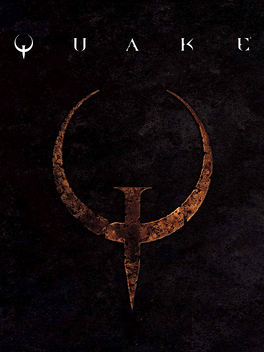
Building on this foundation, the work characterizes computer games as a second-order cybernetic system in which game and player form an interdependent whole. Interactivity and narrativity are treated as synergetic effects of semiosis rather than as fixed properties of the software. To articulate this, the author distinguishes aesthetic interaction, the player's immersion in a game's fictional world, from hermeneutic interaction, the observer's demystifying analysis of that world. Possible world theory and Peircean abduction are drawn upon to explain how players creatively construct meaning and narrative in the course of play. The analysis cautions against uncritically transplanting poststructuralist metaphors onto games and illustrates its claims through examples including Tetris, Quake, and SimCity.
The scope of the paper is primarily theoretical and conceptual, engaging with the scholarly debates of the late 1990s and early 2000s concerning ludology and narratology in game studies. It reviews contributions from figures such as Laurel, Murray, Aarseth, Ryan, and Kirksæther, and it focuses on the relationship between players and computer games rather than on industry data or market conditions. Its concluding bibliographic material offers references on possible worlds, narrative theory, and immersion in electronic media.
Each row is a game or company this document names, each column a document, oldest first. A mark means that document names it. Select a row to see those documents.

DiGRA · 2026

DiGRA · 2026



DiGRA · 2026
International Journal of Role-Playing · 2026