1 free read left. Create a free account for unlimited reading + AI research.
Create free accountArticle DiGRA
1 free read left. Create a free account for unlimited reading + AI research.
Create free accountArticleDiGRA
Distilling the key insights…
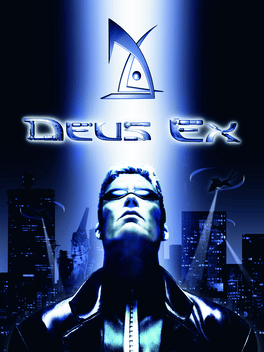
Micronarrative, the authors argue, is a useful design tool for understanding how digital games structure story and play. Drawing on narratological theory and game studies, they propose that micronarratives are hierarchical, modular, and accumulative units of progression that players experience at multiple scales and in varying orders. Their central thesis is that narrative in games nests in layers: small arcs such as a single hockey possession or a stealth encounter sit within medium-level units like periods or missions, which in turn feed larger meta-arcs such as a hockey season or a franchise. The analysis is grounded in close readings of two commercial titles, NHL 12 and Deus Ex: Human Revolution, released around 2011 to 2012, spanning the sports and action-RPG segments of the console and PC market.
The comparison yields a central contrast between the two games. NHL 12 depends largely on emergent, player-generated micronarratives, with only limited connections to the ongoing season, so its smaller units emphasize winning and losing and the moment-to-moment drama of competition. Deus Ex: Human Revolution, by contrast, relies on a strongly authored plot and uses tight designer control, with geographic granularity structuring quest arcs that branch into divergent outcomes. Player freedom in Deus Ex is expressed mainly through the choice of solutions and through character customization rather than through open-ended event generation.
The authors' final argument reframes game design as an ongoing process in which story is enacted through player choice rather than simply told or shown. Because micronarratives are modular, designers must account for interdependencies between them, such as a failed stealth attempt alerting neighboring regions, to preserve narrative coherence. The work concludes that narrative and gameplay pleasures operate at every scale, and that effective design must balance authorial structure with the accumulated consequences of player action.
Each row is a game or company this document names, each column a document, oldest first. A mark means that document names it. Select a row to see those documents.
DiGRA · 2016
DiGRA · 2016
DiGRA · 2016
DiGRA · 2016
DiGRA · 2016

DiGRA · 2016
DiGRA · 2016
DiGRA · 2016
DiGRA · 2016
DiGRA · 2015
DiGRA · 2015
DiGRA · 2015