1 free read left. Create a free account for unlimited reading + AI research.
Create free accountSome New Things I Learned About Grand Theft Auto VI And Rockstar
Key insights
7 takeaways- 01Development began as early as 2015, with the project undergoing a strategic pivot to prioritize Red Dead Redemption 2 before integrating foundational systems like advanced NPC mechanics into the new title.
- 02Design choices such as narrowing road widths to increase traffic density have served as foundational constraints that created cascading effects throughout the game's construction.
- 03Between 2019 and 2022, internal leadership faced significant tension while attempting to reconcile realistic, immersive simulation elements with traditional arcade-style gameplay.
- 04The development process involved extensive field research, including site visits to Miami and police ride-alongs, to inform the game's atmospheric design.
- 05Rockstar Games has doubled its workforce from approximately 2,400 employees in 2018 to 4,700 today to support the massive scale of Grand Theft Auto VI development.
- 06The studio has shifted toward a highly structured, data-driven management style, exemplified by the art production team growing from 5–6 people during GTA V to 65 for the current project.
- 07The current development methodology relies on a hybrid model that combines centralized, bureaucratic oversight with decentralized creative autonomy to allow for granular, unexpected world-building details.
Ask AI about this video
Transcript
Hello, OneTakeSchreyer here. So, last month I went to Rockstar Games' office in Edinburgh. Edinburgh. Am I doing that one right? Edinburgh. Scotland. Uh to Rockstar North where the brain trust of Rockstar is based. It is where a lot of their creative decision-making happens. I went there for a big Bloomberg Business Week cover story about the making of Grand Theft Auto. You can read a free gift link to that in the show notes. So, go check that out if you haven't already and check out my previous videos about my visit there. But, today I wanted to talk about some of the things that didn't make the cut. While I was there, I spent a great deal of time. I spent a full day interviewing a bunch of the top developers on Grand Theft Auto 6. And of course, not everything from those hours and hours of interviews made it into the final piece. So, here are some exclusive kind of scraps, some bits and pieces, some cut cut pieces of the story that you might find interesting cuz I think they're interesting even though they didn't make
the final version of the piece. Um maybe some things you you might not know about Grand Theft Auto 6 and how it was made and even a couple of Red Dead 2 things. So, let's start. Um I'm going to pull up some notes here. So, first of all, something that I learned uh while talking to those folks is that there are a few artists at Rockstar who have actually been working on GTA 6 for more than 11 years, since 2015 if not earlier. 2015 is when uh Rockstar started kind of planning out GTA 6 in the sense that it was conversations before like before that. 2015 is when they started going to Miami, actually starting working on the map of the game, which is always the first thing that Rockstar does on these big open-world games is they start planning out the map first. And um gradually over the next year or two, 2015-2016, the top leadership began mobilizing everything to work on Red Dead 2 cuz Red Dead 2 needed a lot of help. It was doing a lot of big ambitious systemic things. But, they figured if they all go on put all their resources into that, make it really great. First of all,
it'll make the game great, but also it'll help them build foundation all stuff that they would then be able to take into GTA 6. But actually not every single person at the company worked on Red Dead 2. Most did. Um obviously a fair amount were still working on GTA 5 and um the kind of update the content packs they kept releasing for GTA 5. But also there were a few artists who kept working on the map for GTA 6, which I think is kind of wild. Imagine working on a single game for more than 11 years. That to me seems a little crazy. Um another thing, fun fact about the map that they were telling me, Aaron Garbut, the art director and one of the heads of development on this game was telling me that um the roads are significantly narrower in GTA 6 than they were in GTA 5. You might have noticed this in the gameplay footage in the trailers. Um I hadn't thought about it until he told it to me. So I thought it was really interesting. GTA 5, which of course is set in fictional Los Angeles, um you got these really wide kind of roads that
make it really easy for you to zip through the streets and bypass traffic, um zoom around other cars. You never really feel traffic, which is kind of an unrealistic depiction of Los Angeles, of course. Um it feels a little more like racing game-ish as you're driving around that city. Whereas in GTA 6, the idea is more narrow roads, kind of denser traffic, um which they decided this from the very beginning, which had a lot of like ripple effects. As Garbut said, quote, "All these things sort of come to bite you later." Um because denser roads, narrower roads mean a lot more buildings, mean a lot more just kind of constructing around that concept, which is what they did and what some of those artists who were on the game for 11 years were working on. Um it'll be really interesting to see how that actually plays into the game when when we get to finally check it out. November 19th. Real real date this time. Um another fun fact that I learned while talking to these guys. I'm not sure if this has ever been publicly reported, but I'll share the story. So, Rob
Nelson, who's one of the heads of development, was telling me the story about how, um, one of the top, uh, animators at Rockstar, Mark Tennant, whose title is Vice President Animation, um, built this prototype, uh, for Red Dead 2, like back in the day, 2014 or 2015 or something. And he showed it to Phil Hooker, who's another one of the heads of development, a technical guy. And Phil didn't want to show it to Rob uh, but at least did first, um, because it was so, uh, because Rob Nelson is known as the guy who's like wants to do the world, wants to do everything, wants to do all these ambitious things, no matter what kind of, uh, work it will lead to the team. But this prototype was essentially, hey, instead, if you're interacting with somebody, instead of just pressing L2 to like kind of hold up your gun and point it at someone, what if you could press L2 and then have the option of being able to greet or antagonize somebody, and what would that look like? And he showed it to Rob Nelson, uh, despite Phil Hooker's kind of, uh, reluctance there. And Nelson was like, uh, I'm going to quote Nelson here, he told me, "I was like, this is incredible. This will revolutionize the way our games and our worlds work." And,
um, essentially that is what led to them figuring out all these kind of branches from there, and what you see in Red Dead 2, which is you being able to interact with people in a way that isn't just pointing a gun at them. What I'm not I'm not actually sure. I don't remember if they told me this. I don't I'm I'm not sure if, uh, there is another kind of if there is a deeper version of this interaction system in GTA 6. I'm sure there'll be some way to interact with pedestrians that isn't just kind of shooting them or pointing a gun at them. Um, but this, uh, of course, this one prototype led to this kind of really fundamental system in Red Dead 2, and of course led to a lot of work along the way, a lot of animation work, a lot of dialogue work, a lot of scripting, etc., etc. Um, but of course, that is one of the coolest things about Red Dead 2 is that you can have all these different kinds of interactions with people and you can go up to a a bank teller and call them a dummy or you can go and insult somebody or you can go and get someone to give you money without actually threatening them or just pointing a gun at them, etc., etc., which I thought was pretty cool. Um
here's another fun thing. So, in my story, I talk a little bit about the dark moments for GTA 6, which were really the period of like 2019 to let's say 2022 when it was this confluence of things. COVID obviously, but really them just kind of trying to figure out what the game was going to be and a lot of that came down to them trying to decide how realistic is Grand Theft Auto 6 going to be, how much of these big immersive systems from Red Dead 2 are we going to carry over versus how much of it is going to feel more arcadey like a GTA game and finding that line and figuring out what the game is going to look like. This led to a lot of um I don't want to say chaos, but certainly it led to a lot of tension and some struggling within the studio because a lot of people felt like the game was just kind of treading water. It wasn't actually making progress for a long period of time and that was frustrating for people. Some designers left as a result of that of not feeling like they were actually making progress on the game. Felt like there was indecision, too many cooks in the kitchen with these three heads of development, etc., etc. Um one of the things that I didn't
mention in the story, but that I thought was an interesting anecdote is the weapon system. And so, Rob Nelson was telling me that they knew that they wanted to go from Red Dead 2 to GTA 6, they wanted it to they wanted GTA 6's weapon system to be more like Red Dead where you couldn't just carry an unlimited number of guns. It was a little more realistic. You had to select kind of a a loadout. You had to kind of you have a limited number of weapons that you can hold in any given time. You can't just pull out a rocket launcher and then your guns and then all these other stuff, right? Um and so, the idea that they were thinking was like, well, if we use a weapon wheel, is that just going to make remind people of all these blank like is that just going to have a bunch of blank spots in it because it'll remind people of what they can't actually do, what they can't carry. And so maybe we shouldn't use a weapon wheel. And so they spent months, if not years, trying a million different things that would replace the weapon wheel. They tried trays and webs and all sorts of different things um in the UI and just kind of ways to replace the weapon
wheel. They tried not having one. Like they tried all these different iterations on this. After all that, they just wound up back at a weapon wheel. And in the final game, it's just a weapon wheel again, which I think it's kind of I I bet if you're you're out there, you're watching this, you're in game development, you're just like, "Yep, that's game development." Which is just often times you have these periods of intense iteration only to wind up back where you started, back with the original idea. Um which I imagine can be frustrating for a lot of people on the ground level. If you're putting all this work into iterating and prototyping and doing UI work, etc., etc., only to wind up back where you started. That seems tough. And that was part of this uh dark period that I think led to some problems for the game and really ended when the the game started coalescing, I would say, around end of 2022, beginning of 2023, something like that is where they really started to see it all come together. And as I mentioned in the story, the that first trailer that they released in December 2023 was really a guiding light for a lot of the people on the team to see, "Oh, this is what the
game is going to look like." Another fun story. Um so, uh you probably saw in August Rockstar released this giant gameplay footage premiere, this 27-minute video, uh on Netflix. And that idea was actually come up with by Rockstar. Rockstar came up with this idea to do this big thing. And um Mark Adamson, who's the marketing boss of Rockstar, was telling me that uh a lot of this came from him, that he came up with this idea to do something completely different than they've done in the past, rather than their kind of typical just walk-through gameplay walk-through shows on YouTube and whatnot. He um put together this idea of like 27 minutes of gameplay footage, um take it to Netflix. So, he was working on this big cut um with some other people in New York and uh uh he put it together. He showed it to some of the top people there, Jen Kolbe that had a publishing was a said she saw it in this dark room and she like was tearing up after watching it cuz she was she thought it was so cool. Um but then they had to sell everybody at the company or certainly everybody who worked would be relevant to this on the
idea of polishing 27 minutes of gameplay just for this Netflix thing, which um I think was a tough ask. But, they did sell people on it and they did obviously take it to Netflix and Netflix was interested and from there um the and then it all went from there. Um 27 minutes is a lot of a lot of footage. Um the good news is that it wasn't wasted work. Sometimes game developers have to work on polishing a lot of footage for or like a polishing a demo that winds up being completely wasted work because it's it's things change a lot between that and the final product or like they're kind of hacking together systems that don't actually hold together for the final game. This wasn't wasted work, but still it was a lot of polish for um this Netflix premiere. Um uh another fun fact, uh cut this cut a little bit or I mentioned this a little bit in in my story, which is that um the team at Rockstar and especially the leaders at Rockstar went on a bunch of trips to Miami. Um they actually had a couple of people working full-time in Miami. They didn't wind up opening an office in Miami, although there were
some people and still are some people pushing for that. Um but they went all over. They went um some of the leaders went. They went on like these group trips. Um some of the artists, some of the developers, etc. Um they went all over the place. They went on police ride-alongs. They went to what Rockstar developers told me were some scary places. Um at one point uh some of the artists were in a helicopter taking photos of aerial views of the city and they wind up hovering over a Beyoncé concert, um which I guess Beyoncé doesn't have aerial aerial defenses on her on her shows, just so you know for the future. But, yeah, they wind up hovering over this Beyoncé concert. Um, and I got a fun quote that didn't make it in the final story, but uh I thought you all would enjoy this which which is um talking a little bit about these ride-alongs and meeting some just kind of really colorful characters in Miami. Jonathan Ashcroft, who's the senior vice president of technology, was telling me um first of all, he spent his 40th birthday at a club in a nightclub in Miami in one of these trips, which was funny because he was telling me it's like all these light-skinned Scottish people just like looking totally place
wandering around this club, and they're just like scrutinizing the lighting and stuff
[laughter]
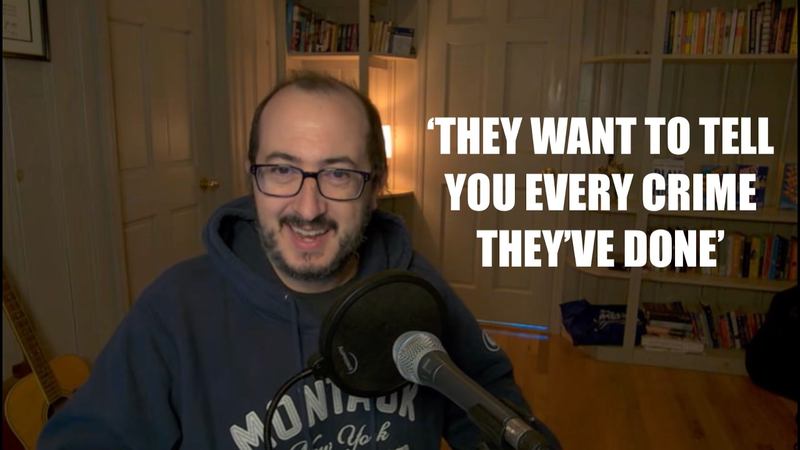
like while everyone else around them was partying. But, also he was telling me that when it came to these like colorful characters, quote, "As soon as they know where you're from, they just want to tell you every crime they or their friends have ever done." Uh which I thought was was very amusing just imagining these rockstar developers going up and being like, "Yeah, we worked on Grand Theft Auto." And they're just like, "Let me tell you about this one thing that happened to me." Um just very very funny. Um One other thing, by the way, unrelated to that, but another just kind of fun fact. So, I mentioned in my story that Rockstar, over the course of making this game, went from about 2,400 employees in 2018 to about 4,700 employees today, which is just a a like unfathomable level of growth. They doubled the size of their studio, and their studio was not small before, which required a lot of changing, a lot of communication improvement, a lot of just kind of changing the way they do business in order to account for that.
One of the biggest things they did was hire a lot of producers, which I think um depending on who you ask, you get a lot of different uh kind of um reactions to something like that, right? A producer in game development is essentially someone who um helps grease the wheels, helps make things smoother, helps usher things along, um keeps track of schedules and graphs and charts and budgets and um makes sure that everyone is talking to the right people, make sure that nobody is blocked, meaning that they can't get their work done because they're waiting on something from another department or another designer or another developer. Um and so uh uh producers, I think, really good ones can obviously help games get done uh more efficiently and more productively and make everyone's lives easier. But some people see producers, of course, as roadblocks. Um Naughty Dog, for example, always infamously in in previous decades was always always adamantly always very proud to brag that they didn't have producers because they saw producers as just kind of an unnecessary level of
middle management. They've changed that philosophy and now they do have more production. But um this is a big part of how Rockstar managed this. And Aaron Garbut, who one of the three heads of development, top artist, told me that the art production team on GTA V was like five or six people. Now it is 65 people. And what that means is that they have a lot of graphs and a lot of metrics and a lot of charts and they keep track of things in a way more rigorous way than they did in the past. Which again, I'm sure has its pros and cons. But one of the things that is most helpful about that is that you can use that to more accurately estimate how much time it will take a task to go through. Something that sometimes happens in game development is that uh you if you are an artist and you are given a task and you are told uh this needs to be done in the next week, but actually it turns out it would take you two weeks, uh you might need to put in a lot of extra overtime in order to get that task done in a way that you think it should be done. And then from there it can kind of it can
become this escalating factor where you uh have then shown that you can deliver on that task in one week and so that that's what people expect from you moving forward creates even more overtime and it can be this this real um vicious cycle that leads to a lot of problems for everybody. Then suddenly everybody expects that kind of task to be done in a week. So one of the advantages of having all this production is you can have graphs that more accurately how long a certain task will take and give people a lot more information. Again, it has its pros and cons. I think this can lead to some kind of some some bureaucracy and some people don't like that sort of thing. Some people like having more freedom, um not having to go through all these different kind of layers of production. I've talked to many people over the years, um such as the people at Rebel Wolves who made the Blood of Dawn Walker, who have left big companies that really grew and grew and grew in favor of smaller companies where they don't have layers of middle management. They don't have a ton of producers and therefore they can all just kind of communicate by talking to each other in small groups and meetings on their own. They know everybody on the team. They certainly don't have 4,700
people working on a single project. So, Rockstar has chosen to go the very, very big route, which is how they make games as humongous and as detailed as Grand Theft Auto 6. But, of course, that can also have downsides. Um in fact, I'll leave you with this one quote, which I thought was really interesting. This is again from Aaron Garbut, who said, "There's no one person that has this whole thing in their head. Grand Theft Auto 6 is a humongous game, like Rockstar's previous games, and I imagine that not even not even the top developers of this company know every single thing that's in the game. I think part of how they make games, which is not dissimilar to a lot of other studios that make these huge open world games, is that individuals are given a little bit of autonomy to put in details and put in features and put in things that they think are cool. Um which uh just as an example, I mean, one of the most infamous parts of Red Dead 2 was that the horses have testicles that will shrink or expand based on the weather.
And that is not something Garbut actually brought this up. That was not something that was on some big list of features to make. It was not something that an art director told an artist, "All right, we got to get those horse testicles in here. Better better put in nights and weekends so you can get these horse testicles in here." That was something that people or a person kind of on their own autonomously decided I'm going to do this because I think it's a really cool detail and I have enough time to work on it. We have all this time working on the project. We have these resources. I can put this in. And I think there're going to be a lot of details like that within this game that I'm very curious to see and I'm sure there will be no shortage of YouTube videos titled the 99 coolest details you missed in Grand Theft Auto 6. So that'll be interesting to see and it's fun to imagine that even to the top developers at Rockstar some of those videos will be news to them. They will show them details that maybe they weren't even aware of until the game shift and players started poking around because nobody has this whole thing in their head.
All right. So yeah, just hope you enjoyed hearing a little bit of fun stuff that got cut from my bigger story. Don't forget to check out the big story if you haven't already. Again, free link in the show notes and I will see you all next time.
Summary
The development of Grand Theft Auto VI represents a massive, decade-long undertaking characterized by extreme organizational growth and iterative design challenges. Rockstar Games began conceptualizing the title as early as 2015, prioritizing map design before shifting significant resources to support the completion of Red Dead Redemption 2. This strategic pivot allowed the studio to establish foundational systems, such as advanced NPC interaction mechanics, which were later integrated into the development of the new title. The project has been marked by a period of intense internal tension between 2019 and 2022, as leadership navigated the balance between realistic, immersive simulation and traditional arcade-style gameplay.
Operational scale has been a defining feature of the project, with the studio’s headcount doubling from approximately 2,400 employees in 2018 to 4,700 today. To manage this expansion, Rockstar significantly increased its reliance on production staff and rigorous data-driven metrics. The art production team, for instance, grew from five or six people during the development of Grand Theft Auto V to 65 for the current project. While this bureaucracy aims to improve scheduling accuracy and reduce unsustainable overtime, it also reflects a shift toward a highly structured environment where no single individual possesses a comprehensive overview of the entire game.
Key design decisions, such as the implementation of narrower roads to create denser traffic, have had cascading effects on the game’s construction. The development process also involved extensive field research, including site visits to Miami and police ride-alongs to capture the city's atmosphere. Despite the high level of oversight, the studio continues to foster individual autonomy, allowing developers to embed granular, unexpected details into the world. This combination of massive, centralized management and decentralized creative freedom remains the core methodology for producing the studio's expansive open-world experiences.