1 free read left. Create a free account for unlimited reading + AI research.
Create free account
"For Whom the Bell Tolls" - The True Cost of Survival in The Walking Dead - Extra Credits
Key insights
6 takeaways- 01Interactive media can successfully explore complex philosophical questions about the human condition without sacrificing gameplay engagement.
- 02The game utilizes John Donne’s 17th-century meditation on interconnectedness to challenge the player's justification of pragmatic, dehumanizing choices.
- 03The relationship between the protagonist, Lee, and the child, Clementine, serves as the narrative’s moral anchor and a final attempt at redemption.
- 04Character interactions, such as those with the character Chuck, elevate the game beyond standard survival tropes by forcing players to confront their own complicity in group degradation.
- 05The game posits that the preservation of human life, rather than mere survival, is the only true measure of success.
- 06Telltale’s The Walking Dead frames survival as a moral erosion, arguing that every death diminishes the collective humanity of the survivors.
Ask AI about this video
Transcript
[Music] [Music] in one moment in one small instant in The Walking Dead they reach back in quote a 17th century poem by John Dunn a poem called devotions upon emergent occasions meditation 17 this moment to me was incredible because in one short phrase in one utterance they captured for me what The Walking Dead was really about Chuck the transient the old man they find living in a box car only says a snippet of the full phrase the part most of us know from Metallica or Hemingway but it's worth repeating in full to understand what's really being referenced the sentence Chuck quotes from reads thus no man is an island entire of itself every man is a piece of the continent a part of the Maine if a cloud be washed away by the Sea Europe is the less as well as if a Promontory were as well as if a manner of thy friends or of thine own were any man's death diminishes me because I am involved in mankind and therefore never send to know For Whom the Bell Tolls it
tolls for thee it's important first to note that it's Chuck that says this it tells us a great deal about him it illuminates the choices he's about to make it shows us that he's much more than simply a guitar playing hobo I won't spoil anything here but for those of you who have played the game this statement gives us the context we need to understand what he chooses to do shortly thereafter it also rounds out his character it shows him not as a drunk or vagrant it shows that for all the problems he may have in his life it's not those that Define him it shows that of all the members of your group he has the greatest sense of the past he is perhaps the most literate and of all the characters in the game he may be the only one who without being self-righteous is unswervingly moral but the quote does more than this it forces us to think about the meaning of the game as a whole its very out ofpl nature in a sea of otherwise very well-written but very modern dialogue calls it out to us and demands that we consider it as more than simply a halfhazard reference to me in this moment we were reminded of what the whole work is saying that each one of us is an incredibly valuable thing that even the least of us makes the whole more and if we give up on that we give up on being human the entire Walking Dead universe is about the loss
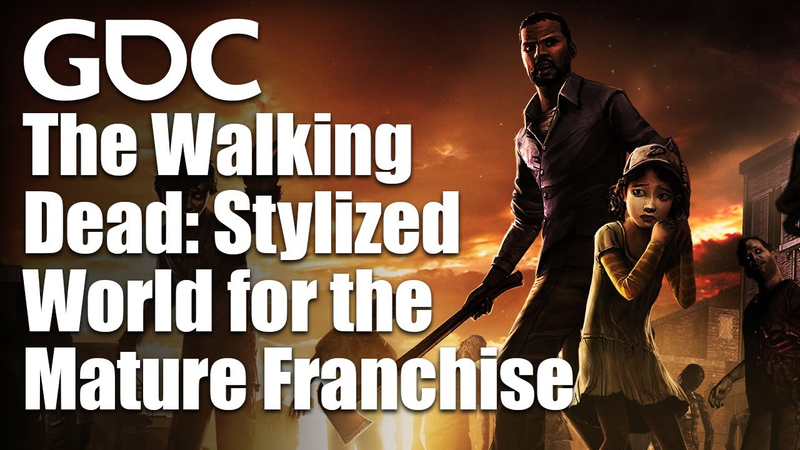
that occurs for all of us due to a million individual tragedies it's not just the post-apocalyptic setting with its lack of conveniences that we take for granted in our everyday lives that hammers this home it's not the terror inherent in living a life under constant threat rather it's the demonstration of how that loss erodes all of us how even the survivors don't survive unscathed but in many ways lose parts of their Humanity due to losing so much of humanity as a whole the entire game series is about how every individual loss is a loss for us not only for Lee or for Clementine but for us person personally as players each sacrifice chips away at us and makes us all the more single-minded focused on the one goal we think we might be able to achieve the one remaining act we might be able to do to retain our Humanity the one Redemptive Act of saving a child and here too is that focus on the larger hole while Clementine is clever and at times helpful in a strictly pragmatic sense Lee would simply be better off without her but the entire game is focused on this relationship on how this tiny human being allows Lee to be more than he is but the game also makes this point in harsher ways one of the the most remarkable things about the game to
me was that it got me to give up on one of the characters it showed me that dehumanization that degradation by getting me to in the end let one of the characters die any of you who have played the game can probably guess who I'm talking about but for those of you who haven't I opted to let a high school kid die you see how inhumane that sounds how morally destitute if you heard it on the Evening News you'd be repulsed but in the context of the game it seems justifiable and yet in the end with the way the game closes I realized he was just some scared kid and then you have to face the fact that within that Universe given how precious every single life is how Humanity itself is barely holding on you've let another go and then you're back asking for whom the belt TOS because this life even with all of its bumbling and cowardly Act is part of a larger hole and in its ending it's not only him who's lost something but you it's rare that a game can point out to us how precious our own humanity is and how quickly life overwhelms us and without thinking we trade it away and yet in one line one single moment or perhaps that's not fair perhaps it would be better to say and yet with every as ECT of the game The Walking Dead
provides just that again I'm not saying that this game is perfect and we're especially not saying that this analysis is at all required to have that experience of understanding your place as part of a larger hole but I think it goes to show very clearly that without sacrificing any of the engagement any of what we traditionally think of as a game we can wrestle with issues essential to who we are and I like that see you next week for some more Walking Dead [Music] [Applause] [Music] want [Music]
Summary
The narrative core of Telltale’s The Walking Dead centers on the erosion of human morality within a post-apocalyptic landscape. By utilizing John Donne’s 17th-century meditation on interconnectedness, the game challenges players to confront the true cost of survival. The central thesis posits that every individual life is an essential component of a larger human collective; therefore, every death—regardless of the circumstances—diminishes the survivors and strips away a portion of their humanity.
The game effectively uses character interactions to illustrate this philosophical struggle. The inclusion of literary references, specifically the quote regarding the tolling bell, serves to elevate the narrative beyond standard survival tropes. This moment highlights the depth of characters like Chuck, who, despite his marginalized status, acts as a moral anchor. By forcing players to make impossible choices—such as deciding who lives or dies—the game exposes how quickly individuals can justify dehumanization under pressure. These decisions are not merely mechanical; they are moral tests that force the player to acknowledge their own complicity in the degradation of the group’s collective humanity.
Ultimately, the game functions as a critique of how easily people trade their ethical standards for pragmatic survival. The relationship between the protagonist, Lee, and the child, Clementine, serves as a focal point for this struggle, representing the final, desperate attempt to retain one’s humanity through a redemptive act. By demonstrating that even the most seemingly justifiable sacrifices leave the player diminished, the game successfully argues that the preservation of human life is the only true measure of success, proving that interactive media can effectively explore complex, essential questions about the human condition without sacrificing gameplay engagement.














Comments