Loading the document
Games and companies in this document


Connections
Each row is a game or company this document names, each column a document, oldest first. A mark means that document names it. Select a row to see those documents.
More from Monash University
View all
Whitepaper
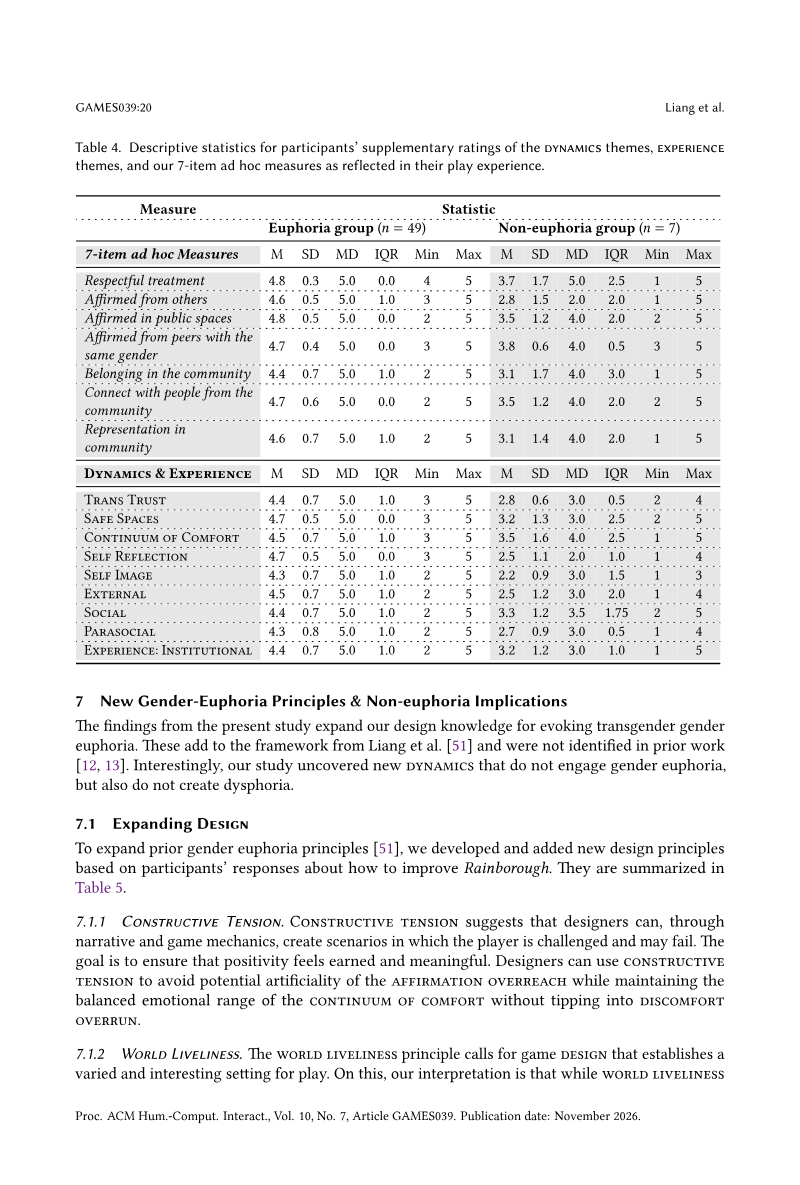
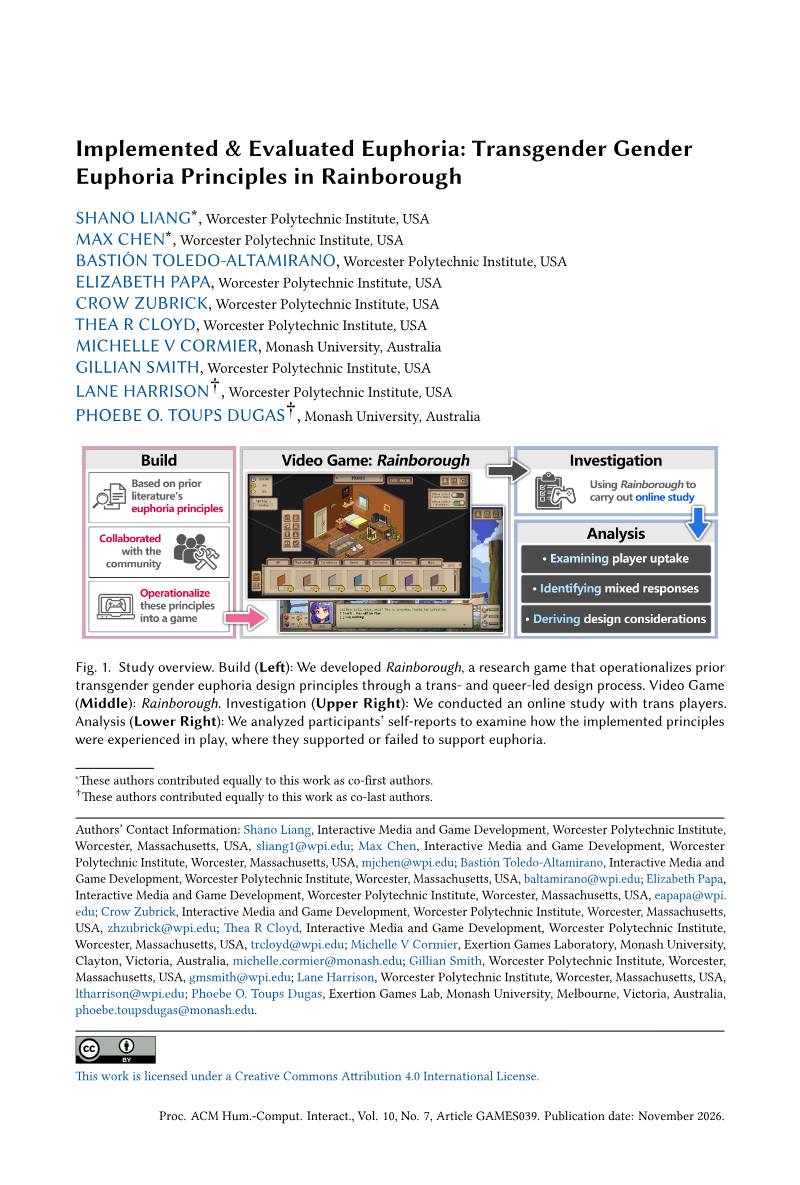
Implemented & Evaluated Euphoria: Transgender Gender Euphoria Principles in Rainborough
Worcester Polytechnic Institute · 2026
Whitepaper
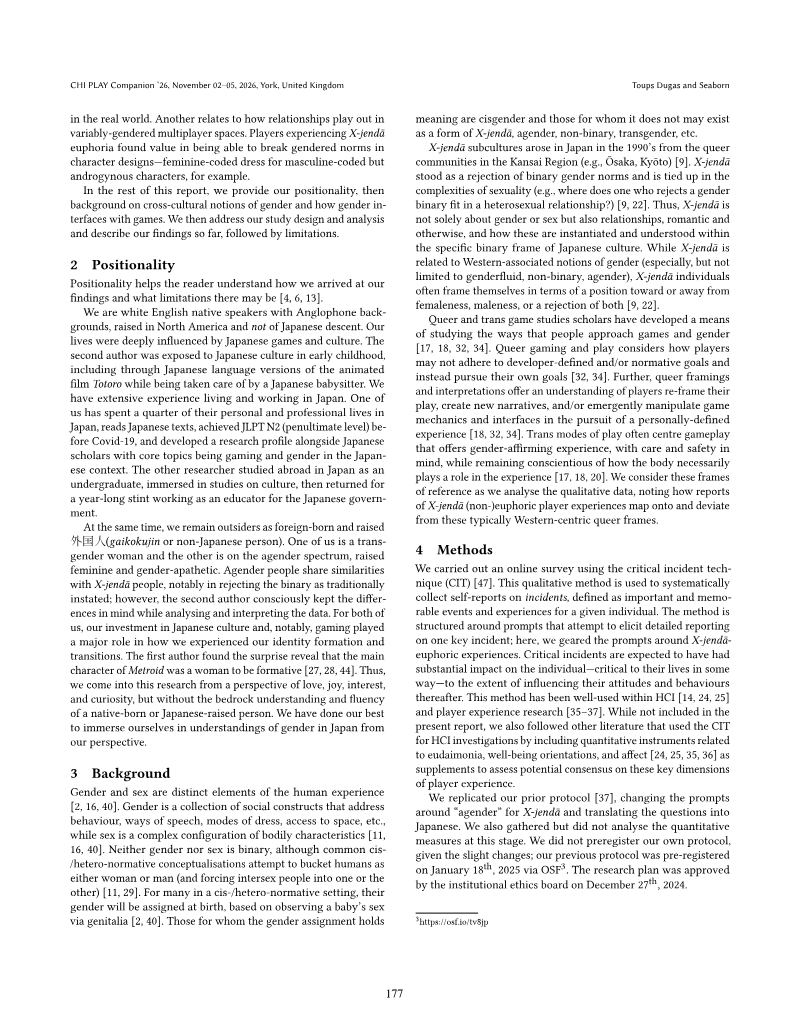
Mapping Out X-Gender Euphoric Gaming Experiences
Monash University · 2026



Whitepaper
Monstera pocketii: The Botanical Vitality of Pokémon
DiGRA · 2026
Article
“More Than Just Playing a Character”: Gender Exploration and Expression in Avatar Customization
Monash University · 2024
Whitepaper
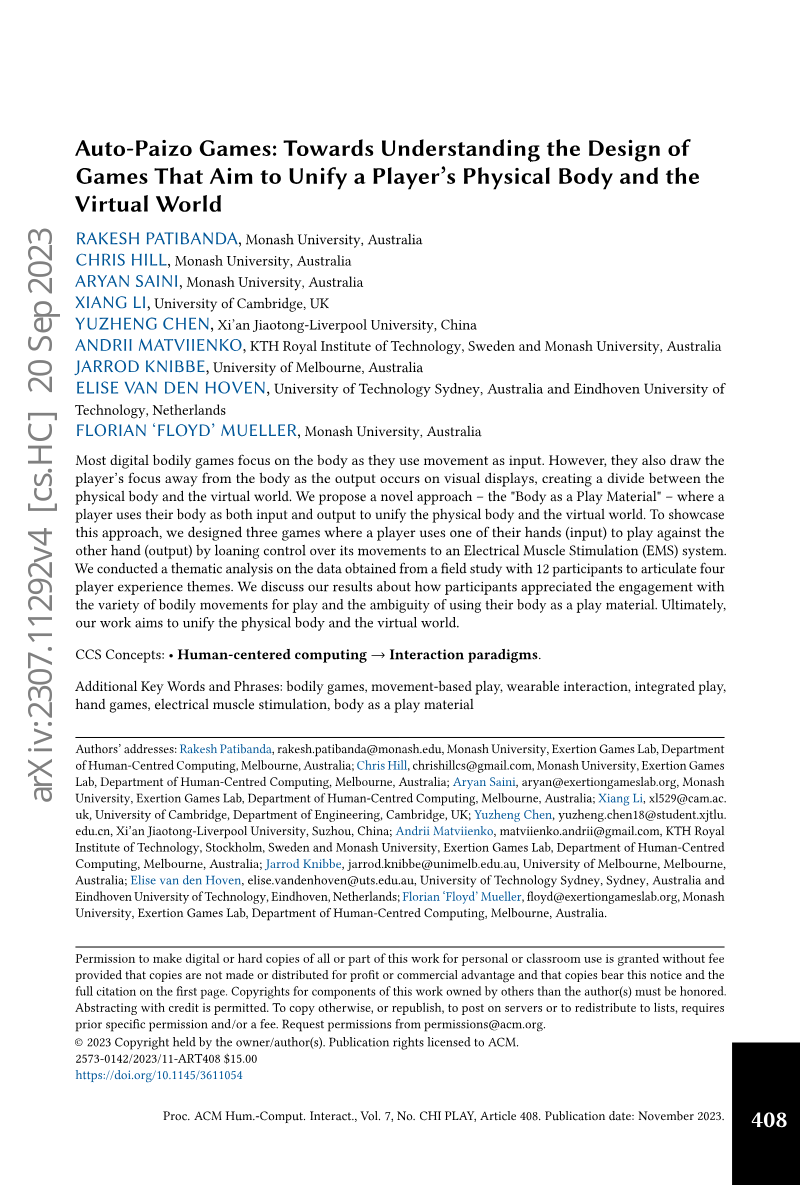
Auto-Paizo Games: Towards Understanding the Design of Games That Aim to Unify a Player's Physical Body and the Virtual World
Monash University · 2023
Whitepaper
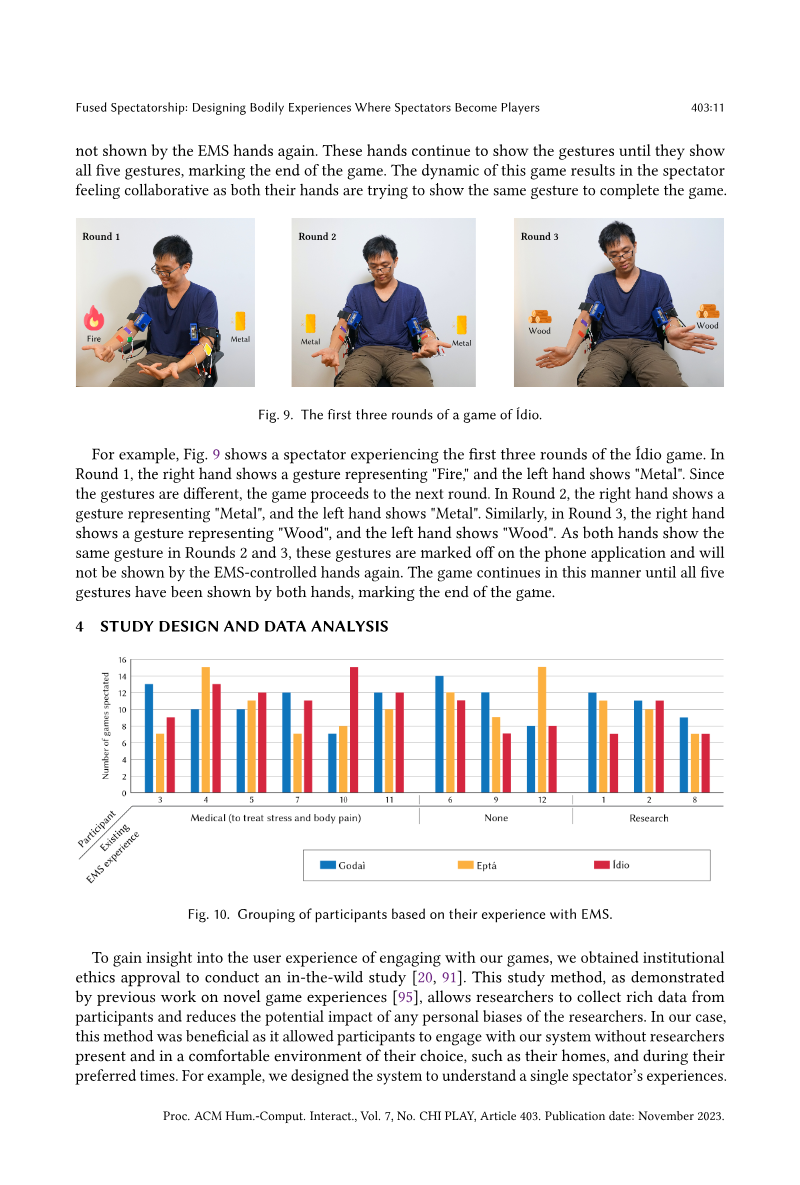
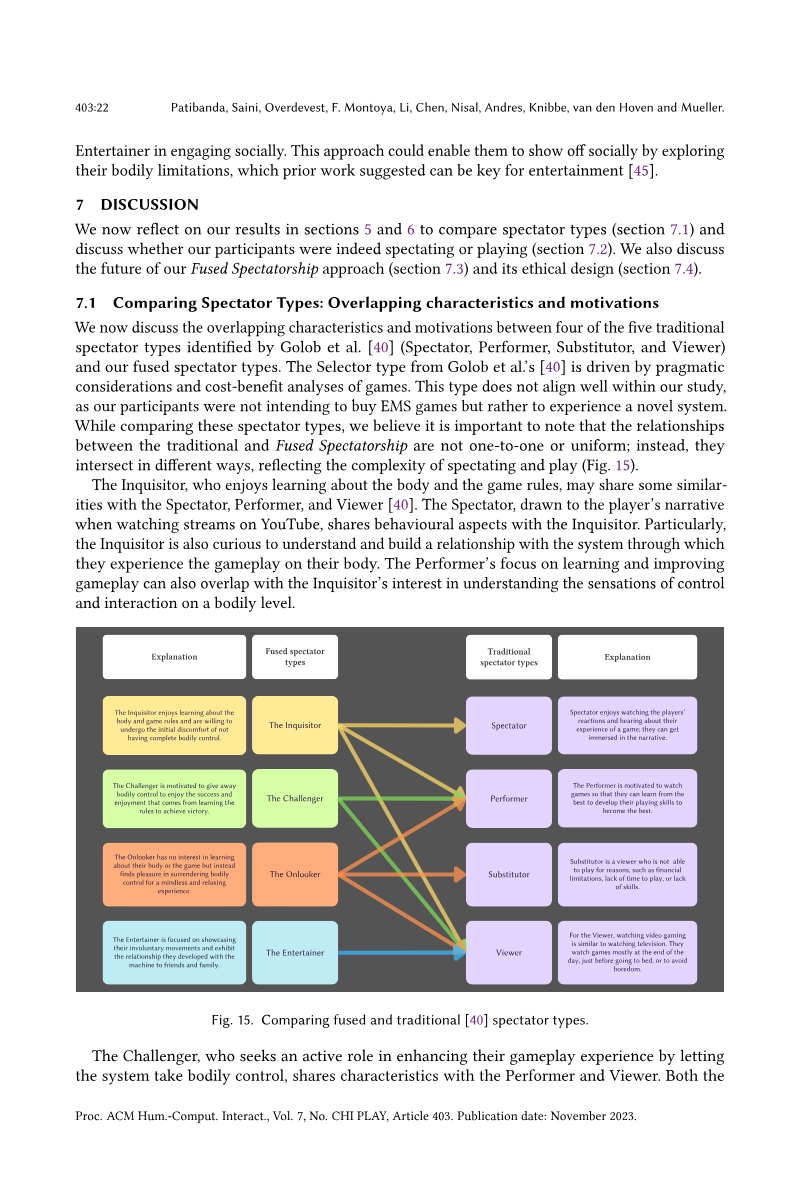
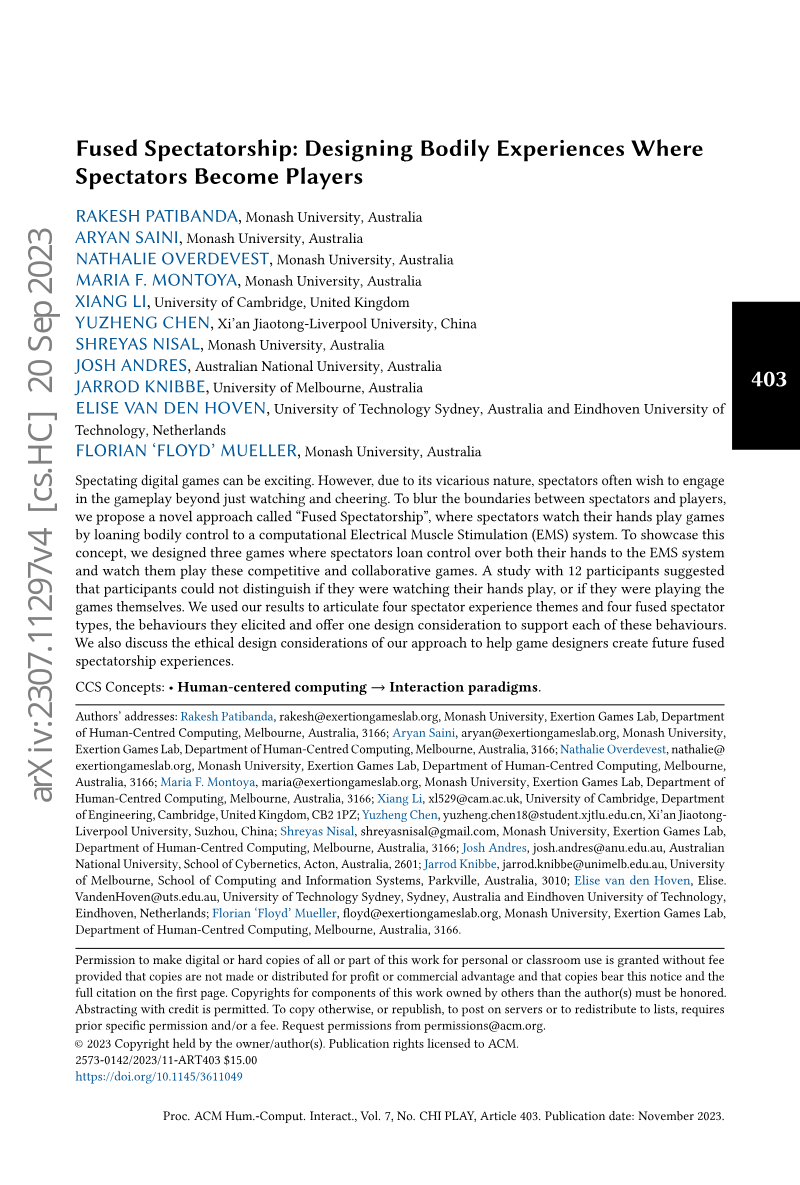
Fused Spectatorship: Designing Bodily Experiences Where Spectators Become Players
Monash University · 2023
Whitepaper
Actuating Myself: Designing Hand-Games Incorporating Electrical Muscle Stimulation
Association for Computing Machinery · 2021
Whitepaper
Myopic Bike and Say Hi: Games for Empathizing with the Myopic
Xi'an Jiaotong-Liverpool University · 2021