Loading the document
1 free read left. Create a free account for unlimited reading + AI research.
Create free accountArticleMonash University
Players use avatars to move beyond simple character representation and engage with their gender identity. This digital space allows for self-expression.
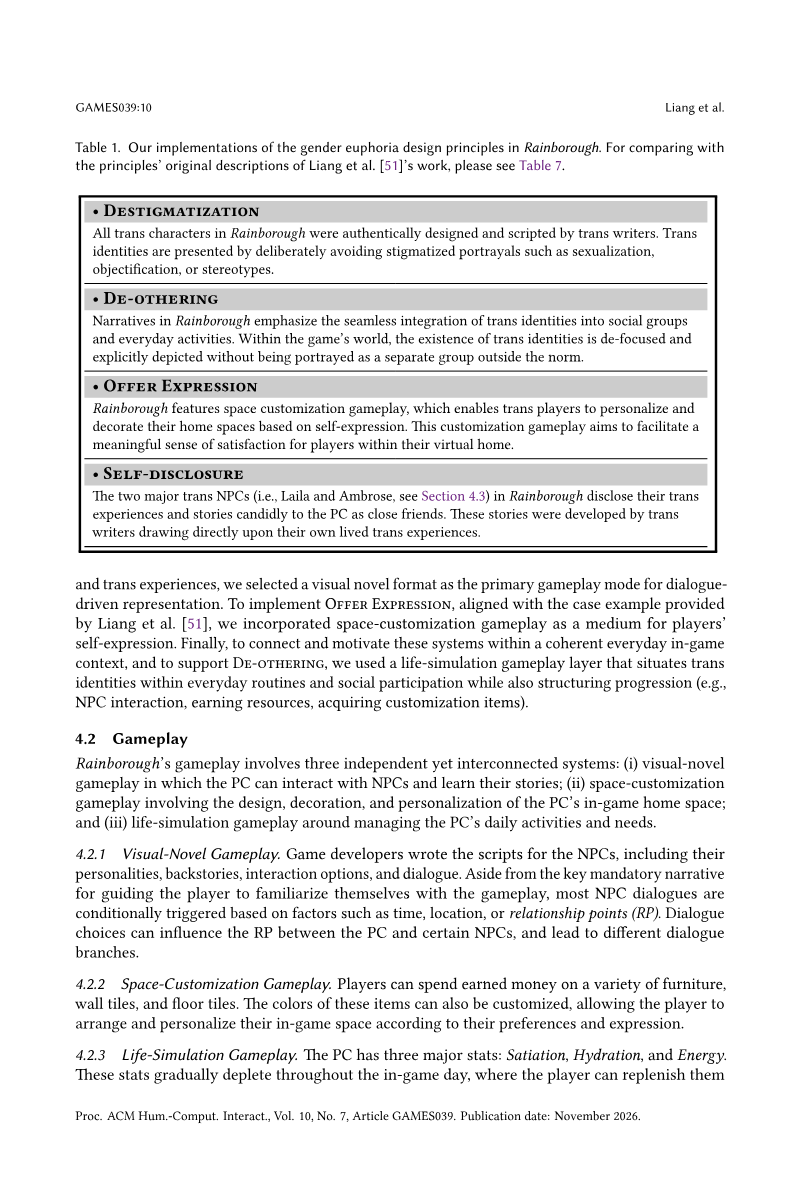
Avatar customization serves as a critical site for gender exploration and self-expression, functioning as a digital space where players can navigate, subvert, or reinforce gender norms. The research investigates how the design of character creation systems influences the ability of players—particularly those from marginalized backgrounds—to project their identities into virtual environments. By analyzing the bidirectional relationship between players and their digital representations, the study highlights how game mechanics often impose rigid, binary frameworks that limit authentic self-expression.
The findings indicate that many players utilize avatar creation to experiment with gender identity, often using "gender-swapping" or non-traditional aesthetic choices to escape the restrictive expectations of hypermasculine or hyperfeminine archetypes. For many, the avatar acts as a symbolic extension of the self, allowing for a performative stylization of gender that is unconfined by real-world social pressures. However, the study notes that current industry standards, which frequently rely on binary checkboxes and limited body-type presets, often fail to accommodate the diverse needs of queer and marginalized users, effectively reinforcing existing power structures within gaming culture.
Methodologically, the research employs in-depth qualitative interviews to capture the nuanced experiences of players, utilizing a thematic analysis approach to interpret how these digital interactions reflect broader sociocultural contexts. The study concludes that expanding customization options is essential for fostering inclusive gaming environments. By moving beyond binary defaults, developers can better support the role of video games as a mechanism for identity affirmation, allowing players to engage in a more fluid and authentic exploration of their gendered selves.
University of California · 2024