Monash University
4 reports, presentations and talks by Monash University in the Game Industry Library, the newest “Monstera pocketii: The Botanical Vitality of Pokémon” (2026).
Documents



Monstera pocketii: The Botanical Vitality of Pokémon
This paper argues that the Pokémon franchise should be read through plant studies rather than solely as representations of animals.
- The paper argues Pokémon should be read through plant studies rather than solely as animal representations, emphasizing the botanical and 'living surface' qualities of the creatures and franchise, which exceed the category of the animal.
- Author Nikolas Matovinovic (Monash University) builds on ecocritical and critical plant studies frameworks, drawing on Sean Morey and Jason Crider's 'Hyperanimal' concept and theories of plant agency and interspecies communication, including orchid-wasp relations.
- Carnivorous-plant-inspired Pokémon such as Victreebel and Carnivine are presented as the most significant contemporary screen depiction of carnivorous plants, a category the paper says existing plant horror scholarship largely overlooks.
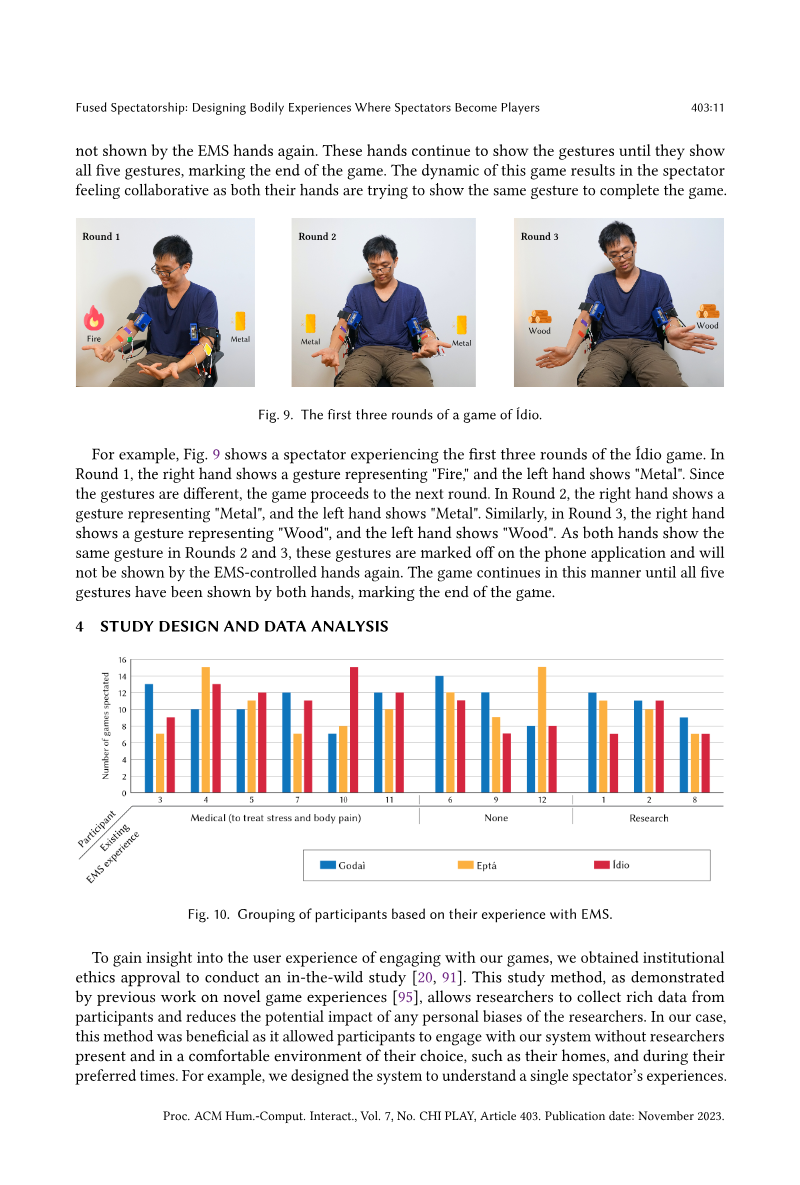
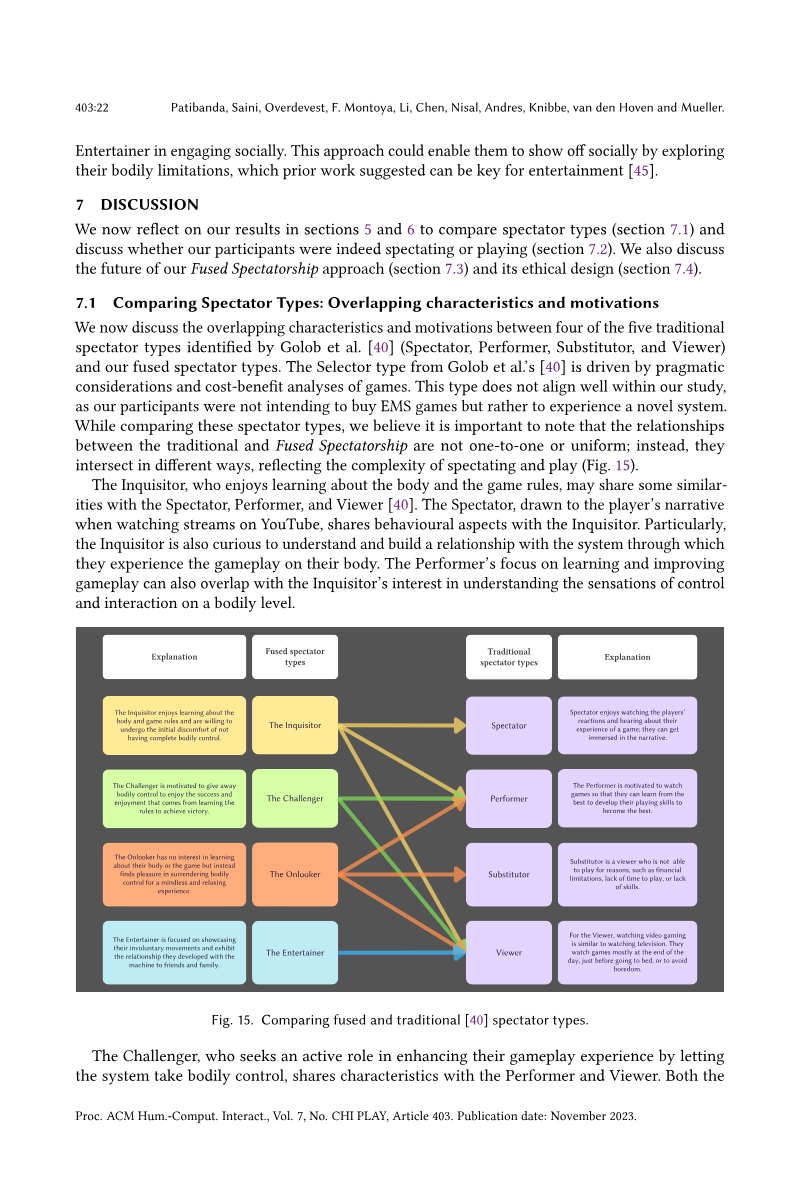
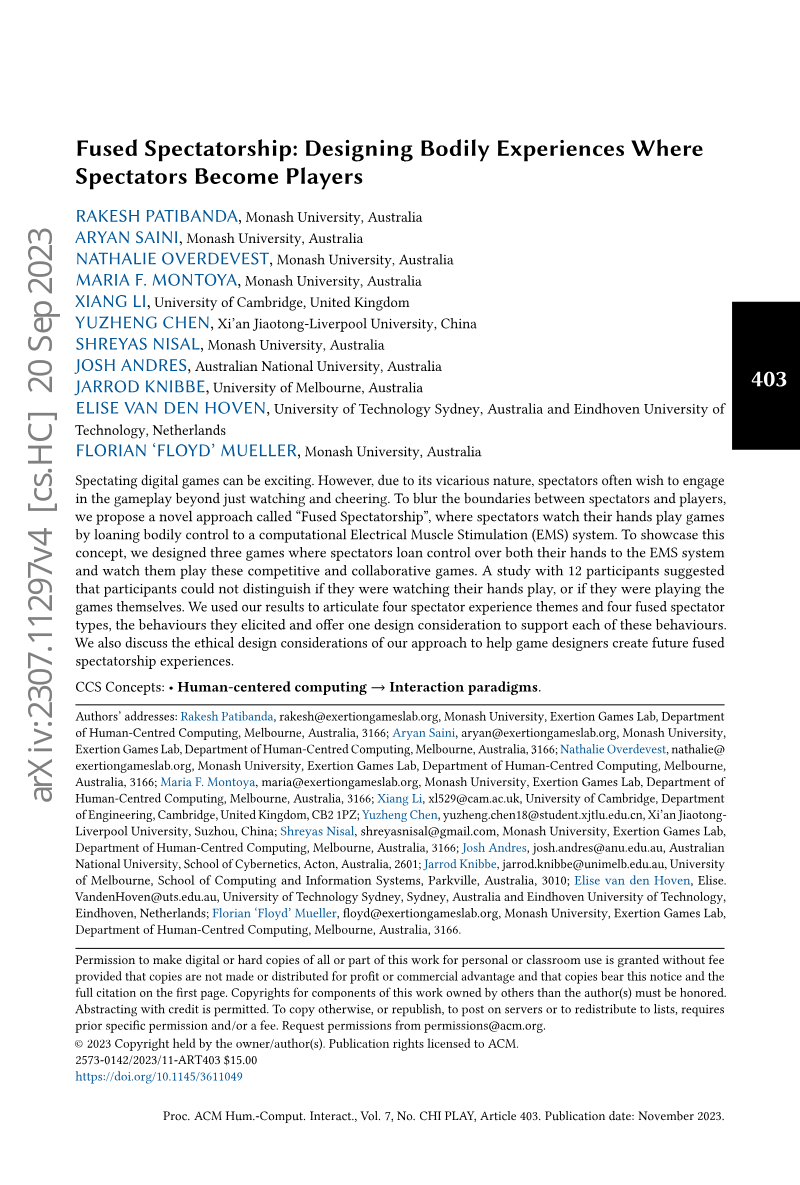
Fused Spectatorship: Designing Bodily Experiences Where Spectators Become Players
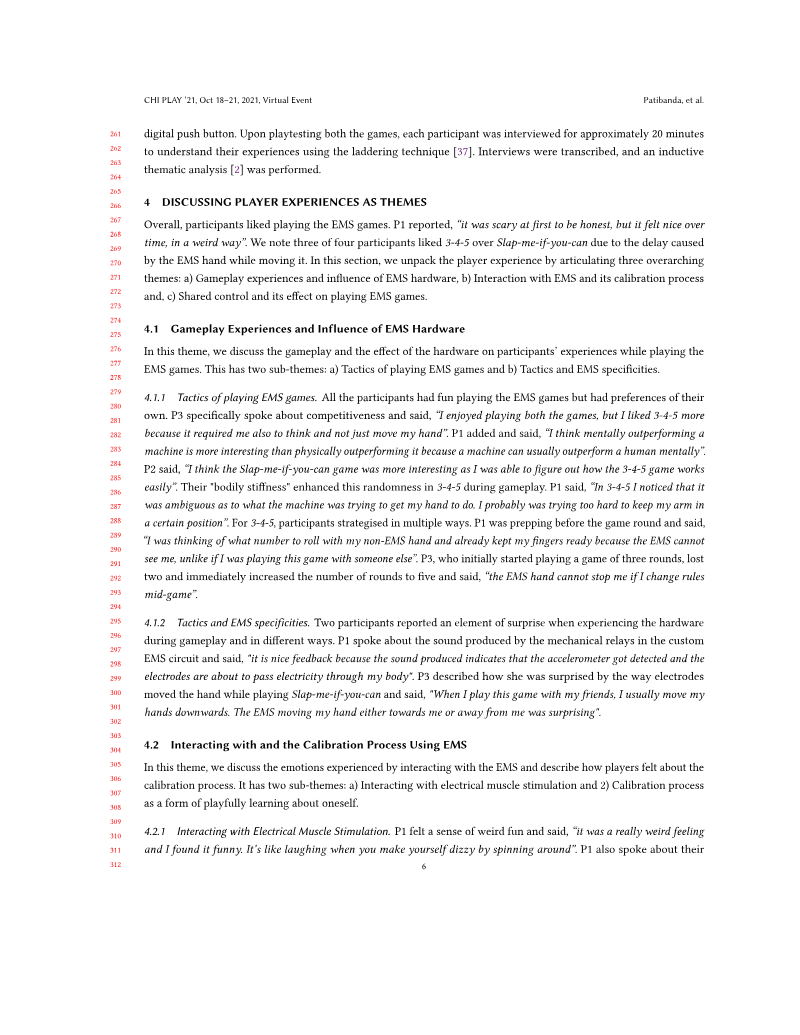
Fused Spectatorship redefines the traditional boundaries of digital gaming by utilizing Electrical Muscle Stimulation (EMS) to transform the spectator’s body into an active output medium.
- Fused Spectatorship uses Electrical Muscle Stimulation (EMS) to actuate involuntary motor movements, allowing spectators to physically participate in digital games rather than merely observing them.
- Research involving 12 participants across three game environments confirms that bodily engagement is a primary driver for immersive play, often causing users to struggle to distinguish between watching their hands move and actively playing.
- The study identifies four distinct spectator archetypes—the Inquisitor, the Challenger, the Onlooker, and the Entertainer—each requiring different levels of bodily control and awareness.
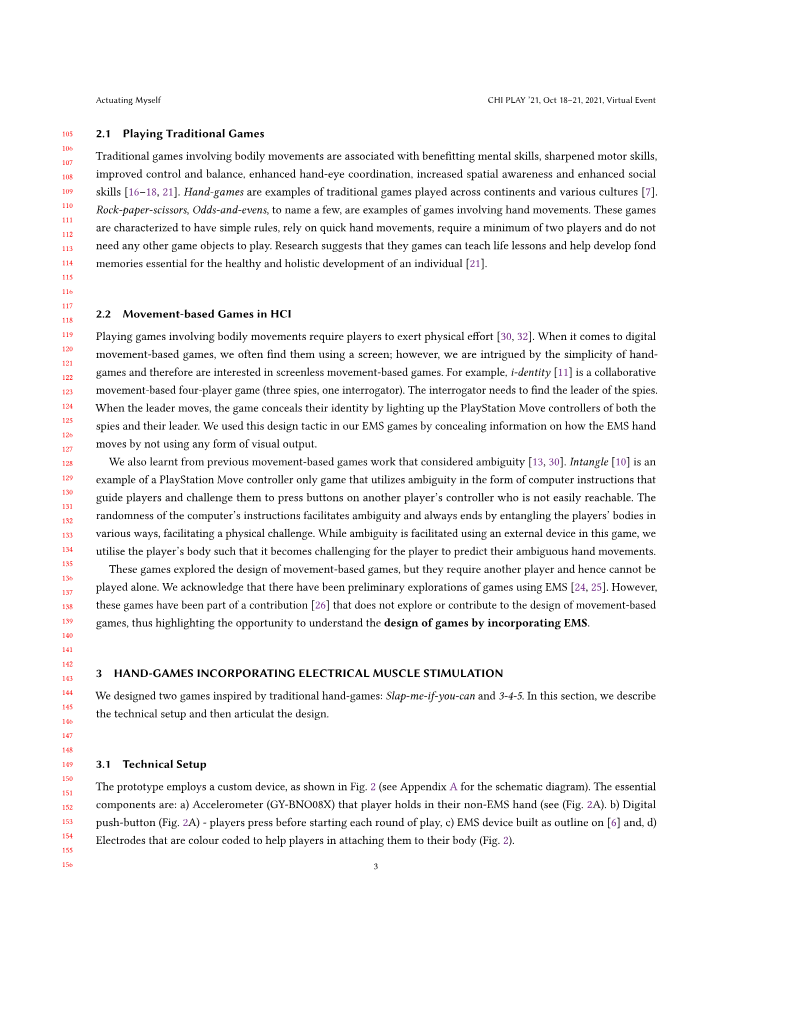
Actuating Myself: Designing Hand-Games Incorporating Electrical Muscle Stimulation
Electrical muscle stimulation (EMS) offers a transformative approach to game design by enabling single-player experiences that simulate the competitive dynamics of traditional two-player hand games.
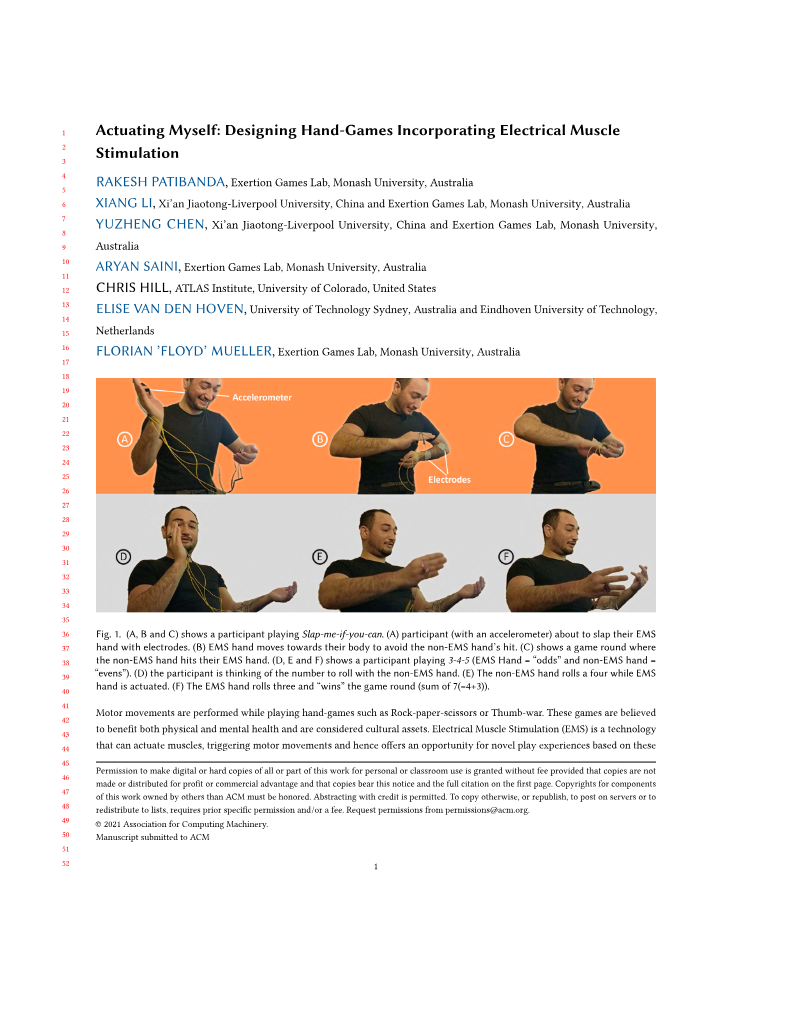
- Electrical Muscle Stimulation (EMS) can transform traditional two-player hand games into single-player experiences by allowing users to share control of their bodily movements with a machine.
- The study developed two prototype games, 'Slap-me-if-you-can' and '3-4-5', which use an accelerometer in the non-EMS hand and electrodes on the forearm to actuate wrist and finger movements.
- The calibration process for EMS serves as a form of playful learning, helping users understand the biological relationship between specific forearm muscles and resulting hand movements.
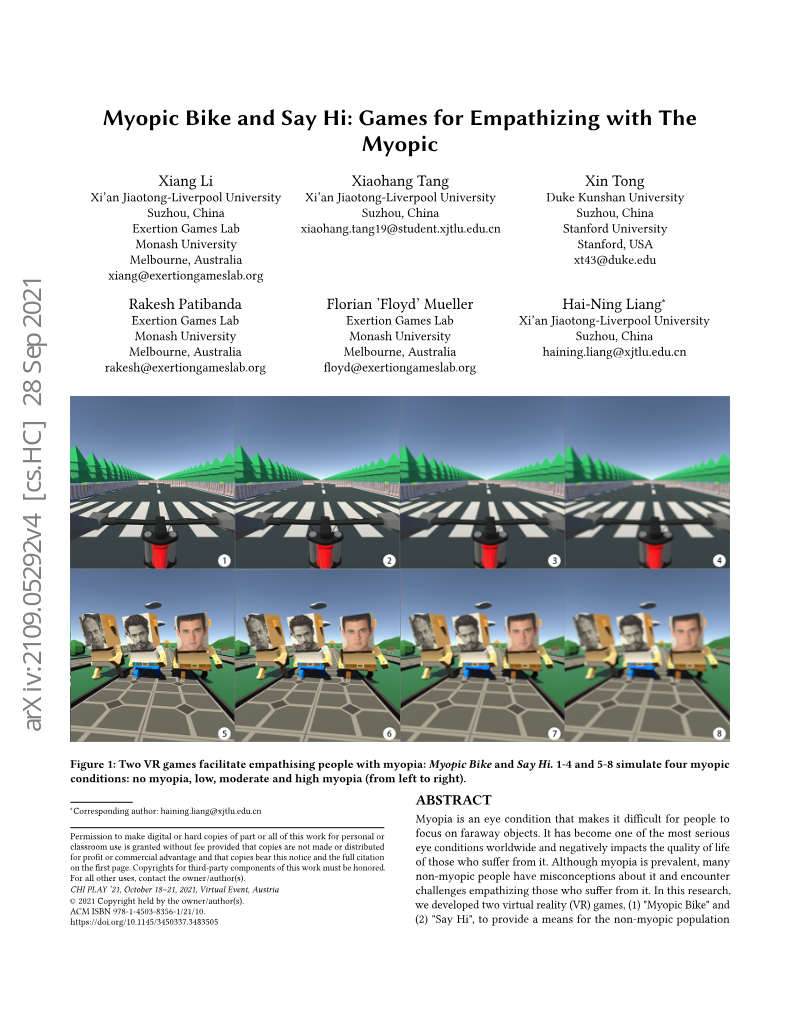
Myopic Bike and Say Hi: Games for Empathizing with the Myopic
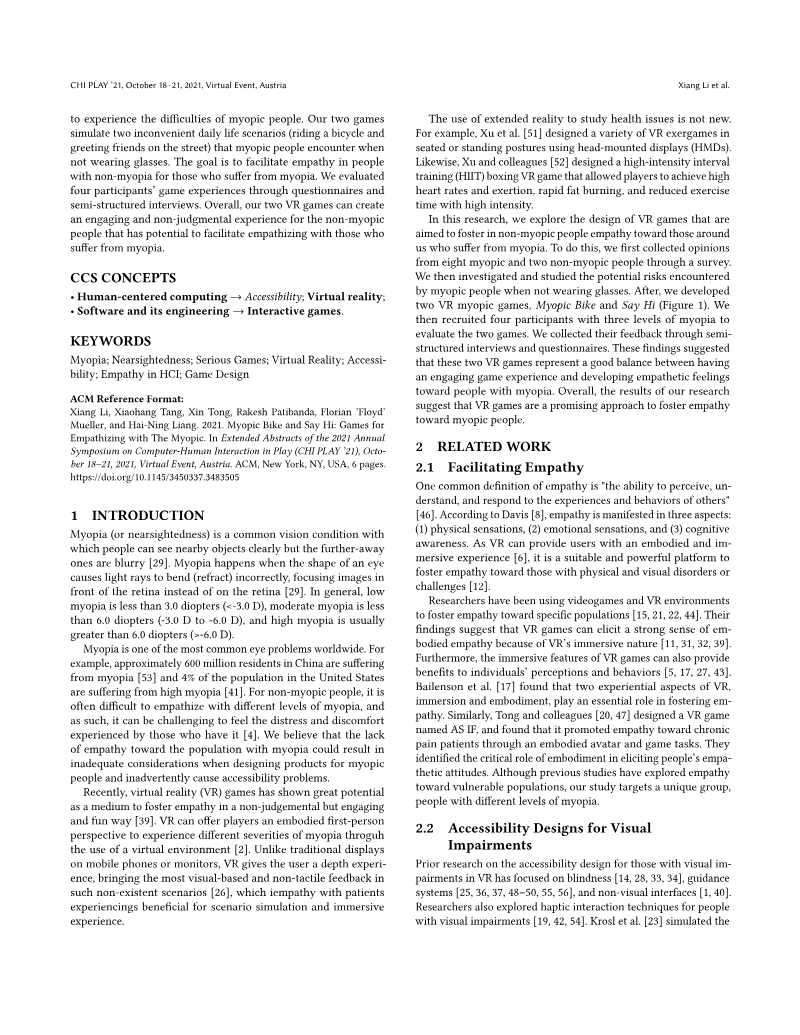
This research explores the potential of virtual reality (VR) games to foster empathy in non-myopic individuals toward those living with varying degrees of myopia.
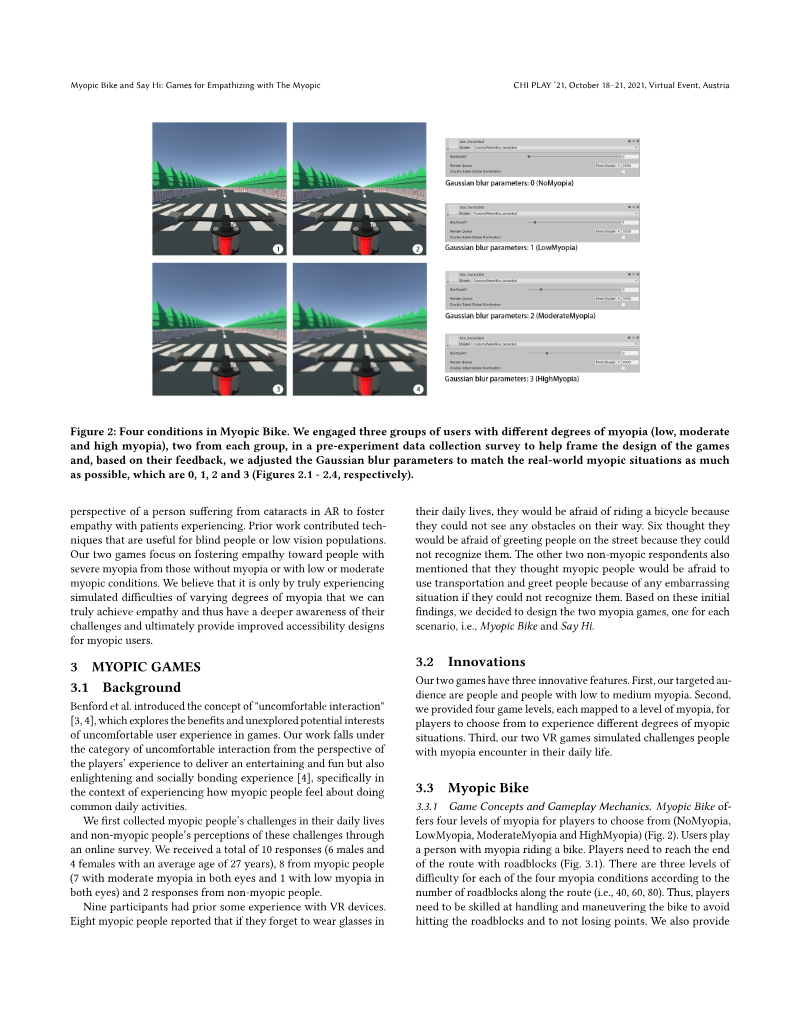
- Researchers developed two VR games, 'Myopic Bike' and 'Say Hi,' to simulate varying levels of myopia (low, moderate, and high) to foster empathy in non-myopic users by replicating daily challenges like cycling and social interaction.
- The games utilize four distinct visual simulation levels to represent myopia severity, ranging from no myopia to high myopia (defined as greater than 6.0 diopters).
- Initial playtesting with four participants across different myopia conditions indicated that the VR experience successfully created an engaging, non-judgmental environment for users to better understand the difficulties faced by those with visual impairments.
Do you work at Monash University? Get a free report of how these documents are read and cited here.