Loading the document
1 free read left. Create a free account for unlimited reading + AI research.
Create free accountWhitepaper DiGRA
1 free read left. Create a free account for unlimited reading + AI research.
Create free accountWhitepaperDiGRA
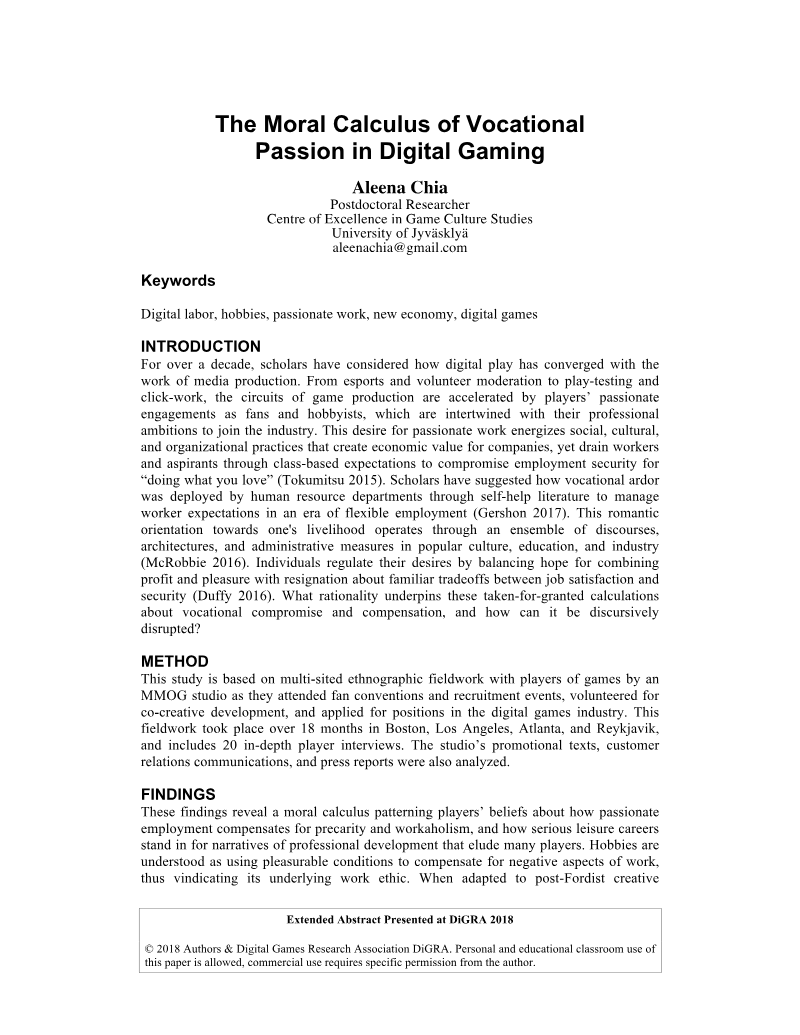
The paper examines esports, volunteer moderation, play-testing, and aspirational job-seeking in digital games.
The document explores the "moral calculus" that shapes players' beliefs about vocational passion in the digital games industry, arguing that this calculus justifies precarious employment conditions. It posits that the rhetoric of passionate work exploits ambiguities between leisure and livelihood in post-Fordist creative industries, benefiting companies while disadvantaging aspirants and workers. The core argument is that this compensatory relationship, where hobbies are seen as offsetting negative aspects of work, stems from industrialization's separation of labor and recreation, and the subsequent institutionalization of the hobby as productive leisure.
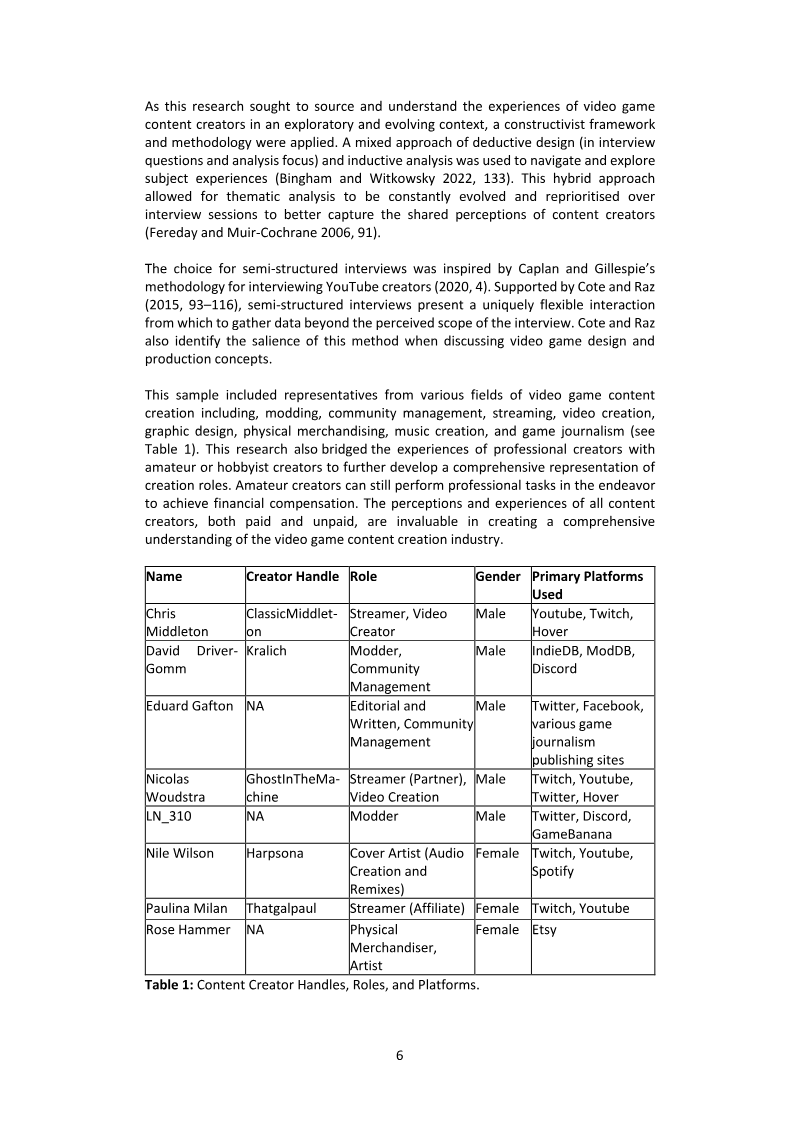
The study employed multi-sited ethnographic fieldwork over 18 months in Boston, Los Angeles, Atlanta, and Reykjavik. This involved observing players of an MMOG studio at fan conventions and recruitment events, during co-creative development volunteering, and as they applied for industry positions. The methodology also included 20 in-depth player interviews and analysis of the studio's promotional texts, customer relations communications, and press reports.
Key findings indicate that players internalize a moral calculus where passionate employment is perceived to compensate for precarity and workaholism. Serious leisure careers are often viewed as substitutes for traditional professional development narratives. The paper contends that by reversing the belief that profit corrupts hobbies, the rhetoric of passionate work normalizes the sacrifices associated with precarious and aspirational labor. This "boundary work" selectively emphasizes aspects of vocation and avocation to serve business interests at the expense of individuals.
The significance of this research lies in its investigation of the confounding logic where passion, deemed corruptible by work, is simultaneously presented as capable of sublimating work from drudgery. Understanding this boundary work provides a framework for individuals to critically reflect on their desires, question existing employment structures, and reconfigure their approach to purposeful livelihoods beyond industrial-era notions of productivity and neoliberal ideologies of passion.

DiGRA · 2026

DiGRA · 2026



DiGRA · 2026



DiGRA · 2026



DiGRA · 2026



DiGRA · 2026



DiGRA · 2026



DiGRA · 2026



DiGRA · 2026

DiGRA · 2026



DiGRA · 2026



DiGRA · 2026
DiGRA · 2023