1 free read left. Create a free account for unlimited reading + AI research.
Create free account
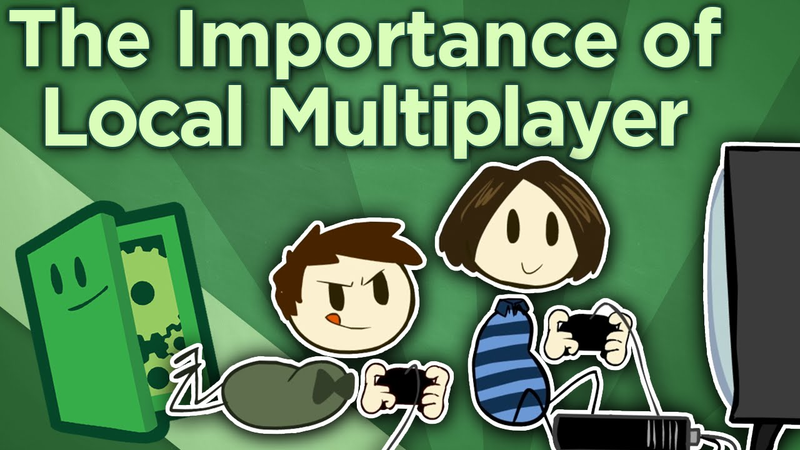
The Importance of Local Multiplayer - Seeing Eye-to-Eye - Extra Credits
Key insights
6 takeaways- 01The decline of local multiplayer in AAA gaming is primarily driven by an economic strategy to increase unit sales, as removing couch co-op forces each household member to purchase their own individual copy of a game.
- 02Online-only gaming environments contribute to increased toxic behavior by removing the empathy and accountability fostered by face-to-face interaction.
- 03The indie game sector is currently filling the void left by AAA developers, prioritizing the unique social dynamics of in-person play over the revenue-maximizing models of larger publishers.
- 04Physical proximity in gaming, such as playing on a couch or at an arcade cabinet, serves as a social foundation that builds genuine friendships and bridges divides between players.
- 05In competitive scenes like fighting games, physical presence encourages mentorship and mutual respect, which counters the dehumanization often experienced when opponents are reduced to anonymous digital entities.
- 06Local multiplayer functions as a vital tool for fostering a more civil and inclusive gaming culture by reminding participants that their opponents are fellow human beings.
Ask AI about this video
Transcript
When I was young, the only way to play a game with a friend was to be sitting on the couch next to them or gathered with them around the table. You had to be sharing an arcade cabinet or hanging out at your local game store. You played face-to-face. Today, this isn't the case. Today, almost no AAA game comes out with local multiplayer, and even those that do often consider it an afterthought, a secondary mode to online play. And the truth is, there's a good business reason for this. I mean, I am pro local multiplayer, but I won't sugarcoat it. Companies long ago learned that they lose very few sales by not including local multiplayer. First of all, very few people won't actually buy a game simply because it doesn't have local multiplayer. And they may grumble about it, and they may be unhappy, but if it's a game you're jazzed about or a series that you love, in general, you'll probably suck it up and play over the internet with your friends. Second, the amount of sales they lose is actually offset by the number of sales they gain. I mean, if a game has local multiplayer, that often means that two or more
players only have to buy one copy of the game to play together. But if a game doesn't have local multiplayer, every single person who wants to play has to actually buy a copy. So, all of your friends have to buy it if you want to play together, and the company has managed to sell two or more copies where they would have only sold one. Now, there are some counterarguments to be made to that logic. For one, local multiplayer makes it easy to introduce new people to a game. Local multiplayer games are also better candidates for DLC as there will be some friendly peer pressure to pick that stuff up. But those aren't the reasons I'm going to talk about because I think they're less important and ultimately less convincing. For all the business reasons to remove local multiplayer, there's one compelling reason to keep it. Local multiplayer made us better people. I think some of the toxicity that we so often wrestle with today comes from the fact that we no longer play games face-to-face. It was a lot harder to curse somebody out or fling racial epithets at somebody when you were sitting right next to them. It was harder even to be mad at them, much less stay that way. When we played with each other in a real proximal sense, we got
to know each other and we had to accept each other as human beings. Other players weren't just faceless entities on the internet, they were people just like you. Empathy was practically unavoidable. I mean, sure there would be those times where a heated match got a little bit ragey, but that rarely lasted long and more often grudging congratulations on a win or a heartfelt maybe next time on a loss were readily given. And when all was said and done, you broke bread or probably pizza and whatever frustrations there were slipped away. And some of my best friendships were formed in that environment, sitting around a table playing Magic or D&D, spending hours trying to grind through Gain Ground on the Genesis and man, so many hours in GoldenEye. And while I have found great people and made great friends playing online, it's never quite as natural or as easy as it was over a game of Smash or Mario Kart. Now, sometimes when I've brought this up, I've had people push back and say, "Dude, look at the fighting game community. It's all local play and there's a lot of toxicity there." And yes, there is toxicity in parts of the
fighting game community and there's work that needs to be done there, but I've also seen the fighting game community, especially in local tournaments, be one of the most welcoming and open groups I've ever encountered. I've seen old hands happily take their time to train new players. I've seen lines of race disappear. I've seen people from all walks of life bond over those machines. And way back before there was a pro scene, when you had to put a quarter on a cabinet to play, it was an even more welcoming community. Crushing losses and frustration just melted away in the face of our shared joy in these games. Luckily, today's indie community has started to create more of these experiences. Maybe out of nostalgia or maybe out of an interest in exploring the unique type of play that comes when people play together in a room or maybe even just so they don't have to deal with the problem of rendering two perspectives on a screen when you're already pushing a machine to its limits. These have been great to see and I hope it leads to a resurgence in these types of games in general. But as we see local multiplayer falling out of the AAA space, I just wanted to take a moment and say that for all the expense, for all the hassle of putting in local
multiplayer, it does have a value that's not so easily quantified. And not every game should have it. In fact, most games probably shouldn't. But, for those that it's perfect for, it's worth remembering that it makes our community better as a whole. It helps to forge friendships and create bonds. But, more than that, it helps to remind us that we're all humans. That on the other side of that wire is not just some faceless bot or some outlet for meanness and frustration and rage. It's another person who loves the same thing you do. I'll see you all next week.
Summary
The decline of local multiplayer in the AAA gaming industry is driven primarily by economic incentives rather than a lack of player interest. Publishers have identified that removing couch co-op features forces each individual player to purchase their own copy of a game, effectively doubling or tripling sales per household. While this strategy maximizes revenue, it prioritizes short-term financial gains over the social benefits historically associated with shared physical gaming spaces.
Beyond the business model, the shift toward online-only play has contributed to a rise in toxic behavior within gaming communities. When players interact face-to-face, the physical presence of others fosters empathy and accountability, making it significantly more difficult to engage in the harassment often seen in anonymous online environments. Shared physical experiences, such as playing arcade cabinets or console games on a couch, historically served as a foundation for building genuine friendships and bridging social divides. Even in competitive scenes like fighting games, the proximity of players often encourages mentorship and mutual respect, countering the dehumanization that occurs when opponents are reduced to faceless digital entities.
While AAA developers have largely abandoned local multiplayer, the indie game sector has begun to fill this void, driven by both technical constraints and a desire to recapture the unique social dynamics of in-person play. Although not every title requires local multiplayer, the industry should recognize that these features provide value beyond simple metrics. By facilitating human connection, local multiplayer serves as a vital tool for fostering a more civil and inclusive gaming culture, reminding participants that their opponents are fellow human beings who share a common passion.






















Comments