1 free read left. Create a free account for unlimited reading + AI research.
Create free account
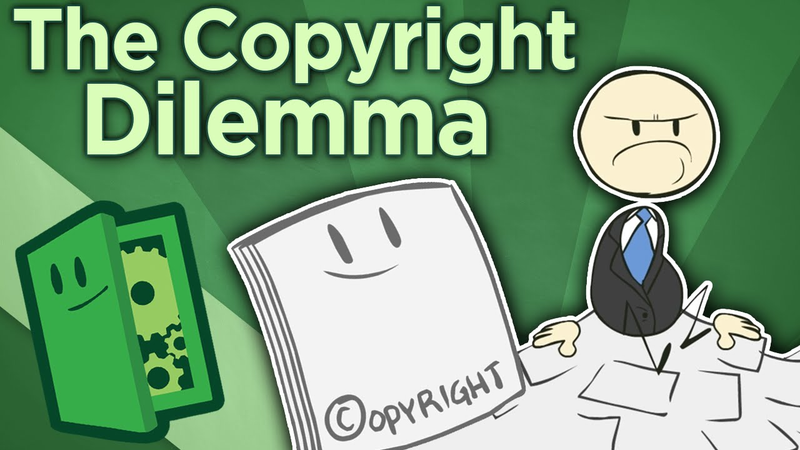
The Copyright Dilemma - On Trademarks, Copyrights, and Patents - Extra Credits
Key insights
5 takeaways- 01Trademark law requires companies to actively defend their brands against any potential dilution, which forces aggressive litigation over common words in titles regardless of actual market competition.
- 02Historical efforts to patent specific game mechanics, such as trading card game structures or sanity meters, have largely proven to be legally unenforceable.
- 03Game mechanics and rules generally remain ineligible for copyright or patent protection, preventing the monopolization of genres but leaving original designs vulnerable to cloning.
- 04The inability to protect core game systems creates a double-edged sword that fosters industry-wide iteration while simultaneously enabling larger entities to exploit the work of independent developers through reskinned clones.
- 05The global nature of the gaming market and the difficulty of cross-border enforcement make it unlikely that a clear legislative solution will emerge to balance creative freedom with intellectual property protection.
Ask AI about this video
Transcript
Today, we're going to talk about the problems of trademarks and copyrights in the games industry, which may sound incredibly dull, but we exist in a wacky industry where nothing works quite the way you expect it to. And the quirks specifically about copyright laws around games in the US have a major effect on what games get produced. Now, this is obviously going to be a quick and messy version because I'm not a lawyer and we're not really interested in this for the legal technicalities or the specifics. This is going to be the broadest strokes, widest generalizations version in order to allow us to get to the bit that matters to most of us. What this means for the games we get to make. So, let's start off with trademarks because those are a little bit easier. Trademarks can be anything which identifies your brand with consumers. So, the McDonald's arches or the Nike swoosh. These can be symbols, but they can also be words or names or phrases. And to qualify as a trademark, the only real qualifications you need are one, that your mark be unique enough to your brand that it won't confuse consumers
with a similar product. Two, that you actually have to use it. You can't just sit on all the trademarks in the world hoping to sue somebody like you can with patents. And three, you have to defend your trademark if somebody else tries to infringe on it. And here's where we get back to games because this is where we get things like Bethesda threatening to sue Mojang over the use of the word scrolls as the title of their game. Obviously, that was ludicrous. Anybody who plays games would never remotely confuse the two titles. Scrolls as a word by itself is too general to really qualify as a trademark. And their games aren't just called scrolls, so it wasn't like Mojang was simply stealing their title. But, legally, that's not exactly how it works because in the broadest and most quick and messy sense, if you don't defend your trademark, you lose legal claim to it. So, someone in Bethesda's legal division clearly got worried and said, "Hey, if we don't send Mojang a cease and desist, we're going to lose the right to defend The Elder Scrolls." And the truth is they probably knew the whole thing was loony while they were doing it, and they really didn't care too much about what Mojang was doing.
But, they felt like they needed to make a show of it to prevent making potential future cases much more difficult for them, which is why you get so many of these suits, like Sins of a Solar Empire: Rebellion being sued over the word rebellion, or all of those infamous cases surrounding the use of the word edge. Some of them may have more merit than others, and some are clear attempts just to make a quick buck off of a lawsuit, but often when you see a ridiculous trademark kerfuffle involving that's just asking for a PR backlash by picking on the little guy, they may be as aware as you are that what they're doing is ridiculous. But, they got to do it because that's how the law works. Copyright, on the other hand, is the interesting one. Copyright is the protection given to any piece of artistic work that says that the entity owning the copyright has the exclusive right to distribute that work, which they can then basically license to other people however they want. And you can absolutely copyright a game, but you can't copyright a game design. You also can't really patent a game design the way you would with an invention. And oh, people have tried both, believe me.
Wizards of the Coast famously patented the trading card game method of play back in 1994. You can see how that worked out. Everybody else just started calling their games collectible card games to avoid any trademark issues and ignored the essentially unenforceable patent anyway. Or, if you want a really stupid one, you can check out US patent 8529350 B2, where somebody in 2009, yes, just 7 years ago, patented updating stats in a sports video game based on the real-world performance of players. And like most other game design patents, this one proved unenforceable. Or, my favorite one, Nintendo's patent on the sanity meter from Eternal Darkness, whose first line reads, "A video game and game system incorporating a game character's sanity level that is affected by occurrences in the game, such as encountering a game creature or gruesome situation. Which, while the idea of tangling with such a big entity as Nintendo may have given some developers pause, has not kept a number
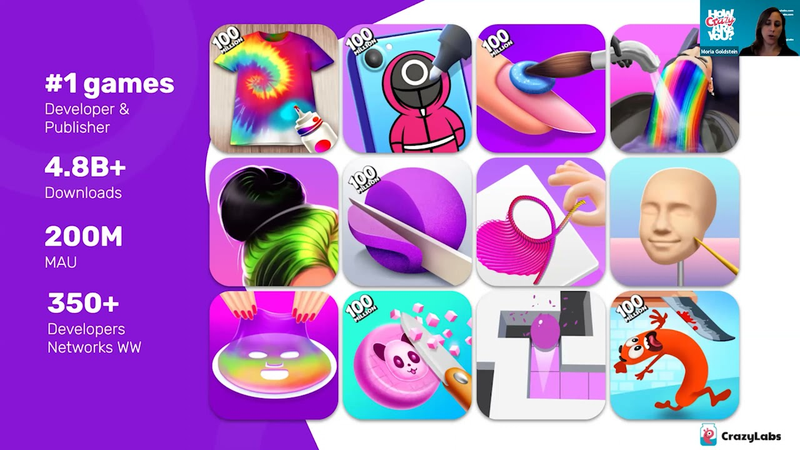
of games from using the very mechanic described in that first line. Now, for years we thought this was great. Game design is more like a language than an invention. You don't want people patenting the use of a comma or the idea of a conjunction. Instead, you want people to use those things in interesting ways to create new stories and works. And we still think that. And I think having game mechanics essentially be something you can't get sued over helps our whole industry to do wonderful and creative things. After all, you wouldn't want a company cornering the market on first-person shooters or real-time strategy just because they built the first thing vaguely in that genre. But, as much as I am for this open-source mentality with the syntax and the grammar that is the language of game design, I can't help sometimes scanning the App Store or even some of the pages of Steam and wondering if it's part of what's allowed so many companies to flood the market with blatant theft. And I don't mean games that are similar. I mean obviously reskinned clones of a successful game made by companies that clearly don't even really want to be making games. I don't think there's really a better solution than the system we have right
now. And even if you could find a better way to enforce rules around this sort of thing domestically, there are plenty of places in the world that aren't very concerned about copyrights or patents from other countries. Still, it's interesting to think about whether there is a systemic solution to the cloning problem this industry's going through right now that doesn't involve letting people hoard elements of game design. Because I have seen so many small companies with a great idea have their design ripped off by companies with a much bigger marketing budget and essentially be forced out of the market they created with no legal recourse to do anything about it. Anyway, I hope that this makes some of those weird game lawsuits you see out there make at least a little bit more sense. And I hope this idea of striking a balance between keeping game design ideas open and available and providing some protection for the people who actually come up with and are dedicated providing good versions of that design gives you something to ponder. See you next week.
Summary
The gaming industry operates under a complex and often contradictory legal framework regarding intellectual property, specifically concerning the distinction between trademarks and the protection of game design. Trademarks serve to identify a brand and prevent consumer confusion, but they carry a mandatory requirement for active defense. This legal necessity forces companies to initiate aggressive, often unpopular litigation—such as challenging the use of common words in titles—to prevent the dilution or loss of their legal claims. These actions are frequently driven by corporate risk management rather than genuine concerns over market competition.
In contrast, copyright and patent laws offer limited protection for game mechanics and design. While artistic assets are protected, the underlying rules, systems, and mechanics of a game generally remain ineligible for effective patenting or copyright. Historical attempts to patent specific mechanics, such as trading card game structures or sanity meters, have largely proven unenforceable. This lack of protection functions as a double-edged sword: it fosters an open-source environment where developers can freely iterate on existing genres and mechanics, but it simultaneously leaves smaller creators vulnerable to predatory cloning.
The current landscape creates a systemic dilemma where the industry benefits from the free exchange of design ideas but suffers from the proliferation of low-effort, reskinned clones. While the inability to hoard game mechanics prevents monopolization of genres, it offers no recourse for independent developers whose original designs are exploited by larger entities with superior marketing resources. Ultimately, there is no clear legislative solution that balances the need for creative freedom with the protection of original innovation, particularly given the global nature of the market and the difficulty of enforcing intellectual property rights across international borders.
















Comments