1 free read left. Create a free account for unlimited reading + AI research.
Create free accountWhitepaper DiGRA
1 free read left. Create a free account for unlimited reading + AI research.
Create free accountWhitepaperDiGRA
The paper argues that warps disrupt the fluidity of paths by removing the player's navigational control, converting open routes into predetermined tracks.
Gazzard's paper examines the warp as a recurring "time/space" device in videogames, arguing that warps disrupt the fluidity of paths and remove the player's navigational control, converting open routes into predetermined "tracks." Drawing on cultural precedents such as the TARDIS, Snakes and Ladders, and the warp pipes of Super Mario Bros., the author proposes that warps can be understood by how they break the one-to-one correspondence between play time and fictional time. The analysis distinguishes deliberately installed puzzle warps from "inadvertent" warps that aberrant players discover through unintended exploits.
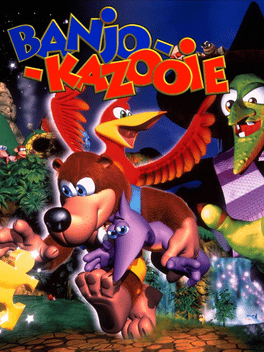
The paper offers a three-part classification of puzzle warps. Jump warps are unidirectional and typically single-use, with visible or aleatoric (randomized) destinations. Return warps are bidirectional and either return the player to a previous location or to another point entirely. Portals are the most flexible form, offering full visibility of both endpoints. Each category, the author contends, shapes player experience in distinct ways: warps can accelerate exploration and shorten completion times, but they can also disrupt learning progression, strand players in dead ends, and introduce cheating or temporal distortions. Examples from Toki Tori, Super Mario Bros., Portal, and Banjo-Kazooie: Nuts and Bolts ground this conceptual framework, which is presented as a qualitative taxonomy rather than an empirical study.
DiGRA · 2016
Game Dev Unchained · 2019