FinancialGREE
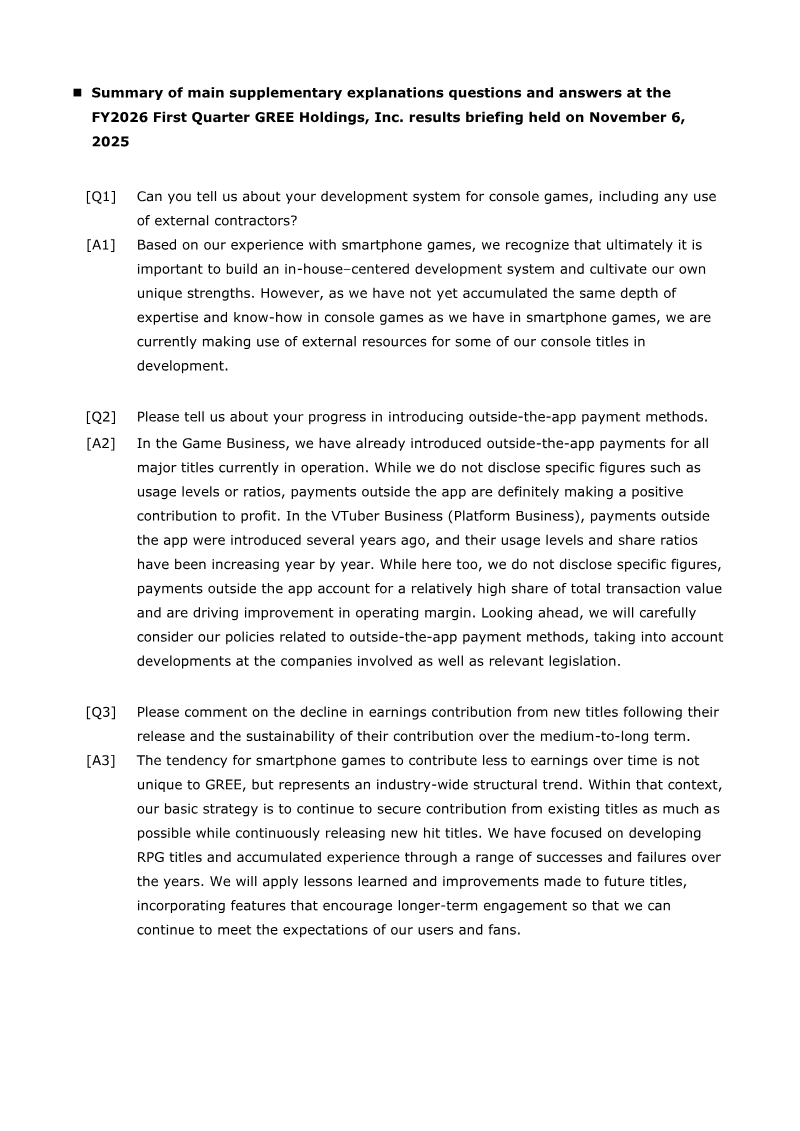
Summary of Main Supplementary Explanations Questions and Answers at the FY2025 Third Quarter GREE Holdings, Inc. Results Briefing Held on May 9, 2025
9 May 20251 pages~2 min full read
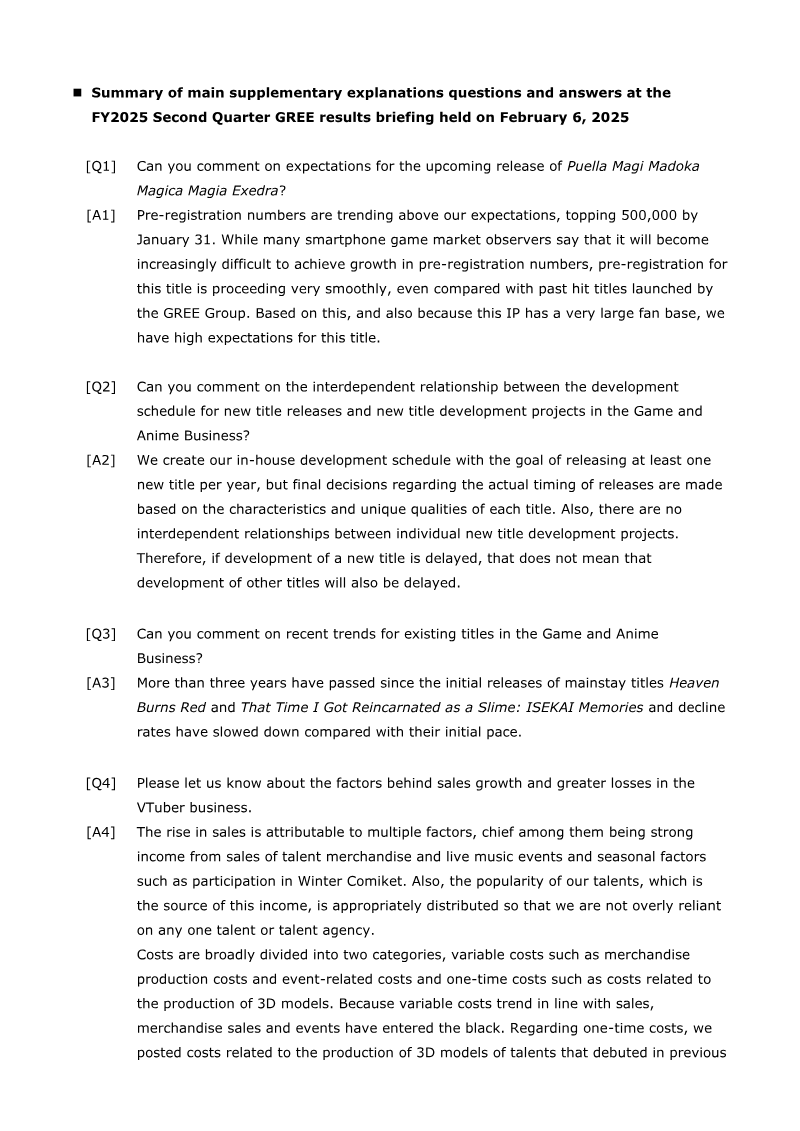
GREE Holdings maintains a strategic focus on stabilizing its release pipeline and diversifying its intellectual property portfolio to ensure long-term revenue growth. Following the third quarter of fiscal year 2025, the company emphasizes a shift toward more frequent game launches to optimize development resources and maintain market presence. While a three-year gap occurred between the releases of Heaven Burns Red and Puella Magi Madoka Magica Magia Exedra, future development cycles are structured to avoid such prolonged intervals while preventing internal competition between titles.
The company’s expansion into the anime sector serves as a critical pillar for its broader IP strategy. Having participated in over 20 anime production committees, including high-profile projects such as Is It Wrong to Try to Pick Up Girls in a Dungeon? V and Mushoku Tensei II: Jobless Reincarnation, the organization is leveraging these partnerships to build industry expertise. This collaborative track record provides a foundation for a more ambitious transition toward in-house IP creation.
The long-term objective involves managing the entire lifecycle of intellectual property, from the discovery of original works to the production of anime adaptations. By moving beyond passive participation in production committees and focusing on original, internally led projects, the company aims to establish a portfolio of IPs that generates stable, recurring revenue. This integrated approach across the game and anime segments is designed to maximize the value of owned assets and reduce reliance on external licensing, positioning the firm for more sustainable financial performance in the Japanese and global entertainment markets.
GREE · 2026
GREE · 2026
GREE · 2026
GREE · 2025
GREE · 2025
GREE · 2025
GREE · 2025
GREE · 2025
GREE · 2025
GREE · 2025
GREE · 2025
GREE · 2025
GREE · 2025
GREE · 2022
GREE · 2019
COLOPL · 2026
CyberAgent · 2025
Nacon · 2025
CyberAgent · 2024

Koei Tecmo · 2024
GREE · 2024
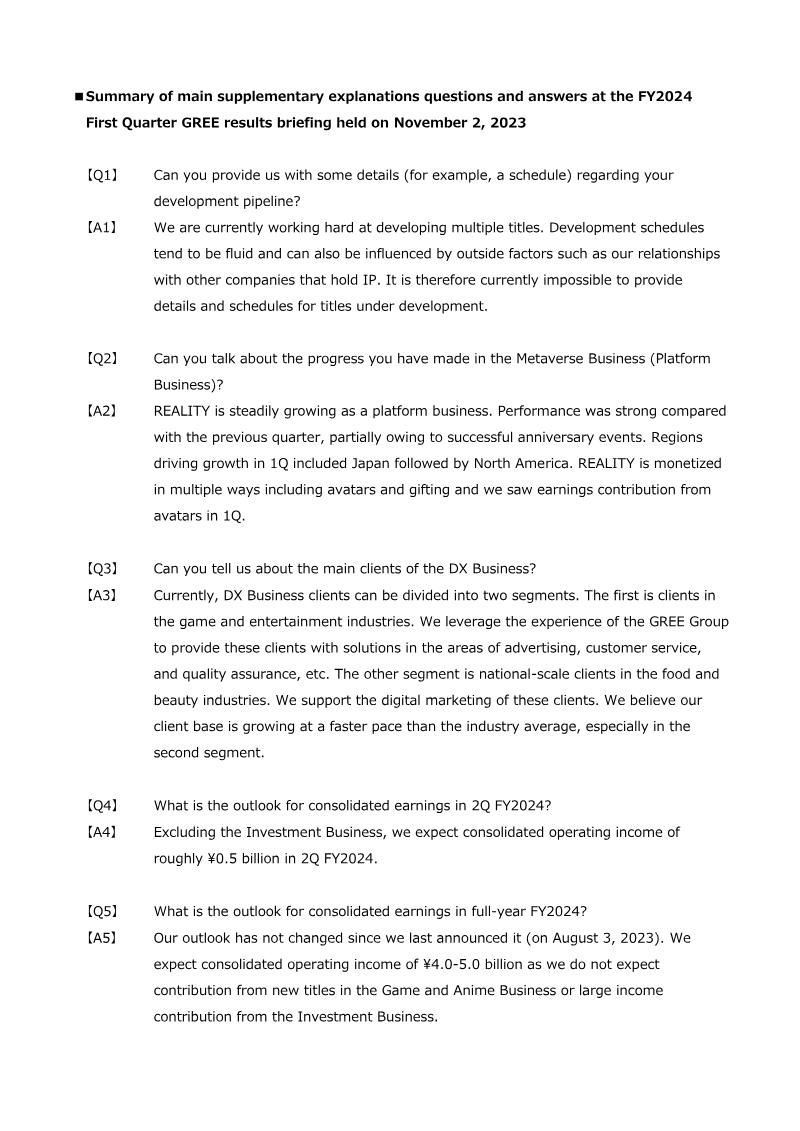
GREE · 2023
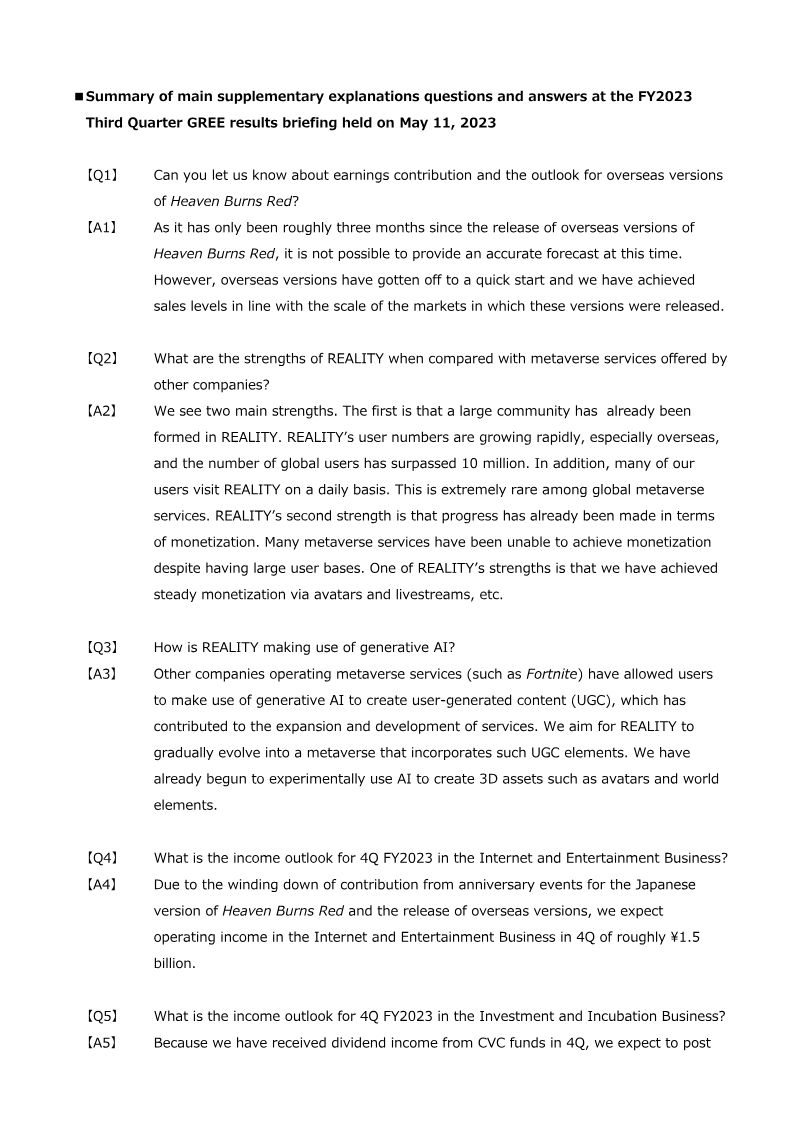
GREE · 2023
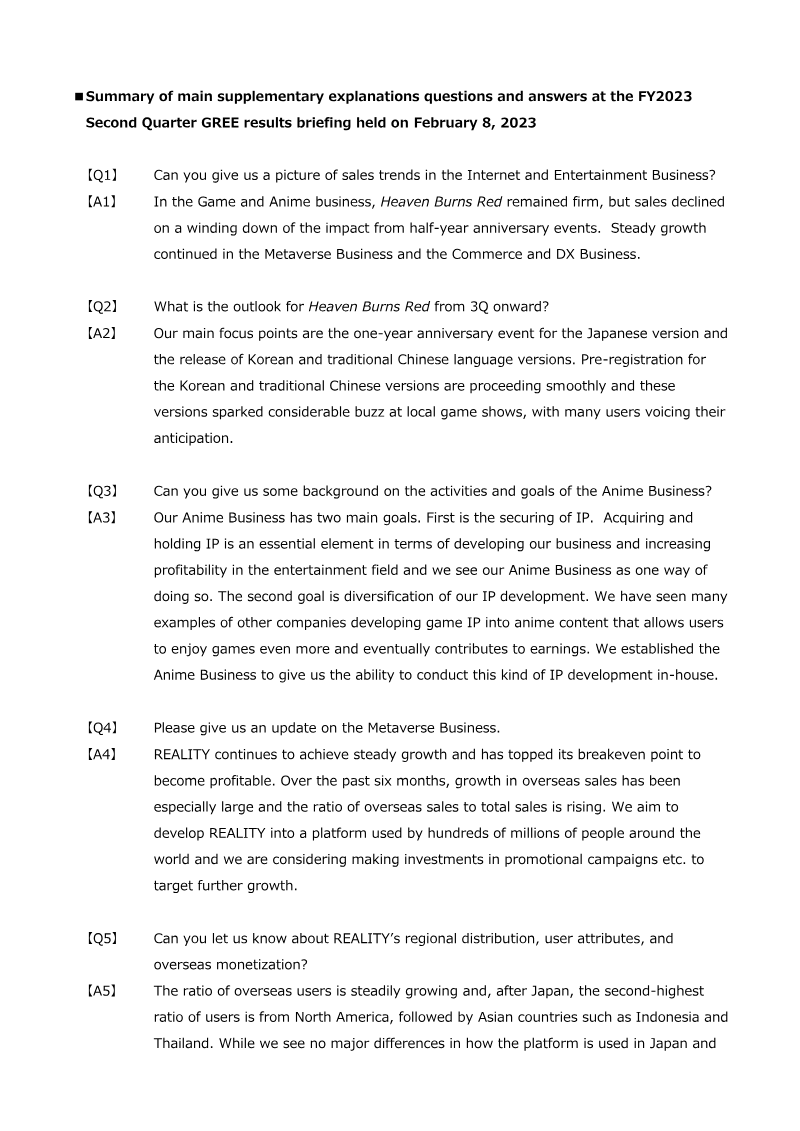
GREE · 2023