Key insights
5 slides
Key number
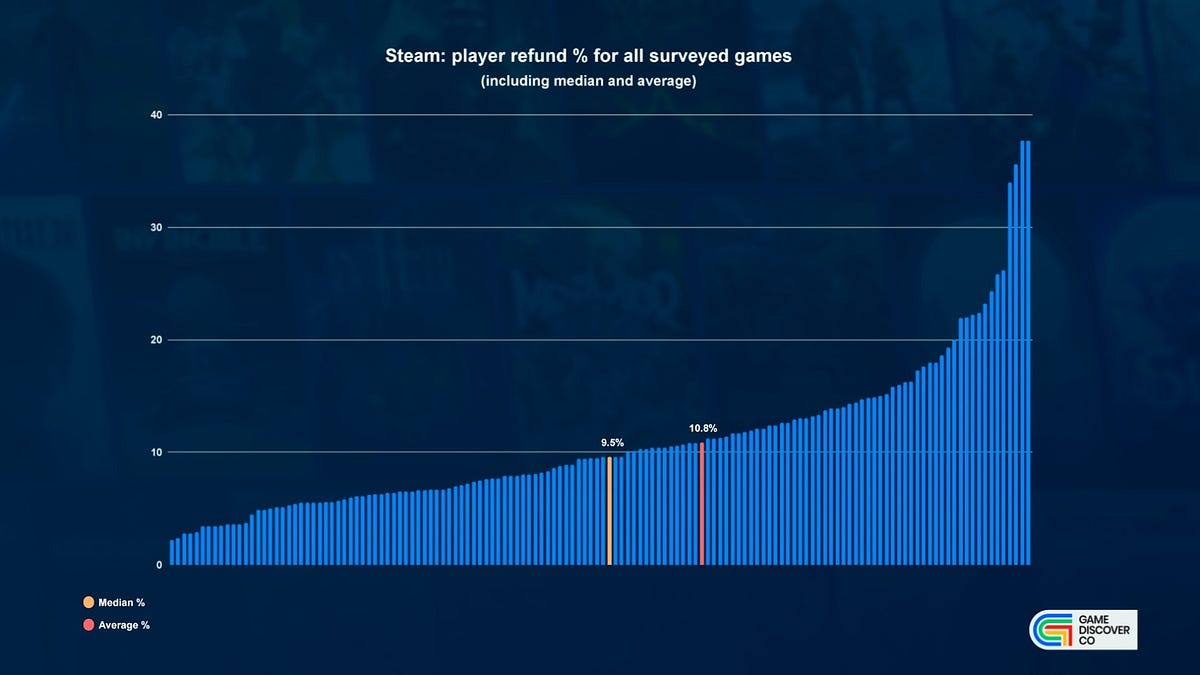
The median lifetime unit refund rate for Steam games is 9.5%.
The industry-wide average is 10.8%. This analysis establishes industry-standard expectations for unit refund rates.
What changed
Early Access titles face a median refund rate of 12.4%.
Standard releases have a median of 8%, while titles that transitioned out of Early Access average 10.4%.
Price impact
Games priced at $30 or more average an 11.9% refund rate.
Titles under $5 average an 8% refund rate. Higher price points correlate with increased refund rates.
Engagement buffer
Games with over 50 hours of average playtime see 7.4% refunds.
High player engagement serves as a buffer against returns. Titles with 90%+ positive ratings consistently perform better.
Engagement effect. Games with over 50 hours of average playtime see lower refund rates of 7.4%.
External factors
Regional demographics and discounting strategies influence overall refund activity.
Chinese players show higher refund activity. Discounting can drive impulse purchases and subsequent returns.
External drivers. Regional player demographics and discounting strategies are notable external variables that influence overall refund activity.
1 / 5
Ask AI about this report