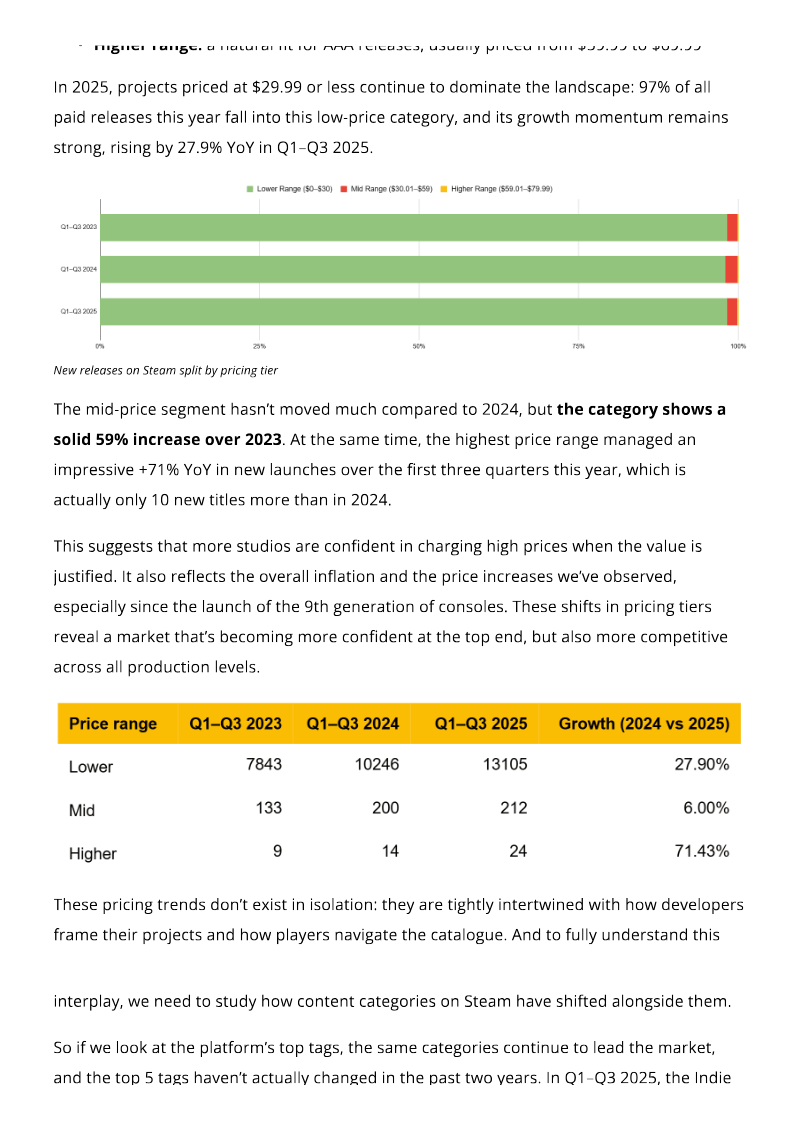
The Steam marketplace is currently defined by a hyper-competitive landscape, characterized by a 27.8 percent increase in annual new releases and a significant expansion of free-to-play titles. This influx of content has recalibrated consumer value expectations, forcing developers to adopt more rigorous, data-driven pricing strategies. Success in this environment requires a precise alignment between production scope and established market benchmarks, as players increasingly utilize price points as primary indicators of quality and content depth.
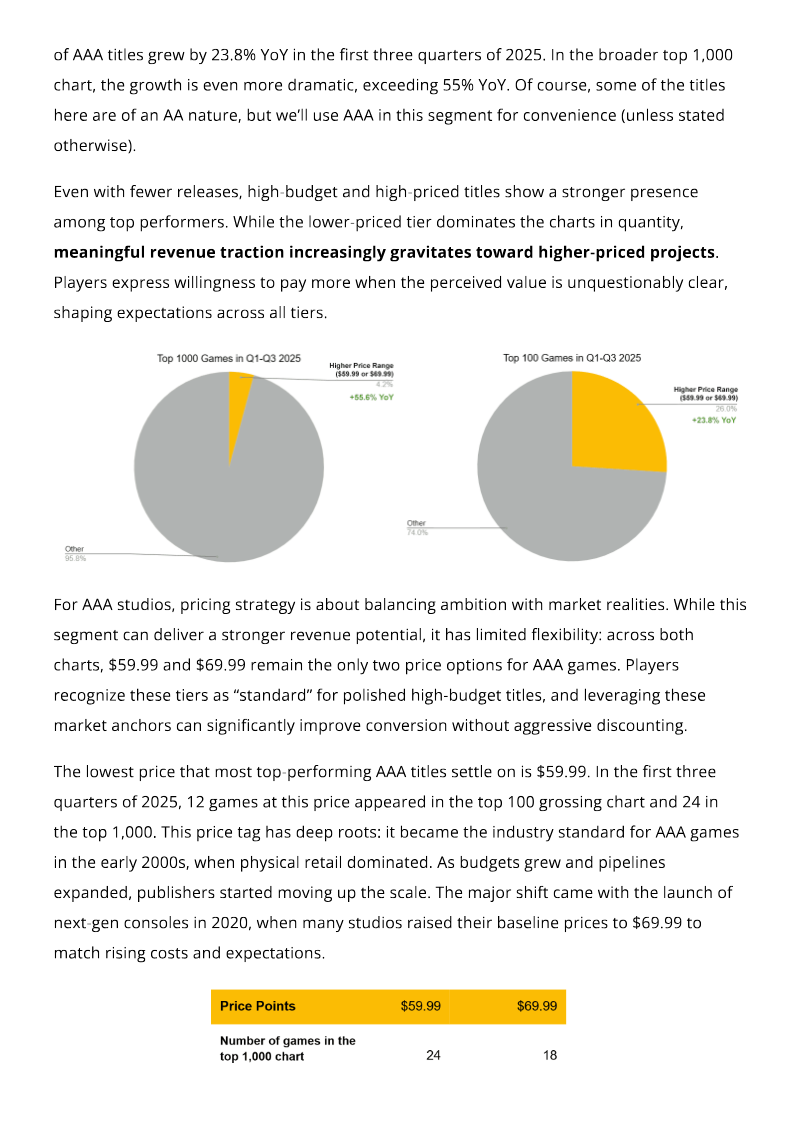
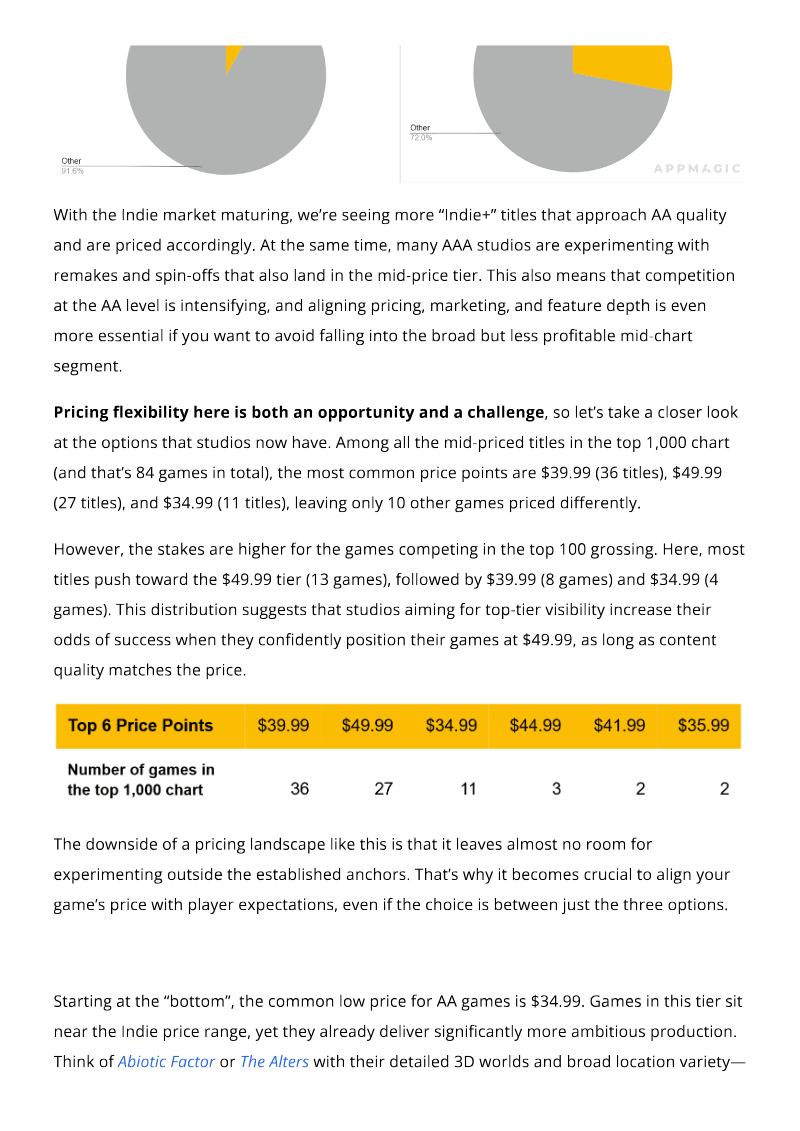
Pricing strategies on the platform are heavily influenced by rigid psychological anchors that signal specific tiers of production. The vast majority of releases remain concentrated in the sub-$29.99 range, where developers leverage common price points like $14.99 and $19.99 to optimize conversion rates. Mid-tier titles, often categorized as AA, typically occupy the $34.99 to $49.99 bracket, while AAA releases are largely confined to the $59.99 and $69.99 tiers. In these higher segments, commercial viability is increasingly tethered to the strength of established intellectual property and brand reputation rather than pricing experimentation alone.
Ultimately, the findings underscore that pricing is no longer a static decision but a strategic lever that must account for genre-specific player expectations. As the marketplace becomes more saturated, the ability to justify higher price points through perceived value becomes the primary determinant of long-term success. Developers must navigate these established anchors carefully, ensuring that their pricing reflects the actual production ambition of the title to remain competitive against the growing volume of high-quality, lower-cost alternatives.