1 free read left. Create a free account for unlimited reading + AI research.
Create free account
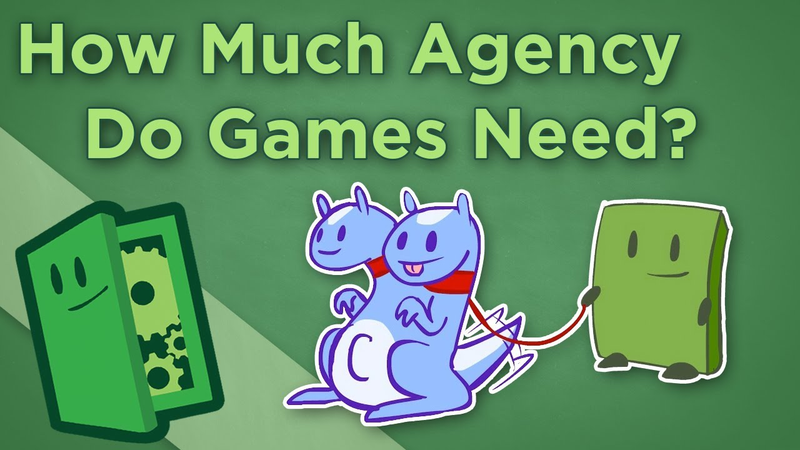
How Much Agency Do Games Need? - Choices in Linear Games - Extra Credits
Key insights
6 takeaways- 01The binary debate between open-world exploration and linear narrative is reductive, as agency can be effectively integrated into both structures.
- 02Player agency is defined by the meaningful impact of actions on the game world rather than the sheer volume of choices provided.
- 03Designers can foster deep emotional engagement in constrained, linear sequences by allowing players to physically navigate spaces, as demonstrated in the opening of The Last of Us.
- 04Games fail to provide agency when combat becomes a predictable, assembly-line process, a common flaw in poorly designed shooters.
- 05Titles like Dark Souls succeed by forcing players to adapt their strategies, ensuring that every combat encounter functions as a series of meaningful tactical decisions.
- 06There is no universal formula for player satisfaction; developers must rely on rigorous playtesting to determine if the level of agency is sufficient to maintain player investment.
Ask AI about this video
Transcript
Now at last we can talk about that question that started this whole choice series. How much choice do you need in a game to make the player feel like they have agency, like their choices matter? The answer is simple, it depends on the game. I know that sounds like a cop out, but think of it rather as a way of reframing the discussion. This whole series came to be because James was having a conversation with someone and they said, "But I like linear games. I think all this asking for more choice in games is actually ruining things." It was then that James realized that almost every time he's heard a discussion amongst players about choice in games it's not really been about choice, it's been about open world games or games with more narrative choice versus more directed experiences. People, especially on the internet, seem to often use the concept of choice in games as a shorthand for the amount of open exploration or branching dialogue they get to experience. But putting it this way makes it binary. Framing this discussion like that puts these game types in opposition, making the tacit
assumption that one's inherently better than the other. And while you may have a personal preference, sales numbers and reviews show us clearly that there's no universal consensus on which type of games are better. So the real question we should be asking is does a particular game have enough choice to give us a feeling of agency? And again, by agency we just mean the feeling that your choices matter, that by your actions you can impact the outcome of the game. This changes the question from is more choice inherently better to asking if whatever game you're looking at uses choice appropriately. So let's look at an example from a recent game. Consider the early minutes of The Last of Us. If you haven't played it, I'm not going to spoil anything, but I encourage you to try to at least play the first 20 minutes and try to play it yourself if possible because we're specifically analyzing play here. A let's play isn't going to cut it for this one. Think back to the first few minutes where you walk through the house. You remember how quickly that sequence sucks you right into the game? How playing through it emotionally engages you almost immediately, putting you in control of that character makes that section all the more vivid and effective. It's just a tiny bit of freedom, really, but by putting you in their shoes and making
you guide them, decide for them, it carries so much weight. Whether or not you open that door to the bedroom is a big decision. It feels like a tense moment, even though in terms of actual narrative, there's nothing much that happens if you do. Now, they could have easily made that section a cutscene, and this is Naughty Dog. They can make one hell of an emotionally resonant cutscene. And there are numerous cutscenes throughout the game that technically have a greater narrative impact than this sequence, but a cutscene by definition offers the least possible amount of agency. And for this moment in the house, giving the player control was the far more immediately engaging option. And it's not even a lot of control. Your choices in that house are very constrained, but here you don't need much freedom to feel as though you're making choices, to feel as though you're really looking for someone in this house, and that what you do might lead you to finding them, or maybe finding something much, much worse. The amount of choice is perfectly tuned to what that moment needs. There's just enough choice to make you feel like you're in control and that your actions matter. That's the power of agency. We don't need a morality bar, dialogue options, or an open world to feel it. It all depends on what the specific moment
requires to achieve the greatest impact. The real problem, and I think this is what a lot of people are tapping into when they say they don't like linear experiences, comes when a game becomes a paint-by-numbers exercise. When the designers require you to do exactly what they want you to do, in exactly the order they want you to do it, or otherwise you can't get through the section. This is very often true for big set-piece moments where you have to jump from collapsing pedestal A to hanging by a tin bar B to get through, but it can also be true in the play itself. This is most often a complaint I hear about bad shooters, so let's look at those. In poorly designed shooters, you'll often find yourself sitting behind a box and then popping up when the enemy stops firing to try to pick off a few. It has all the choice of a shooting gallery, no matter how much window dressing they try to give it. These types of shooters have very few combat scenarios that force you to use different weapons, figure out how to flank your enemy, or change up your play style. There's no choice involved, there's just doing. From the first time that you figure out that you can just hide behind the crate until the enemy reloads, it's just rinse and repeat. No agency, no volition. It's like an assembly line. No choice involved.
Compare that to something like Demon's Souls or Dark Souls. In those games, you always feel as though you have options, as though you're making decisions within the level and within the combat. You feel as though your choices matter, so you have agency, and thus you feel more emotionally connected to the combat. There's a reason that you can come back to a lost battle in Demon's Souls or Dark Souls, and it's not just because it's hard. It's because you realized that if you had made a different choice, you could have won that fight. That's agency. So, you see, when we talk about choice and we ask how much choice should there be in games, we're asking the wrong question. We have to ask it in the specific. We have to ask the question, does this game give me enough choice to make me feel like my actions matter? And as we answer that question across a number of games, we'll find that the amount of choice varies a great deal. Sometimes all the open world and dialogue options they could cram in still won't be enough. Sometimes something as simple as enemy placement that forces you to adopt a new tactic is all you need to get that feeling of agency. I wish we could be a little more scientific about all this, but sometimes in game design there's some things that we haven't hammered out a test for. They just come down to gut feeling and a lot of play testing. But hopefully this
helps to clarify the question when you're making games or when you're just asking yourself, what is it about this game I love? Or what is it about this game I just don't like? We'll see you next week for some more choice talk.
Summary
The quality and relevance of player choices are significantly more important to the gaming experience than the sheer quantity of options provided. While industry discourse often frames choice as a binary conflict between open-world exploration and linear narrative, this perspective is reductive. The true measure of a game’s success lies in whether it provides sufficient agency—the feeling that a player’s actions meaningfully impact the game world—regardless of the title’s structural linearity.
Effective agency is achieved when design choices are perfectly tuned to the specific needs of a moment. For instance, even highly constrained sequences can foster deep emotional engagement by allowing players to physically navigate a space, as seen in the opening of The Last of Us. Conversely, games fail to provide agency when they devolve into repetitive, "paint-by-numbers" experiences. Poorly designed shooters often suffer from this, where combat becomes a predictable, assembly-line process that lacks tactical variety. In contrast, titles like Dark Souls succeed by presenting combat scenarios that force players to adapt their strategies, ensuring that every encounter feels like a series of meaningful decisions rather than a scripted chore.
Ultimately, the amount of choice required varies by game, and there is no universal formula for player satisfaction. Designers must rely on rigorous playtesting and intuitive design to determine if a game offers enough agency to keep players invested. By shifting the focus from the volume of choices to the impact of those choices, developers can create more compelling, emotionally resonant experiences that transcend traditional genre labels.


















Comments