Sony Group’s FY2017 annual report demonstrates a diversified conglomerate that achieved modest sales growth while navigating significant restructuring, acquisition, and risk‑management challenges. Operating income rebounded to ¥288 billion, driven by strong Game & Network Services and Electronics performance, yet total sales fell 6.2 % to ¥7.60 trillion due to a weaker yen and declining battery‑business volumes. Net income attributable to shareholders reached ¥73 billion, reflecting a sharp decline in operating profitability relative to the prior year. The company’s balance sheet remained solid, with assets of ¥17.66 trillion and equity per share of ¥1,977.72, supported by robust cash generation (¥1.26 trillion operating cash flow) and a healthy liquidity position that includes unused credit lines of ¥459 billion.
Sony’s strategic focus for 2017‑2021 centers on “KANDO” emotional engagement, direct‑to‑consumer services, and creator‑oriented IP, while maintaining leadership in CMOS image sensors. Capital allocation emphasized semiconductor expansion (¥128 billion investment, ¥107 billion for image‑sensor capacity) and a series of spin‑offs to streamline operations. Risk disclosures highlighted integration costs, supply‑chain volatility, foreign‑exchange exposure, cyber‑attack threats, and pension‑plan liabilities as material risks that could erode profitability. Governance structures feature a board of 18 directors with independent oversight, comprehensive compensation plans tied to performance, and adherence to NYSE‑style standards.
Geographically, Sony’s strongest markets remain Japan (¥2.39 trn) and the United States (¥1.67 trn), with growing presence in China and Asia‑Pacific across entertainment, technology, and financial services. The report underscores a balanced portfolio of media (Music, Pictures), hardware (Gaming, Electronics), and financial services, all operating under U.S. GAAP with detailed accounting policies for goodwill, intangible assets, and fair‑value measurements. Overall, Sony’s FY2017 performance reflects resilience amid competitive pressures, strategic realignment, and a forward‑looking investment agenda aimed at sustaining long‑term shareholder value.
Sony Group · 2026
Sony Group · 2025

Sony Group · 2024

Sony Group · 2024
Sony Group · 2023
Sony Group · 2022
Sony Group · 2021
Sony Group · 2020
Sony Group · 2019
Sony Group · 2017
Sony Group · 2016
Sony Group · 2015
Sony Group Corporation · 2026
Bandai Namco · 2026
InvestGame · 2025
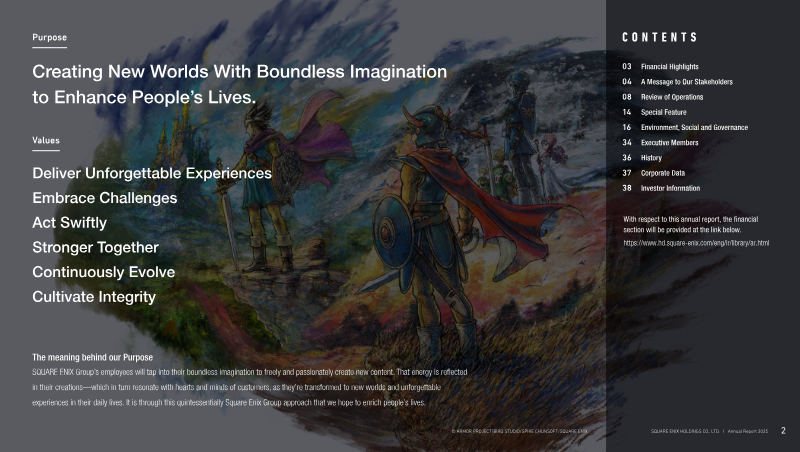
Square Enix · 2025
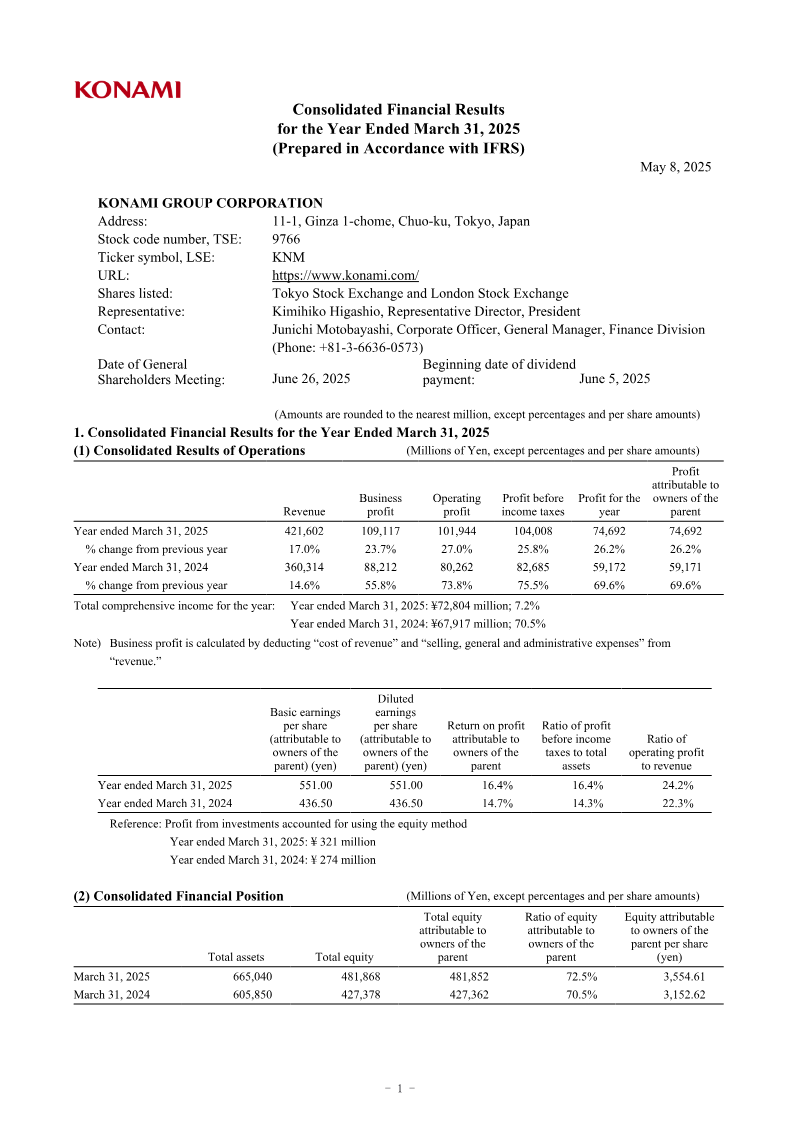
Konami · 2025

Nintendo · 2024
Bandai Namco · 2022
Bandai Namco · 2021
GREE · 2017
Bandai Namco · 2017
GREE Inc. · 2016
Bandai Namco · 2014